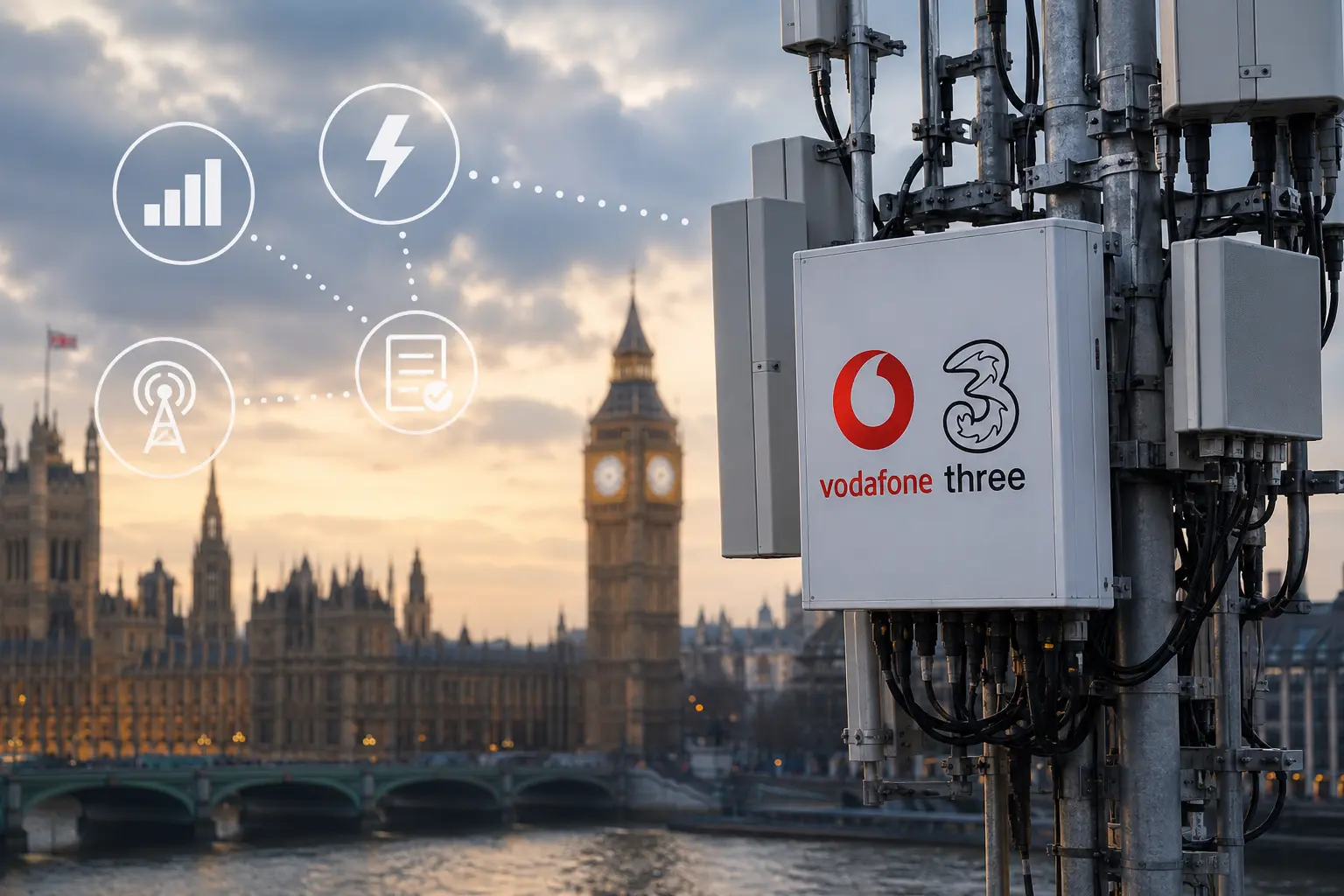
- VodafoneThree has activated Ericsson's dual-mode 5G core, designed to handle up to 9Tbps of traffic
- The deployment follows earlier radio and core-sharing work and begins the move towards a single dedicated core for the merged network
The fact
VodafoneThree has put Ericsson's cloud-native 5G core into live service as it continues integrating the former Vodafone UK and Three UK networks. The dual-mode platform combines 4G and 5G core functions and is designed for capacity of up to 9Tbps.
The launch follows an earlier integration phase using Multi-Operator Core Network technology, which allows Vodafone and Three customers to use coverage from either network. VodafoneThree says the new Ericsson system moves the integration towards a single dedicated core and will support 5G Standalone services including network slicing.
Ericsson is VodafoneThree's sole nationwide core-network supplier under an eight-year SEK12.5 billion agreement announced in 2025. VodafoneThree has 28.6 million customers, but neither company disclosed how many subscribers or how much traffic have moved onto the new core, or when older core platforms will be retired.
The assessment
Putting the new core into service starts the harder part of the integration. VodafoneThree now has to move subscriber sessions, policy functions and traffic onto the Ericsson platform while keeping services running across a network assembled from two operators.
That migration matters more than the headline capacity. A 9Tbps platform can provide plenty of room for growth, but the immediate job is moving live services without creating faults at the boundary between the new core, existing radio networks and systems that have not yet been retired. The architecture is distributed and designed for resilience, so a single core platform should not be read as a single physical point of failure.
For BTW readers, the merger becomes operationally deeper as more traffic moves onto the new core and the older platforms are switched off. That is where VodafoneThree can simplify the network, but only after the replacement has carried enough live traffic to prove it can take over safely.
What to watch
Watch for figures on migrated subscribers and traffic, followed by dates for retiring the former Vodafone and Three core platforms. Service stability during migration and wider use of network slicing will show how quickly the new core is moving from initial activation to carrying the merged operator's everyday traffic.
Member Briefing
Deeper Profile Context
Sign in with the right membership level to unlock the full briefing and source notes.
Only for Strategic Circle
Strategic Circle
Open to all readers. Unlock profile briefings after joining and signing in.
Join Strategic CircleOnly for Leadership Alliance
Leadership Alliance
For qualified IP-asset owners and management; sign in to unlock alliance briefings.
Join Leadership Alliance