
Summary
Public routing analyses reported that Vodafone Idea AS55410 appeared as the origin for tens of thousands of networks on 16 April 2021. Catchpoint counted more than 34,000 networks in its analysis, while the Mutually Agreed Norms for Routing Security initiative (MANRS) described more than 31,000 routes. Those measurements were drawn from particular observation methods and should not be treated as one universal count [1][2].
The public record supports the existence of large anomalous announcements and broad propagation. It does not establish malicious intent. MANRS called the event a hijack; other reporting and this article use route leak or origin misannouncement to avoid turning a technical observation into an unsupported claim about motive [1][2][3].
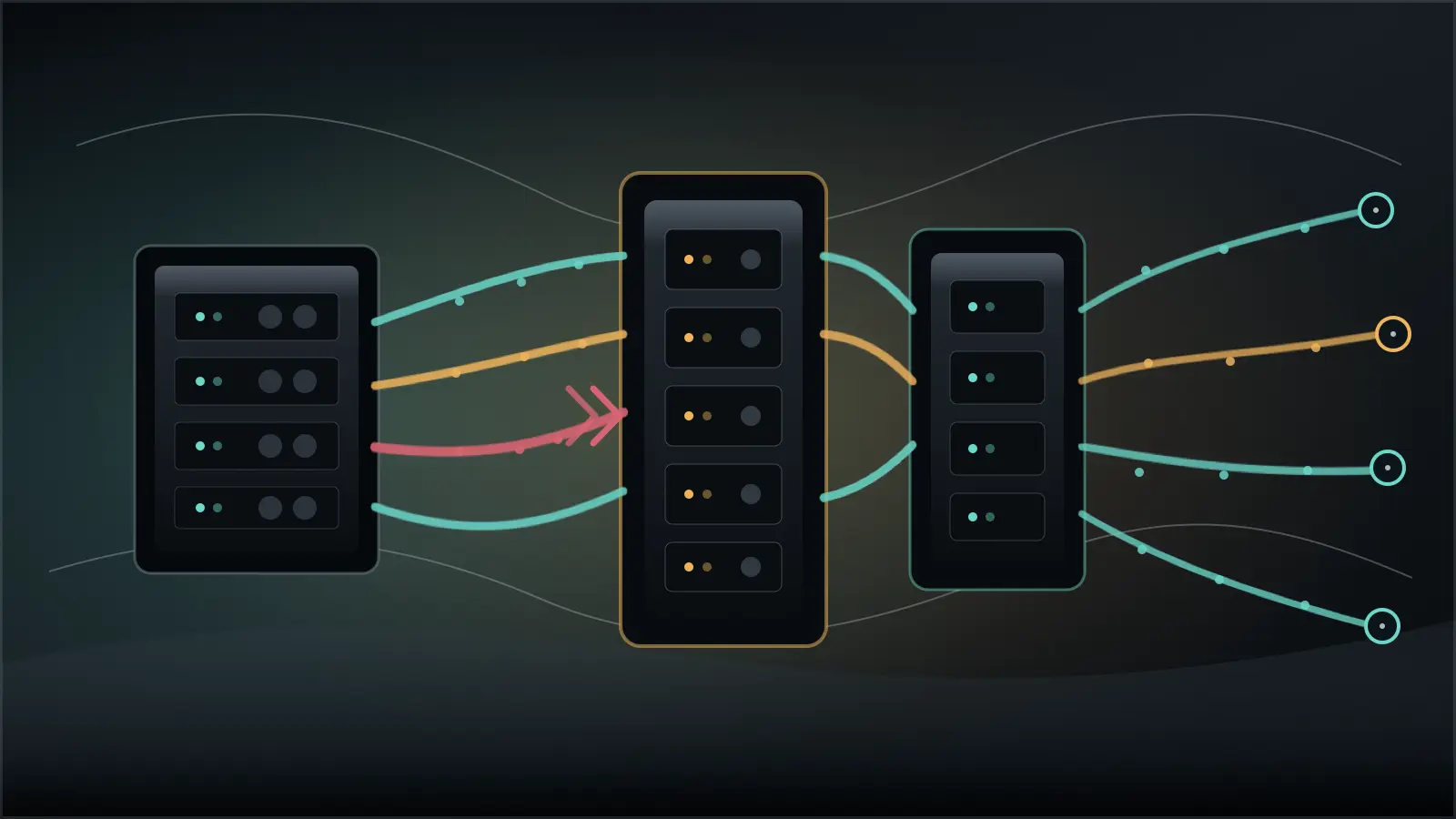
Responsibility began at AS55410, which controlled what its routers originated and exported. It did not end there. Upstream providers controlled customer-prefix authorization, maximum-prefix policy, origin validation and onward propagation. MANRS attributed the observed announcements in its analysis to a path through Bharti Airtel AS9498 and contrasted that propagation with other upstreams that did not pass the same routes onward [2].
The Resource Public Key Infrastructure (RPKI) could have supplied strong evidence for the subset of announced prefixes covered by Route Origin Authorizations (ROAs). Catchpoint and MANRS both found that most affected networks in their respective analyses lacked useful ROAs. Origin validation therefore offered a powerful but incomplete control: it could identify unauthorized origins for covered prefixes, but it could not protect resources without ROAs or validate the full AS path [1][2][12][13].
The RIPE Routing Information Service (RIPE RIS) and RouteViews, two public route-collector systems, made the incident observable from participating peers. They did not authorize the routes, control provider import policies or prove that every network selected the same path. Collector evidence is a record of exposed routing state, not a substitute for the configuration and forwarding evidence held by the involved operators [8][9].
A defensible accountability review separates prevention, acceptance, propagation, detection, containment, withdrawal and proof of repair. Each stage has a different owner and a different evidence trail. A restored route table is necessary, but it does not by itself show why the incident occurred or whether the same control failure can recur.
What the public evidence establishes
The central event is bounded to 16 April 2021 and to public observations associated with Vodafone Idea AS55410. Catchpoint reported that at 13:48:58 GMT the AS appeared as the origin for more than 34,000 networks. Its examination of the RIPE RIS rrc00 collector described approximately 225,000 BGP update messages between 13:45 and 15:00 GMT. Catchpoint also reported that 64 of 73 peers connected to that collector received at least one affected network and that most anomalous routes were removed after roughly an hour [1].
Those figures describe what Catchpoint derived from one analytical view. They are not proof that every Internet router received 34,000 routes, that all affected prefixes were selected for forwarding, or that every destination remained impaired for the same period. A BGP collector receives routes from a set of participating peers. Different peers expose different policy decisions, and an update count includes announcements and withdrawals rather than a direct count of users or failed sessions.
Catchpoint further said that the event disrupted more than 3,500 companies and listed examples spanning telecommunications, content delivery and financial services. That is a consequential impact claim, but its meaning must stay attached to the publisher's methodology. The public materials used here do not provide a complete company-by-company failure record, a denominator for all potentially exposed networks, or a validated financial-loss total. The claim is useful as evidence of breadth, not as a license to assign identical harm to every named organization [1].
MANRS published a separate analysis that described AS55410 as normally announcing 824 routes and said that it announced more than 31,000 additional routes during the incident. MANRS called the event a major BGP hijack. It said the announcements visible in its analysis exited through Bharti Airtel AS9498 and argued that customer filtering and prefix limits at that boundary should have constrained the propagation. It also noted that other identified upstreams did not propagate the same set of routes [2].
The difference between more than 34,000 networks and more than 31,000 routes is not necessarily a contradiction. Analysts can count prefixes at different observation points, apply different time windows, include or exclude the source network's ordinary announcements, and deduplicate updates differently. A responsible account preserves the source and unit for each number rather than collapsing them into an apparently exact global total.
The Register summarized the event for a broader audience as an announcement of more than 30,000 bogus prefixes and reported the concern voiced by routing specialists. That reporting confirms that the incident attracted cross-industry attention, but it does not replace the route-level evidence or disclose private router configurations. Public accountability should use journalism to establish what was reported and disputed while keeping technical findings tied to the underlying observations [3].
Across these accounts, four propositions are well supported. An unusually large set of routes was associated with AS55410 as origin. At least one upstream propagated a substantial portion of those announcements. Public collectors and analysts observed the event at multiple network boundaries. The anomalous state was substantially withdrawn within a bounded period. What remains less certain is motive, the originating configuration change, the complete set of accepting networks, the exact forwarding effect for every prefix and the durability of subsequent repairs.
Why terminology changes the accountability claim
The terms route leak, origin misannouncement and hijack describe overlapping but distinct ideas. RFC 7908 defines route leaks through the violation of intended propagation scope, typically involving the redistribution of routes in a way that conflicts with expected business relationships. An origin misannouncement occurs when an AS originates a prefix it is not authorized or intended to originate. Hijack is commonly used for unauthorized control of route origin or traffic, but in public discussion it can imply an adversarial purpose that route data alone cannot prove [11].
The AS55410 incident included an unexpected origin for many networks. That is more than an ordinary case in which a valid route is merely exported to the wrong neighbor. Yet the public evidence used here does not reveal whether the cause was an import-and-redistribute mistake, a route-generator error, a configuration template problem, a test route escaping its boundary, a compromised system or intentional action. A technical classification can describe the observed control-plane state without resolving that causal question.
MANRS was entitled to use the term hijack in its analysis, and that terminology is part of the public record [2]. This article uses route leak in the title because its accountability question is about operational containment rather than motive. It also uses origin misannouncement when discussing the specific control that made AS55410 appear as origin. The terms should not be silently exchanged. A post-incident investigation should state which observation supports which label and what additional evidence would be needed to infer intent.
This distinction matters for governance. If the event was accidental, change control, route-generation safeguards and peer filtering become central. If a system was compromised, access control, credential evidence and incident response also matter. If conduct were intentional, authorization and enforcement questions would become more prominent. The public route record can identify a dangerous state and the networks that propagated it. It cannot alone choose among those causal narratives.
Accountability therefore starts with practical control. AS55410 was responsible for the routes its systems originated and exported regardless of motive. An upstream was responsible for the customer routes it accepted and passed onward regardless of why the customer sent them. Other networks were responsible for their own validation and import decisions. This approach avoids waiting for a definitive psychological or legal label before examining controls that should have constrained the event.
How a local announcement acquired wider reach
BGP is the protocol through which autonomous systems exchange reachability information. An announcement tells a neighbor that a destination prefix is reachable through an AS path. The receiving router applies local import policy, checks attributes, compares candidate paths and may install and export the selected route. RFC 4271 defines the protocol behavior, but each operator controls much of the policy that determines what its routers accept and propagate [10].
That design distributes both resilience and risk. No central routing authority approves each announcement before it is used. An operator can express policy based on the neighbor relationship, prefix, origin AS, AS path, communities, validation state and other attributes. If those policies are broad or inaccurate, a customer's anomalous announcement can cross the first boundary and be advertised to many more networks.
The source AS is the first control point. A router should not originate an arbitrary set of prefixes merely because they appear in an imported table or configuration object. Intended origin prefixes can be generated from an approved inventory, bounded by maximum prefix lengths and compared with route registries or RPKI data. Export filters can limit what each eBGP session may announce. Configuration review can flag a sudden change from hundreds of normal routes to tens of thousands.
The customer-provider boundary is the second control point. A provider normally has information about the prefixes its customer is authorized to announce. That information may come from contracts, provisioning records, Internet Routing Registry objects, RPKI-derived validation and observed history. None is perfect by itself, but a provider can combine them into a narrow acceptance policy. A customer that ordinarily originates a limited set of networks should not be able to send tens of thousands of unrelated prefixes without triggering rejection or an emergency limit.
Onward export is the third control point. Even if a route enters one provider's routing system, policy determines whether it is passed to peers, providers or customers. Relationship-aware export rules are designed to prevent a route learned from one provider or peer from being offered in a way that creates unauthorized transit. For customer-originated routes, the provider must still determine whether the customer is authorized to originate the particular prefixes before it treats them as legitimate customer reachability.
The AS55410 event became consequential because the anomalous routes did not remain local. MANRS attributed the observed propagation in its account to AS9498 and emphasized that other upstreams did not propagate the same routes [2]. That contrast is an accountability signal. It suggests that the outcome was not mechanically inevitable once AS55410 announced the routes. Different boundaries made different acceptance or propagation decisions.
The source network's prevention duties
AS55410 controlled the systems that produced and exported the anomalous origin state. The most direct prevention question is therefore how an approved origin set was represented and enforced. A mature process should distinguish prefixes the network may originate, routes it may carry for customers, full-table routes it learns for forwarding and special-purpose routes used for testing or mitigation. The categories should not collapse into one exportable pool.
An approved-origin inventory should be machine-checkable. Each entry can include the prefix, maximum length, origin AS, business owner, provisioning record, registry or ROA evidence, applicable neighbors and expiration or review date. Route generation should consume that inventory rather than infer origin authority from whatever happens to be present in a routing table. A route outside the inventory should fail closed or require an explicit, logged exception.
Export controls should be neighbor-specific. A provider-facing session should receive only the intended public announcements. A route learned from another external neighbor should not be re-originated merely because of redistribution between routing protocols, a route-map error or a broad network statement. Candidate configurations can be tested against a known set before commit, and actual Adj-RIB-Out data can be compared with that set after change.
Scale is itself a safety signal. If AS55410 normally announced hundreds of routes, a jump into tens of thousands should have exceeded a local change budget even before any external validation. A source-side prefix limit is different from the receiving provider's maximum-prefix setting: it constrains what the network's own export process is permitted to produce. The limit can be tailored by neighbor and can require a deliberate override with a reason and expiry.
Monitoring should not depend solely on customer complaints or upstream alerts. The source network can observe its own BGP outputs, query independent collectors and alert on unexpected origins for external prefixes. The strongest design compares intended configuration, router output and external observation. A route can pass a configuration syntax check yet still be wrong in policy. External observation confirms what escaped the boundary.
The public record does not disclose which of these controls existed at AS55410, which one failed, or whether a later change repaired it. An accountability finding should not invent that information. It should request configuration diffs, route-policy versions, approved prefix lists, change tickets, alert logs, Adj-RIB-Out captures and withdrawal records. Those artifacts would show whether the failure was in authorization, generation, export, monitoring or response.
Upstream filtering was an independent duty
The source network's mistake does not remove the upstream's control. A provider makes an operational decision when it accepts a customer route. The customer may supply the data, but the provider determines whether that data enters its routing system and whether it is exported to others. That boundary is where a local error can either stop or become an Internet-scale event.
MANRS argued that AS9498 should have applied AS filtering and prefix limits to the customer relationship [2]. The principle is broader than one named operator. A provider should know which customer AS is expected on a session, which origins may appear behind it, how many routes are normal, which prefix lengths are acceptable and what validation states require rejection or review. A session that suddenly offers an enormous number of unrelated origins should not be treated as normal merely because BGP syntax is valid.
Prefix filtering can be strict or adaptive, but it must be evidence-based. A strict allowlist offers strong protection where the customer's advertised set is stable. A generated filter can use verified registry and RPKI information, provided the generation process handles stale or incomplete records safely. An adaptive anomaly system can compare the current route count and origin set with historical baselines. Whatever method is used, the operator should be able to explain the rule that admitted each route.
Maximum-prefix limits are a coarse but valuable backstop. A limit set far above any plausible customer change may protect router memory without protecting the routing system. A useful limit reflects the customer's authorized scale and includes alert thresholds below the hard shutdown point. Operators also need a recovery procedure so that a limit breach does not lead staff to disable the control permanently during an incident.
Origin validation adds a cryptographic signal for covered resources. A route whose origin conflicts with a valid ROA can be classified as invalid. A provider can reject invalids, lower their preference or route them into review according to its policy. The policy decision remains local, but the validation state gives an operator a clear, auditable reason to refuse an unauthorized origin.
RPKI coverage was incomplete in this event. Catchpoint said only about 20 percent of the involved networks in its analysis had ROAs and that the AS55410 origin caused those covered routes to appear invalid [1]. MANRS similarly said roughly 80 percent lacked ROAs and described more than 7,000 covered routes for which the unauthorized origin would be invalid [2]. The precise counts differ with the analytical set, but the operational conclusion is consistent: origin validation could have stopped a meaningful subset, not the entire event.
That limitation does not make filtering optional. For prefixes without ROAs, providers can still use customer authorization, Internet Routing Registry (IRR)-derived filters, prefix limits, origin history and anomaly detection. RPKI is one layer in a control stack. Treating the absence of a ROA as permission to accept any customer origin would transfer the cost of incomplete deployment to every downstream network.
Onward export requires another decision. A provider may accept a route for limited internal handling yet choose not to propagate it broadly. Quarantine communities, low preference, route-server controls and policy review can constrain uncertain routes. The evidence needed after an incident includes both Adj-RIB-In and Adj-RIB-Out, because acceptance and amplification are distinct actions.
Why current topology data must be handled carefully
CAIDA ASRank, CIDR Report and RIPE Stat provide useful public context for AS55410 [4][5][6][7]. They can help identify the AS, inspect currently visible relationships, review announced prefixes and compare public routing records. They are not a complete, immutable snapshot of the network on 16 April 2021.
Topology inference is especially bounded. A relationship displayed today may have changed since the incident. An inferred provider or peer relationship may not capture private contracts, route-server behavior, backup sessions or policy exceptions. Current announced-prefix data can show what public collectors associate with the AS now, but it cannot prove the exact authorized origin list in 2021.
The proper use of these services is corroboration. They help an investigator frame questions, verify identifiers and find anomalies worth testing against time-specific route archives. They should not be used to assert that a particular 2021 session had a particular policy unless a historical record supports that conclusion.
An operator's internal evidence should be more precise. Provisioning systems, signed contracts, customer prefix records, router configurations, RPKI validator snapshots and route-policy revisions can reconstruct what the boundary was supposed to allow. Collector archives can then show what the boundary actually exposed. Accountability depends on the difference between those two states.
This is also why a registry record is not a sovereignty claim over reachability. A record can document allocation, contact, route intent or origin authorization. Running routers still decide whether to use that evidence. Accurate records are essential, but continuity depends on operational policies that consume them, update them and fail safely when records are incomplete or contradictory.
Route collectors preserve evidence, not authority
RIPE RIS and RouteViews collect BGP data from participating peers and make it available for analysis [8][9]. Their value in an incident is substantial. They can timestamp announcements and withdrawals, show which collector peers received a route, expose changes in origin and AS path, and allow independent observers to compare propagation.
Catchpoint's use of rrc00 illustrates that value. The analysis could estimate update volume, identify peers that saw affected networks and follow withdrawals because the collector retained external observations [1]. Without such systems, public understanding would depend much more heavily on voluntary statements from the involved operators.
Collector visibility is not universal. A collector peer may send its best route rather than every alternative. A route visible at one collector may never be selected by another network. A route absent from a collector may still have propagated through paths the collector could not see. Peer sessions can reset, policies can change and timestamps can reflect collection behavior as well as the event itself.
For these reasons, an update count is not a user-impact count. A peer count is not a count of all autonomous systems. A visible route is not proof that traffic followed it. Forwarding outcomes require data-plane measurements, traffic telemetry or operator records. Collector evidence should be joined with those sources rather than stretched beyond its scope.
Collectors also do not authorize or withdraw routes. RIPE NCC and the University of Oregon can operate observation infrastructure with strong integrity, but they do not control a provider's import policy. Their accountability is to preserve accurate, well-documented observations and disclose collection limits. The originating and propagating networks remain responsible for operational state.
A strong incident record should preserve the exact collector, peer, timestamp, prefix, origin and path used for each claim. It should distinguish an initial announcement from repeated updates and distinguish a withdrawal from a route merely disappearing at one vantage point. Reproducible queries matter because a summary chart can hide policy differences that are central to accountability.
RPKI supplies origin evidence, not path permission
Route Origin Validation compares a BGP announcement with cryptographically signed Route Origin Authorizations. A ROA can state that a particular AS is authorized to originate a prefix up to a specified maximum length. RFC 6811 and RFC 8893 define the validation model and operational terminology [12][13].
For a covered prefix in the AS55410 event, an unauthorized AS55410 origin could produce an invalid result. A network rejecting RPKI-invalid routes would then have a direct control to stop acceptance. This is a strong example of number-resource records supporting practical security: a signed authorization becomes operational only when a validator and routing policy use it.
The event also exposes three limits. First, many prefixes lacked ROAs. Their routes would be not found rather than invalid, so a reject-invalid policy would not stop them. Second, RPKI origin validation addresses the origin AS, not whether every AS relationship in a path is authorized. Third, validation state does not force a router to act. The relying operator chooses policy.
Those limits are reasons for layered controls, not arguments against RPKI. Prefix holders can create accurate ROAs and keep maximum lengths narrow. Regional Internet Registries (RIRs) and repositories can maintain secure, available publication systems. Network operators can run diverse validators, monitor stale data and apply clear policy. Providers can combine validation with customer prefix lists, AS-path checks and limits.
Evidence of RPKI deployment should be time-specific. A current ROA does not prove that it existed during the incident. A current reject-invalid statement does not prove that the policy was enabled on the relevant router or session. Investigators need validator caches or logs, policy versions, route decision records and timestamps.
The public reports' estimates of ROA coverage also need careful phrasing. Catchpoint's roughly one-fifth and MANRS's roughly one-fifth describe their respective involved sets [1][2]. They do not establish a global RPKI adoption rate. Their importance is incident-specific: thousands of the anomalous origins may have carried a validation signal that relying networks could use, while most still required other authorization controls.
IRR records and customer authorization remain necessary
Internet Routing Registry objects can describe routing policy and authorized origins. Providers often use them to generate filters. They offer broad deployment and can cover prefixes without ROAs, but their accuracy depends on maintenance, authentication and database practices. A stale or weakly authenticated route object can create false confidence.
Customer provisioning records add another evidence layer. A provider knows which organization requested service, which AS is connected, which prefixes were approved and what changes were authorized. That local relationship record can be narrower and more current than a public registry. It should still be reconciled with independent number-resource evidence to prevent a mistaken customer claim from becoming an accepted route.
The strongest filter therefore does not assume one perfect database. It joins customer authorization, allocation context, route objects, ROAs, prefix-length policy and observed history. Contradictions should trigger review rather than automatic broad acceptance. A newly requested prefix can require proof tied to the customer account and resource holder.
Filter generation itself needs governance. Inputs should have timestamps and provenance. Changes should be reviewed, tested and rolled out safely. An operator should know when a registry update altered an allowlist and be able to revert an erroneous change. A generated filter that is never refreshed can become stale; one refreshed without guardrails can distribute bad data quickly.
In the AS55410 case, the public evidence does not disclose the precise filter inputs used by AS9498 or any other provider. Accountability should ask for them. The question is not whether an operator can name IRR or RPKI as a general practice. It is whether the route decision at the relevant session can be reproduced from the evidence and policy in effect at the time.
Explicit policy, roles and path controls
RFC 7454 describes operational security practices for BGP, including filtering and limits. RFC 8212 makes explicit import and export policy a default safety principle for eBGP. These standards address a recurring failure mode: routes should not flow merely because an operator forgot to define a policy [14][15].
Explicit policy is necessary but not sufficient. A policy that permits every customer route is explicit and still unsafe. The rule must encode the intended relationship and authorization. The audit question is not just whether a route map existed, but whether it limited the customer's prefixes, origins, lengths and path behavior.
RFC 9234 defines BGP Roles and the Only-to-Customer attribute as mechanisms for expressing relationships and detecting certain route leaks [16]. Roles can help networks distinguish provider, customer, peer and route-server relationships. OTC can carry information intended to prevent routes from being propagated against the valley-free expectations associated with those roles.
These mechanisms are relevant control options, not proof of deployment in April 2021. The public evidence used here does not establish that AS55410, AS9498 or other participants had negotiated BGP Roles or processed OTC. An accountability report should not convert a later or optional standard into a retroactive factual claim.
Path controls also cannot replace origin authorization. A route can have a relationship-consistent path and still name an unauthorized origin. Conversely, a route can have a valid origin but be leaked along an unauthorized path. Operators need both dimensions. The AS55410 event placed origin validation at the center, while the differences among upstream propagation decisions also reveal relationship and customer-filter controls.
RFC 7999 defines a well-known BGP community for blackholing [17]. Blackholing is relevant as general operational context because it demonstrates that BGP announcements can intentionally trigger discard actions. The sources used for this incident do not show that the BLACKHOLE community was part of the AS55410 event. It should therefore remain a control example, not be inserted into the event narrative as fact.
The broader point is that specialized actions require narrow authorization. Whether a route requests ordinary forwarding, traffic engineering or discard, a provider should confirm that the neighbor controls the affected prefix and is permitted to request that action. A defensive mechanism can create harm if it trusts an unauthorized route.
Detection should identify the failing boundary
A large origin-set change should be detectable inside the source network before external reports arrive. Useful signals include route-count deltas, unexpected origins, new external prefixes in Adj-RIB-Out, invalid validation states and differences between approved inventory and advertised state. The alert should identify the configuration or process that produced the routes.
The upstream needs independent monitoring. It can alert on a customer's accepted prefix count, new origins, unauthorized prefixes, validation invalids and sudden changes in path diversity. That alert should be evaluated before onward export where practical. Detecting an event after the routes have been propagated is valuable, but it does not substitute for admission control.
External observation adds another layer. An operator can monitor RIS, RouteViews and commercial route feeds for its own prefixes and customer routes. Prefix holders can alert when an unexpected origin appears. Upstreams can compare public propagation with their intended exports. Diverse feeds reduce dependence on one collector's visibility.
Detection metrics should be separated by owner. Time from first internal bad advertisement to source alert belongs to AS55410's monitoring. Time from customer receipt to provider rejection or escalation belongs to the upstream. Time from public observation to prefix-holder notification belongs to monitoring and coordination systems. Combining these intervals into one incident duration can hide where delay accumulated.
The public record gives a bounded observation interval and withdrawal pattern, but it does not provide the internal alert timestamps for every operator. A serious post-incident review would retain those timestamps together with notification records. It would show whether operators discovered the event through their own controls, another network, a route collector, a user complaint or public reporting.
Alert quality also matters. A system that produces constant unactionable route alarms encourages operators to suppress them. Controls should attach evidence: the expected origin, the observed origin, the customer authorization source, the validation state, the route count baseline and the export scope. Explainable alerts make fast rejection safer and post-incident review more rigorous.
Containment was more than waiting for withdrawal
The source network could contain the incident by stopping the originating process, applying an export block and sending withdrawals. It also needed to verify that the bad routes disappeared from its own Adj-RIB-Out and from independent observations. A local configuration rollback is not sufficient if stale routes remain active elsewhere.
The propagating upstream could contain its part independently. It could filter the customer session, withdraw accepted routes from its peers and customers, and notify downstream networks. That action would reduce propagation even if the source network had not completed its repair. This is why upstream responsibility is not derivative: the provider controls a separate boundary and can limit its own contribution to the incident.
Other receiving networks could reject invalid or unauthorized routes and restore prior paths. Prefix holders could publish or correct ROAs where appropriate, but a new ROA is not an instant global withdrawal mechanism. Validators refresh on their own schedules, and networks choose how to handle states. Emergency registry changes should also avoid creating inaccurate long-term records merely to influence a transient event.
Catchpoint described most routes as removed after about an hour and reported a smaller residual set during its analysis [1]. A responsible closeout would explain which withdrawals came from AS55410, which were filtered by providers and whether any routes persisted at selected collectors. It would avoid treating disappearance at one vantage point as universal recovery.
Recovery has at least three layers. Routing state should return to authorized origins. Forwarding measurements should show that traffic reaches intended destinations. Services dependent on the affected networks should recover. Each layer may have a different timestamp. A clean public route view can coexist with cached, converging or application-level effects.
Durable containment requires a repeat test. The source should prove that an unauthorized prefix cannot enter the origin set. The upstream should prove that a customer cannot exceed its authorized set or prefix limit. Validation should reject a covered unauthorized origin. Monitoring should alert on a controlled test without leaking it externally. Evidence of those tests is stronger than a general assurance that filters were reviewed.
Measuring impact without inflating the record
The incident's scale makes broad harm plausible, but BGP propagation is not identical to service outage. A network may receive an anomalous route without selecting it. It may select the route for some locations and not others. Different prefixes may lead to blackholing, detours, degraded performance or no visible user effect depending on topology and policy.
Catchpoint's reported company count and examples provide evidence that the event crossed many organizational boundaries [1]. They do not provide a full causal trace for each company. A public article should therefore avoid saying every listed organization suffered a complete outage. It can accurately say that analysts observed anomalous routing involving networks associated with a broad set of services and that some services experienced disruption.
User-impact evidence should include active probes, traffic changes, error rates, latency, support reports and affected regions. Financial impact requires a separate method that distinguishes the routing event from ordinary variation and other incidents. The public sources used here do not supply a complete loss model.
The asymmetry of evidence is important. Route collectors can show thousands of anomalous announcements in detail while service providers may disclose little about customer effects. That does not make route counts a substitute for harm evidence. It means the accountability record should preserve both what is known and what remains unavailable.
Impact also includes operational cost. Networks that did not originate or propagate the routes may still have had to investigate alarms, contact providers, validate customer reports and restore confidence. Those costs are dispersed and rarely aggregated. Better prevention at source and upstream boundaries reduces not only outage risk but also this externalized investigation burden.
The evidence needed for a defensible finding
For AS55410, the essential evidence is an approved prefix inventory, the configuration and policy before and after the event, change records, route-generation inputs, Adj-RIB-Out, internal alert timestamps, operator actions and withdrawal confirmation. Access and integrity records would help determine whether the event was error, system failure or unauthorized activity without assuming an answer.
For AS9498 and any other receiving provider, the evidence is the customer authorization set, IRR and RPKI inputs, validator state, maximum-prefix configuration, import policy, Adj-RIB-In, selected routes, Adj-RIB-Out, alert history and incident response. The provider should be able to show why the routes were accepted and why they were propagated.
For networks that rejected or did not propagate the routes, evidence matters too. Their policies offer a comparison case. If one upstream stopped the announcements while another passed them, investigators can compare prefix filters, limits, validation and relationship configuration. That turns the incident from a general warning into a test of specific controls.
For affected prefix holders, useful evidence includes ROAs and route objects as they existed at the time, alerts, reachability measurements and provider communications. For collectors, reproducible query parameters and peer metadata establish the scope of observations. For service operators, traffic and error telemetry connect control-plane changes to user outcomes.
All artifacts need stable timestamps and hashes. BGP time, router log time, change-system time and monitoring time should be synchronized or their offsets documented. Otherwise, an apparent detection delay may be a clock mismatch. Retention should cover raw evidence, not only screenshots or summary charts.
Public disclosure can remain bounded while still being useful. Operators need not publish customer secrets or exploitable configuration. They can disclose the failure class, the control that should have stopped it, why that control failed, the containment timeline, the tested repair and the evidence boundary. A vague statement that a routing issue was resolved does not allow peers or customers to assess recurrence risk.
An accountability matrix for the incident
Vodafone Idea AS55410, as the observed origin. Its prevention duty was to constrain origin generation and export to authorized prefixes. Its detection duty was to notice a dramatic deviation in route count and origin set. Its containment duty was to stop the process and issue withdrawals. The public record establishes the observed origin state but does not establish the internal trigger, intent or complete repair. The strongest proof would be configuration diffs, approved-origin data, export captures and a repeat test.
Bharti Airtel AS9498, as the upstream identified by MANRS. Its prevention duty was to authenticate the customer relationship, restrict accepted prefixes and origins, enforce meaningful limits and use available validation evidence. Its containment duty was to stop onward propagation and withdraw the routes it had passed. MANRS's analysis identifies the path and recommends controls, but this article does not infer private policy beyond that report [2]. The decisive evidence would be session policy, route inputs, accepted and exported tables, alert timing and corrected filters.
Other upstreams and receiving networks. Their duties depended on relationship and role. An upstream that did not propagate the routes provides evidence that containment was possible. A peer or downstream that received the routes controlled its own origin validation, import policy and route selection. Public collectors reveal some outcomes, not every network's decision. Each operator should be judged on the routes visible at its boundary and the evidence it could reasonably use.
Prefix holders. They controlled whether accurate ROAs and route objects existed for their resources. Their records could help networks reject the AS55410 origin, particularly for covered prefixes. They did not control whether every router consumed that evidence. Their accountability is timely and accurate authorization data, monitoring for unexpected origins and effective coordination with providers.
RIR and RPKI publication systems. Their duty was to preserve accurate number-resource and authorization records, secure publication and operational continuity. They did not make forwarding decisions on behalf of networks. A valid ROA is evidence supplied to running policy, not a centralized command. Their performance should be evaluated through repository integrity, availability and correction procedures.
IRR operators and filter-generation systems. They controlled the integrity and availability of route-policy records and the mechanisms that convert records into filters. Their evidence can complement RPKI and customer provisioning, but stale or weakly authenticated objects can weaken controls. Providers remain responsible for how they validate and deploy generated filters.
RIPE RIS and RouteViews. Their duty was observation integrity, timestamped collection, documentation and access to evidence. They made the external route state inspectable and supported independent analysis. They did not authorize AS55410, choose routes for users or compel withdrawals. Their role is an evidence layer.
MANRS and technical analysts. Their role was to interpret observations, explain norms and recommend operational controls. MANRS resources emphasize filtering, anti-spoofing, coordination and routing information [18]. These are important operational expectations, not a judicial finding or regulator's order. Analysts should disclose methods and distinguish evidence from inference.
Enterprise and service operators affected by propagation. Their duty was to monitor their own prefixes and dependencies, maintain provider contacts, test reachability and communicate verified impact. They could not directly repair another network's configuration, but they could reject bad routes where they operated networks, publish accurate authorization data and preserve evidence of harm.
The matrix prevents a common simplification: assigning every consequence to the first bad announcement. The source event was necessary, but broad effect depended on downstream decisions. Accountability follows each actor's ability to prevent, reject, observe, contain or prove a route state.
What verifiable repair would look like
A source-side repair would bind route origination to an approved inventory, reject unexpected redistribution, limit export scale and compare actual advertisements with intent. The test would attempt to introduce an unauthorized prefix in a controlled environment and confirm that it cannot reach an external session.
An upstream repair would generate a narrow customer filter from reconciled evidence, set a realistic maximum-prefix limit, reject invalid origins where policy requires, and alert on abnormal route growth. The test would send controlled unauthorized and excessive announcements on a lab or isolated session and confirm rejection without destabilizing legitimate service.
A relationship repair would define the customer, peer and provider role for each session and apply explicit import and export policy. Where supported, BGP Roles and OTC could add protocol-level evidence. The test would verify that a route cannot traverse a relationship in a way the policy forbids.
A monitoring repair would correlate source exports, provider acceptance, public collector observations and prefix-holder alerts. It would set owner-specific detection targets and retain the evidence behind each alert. The test would confirm that an anomaly is detected before it becomes broadly visible or, at minimum, within a documented escalation window.
A coordination repair would maintain current routing-security contacts, escalation paths and authority to filter or withdraw. During a large incident, technical evidence and accountable contacts must reach the operator that controls the bad state. The test would exercise notification without relying on informal personal channels.
A disclosure repair would publish the failure class, control owner, containment timeline and verification method. It would state what remains unknown. This allows customers and peers to distinguish a tested remediation from reassurance. The public record used here does not provide such a complete cross-operator repair report, so the article cannot claim that recurrence has been eliminated.
The upstream-filtering accountability test
The AS55410 incident is a direct test of network-infrastructure accountability because the argument disappears if BGP, AS relationships, route registries, RPKI, transit filtering and collector evidence are removed. This is not a generic corporate-risk story. It is about who controlled the routing decisions that converted an anomalous origin into reachable or unreachable network state.
The first test is authorization: could the source prove that every originated prefix belonged in its approved set, and could the provider prove that every customer route was authorized?
The second test is enforcement: did running routers use prefix, origin, length, relationship and validation evidence to reject routes outside that authorization?
The third test is proportionality: were prefix limits and anomaly thresholds close enough to normal customer scale to stop a tens-of-thousands-route event rather than merely protect router memory?
The fourth test is observation: could operators and independent collectors show when routes were announced, accepted, propagated, selected and withdrawn, with the limits of each vantage point documented?
The fifth test is containment: could each operator stop its own contribution without waiting for every other party, and could it reach the owner of the remaining bad state?
The sixth test is repair: did controlled testing prove that the same unauthorized origin or abnormal route set would now be blocked, and was that proof retained?
These tests assign responsibility without pretending that one registry or one standard controls the Internet. Number-resource records establish important facts. RPKI strengthens origin evidence. IRR data and customer records can narrow accepted routes. BGP Roles can express relationships. Collectors preserve observations. None acts unless operators integrate it into running systems.
That is the reality layer. A prefix is not protected merely because an accurate record exists, and an upstream is not safe merely because it endorses best practice. The operational result is the route accepted by routers, the path exported to neighbors, the forwarding state installed and the evidence retained when those states conflict with authorization.
The event also demonstrates that responsibility can be distributed without becoming vague. AS55410 controlled origination. AS9498 controlled the customer boundary identified in the MANRS analysis. Other networks controlled their own acceptance. Prefix holders controlled authorization records. Collectors controlled evidence quality. Each role has a bounded question and a corresponding artifact.
Conclusion
Vodafone Idea's 2021 routing incident should not be reduced to one dramatic prefix count or one disputed label. Its significance lies in the chain of controls it exposed. A source AS announced an extraordinary set of origins. At least one upstream propagated them widely enough to become visible across public observation systems. Other upstreams made different decisions. Thousands of covered prefixes may have carried RPKI evidence, while most still depended on customer filters, limits and operational judgment.
The public record does not prove malicious intent, disclose every configuration or quantify every user's harm. It does prove that propagation was not an unavoidable property of BGP. Operators at successive boundaries had opportunities to prevent, reject, observe and contain the announcements.
Accountability should therefore be measured in reproducible decisions. What prefixes was the source allowed to originate? What did the upstream allow the customer to send? Which validation and relationship signals were used? When did monitoring detect the contradiction? Which routes were withdrawn, where did they remain visible, and what test proves the repair?
The answer cannot be a registry entry alone, a standards citation alone or a statement that the incident was resolved. The answer is a chain from accurate authorization evidence to policy enforced by running routers, then to independent observation, bounded containment and retained proof. That chain is what turns routing security from an aspiration into accountable network operation.
Sources
- https://www.catchpoint.com/blog/vodafone-idea-bgp-leak
- https://manrs.org/2021/04/a-major-bgp-hijack-by-as55410-vodafone-idea-ltd/
- https://www.theregister.com/2021/04/20/if_your_internet_wobbled_last/
- https://asrank.caida.org/asns/55410
- https://www.cidr-report.org/cgi-bin/as-report?as=as55410&view=2.0
- https://stat.ripe.net/data/as-overview/data.json?resource=AS55410
- https://stat.ripe.net/data/announced-prefixes/data.json?resource=AS55410
- https://ris.ripe.net/docs/
- https://www.routeviews.org/routeviews/
- https://www.rfc-editor.org/rfc/rfc4271
- https://www.rfc-editor.org/rfc/rfc7908
- https://www.rfc-editor.org/rfc/rfc6811
- https://www.rfc-editor.org/rfc/rfc8893
- https://www.rfc-editor.org/rfc/rfc7454
- https://www.rfc-editor.org/rfc/rfc8212
- https://www.rfc-editor.org/rfc/rfc9234
- https://www.rfc-editor.org/rfc/rfc7999
- https://manrs.org/resources/
Member Briefing
Deeper Profile Context
Sign in with the right membership level to unlock the full briefing and source notes.
Only for Strategic Circle
Strategic Circle
Open to all readers. Unlock profile briefings after joining and signing in.
Join Strategic CircleOnly for Leadership Alliance
Leadership Alliance
For qualified IP-asset owners and management; sign in to unlock alliance briefings.
Join Leadership Alliance