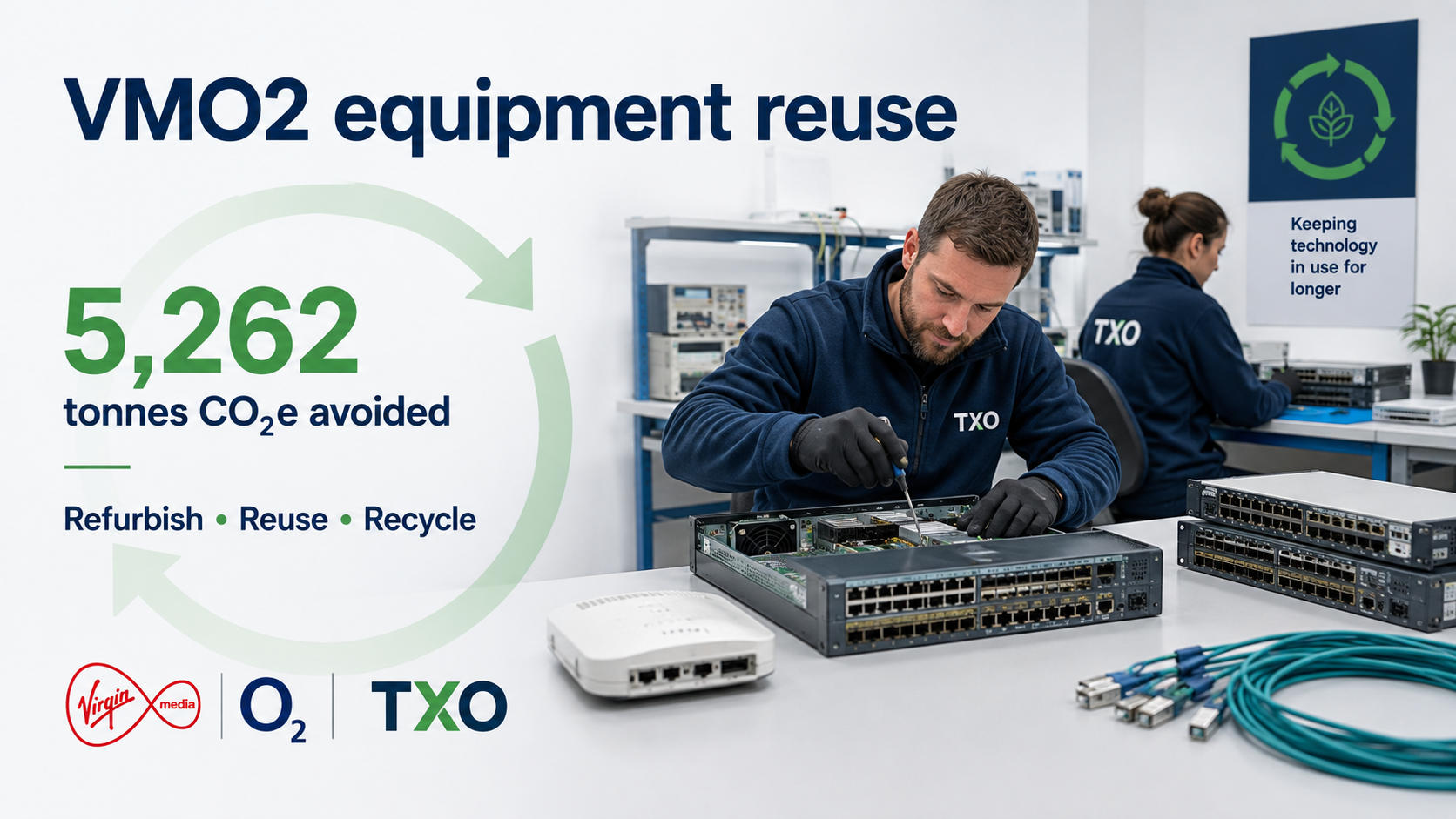
- TXO calculated 4,575 tonnes of avoided CO₂e from refurbishing recovered VMO2 network equipment and returning it to the telecom market
- A further 687 tonnes came from VMO2 sourcing second-hand replacement equipment, while about 690 tonnes of hardware were diverted from landfill
The fact
Virgin Media O2 and circular-economy technology company TXO say a 10-year network-equipment programme avoided an estimated 5,262 tonnes of CO₂e. TXO calculated 4,575 tonnes from refurbishing recovered assets, including switches, routers and line cards, and returning them to the telecom market. A further 687 tonnes came from VMO2 buying second-hand replacement equipment instead of new hardware.
The companies said about 690 tonnes of equipment were kept out of landfill, including cables, power packs, routers, switches and processor boards. Steel, aluminium, and copper accounted for almost 60% of the material recycled. TXO estimated the carbon savings using a calculator it says was developed with the Carbon Trust. The 5,262-tonne figure therefore represents estimated emissions avoided through reuse and refurbishment, rather than a measured fall in VMO2’s reported emissions.
The assessment
The programme changes how VMO2 handles equipment at two points in its network lifecycle. When hardware is removed from service, it can be tested and refurbished before a decision is made to recycle or dispose of it. When replacement equipment is needed, VMO2 can also source suitable second-hand hardware rather than automatically buying new.
That approach depends on the recovered equipment still meeting the required technical and operational standards, and on suitable refurbished stock being available when replacements are needed. The reported emissions benefit also depends on TXO's assumptions about how much new manufacturing those decisions avoid, so the 5,262-tonne figure is an estimate rather than a direct measurement of VMO2's emissions.
For BTW readers, the practical change is that equipment retirement and replacement no longer have to be separate processes. Linking asset recovery with procurement gives usable network hardware another route back into service before recycling becomes the final option.
What to watch
Future VMO2 disclosures should show how many assets are recovered, refurbished, reused and bought second-hand each year. More detail from TXO on how its calculator treats avoided manufacturing, asset condition and replacement assumptions would make the reported CO₂e savings easier to assess and compare over time.