Summary
- UK SoundMap used phone recordings to bring ordinary surroundings into the British Library’s collecting work.
- Staff selection, useful descriptions and the transfer of original files determined what the convenient recording button could deliver.
A boiling kettle is an unlikely applicant for national preservation. It has no manuscript, no agent and a repertoire of one. Yet kettles were among the sounds collected by UK SoundMap, alongside traffic, water and voices. For a library seeking the sound of everyday life, the kitchen was perfectly respectable fieldwork.
The change began with the route into the collection. In his 2010 conference abstract, Richard Ranft described experiments begun in 2009: mobile recordings could reach a public website early, ahead of the long archival sequence that traditionally preceded access. A contributor could share something while it still felt like an afternoon’s discovery.
That timing mattered. Recording an ordinary sound requires somebody to notice it before it becomes interesting through absence. A phone already in a pocket offers a chance of catching the familiar on an unremarkable day. Requiring a professional expedition would put a rather expensive committee between the kettle and its audience.
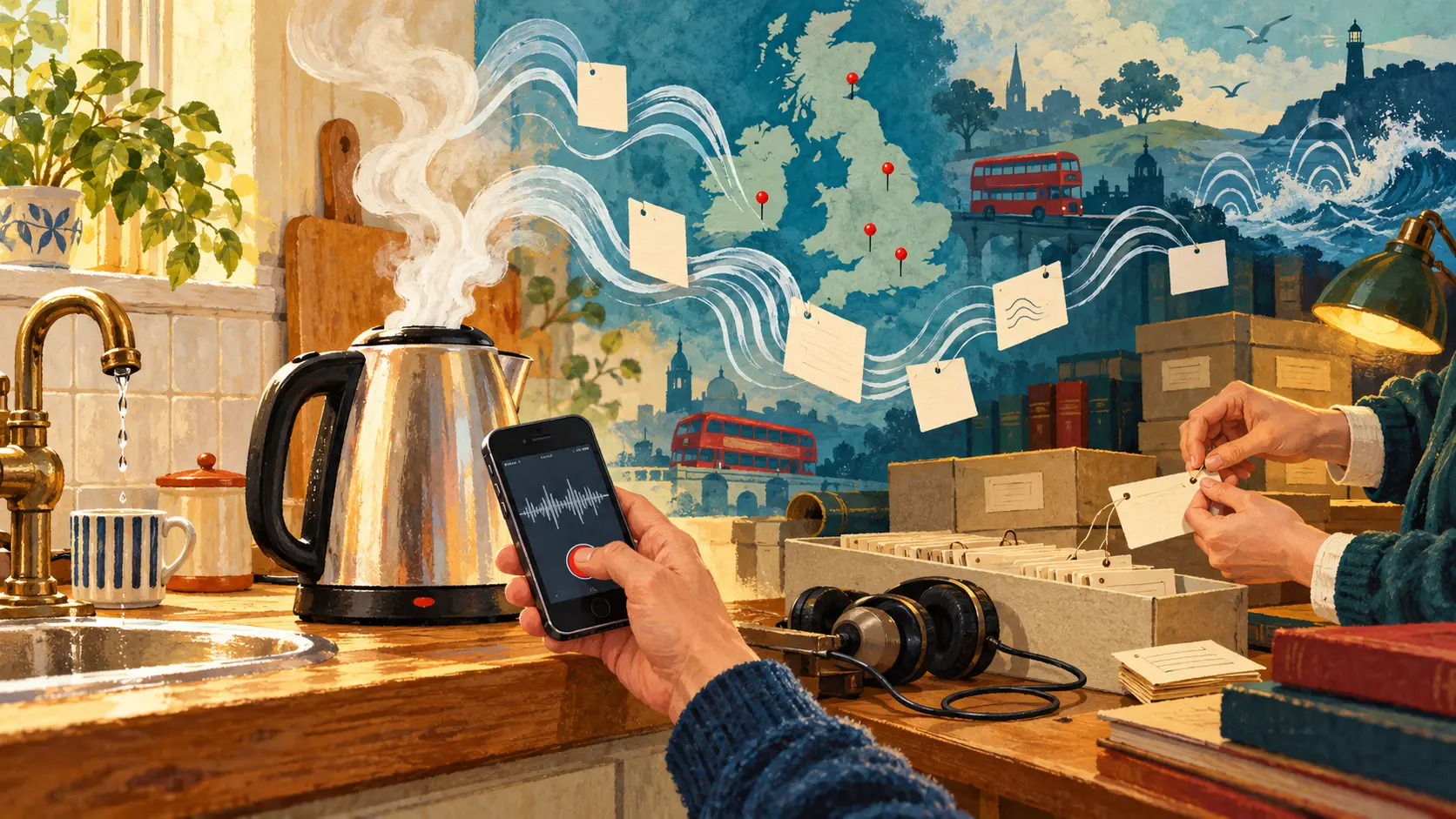
The January 2011 account by Maureen Pennock and Chris Clark describes the practical passage. Contributors uploaded through Audioboo and added #uksm. Library staff selected recordings and applied another tag; an RSS feed supplied the Google Maps display. MP3 files let visitors listen. The invitation was broad, but admission still involved a person.
There was a small, revealing snag: the harvester missed recordings whose #uksm tag had been added later. A sound could exist on the service, acquire the requested label and still escape the map. The authors said the team was working on a more inclusive collection method. The kettle could complete its paperwork and remain outside.
The same report separates listening from keeping. MP3s served access; the plan was to archive original audio and metadata. Descriptions also needed attention: contributors often supplied keywords that repeated a title, leaving researchers wanting more. A convenient player had brought the recording to an audience. The archive still needed enough context to make it useful to somebody who had never stood beside its microphone.
Ranft’s January 2012 retrospective paragraph, on page 36 of a paper about the related Map Your Voice project, records UK SoundMap’s June 2010–June 2011 run: 390 contributors and more than 2,200 environmental recordings. That is a substantial collection of occasions on which somebody decided an ordinary noise deserved attention.
The internet supplied a pleasing new library etiquette. Please make a little noise, attach enough information, and let somebody know where it came from. The quiet work happened afterwards.
Member Briefing
Deeper Profile Context
Sign in with the right membership level to unlock the full briefing and source notes.
Only for Strategic Circle
Strategic Circle
Open to all readers. Unlock profile briefings after joining and signing in.
Join Strategic CircleOnly for Leadership Alliance
Leadership Alliance
For qualified IP-asset owners and management; sign in to unlock alliance briefings.
Join Leadership Alliance