
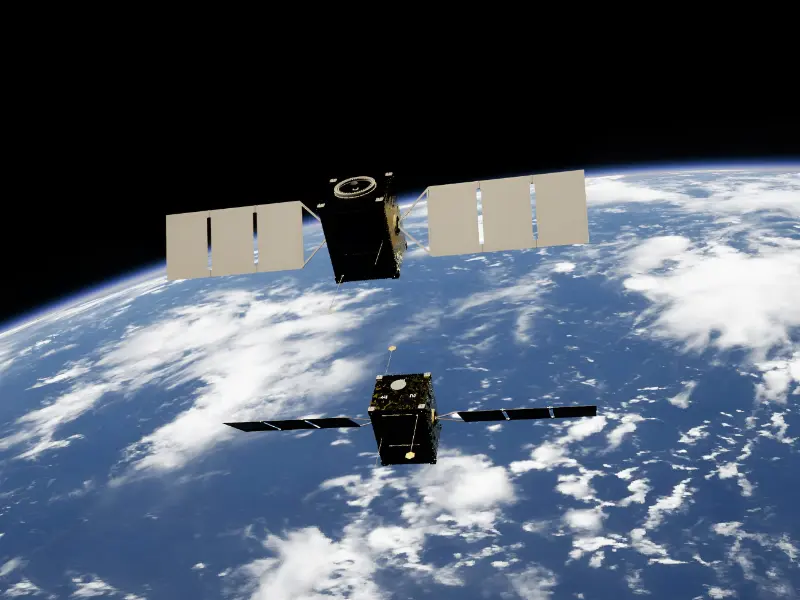
- Five UK‑led satellite projects under ESA’s ARTES programme receive a total of £6.9 million.
- The government will act as a “first customer” for early‑stage AI hardware companies and back AI Growth Zones.
What happened: UK boosts satellite R&D and AI firms
The UK Space Agency is investing £6.9 million into five UK‑led projects within the European Space Agency’s ARTES programme. These initiatives range from on‑orbit satellite refuelling to 5G in space and optical communications. For instance, Orbit Fab is developing a system to refuel electric‑propulsion satellites, receiving £2.9 million, while Goonhilly Earth Station in Cornwall is being funded with £1.6 million to implement LunaNet-compatible communications. Other recipients include Vicinity Technologies (£1.19 million) for a 5G non‑terrestrial network payload, Viasat (£881,000) for a virtual satellite operator network, and Archangel Lightworks with Eutelsat (£356,000) for an optical link integration study.
Separately, the government has committed to supporting promising UK AI hardware start‑ups by acting as an early commercial customer. This helps nascent companies scale when they might otherwise struggle to secure enterprise contracts. In parallel, it has announced “AI Growth Zones,” each of which will receive £5 million to train local workforces in AI technologies.
According to Science Minister Liz Lloyd, space communications are “essential” to daily life, from navigation systems to mobile banking. Paul Bate, CEO of the UK Space Agency, added that this injection of funds will help deliver connectivity even in remote communities, while also boosting high‑skilled jobs in the national space sector.
Also Read: Altibox launches new subsea cable between UK and Denmark
Also Read: UK mobile data usage jumps by 18% in 2025, with 5G demand surging
Why it’s important
This move signals that the UK government sees satellite communications and AI not just as separate priorities, but as synergistic pillars of its future industrial strategy. By funding ARTES projects, the UK is helping maintain its position in European space innovation, even post‑Brexit. The projects supported are not merely exploratory — they could lead to real-world services such as in‑orbit refuelling and satellite-based 5G, which could radically reduce the cost and increase the resilience of global connectivity.
Moreover, by acting as a “first customer” for AI hardware start-ups, the government is lowering the barriers to market entry for innovators in critical-technology fields. This could nurture a new generation of UK-based AI companies, strengthen domestic supply chains, and stimulate jobs in high-tech sectors.
The focus on AI Growth Zones further shows a commitment to socio-economic development: by training people in AI, the initiative supports regional economies and helps bridge the skill gap. In combination, these measures could accelerate the UK’s trajectory toward technological leadership in both space and AI industries.