
U.S. chip stocks fluctuate amid U.S is a public record based on article evidence, entity context, event links, and relationship context.
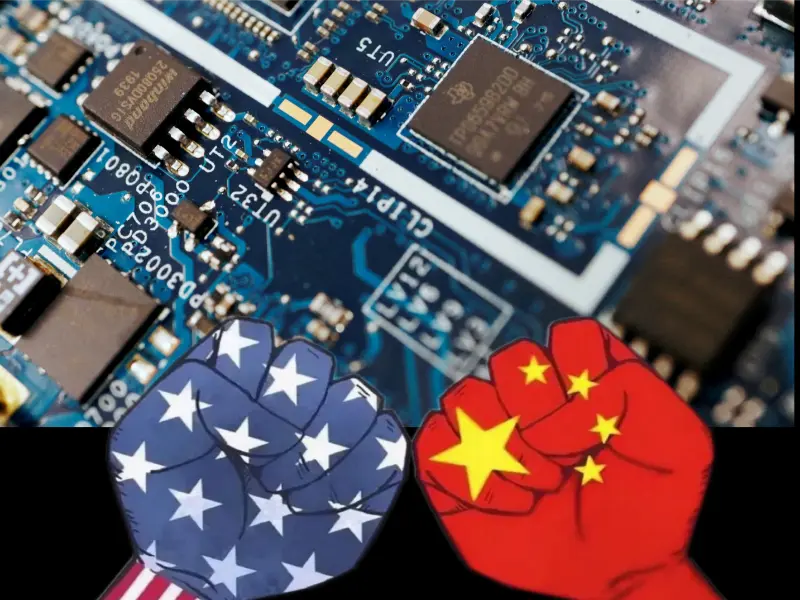
U.S. chip stocks experience volatility after massive sell-off in Asia. Potential U.S. export curbs on advanced chip technology to China in focus. OUR TAKE The semiconductor sector’s recent volatility underscores the precarious balance between geopolitical tensions and market stability. Investors must navigate these choppy waters with caution, yet remain hopeful in the industry’s proven resilience and capacity for recovery. –Doris Du, BTW reporter Trading in U.S. chip stocks was erratic on Thursday following a significant sell-off on Wednesday and a decline in Asian chip stocks.
This turbulence was triggered by reports that the United States is contemplating stricter export controls on advanced chip technology to China. What happened Semiconductor stocks plummeted on Wednesday after Bloomberg News revealed that President Joe Biden’s administration is considering the foreign direct product rule. This rule would enable the U.S. government to block the sale of products made with American technology. If implemented, companies like Tokyo Electron and the Netherlands’ ASML could face new restrictions. Also read: U.S.
urges allies to tighten control over Chinese semiconductors Also read: Samsung reshuffles semiconductor leadership, boosts AI market Why it’s important The Global X Asia Semiconductor exchange-traded fund closed down 1.74 per cent on Thursday, with significant declines in holdings such as SK Hynix, Tokyo Electron, Taiwan Semiconductor Manufacturing Co (TSMC), and Samsung Electronics. After opening 1.7 per cent higher on Thursday, the Philadelphia Semiconductor Index reversed and dropped 0.8 per cent, following a 6.8 per cent drop on Wednesday—the biggest one-day decline since March 2020.
Analysts’ views and market reaction Some analysts saw Wednesday’s sell-off as a buying opportunity. Vedvati Shrotre at Evercore ISI suggested the probability of these trade curbs being implemented is low, highlighting “near-term weakness as a unique buying opportunity.” Vivek Arya at BofA also noted the current volatility as an “enhanced opportunity in companies with best profitability.” However, Daniel Morgan, portfolio manager at Synovus Trust, anticipates more volatility with upcoming chip company earnings and both U.S. Presidential candidates taking a tough stance on trade.
He cited the almost 11 per cent drop in ASML shares on Wednesday as a reflection of concerns about companies heavily exposed to China. Personal opinion For investors, the fluctuating nature of the chip stocks is both a concern and an opportunity. The possibility of tighter export controls introduces an element of uncertainty, but history shows that chip companies have weathered similar storms before. The resilience of the semiconductor industry, despite past challenges, offers a glimmer of hope amid the current turmoil.
Member Briefing
Deeper Trend Context
Sign in with the right membership level to unlock the full briefing and source notes.
Only for Strategic Circle
Strategic Circle
Open to all readers. Unlock trend briefings after joining and signing in.
Join Strategic CircleOnly for Leadership Alliance
Leadership Alliance
For operators, investors, and policy teams that need relationship evidence, failure paths, and source notes. Sign in to unlock.
Join Leadership AllianceSnapshot
Category
Asia-Pacific Cloud Services TrendsU.S. chip stocks fluctuate amid U.S is covered for market relevance.
Region
ASIA PacificSignal Focus
MarketContent Type
Signal BriefingPrimary Domain
TechnologyTopic
MarketImpact
MediumConfidence
Good confidence (82%)Confidence score guide
Published reporting