
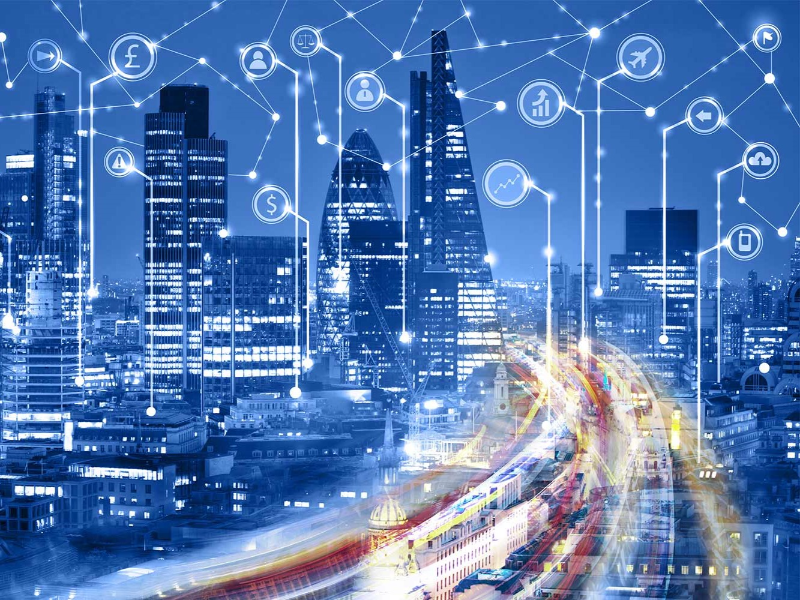
- Smart cities around the world are pioneering urban innovation through advanced technologies that enhance connectivity, sustainability, and livability.
- Singapore, Copenhagen, Barcelona, Tokyo, and Dubai stand out as models of smart city development, each implementing unique initiatives tailored to their specific challenges and ambitions.
As technology advances, cities around the globe are embracing digital transformation to become smarter, more sustainable, and more efficient. These smart cities utilise advanced technologies to improve infrastructure, services, and quality of life for their residents. Here, we explore some of the leading examples of smart cities that are setting the standard for urban development.
Singapore:A model of urban efficiency
Singapore is often cited as one of the world’s leading smart cities, thanks to its comprehensive approach to urban planning and technological integration. The city-state has implemented a wide range of initiatives designed to enhance connectivity, sustainability, and livability. For example, the government’s Smart Nation initiative aims to create a highly connected society, where citizens and businesses can benefit from seamless digital services.
Key projects include the deployment of a nationwide sensor network to monitor traffic, air quality, and energy usage, as well as the use of data analytics to optimise public services and infrastructure.
Also read: The best smart home devices for seamless living
Copenhagen: Leading the way in sustainable living
Copenhagen, the capital of Denmark, is renowned for its commitment to sustainability and has set ambitious goals to become carbon-neutral by 2025. The city uses smart technologies to manage energy consumption, reduce waste, and improve public transport. One notable project is the implementation of intelligent traffic systems that prioritise cyclists and pedestrians, reducing congestion and emissions. Additionally, Copenhagen has integrated smart grids and renewable energy sources, such as wind and solar power, into its energy mix, demonstrating how smart city principles can contribute to environmental sustainability.
Also read: Are smart home devices safe? Unraveling the security landscape
Barcelona: Smart solutions for a better quality of life
Barcelona has taken a holistic approach to becoming a smart city, focusing on enhancing the quality of life for its residents through technology services. The city has implemented a variety of smart technologies, including smart lighting systems that adjust brightness based on pedestrian and vehicular traffic, reducing energy consumption. Barcelona has also introduced a smart irrigation system that uses real-time data to optimise water usage in parks and gardens. Furthermore, the city has embraced open data, allowing citizens and businesses to access and use municipal data to develop new services and applications.
Tokyo: Leveraging technology for urban resilience
Tokyo, one of the most populous cities in the world, faces unique challenges related to density and disaster resilience. To address these issues, the city has implemented a range of smart technologies aimed at improving safety, efficiency, and sustainability. Tokyo’s disaster management systems utilise advanced sensors and predictive analytics to detect and respond to emergencies quickly. The city also employs smart grid technologies to manage electricity demand, reduce waste, and integrate renewable energy sources.
Additionally, Tokyo has invested in smart mobility solutions, such as intelligent transport systems and autonomous vehicles, to enhance traffic flow and reduce congestion.
Dubai: Embracing futuristic technologies
Dubai is known for its ambitious plans and futuristic architecture, and it is rapidly transforming into a smart city. The government has launched several initiatives to make Dubai a leading smart city, focusing on areas such as smart governance, smart economy, and smart living. Key projects include the Dubai Pulse, a centralised platform for managing data and services across the city, and the Dubai Blockchain Strategy, which aims to make Dubai the first blockchain-powered government. Dubai also hosts the Museum of the Future, a landmark that showcases emerging technologies and their potential applications in urban environments.