Summary
- The only page in the reviewed set that keeps ROA coverage and BGP-update validity apart is Cicileo's own FORT monitoring material, and it prints no percentage, no counted population and no date.
- Five LACNIC pages print a routing-security share; all five omit the absolute count, the exact measurement date and the collector or validator, and the same 46% and 60% pair circulates under two different nouns.
The slide that names two quantities
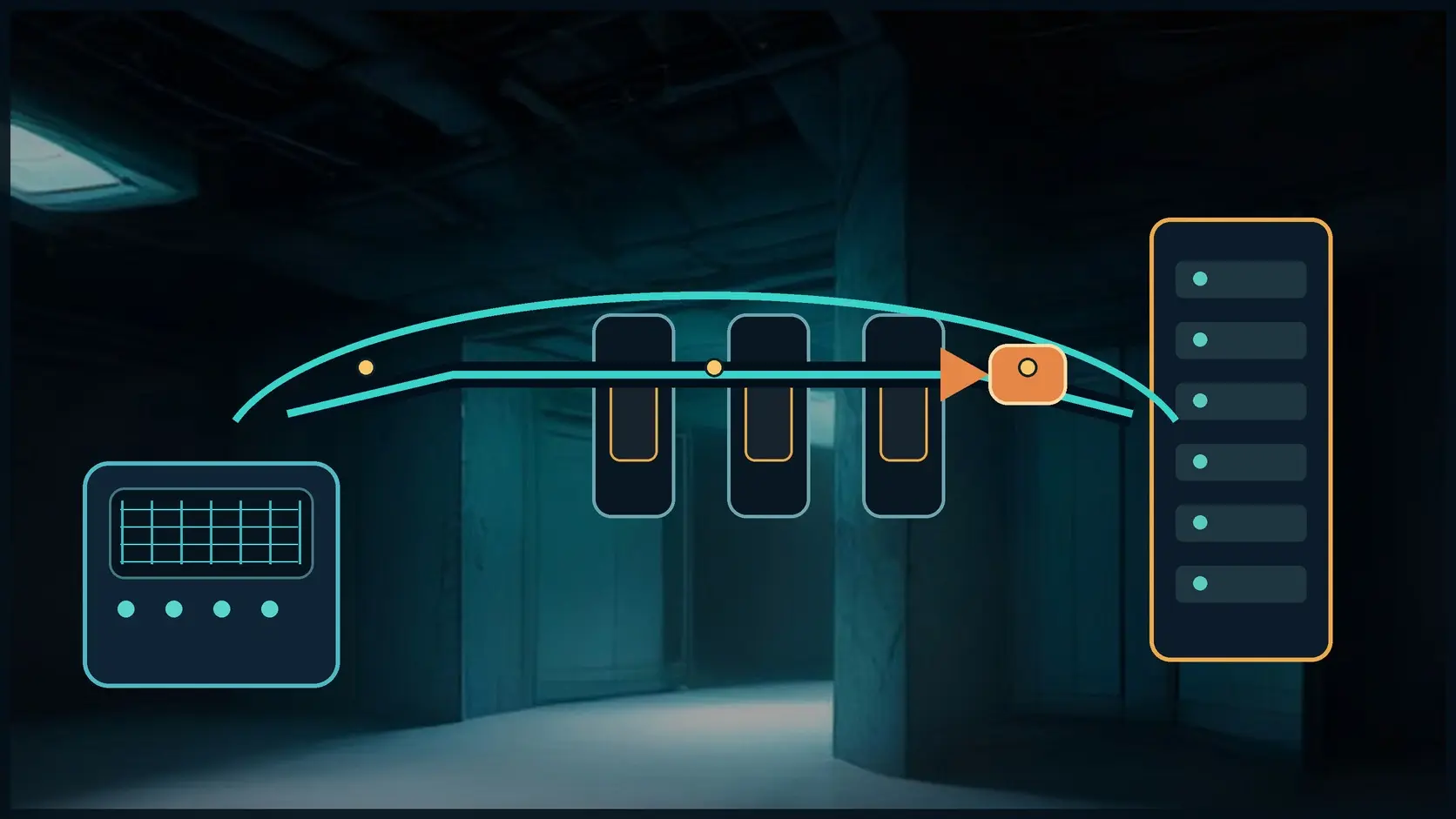
Cicileo's presentation on FORT monitoring is a handful of inputs and one sentence of purpose. The inputs are BGP updates from route-views and RIPE RIS, RPKI validation run through FORT and Routinator, IRR data from RADB and RIPE, and registry data from LACNIC and the NRO. The purpose is to determine cobertura por ROAs and validez de los updates BGP — coverage by ROAs, and the validity of BGP updates — plus country classification and routing anomalies (Monitoreo FORT).
Two quantities, named in one list. The deck, as read, prints no percentage at all: no share, no counted population, no measurement date, no snapshot identifier.
Hold that page beside the ones that do print a number. LACNIC's post of 17 September 2025, bylined Erika Vega, reports regional routing-security shares under the label Valid routes: 46.10% for IPv4 and 60.87% for IPv6 in 2025, against 9.89% and 16.56% in 2019 (LACNIC blog, 17 September 2025). The Spanish original of the same day prints the same cells as Rutas válidas: de 9,89% (2019) a 46,10% (2025) (Spanish original).
Both editions also tell the reader what the percentage is a percentage of, and the answer is not LACNIC's service region. The population named in the text is the Americas (including North America, Central America, the Caribbean, and South America); the Spanish says el conjunto de las Américas. The only time reference for the 2025 figure is the year. The study behind it is described as recently prepared for LACNIC, in Spanish, and the text read carries no retrievable link to it.
A number that changed nouns four times
The 2024 annual report prints a different pair under a different noun: In our region, 54.6% of IPv4 and 55.4% of IPv6 routes are covered by ROAs, with the population given as routes advertised by the region (LACNIC Annual Report 2024). That is coverage, not validation status. On IPv4 the two published pairs sit 8.50 percentage points apart and on IPv6 the difference runs the other way, 5.47 points. That is my subtraction, with both operands on their own pages; the two pairs are not each other's quotient, because the nouns and the populations differ.
The FORT diagnostic report, supervised by Carolina Caeiro and Cicileo and authored by Augusto Luciano Mathurin, adds a third noun at a third scale: fewer than 20% of BGP announcements made across the network have their corresponding ROA (FORT diagnostic report). The counted object there is the announcement, at network-wide reach, and the report's incident analysis runs on BGPStream events from 2017, 2018 and part of 2019. The sentence carries a numbered footnote whose text was not visible in what was read, so the basis of that figure stays unverified here.
Then the noun moves again, in a document that spends the number. LACNIC policy proposal LAC-2026-3 states that RPKI adoption in the region has reached significant levels, registrando una cobertura de ROAs de poco más del 46% para IPv4 y de aproximadamente el 60% para IPv6, and cites the Spanish blog as its source (LAC-2026-3). The cells are the blog's. The noun is not: a validation share has become a coverage share, in a text whose purpose is to justify a requirement.
One LACNIC page does keep the two apart in prose, and it is the page that credits the study. The fifteenth-anniversary post of 10 February 2026, by Carlos Martínez and Gerardo Rada, distinguishes the number of protected prefixes from the proportion of routes that are effectively validated, and attributes a five-year comparative study to Erika Vega, chair of the LACNOG Routing Working Group, coordinated by Cicileo of LACNIC (LACNIC blog, 10 February 2026). It prints no percentage in the text read.
Counting the cells a reader would need
Take the eight documents read on 26 November 2026 and count, as I did, which of five cells each percentage-bearing page supplies: the share, the numerator, the denominator with its unit, the exact measurement date, and the named source of the data. Five documents print a share — the two blog editions, the annual report, the diagnostic report and the policy proposal. Zero of the five print an absolute route, prefix or announcement total beside it. Zero print an exact measurement date; two give a year, one gives a year range inside the analysis rather than beside the figure. Zero name a collector, a validator or a snapshot.
One document names all three instruments, and it prints no percentage.
So the arithmetic a stranger can do is thin, and worth stating exactly. From the blog's own two cells, 46.10 divided by 9.89 is 4.66 times, and 60.87 divided by 16.56 is 3.68 times, over the page's own 2019 base. Those are my divisions of the page's numbers and they say nothing about coverage, because the base is a year and the unit is unnamed.
Why the person carries this
Strip the name and the corpus breaks. The sentence that separates the two quantities is in a deck he authored; the study whose figures travel is coordinated by him, and the page that says so also keeps the quantities apart; the report that puts an announcement share at global scale is one he supervised. Another officer in the same post would produce other sentences, or none, and the finding would have to be rebuilt from whatever that officer published.
The drift itself is not his conduct. No reviewed page shows him choosing the noun cobertura de ROAs, or reading the 46% pair as coverage. That the definitional page prints no figure and the figure-bearing pages print no definition is a property of a document class, and it will be found in any registry that publishes a share. What is not substitutable is the corpus: these specific texts, with these specific splits between number and definition, sit under one name.
What a reader is left holding
The published record now supports a sentence no page states: LACNIC's most-quoted routing-security figure cannot be recomputed from the page that prints it, cannot be dated more precisely than a year, and has already been re-labelled once in a policy document that spends it. The prior reading of that record, this publication's own of 22 November 2026, put the count at four units under one label (four numbers, one label); the eight documents here support the drift and do not, by themselves, prove the count of four.
The consequence is practical. An operator told the region is 46% signed cannot tell whether that is 46% of routes, of prefixes, of announcements or of members, and cannot check whether the 2019 base was measured the same way. A regulator comparing two economies' figures is comparing two counting rules that neither page prints. And the one artifact that would settle it — the study, in Spanish, prepared for LACNIC — is named on the page and reachable from none.
Member Briefing
Read the full trend briefing
Members read the full briefing with the source notes behind every finding.
Strategic Circle
A daily briefing in your language, built from changes we have verified.
Join for USD 20/monthCancel anytime.
Members also get the full research library, a daily briefing on the networks they follow and the private forum.