
Summary
- S&P Global has signed a definitive agreement to acquire datacenterHawk; completion is expected in the second half of 2026, subject to customary conditions.
- datacenterHawk tracks asset-level data-centre supply, demand, pricing, pipelines, site-selection variables and fibre routes.
- S&P Global says it intends to connect those datasets with 451 Research and S&P Global Energy information.
- The price was not disclosed, and S&P Global said the transaction is not expected to be material to its financial results.
- Signing does not prove closing, a functioning combined product, customer adoption or revenue synergies.
A data-centre developer can have land, capital and customer interest yet remain blocked by power. A lender can see a full pipeline but still misprice the probability that those projects become energised buildings. A cloud buyer can hear that a market is expanding while discovering that usable capacity in the required location is already committed.
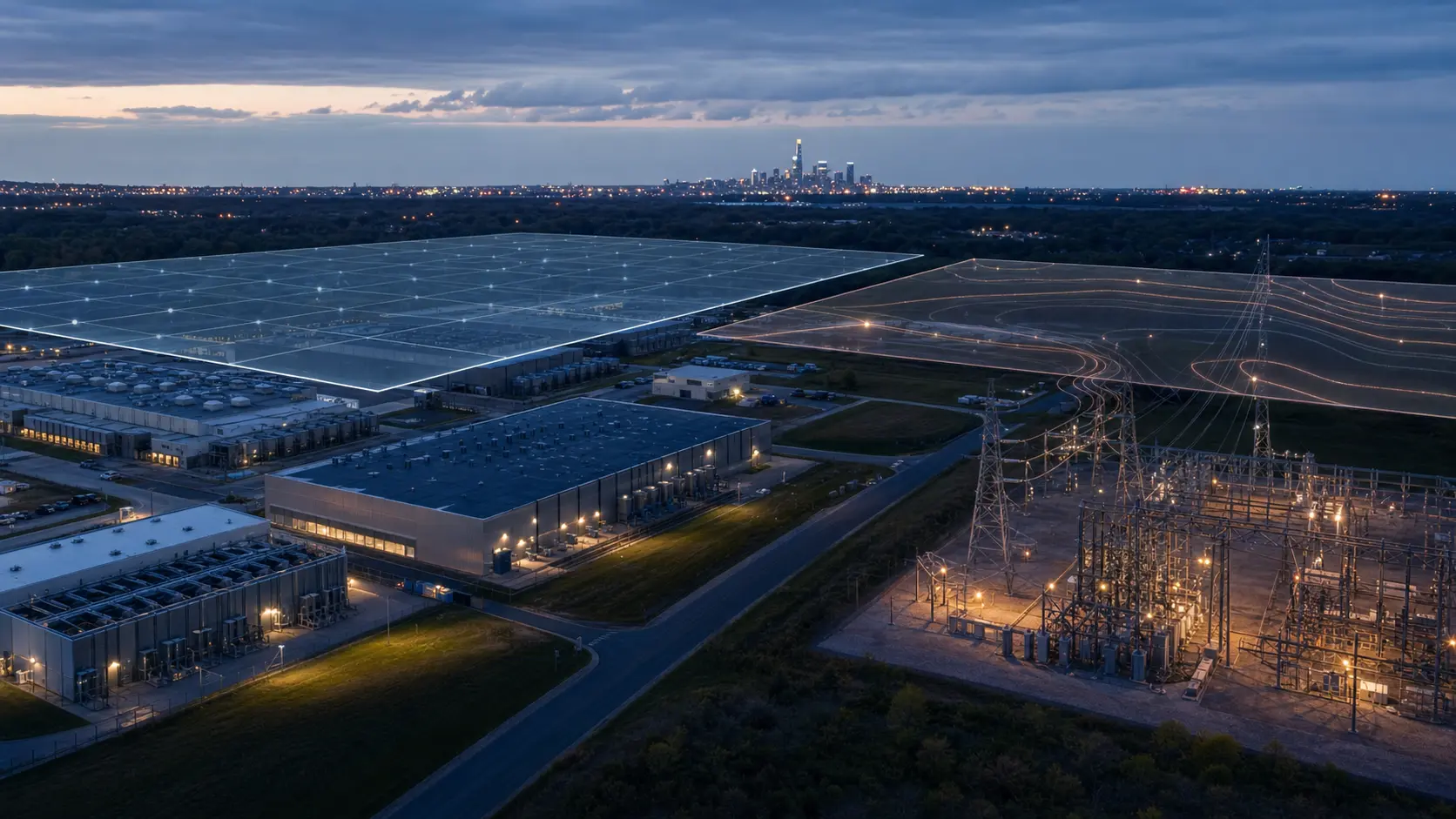
That is the information gap S&P Global is trying to narrow. datacenterHawk supplies a detailed view of facilities and development pipelines. S&P Global already owns research and pricing systems used to interpret technology demand, electricity, fuels and infrastructure. Putting those views together could make the dependency between digital demand and physical energy constraints easier to price.
The asset is a common coordinate system
The transaction is not chiefly about owning another list of data centres. A useful infrastructure dataset must reconcile names, locations, operators, stages, power claims and dates that are rarely expressed consistently. Its value rises when a user can compare one building with a market, then connect that market to power availability and commodity exposure.
datacenterHawk's stated coverage includes supply and demand, pricing, construction pipelines, site selection and Fiber Locator. Those fields describe different layers of uncertainty. Existing capacity is not the same as capacity under construction; a proposed site is not an energised one; a fibre path can make a parcel connected without making it power-ready.
S&P Global's thesis is that those distinctions become more useful beside 451 Research and S&P Global Energy. An investor could test whether announced AI demand is colliding with a constrained grid. A developer could compare markets before committing engineering capital. A supplier could locate demand that is likely to become procurement rather than remain a press-release pipeline.
The common coordinate system is the strategic prize. It is also the hardest integration task.
A signature creates permission, not a product
The parties expect closing in the second half of 2026. Until then, datacenterHawk remains a target under a signed agreement, not an absorbed S&P Global business. Regulatory review, closing conditions and operational separation still sit between announcement and ownership.
After closing, datasets do not become coherent simply because they share a corporate parent. Facility identities must be matched. Geographic and power-market definitions must align. Historical series need consistent treatment, while customers need to know which observations are measured, reported or modelled. Commercial teams then have to decide whether the combined capability is sold as a module, bundled into subscriptions or used to improve existing analysis.
Those choices determine whether the acquisition reduces customers' research cost or merely adds another login. A combined interface that exposes conflicting dates or unexplained capacity definitions can create more confidence than accuracy. Integration quality therefore matters as much as data breadth.
Undisclosed terms keep the return equation open
S&P Global did not disclose the purchase price and said the transaction should not be material to its financial results. That limits any serious return calculation. There is no public basis for estimating an acquisition multiple, financing burden or required cross-sell.
The commercial upside could come from several routes: retaining datacenterHawk subscribers, selling its data to more financial and energy customers, raising the value of existing S&P subscriptions or reducing research duplication inside products. None is proven by the announcement.
The cost side is similarly incomplete. High-quality facility intelligence requires continuous verification of construction stages, ownership, capacity, pricing and fibre access. Fast market growth makes the dataset more valuable but also more expensive to maintain. Integration work can add engineering and sales cost before it produces revenue.
That is why “not material” should not be read as “economically unimportant.” The deal can be strategically useful without moving consolidated earnings in the near term. It can also be small enough that weak execution remains hidden inside a much larger company.
What would show that the map is working
The first observable milestone is closing. The next is product evidence: named integrations, consistent facility identifiers, linked power-market fields and a customer workflow that crosses the old product boundary. S&P Global should be able to show what question a user can answer faster or with less uncertainty than before.
Renewal and cross-sell behaviour would be stronger evidence than launch language. Customers must keep paying for datacenterHawk's specificity while finding additional value in S&P Global's broader research. A useful combined product should also preserve the provenance and timing of individual observations rather than smoothing every estimate into one authoritative-looking number.
The disciplined conclusion is narrow. S&P Global has secured the contractual option to own an important map of data-centre capacity and connect it to the markets that supply power and capital. It has not yet closed the purchase, completed the join or demonstrated that customers will pay more for the combined view. The map may become a control point; today, the company has signed for the right to try.