Summary
- RIPE 93's Programme Committee replaced one 30-minute plenary slot with three lightning talks after reviewing proposals whose material would fit better in ten minutes.
- At Monday's opening, its chair said seven of fifteen lightning submissions had been accepted, with decisions still pending. He also described short rejection explanations and an open search for Friday speakers.
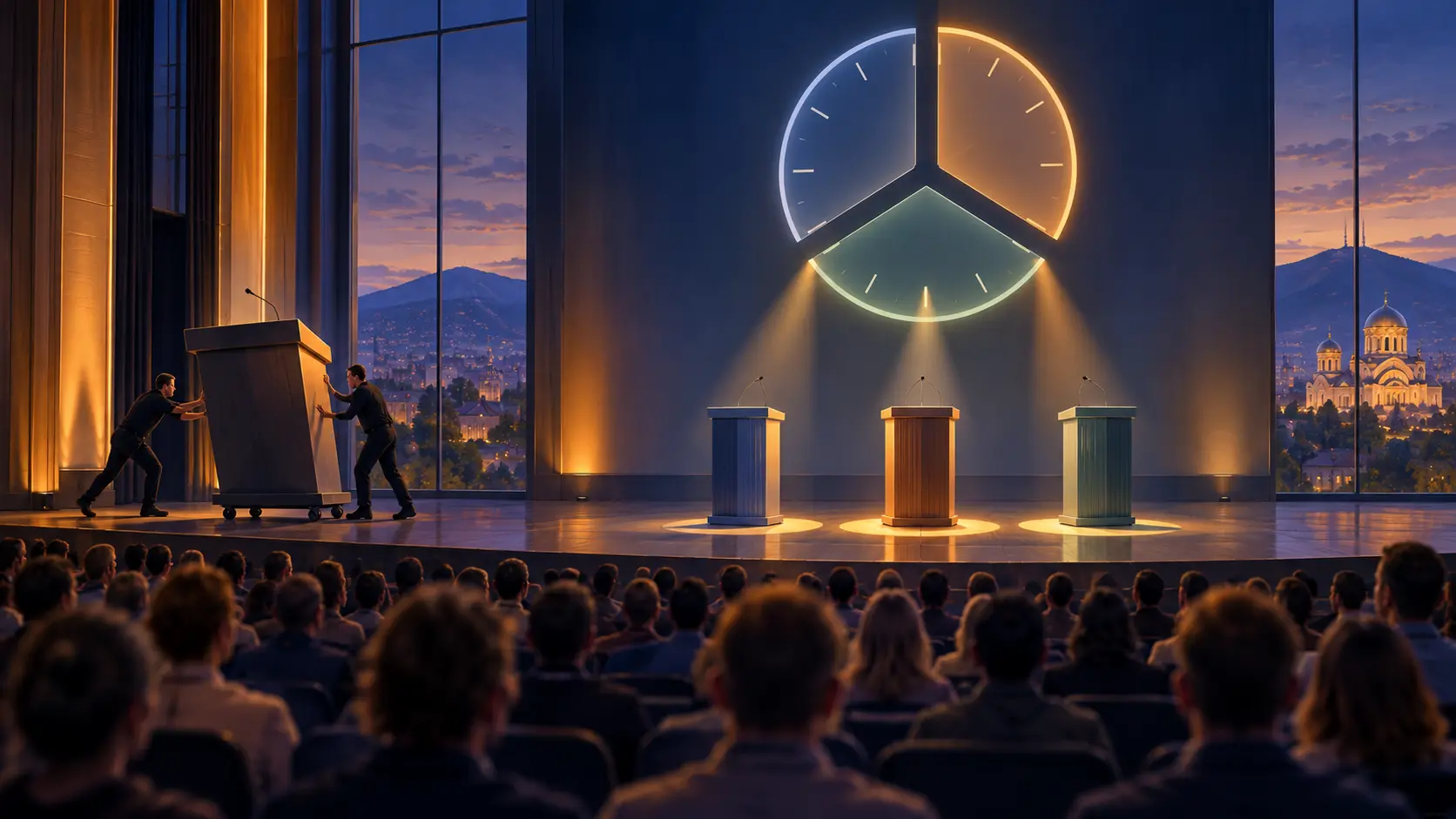
Massimiliano Stucchi had five minutes to address the RIPE 93 opening plenary and used part of them to announce that some proposed half-hour talks were, in substance, ten-minute talks. The official transcript records the committee's remedy: exchange one 30-minute plenary slot for three lightning presentations. A conference programme has a fixed number of minutes. Here the committee changed how many people can spend them.
The committee had received fifteen lightning proposals and accepted seven by Monday afternoon; others were still being decided. Stucchi put plenary acceptance at roughly 15%, around its usual level. Those figures describe different, unfinished selection tracks. They reveal the pressure on the stage, rather than a final scorecard for every speaker.
The format rules make the arithmetic plain. A plenary normally takes 30 minutes, with up to ten reserved for questions. A lightning talk has five to ten minutes total. Stucchi said the committee asked authors of thinner long-form proposals to resubmit a tighter version. It also sends a brief explanation when it rejects a proposal, giving some early submitters time to revise for a later round. “Too short for thirty” is much more useful feedback than a silent rejection.
There is a second clock: departure time. Stucchi said filling Friday is hard because scheduled speakers sometimes discover that their flight leaves before their session. He asked for more lightning submissions and draft slides even during the meeting. The live call page still invites lightning proposals. A talk can be brilliant; an empty podium is a less compelling presentation format.
Stucchi also named AI-generated slides as a separate challenge. The committee says it is getting better at spotting them, while submitters get better at disguising them. The published call asks presenters to credit substantial contributions, including those made with generative AI. The converted slot was explained by the amount of material submitted, not by a stated AI penalty. Both details point back to the same scarce resource: audience attention.
RIPE's Programme Committee selects and schedules the plenary. It can offer an applicant ten minutes, thirty minutes or a reason to rewrite. This week's small schedule change makes that editorial power visible. The fair question for the next meeting is simple: did the shorter format let more operational evidence onto the stage, and did the authors who were redirected know why?
Member Briefing
Deeper Profile Context
Sign in with the right membership level to unlock the full briefing and source notes.
Only for Strategic Circle
Strategic Circle
Open to all readers. Unlock profile briefings after joining and signing in.
Join Strategic CircleOnly for Leadership Alliance
Leadership Alliance
For qualified IP-asset owners and management; sign in to unlock alliance briefings.
Join Leadership Alliance