Summary
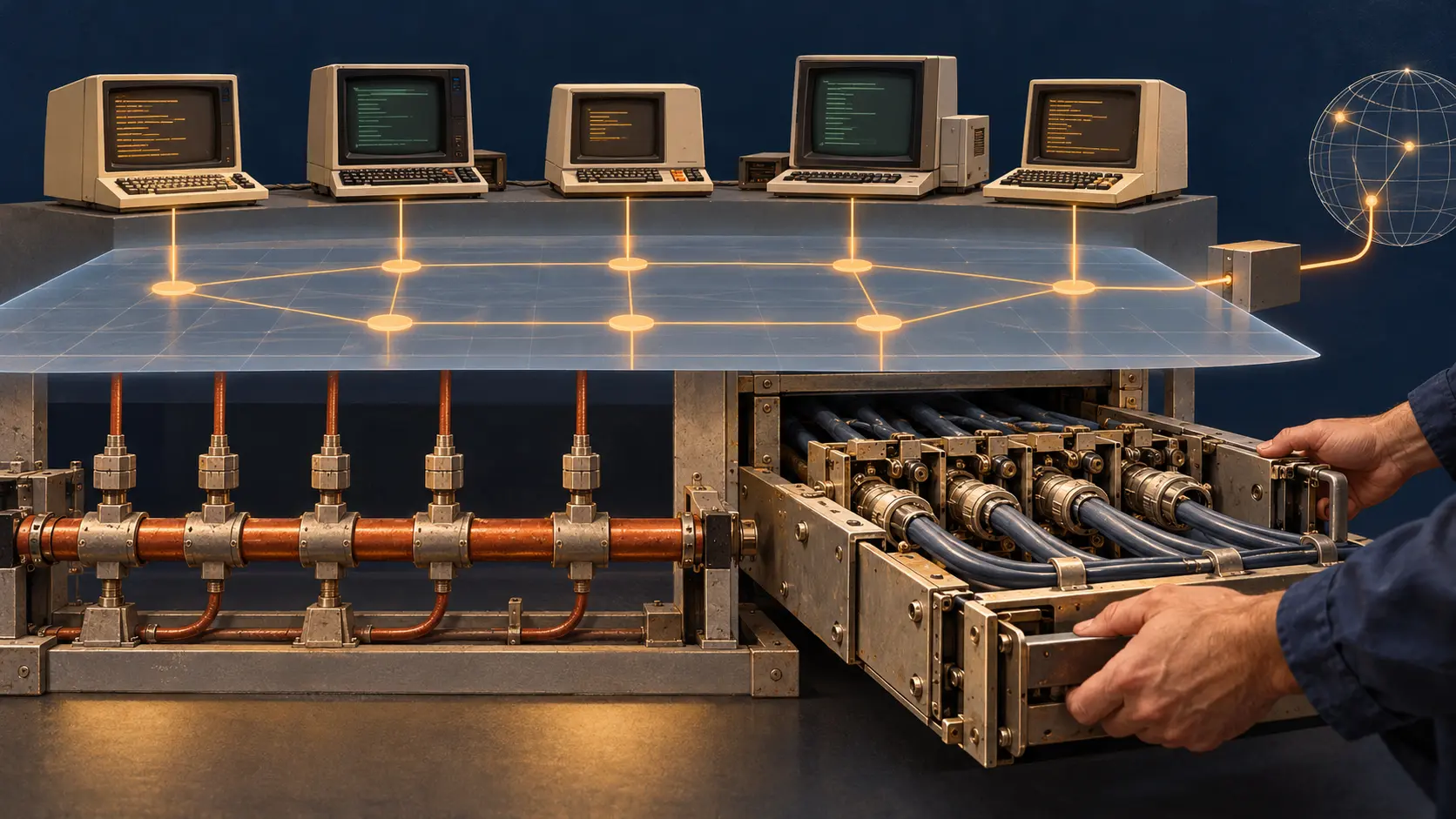
- RFC 778 described a DCNET clock service that returned timestamps through proposed ICMP messages, with a temporary GGP echo path for older systems.
- The COMSAT-WWV virtual host drew on a radio clock normally within a millisecond of WWVB time. Other DCNET hosts could still carry offsets of an appreciable fraction of a second, and the documented path to a BBN gateway took roughly 550 milliseconds round trip.
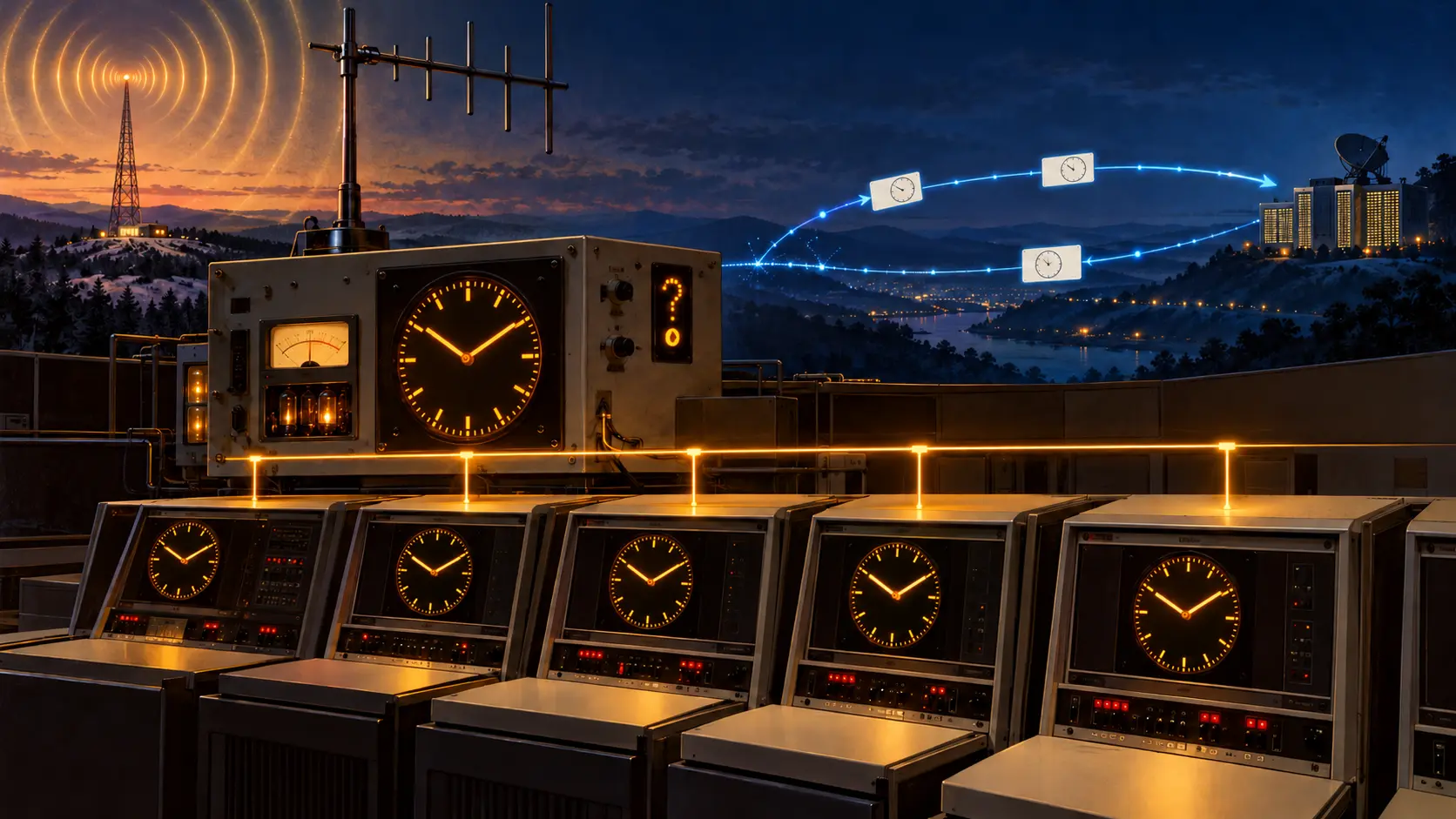
A radio clock can be right while the computer beside it is late. D. L. Mills's April 1981 RFC 778 made that distinction operational. The DCNET Internet Clock Service had a reference host, COMSAT-WWV, backed by a Spectracom receiver for WWVB time. The radio clock normally supplied time and date to within a millisecond. The other hosts used offset and drift corrections against it. Some still routinely wandered an appreciable fraction of a second because tracking their power-line clocks was hard. The reference had an excellent watch; its neighbors still needed to set theirs.
Mills described a service available on DCNET hosts, primarily for synchronization and one-way delay measurements with cooperating Internet hosts. It used the proposed ICMP Timestamp and Timestamp Reply messages. For a while, the same service also answered through Gateway-Gateway Protocol Echo and Echo Reply so existing systems could participate. The note asked other hosts and gateways to implement the service and test how widely it could work. Feasibility beyond DCNET was still an open experiment.
The packet format was small and pointed. Alongside type, code and sequence fields came three timestamps: when the sender originated the request, when the receiver got it, and when the receiver sent it back. The originator initially filled all three with its local sending time. The receiver replaced the latter two at arrival and departure. The ICMP form used type 13 on the way out and type 14 on return; the GGP compatibility form used Echo type 8 and Echo Reply type 0. The values were milliseconds since UT midnight, usually handled modulo 24 hours.
A 36-octet datagram, counting the 20-octet Internet header described in the memo, carried this little conversation.
Four moments emerge once the reply reaches home: departure, remote arrival, remote departure and home arrival. The round-trip calculation in the RFC adds the outward and return segments while excluding time spent processing inside the DCNET host. In that sum the offset between the two host clocks cancels. The directional pieces still lean on clock alignment. A round-trip result and a trustworthy one-way delay are different receipts, even when both are printed in milliseconds.
The route itself was hardly invisible. The memo identified COMSAT-WWV as a virtual host within COMSAT-GAT and described a path to the BBN gateway involving a 4800-bps line. On that stated path, round trip was typically 550 milliseconds “as the ICS datagram flies.” That is one historical route measurement, with a physical line and gateways behind it. The precision of a radio reference did not make a half-second network journey vanish.
For an operator, the most revealing part of the RFC may be its little manual procedure. Connect to COMSAT-GAT by TELNET and run SET HOST HOST to see the current offsets for DCNET hosts. Run SET WWV SHOW to see traffic information and the last response from the radio receiver. In the receiver's displayed time line, an ordinary blank code meant the WWVB signal had been received correctly; a ? meant it had not. The memo even explained which offset to add to timestamps from COMSAT-GAT or COMSAT-WWV to obtain the broadcast WWVB time. Then came the instruction to close the connection—“please!” A clock service with a status character, correction table and courteous exit sign: the machinery was never just a number on a dial.
The service also exposed failure. If COMSAT-WWV was unavailable because the Spectracom clock was down or misbehaving, the described arrangement returned a host-not-reachable GGP datagram. A reply about reachability could therefore say something meaningful about the reference's health in this particular system. RFC 777, published that same April, defined ICMP's timestamp message types and cited Mills for an application. The later RFC 792 specified the timestamp form in its revised ICMP layout. DCNET's radio-backed operating procedure sat at the meeting point of those protocol versions.
RFC 778 is a history of making time answerable. The packet reported moments. The offset table said how far local hosts had strayed. The radio-status mark said whether the reference signal had arrived. The route added its own delay. Ask only “what time is it?” and those layers collapse into one confident-looking number. Mills wrote down the extra questions that made the number worth using.
Member Briefing
Deeper Profile Context
Sign in with the right membership level to unlock the full briefing and source notes.
Only for Strategic Circle
Strategic Circle
Open to all readers. Unlock profile briefings after joining and signing in.
Join Strategic CircleOnly for Leadership Alliance
Leadership Alliance
For qualified IP-asset owners and management; sign in to unlock alliance briefings.
Join Leadership Alliance