Summary
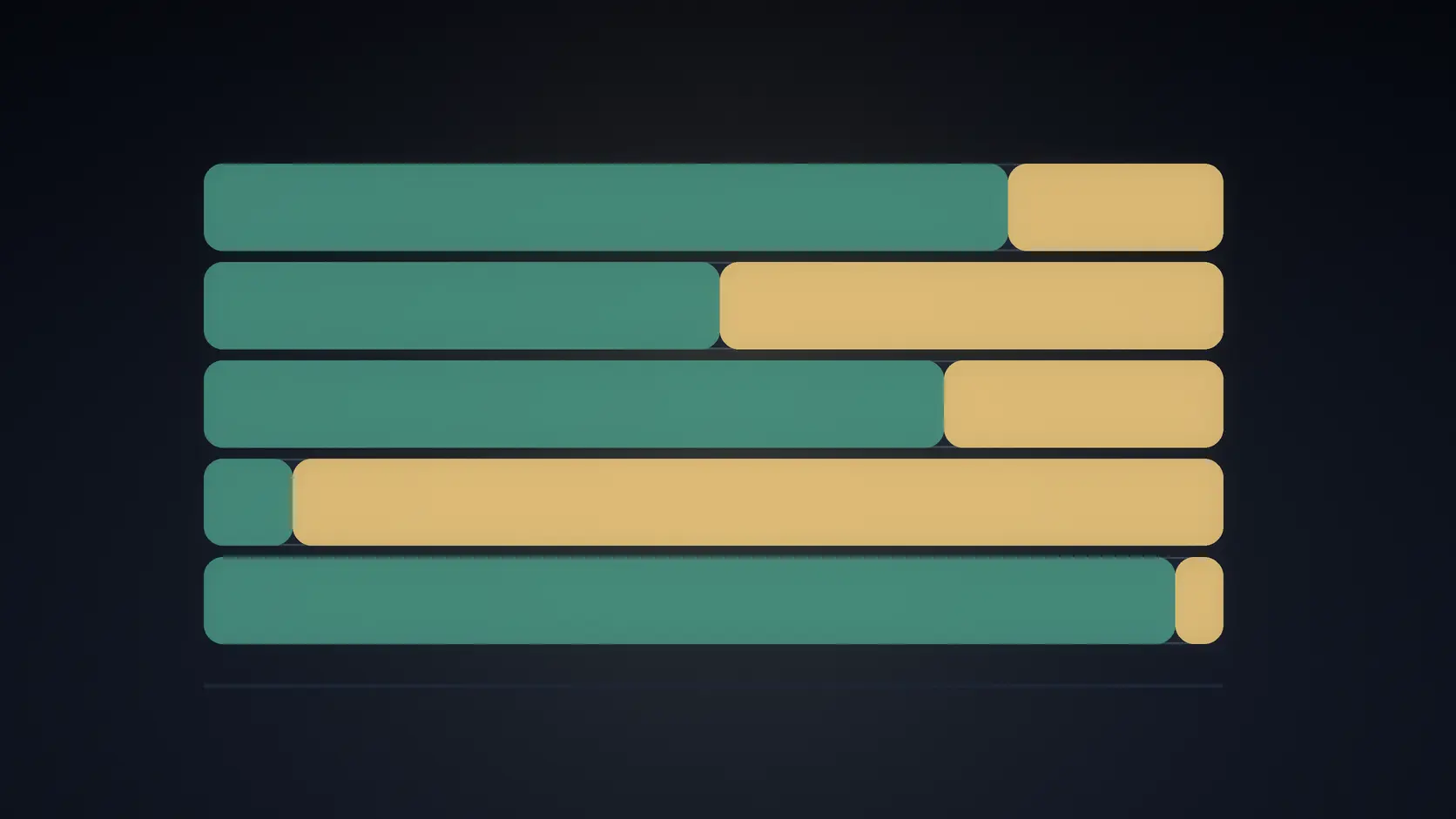
- In ARIN's 2026 book, addresses registered before 1990 moved 78.9 percent as resource transfers and 21.1 percent as mergers, while addresses registered from 2010 to 2019 moved 8.7 percent as resource transfers and 91.3 percent through mergers.
- The medians hide it and the tails show it: the median source registration year is 2002 for traded records and 2004 for inherited ones, but the composition inside each vintage differs sharply, with IBM's 1988 blocks sold to four buyers and Frontier's 2015 blocks inherited by Verizon.
The split by vintage
| Registration | Traded addresses | Inherited addresses | Inherited share |
|---|---|---|---|
| before 1990 | 2,795,520 | 746,752 | 21.1 percent |
| 1990 to 1999 | 8,636,928 | 8,436,480 | 49.4 percent |
| 2000 to 2009 | 9,668,352 | 3,641,600 | 27.4 percent |
| 2010 to 2019 | 888,320 | 9,276,672 | 91.3 percent |
| 2020 to 2026 | 7,965,696 | 393,216 | 4.7 percent |
Of the 8,358,912 addresses registered from 2020 onwards, 7,965,696 moved as trades — 95.3 percent. Of 10,164,992 registered from 2010 to 2019, only 888,320 were traded. A single decade of registrations went through the corporate channel, and it was not the oldest one.
IBM's 1988 blocks and Frontier's 2015 blocks
On 16 December 1988 IBM registered the blocks that in 2026 went out as trades: three of 131,072 addresses to Aviation RE LLC, Saudi Telecom Company JSC and Cisco OpenDNS LLC, plus 65,536 to INTAC Services GmbH. One holder, one vintage, four buyers, four prices if anyone asked.
On 28 August 2015 Frontier Communications registered the blocks that in 2026 went to Verizon Business as mergers, three of 1,048,576 addresses. Nobody negotiated an address price in that line; the price was the company.
Why the direction of the split matters
The folklore says legacy holders merge away and new holders trade. The file says the opposite at both ends: the 1980s cohort is the most commercial, because a 1986-to-1989 block has been idle for decades in the hands of companies that no longer need all of it, and the 2010s cohort is the least commercial, because those registrations sit inside operating networks that change owners only by acquisition.
That has a direct consequence for prices. A price series built from traded records is mostly a series about 1980s blocks — the scarcest, oldest space — while a volume series built from all records is driven by 2010s corporate successions that never had a price. Mixing them produces an index that measures two unrelated things and calls it one market.
What would change the reading
A buyer of old space would like to know how many of those pre-1990 trades were competitive. The log names one seller and one buyer per row and no auction, so four trades on one day could be one negotiation or four.
The other missing piece is the same as everywhere else in these files: the type label is a clerk's decision. If ARIN published its test for merger classification, the 21.1 and 91.3 percent figures would become measurements rather than bookkeeping.
Sources
Member Briefing
Read the full trend briefing
Members read the full briefing with the source notes behind every finding.
Strategic Circle
A daily briefing in your language, built from changes we have verified.
Join for USD 20/monthCancel anytime.
Members also get the full research library, a daily briefing on the networks they follow and the private forum.