Every encrypted request still arrives with a return address. Oblivious HTTP — RFC 9458, Standards Track, January 2024 — is that rare privacy design honest enough to admit the fix is not a stronger cipher but a second company: a relay that knows where you are, a gateway that knows what you asked, and a standing instruction that the two never compare notes.
Oblivious HTTP in one paragraph
- RFC 9458, January 2024, Standards Track, defines Oblivious HTTP: a client encrypts a request to a gateway and ships it through a relay, so the metadata that identifies a client stops travelling in the same envelope as the content.
- The problem it names is that content is not the only thing a request reveals. "Even where an IP address is not directly associated with an individual, the requests made from it can be correlated over time to assemble a profile of client behavior."
- The design fits in one sentence: "The combination of encapsulation and relaying ensures that Oblivious Gateway Resource never sees the Client's IP address and that the Oblivious Relay Resource never sees plaintext HTTP message content."
What a request gives away besides its words
A request is three things wearing one coat: a body, a set of headers, and a context. The body belongs to the client. The context does not. It is the address the connection came from, the moment it arrived, and the quiet fact that this request is sharing a connection with the one before it.
Connection reuse is where the discomfort starts, because it is a performance feature that turns into an identifier without anyone deciding that it should. A server watching many requests ride one connection can link them together while being told nothing at all.
The proxy trade-off: pick your poison
An HTTP proxy can hide the address, and it has always forced a choice. Without TLS, the proxy reads the contents. With TLS, the proxy cannot read them — but the origin server can still link every request sharing a connection, so a client that wants genuine unlinkability must open a fresh connection per request and pay for it in latency.
RFC 9458 is an attempt to hold both ends of that trade at once. What makes it work is not a cleverer cipher. It is a division of labour.
Splitting the knowledge between relay and gateway
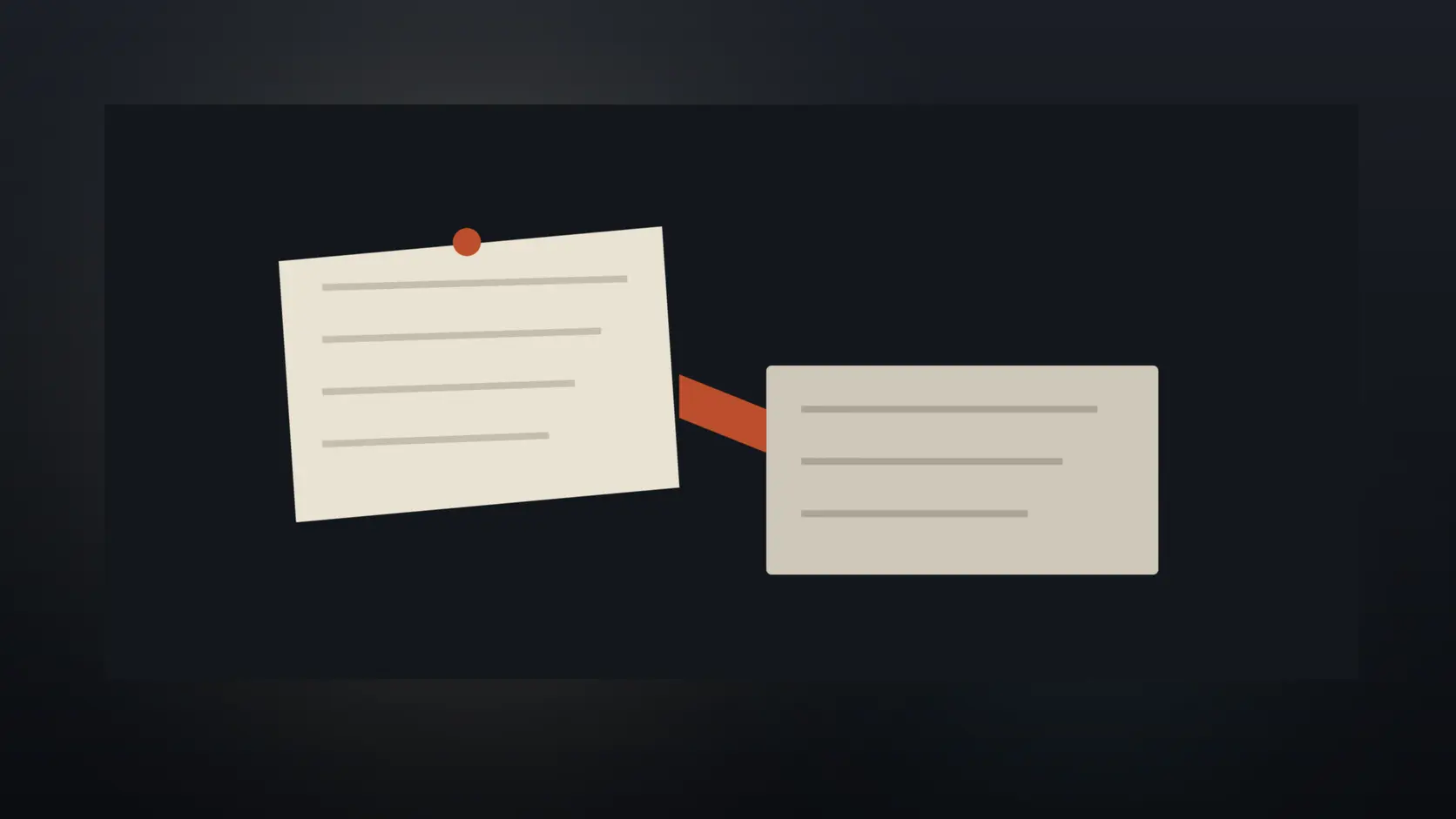
The relay sees the client's address and forwards an encrypted blob. The gateway decrypts the blob, learns the request, and answers without ever learning where it came from. Each side holds half of what would identify a person, and neither half is worth much alone.
Encryption by itself could never manage this, because the party decrypting the request is the party that would otherwise see the connection. The protocol has to invent a second party and hand it a different job.
The assumption, said out loud: no collusion
The scheme works exactly as long as the relay and the gateway do not share notes. If they ever compare, the halves snap together, the privacy evaporates, and no cipher on earth prevents it.
The document is candid about the debt. It speaks of the "limited trust placed in the Oblivious Relay Resource", and it separates the gateway from the target resource so that the party decrypting the request is not also the party answering it.
Privacy as an arrangement, not an algorithm
Oblivious HTTP is the cleanest illustration of a general truth about privacy engineering: the interesting designs are institutional before they are mathematical. Cryptography protects the halves; the structure decides who is allowed to hold them.
That structure carries a cost no benchmark will ever show. A client now depends on a relay existing, staying reachable, and being run by someone whose interests do not line up with the gateway's. The document's honesty about that dependency is precisely what makes the protocol arguable — and therefore improvable.
Member Briefing
Read the full trend briefing
Members read the full briefing with the source notes behind every finding.
Strategic Circle
A daily briefing in your language, built from changes we have verified.
Join for USD 20/monthCancel anytime.
Members also get the full research library, a daily briefing on the networks they follow and the private forum.