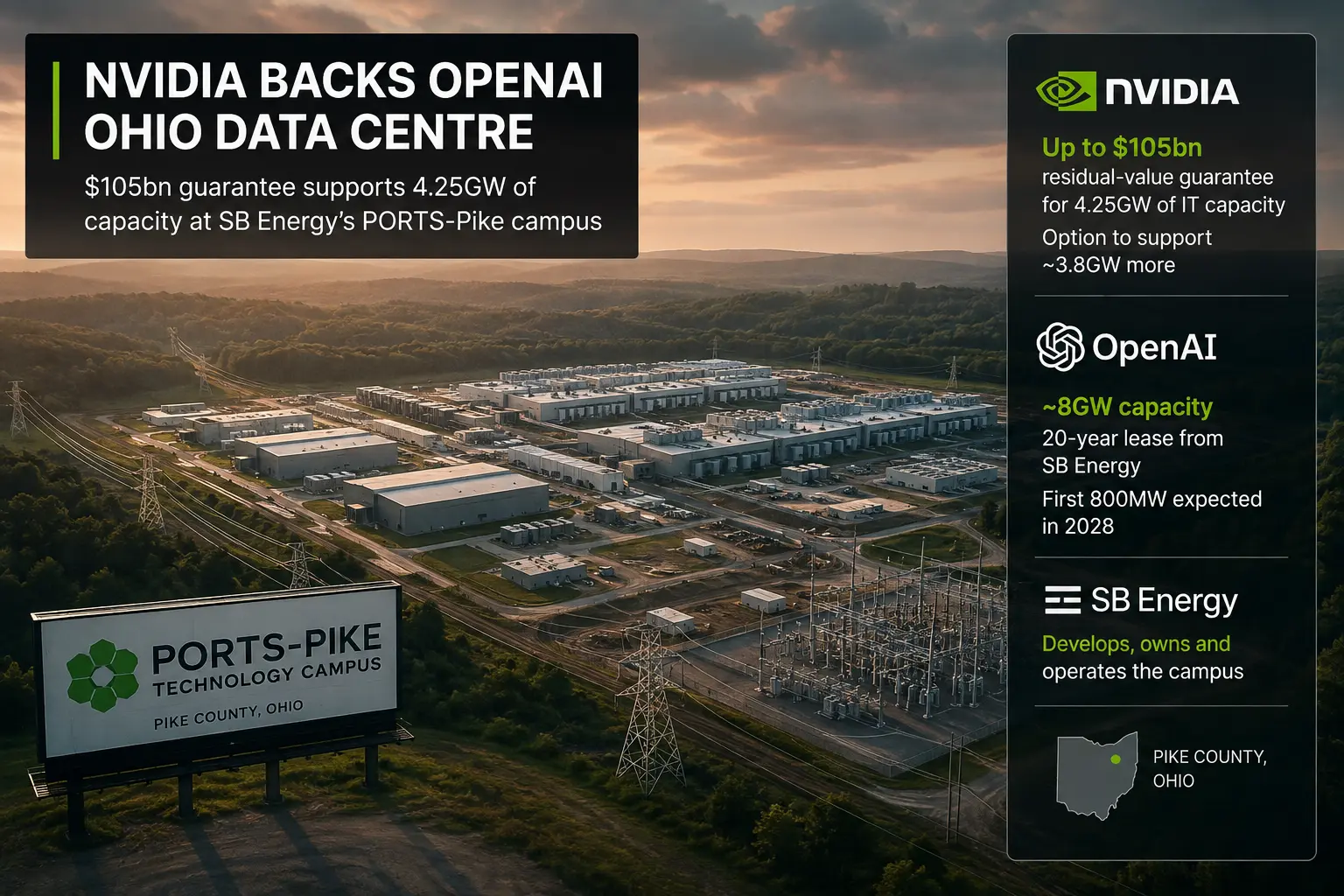
- Nvidia's initial guarantees cover about 4.25GW of IT load, with an option to support roughly another 3.8GW
- OpenAI will lease about 8GW for 20 years, with the first 800MW expected to become available in 2028
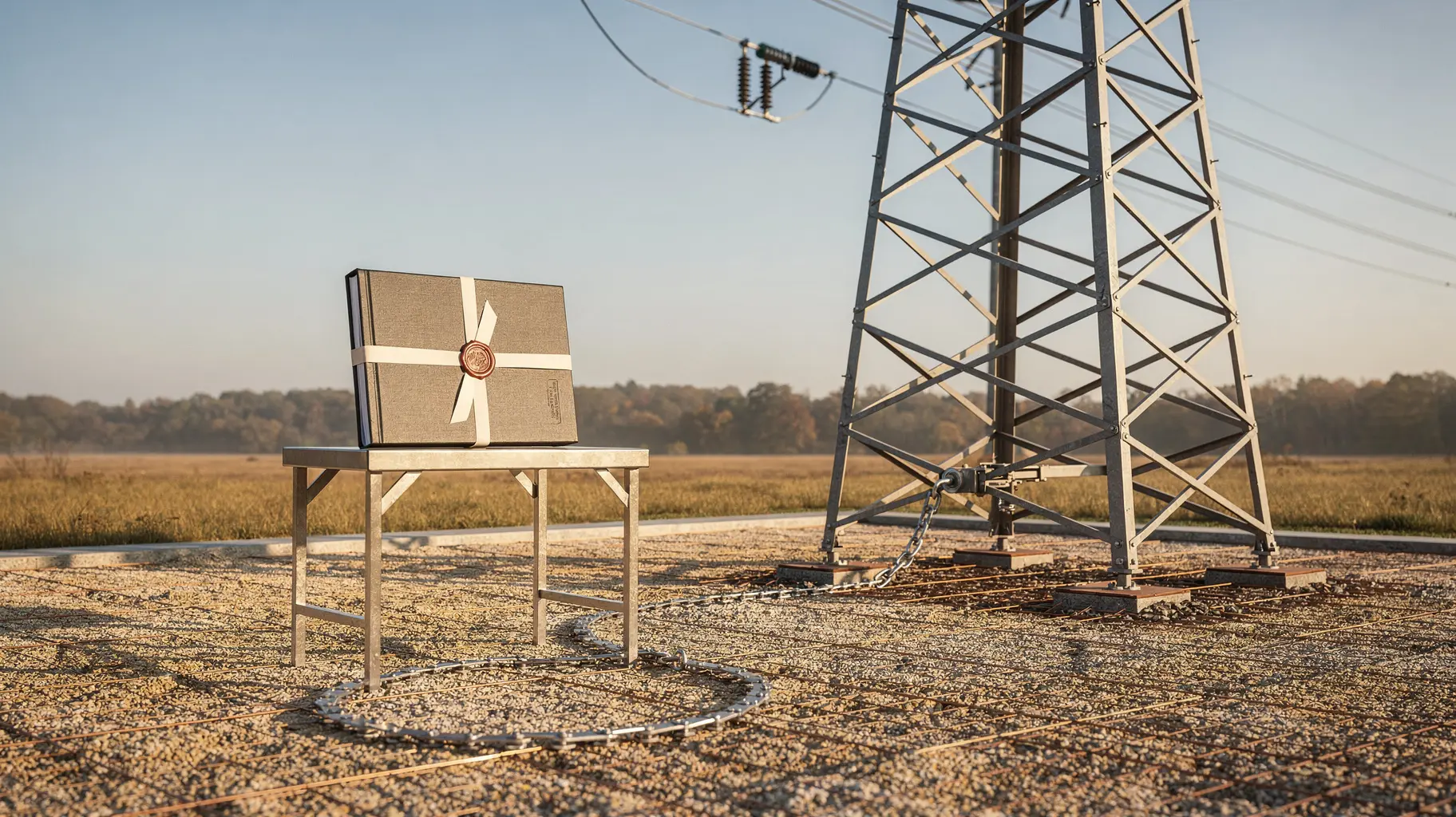
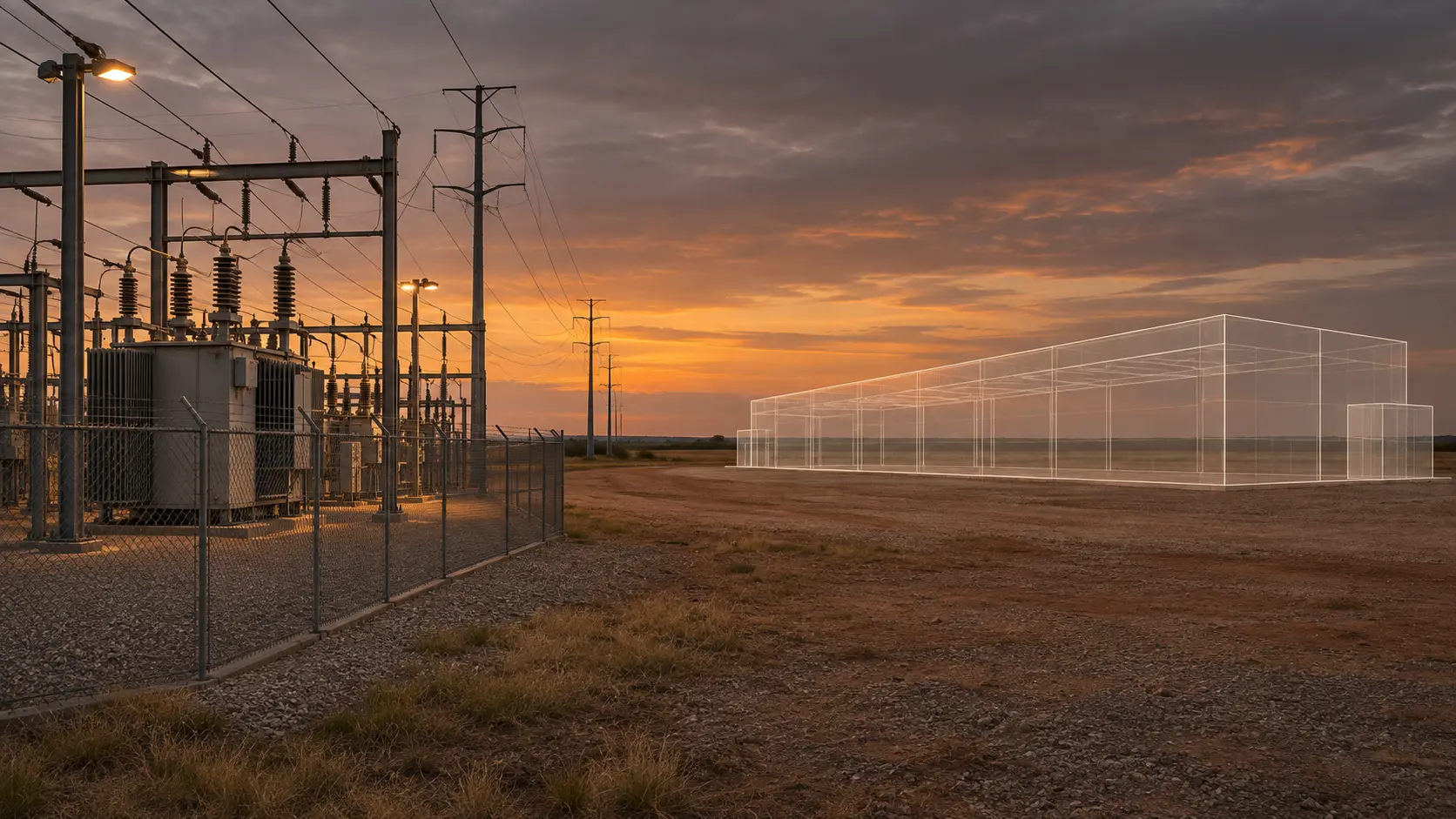
Pike County, Ohio, has flat land, a transmission corridor, and — as of this week — the largest cosign in the history of computing. Nvidia has agreed to stand behind $105 billion of lease obligations for an AI campus that has not been built, for a tenant whose rent has not started, on power that has not yet been switched on.
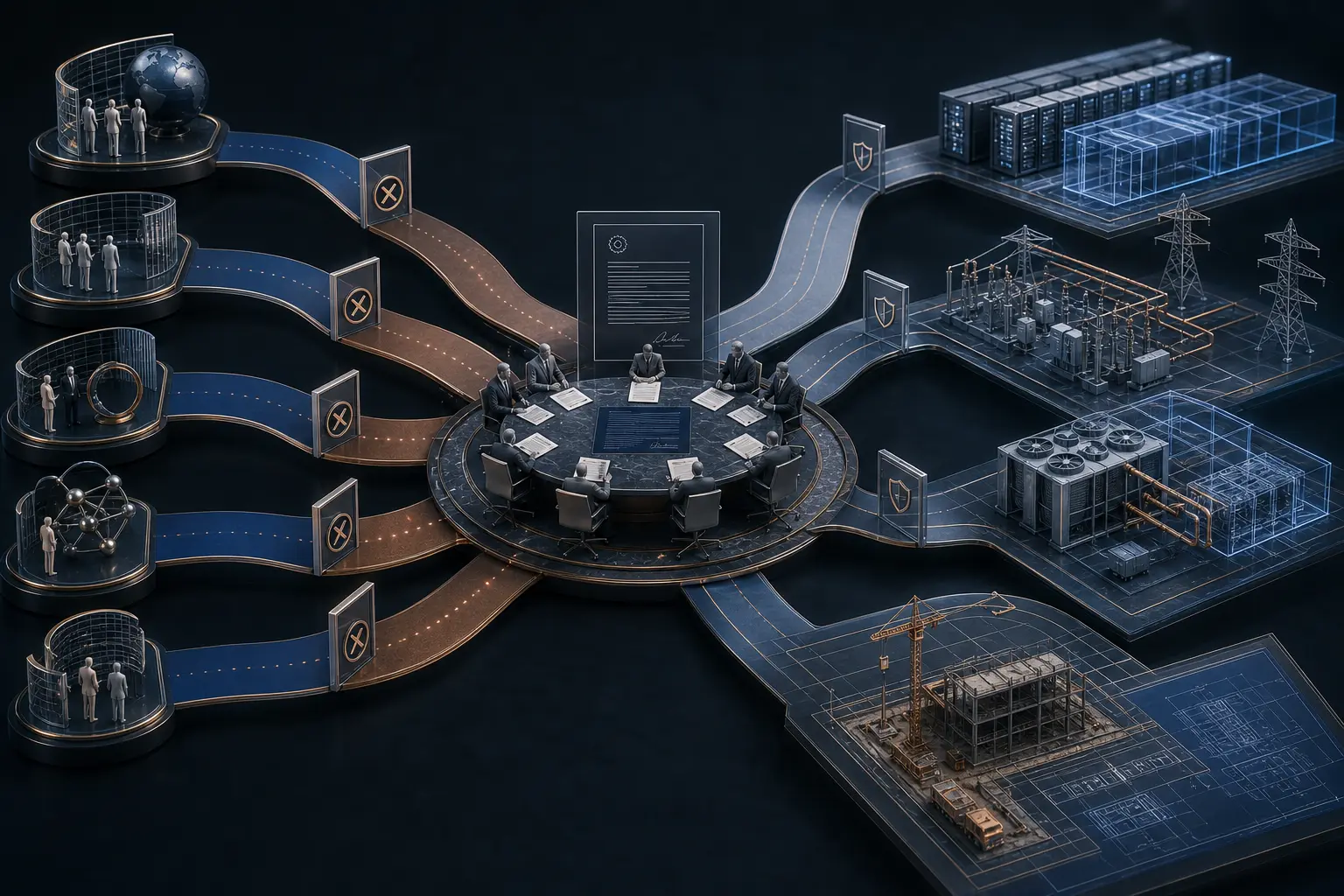
That is the shape of the deal: a chip company underwriting a landlord so the landlord can raise money to build a building for a customer whose bills the chip company is now, in part, guaranteeing. The circle closes neatly. The exposure is capped. And the cap is the most interesting number in the announcement.
What Nvidia actually signed in Pike County, Ohio
Nvidia has agreed to provide residual-value guarantees for leases covering about 4.25GW of IT load at SB Energy's PORTS-Pike Technology Campus in Pike County, Ohio. Its total payment obligation under the initial guarantees is capped at $105bn. Nvidia can choose to extend credit support to roughly another 3.8GW.
OpenAI will lease about 8GW of capacity from SB Energy across 20 years. SB Energy — SoftBank-backed, an energy developer that drifted into data centres and stayed — will build, own and operate the campus. Nvidia will be the exclusive AI compute infrastructure provider for the initially supported capacity, and is putting $1.5bn of its own money into SB Energy for good measure.
The guarantees generally take effect when the relevant leases begin and specified ready-for-service conditions have been met. If OpenAI becomes insolvent and defaults, or fails to make lease payments, Nvidia may have to cover the shortfall between the guaranteed minimum lease value and whatever a replacement lease or sale recovers. The first 800MW is expected to become available in 2028.
Why a chip company is underwriting a landlord
SB Energy must commit capital to land, power and buildings long before OpenAI begins paying for completed capacity. That is the classic developer's timing gap: build now, get paid later, hope the tenant is still solvent when later arrives. Nvidia's guarantee plugs part of that gap by putting a creditworthy name behind the lease if the tenant walks.
Note what the guarantee attaches to: the completed, leased capacity — not the developer, not the construction programme, not the concrete pourer's balance sheet. Asset and administrator are kept in separate boxes, which is the difference between a sound structure and a hostage note. Anyone who has watched an industry confuse bookkeeping with ownership will recognise the discipline, and enjoy it.
The cap is the whole story
Nvidia's obligation is capped, and it generally begins only after the relevant capacity has passed its ready-for-service tests. Nvidia is therefore backing the value of finished, leased infrastructure rather than financing the entire construction programme. SB Energy keeps the development risk, the ownership and the operating job.
Read the remedies. If OpenAI stops paying, Nvidia can assume the lease, hunt for a replacement tenant, or sell. Every one of those paths rests on the same assumption: that 4.25GW of powered, connected, ready AI capacity in Ohio is an asset somebody else will want. That is not a bet on OpenAI's balance sheet. It is a bet on the scarcity of powered land near transmission.
For BTW readers, the takeaway is structural. Nvidia has taken a defined financial position before a single rack of its equipment is installed, and it has taken it at the layer where the value actually sits — the capacity, not the company that pours the concrete.
What to watch: 800MW, 2028 and the 3.8GW option
The first 800MW scheduled for 2028 is the milestone that matters. Watch debt financing, new generation, transmission works, shell completion, ready-for-service certification, and the date OpenAI's lease payments actually begin. Delays push lease commencement — and every guarantee attached to it — to the right.
Keep the optional 3.8GW in a separate column from the initial 4.25GW. If Nvidia exercises it, the company extends both its credit support and the share of the site earmarked for its compute. That decision is the cleanest public signal of how much balance sheet Nvidia is willing to commit to secure future deployment capacity.
Strip out the gigawatts and the guarantee says one thing: Nvidia believes this capacity will always find a tenant. If that holds, $105bn is a number on a page and a very good marketing line. If it doesn't, Pike County becomes the most expensive empty field in America.
Member Briefing
Read the full trend briefing
Members read the full briefing with the source notes behind every finding.
Strategic Circle
A daily briefing in your language, built from changes we have verified.
Join for USD 20/monthCancel anytime.
Members also get the full research library, a daily briefing on the networks they follow and the private forum.