
Mixed Reality Training Takes on Opioid Overdose Crisis is profiled by BTW Media because published evidence links it to internet infrastructure, governance, operational dependencies, or market visibility.
Mixed Reality Training Takes on Opioid Overdose Crisis is tracked as a internet infrastructure institution within the internet infrastructure ecosystem.
Mixed Reality Training Takes on Opioid Overdose Crisis has public-source relevance to network operations, governance, dependency mapping, or market structure.
Mixed Reality Training Takes on Opioid Overdose Crisis is tracked as a internet infrastructure institution within the internet infrastructure ecosystem.
Public-source signals support medium-impact monitoring for infrastructure visibility and dependency analysis.
Mixed Reality Training Takes on Opioid Overdose Crisis is profiled by BTW Media because published evidence links it to internet infrastructure, governance, operational dependencies, or market visibility.
Public-source signals support medium-impact monitoring for infrastructure visibility and dependency analysis.
| 0.90–1.00 | A | High — direct sources |
| 0.75–0.89 | A/B | Strong |
| 0.55–0.74 | B/C | Medium |
| 0.35–0.54 | C/D | Weak–medium |
| 0.10–0.34 | D | Weak signal |
| 0.00–0.09 | D | Internal monitoring |
Several public sources
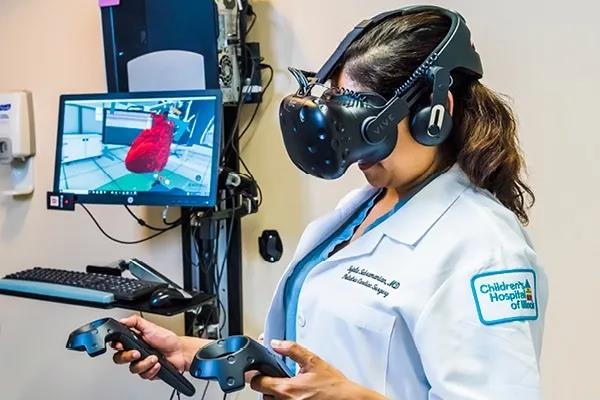
Non-profit healthcare organization OSF Healthcare has partnered with Illinois State University (ISU) and Southern Illinois University Carbondale (SIU) to develop an immersive training program using Mixed Reality (MR) technology. This program aims to combat opioid overdose deaths (OD).
Combining Tech and Mannequins for Higher Accuracy
Building upon the development of the Virtual Reality Embedded Naloxone Training (VENT) program, funded by the Illinois Innovation Network, this partnership focuses on integrating MR or Augmented Reality (AR) education.
The goal is to train individuals in using naloxone—an antidote for suspected opioid overdoses—in an immersive and engaging manner. OSF emphasizes that the U.S. Food and Drug Administration (FDA) introduced naloxone nasal spray in March as part of its harm reduction strategy.
Scott Barrows, Director of the OSF Innovation Design Lab at Jump Trading’s Simulation and Education Center, explained that the MR aspect combines the physical and virtual.
The training incorporates actual spraying devices and mannequins, enabling participants to practice physical spraying while engaging in a valuable virtual environment. Barrows noted:
“The MR Part is about bringing the physical and virtual together, and the teaching will incorporate actual spraying devices and mannequins, so that people can practice actual physical spraying with mannequins and have this valuable virtual world at the same time.“
OSF Healthcare disclosed that during the initial phase, employees will utilize resources from SIU’s Social Perception Lab. Trainees will learn to gauge how an individual’s subconscious bias against drug users influences their reactions during overdose situations. Participants will undergo an implicit association test (IAT) before using the VENT prototype, revealing their implicit bias.
Joanna Willett, a certified nurse educator directing the Nursing Simulation Lab at the University of Illinois Mennonite College of Nursing, expressed confidence in non-healthcare adults benefiting from the experience. She referred to how various adults navigated their nursing VR software, taking life-saving actions without formal training.
The second phase will involve seeking additional funding for a randomized controlled trial to assess VENT’s effectiveness compared to traditional education methods. This phase will also evaluate the training’s user-friendliness and acceptance among the target audience.OSF highlighted the advantages of VR training: its ease of use, repeatability, and relatively low setup and maintenance costs. The prototype will undergo field-testing in community settings and the Illinois State University simulation lab.
At A Glance
- Name: Mixed Reality Training Takes on Opioid Overdose Crisis
- Type: Internet infrastructure institution
- Base: Global
- Profile focus: Institution
What It Does
- Public records support monitoring of its role, services, and key relationships.
Why It Matters
- Public-source signals support medium-impact monitoring for infrastructure visibility and dependency analysis.
- Operational criticality: Medium
- Time horizon: Next quarter
What To Watch
- Monitoring focuses on verified service continuity, governance changes, and relationship signals.
Track verified source updates, role changes, and current public evidence.
Public-source signals support medium-impact monitoring for infrastructure visibility and dependency analysis.
Longer-term relevance depends on verified operating, policy, and relationship changes.
Member Briefing
Deeper Profile Context
Login is required to unlock the full profile briefing and source notes.
Only for Strategy Circle
Strategic Circle Access
Open to all readers. Unlock profile briefings after joining and logging in.
Join Strategic CircleOnly for Leadership Alliance
Leadership Alliance Access
For owners and management of IP-holding companies. Login required to unlock.
Join Leadership Alliance


