Summary
- On August 11, 2026, Mistral announced general availability of Mistral Regional Endpoints (Europe or US inference), a public-preview Priority Tier with committed service levels and an uptime SLA, support for third-party open models starting with Z.ai's GLM-5.2, and an anchor coalition of enterprises making multi-year compute commitments toward 200 MW across Europe by end-2027 and up to 1 GW by 2030 https://mistral.ai/news/regional-inference-open-models-new-compute/.
- VentureBeat describes European Compute Units (ECUs) as roughly five-year multi-year claims on Mistral-built capacity with no early exit, and reports near-term buildout on three sites: 44 MW near Paris (operational in Q2), 23 MW in Sweden with EcoDataCenter, and 10 MW in Les Ulis, France (online Q3) https://venturebeat.com/infrastructure/mistral-ai-wants-to-build-1-gigawatt-of-european-compute-by-2030-and-lock-in-customers-now.
- The physical base remains thinly documented: $830 million in debt (Reuters https://www.reuters.com/business/finance/frances-mistral-raises-830-million-debt-ai-data-centre-build-up-2026-03-30/; DCD https://www.datacenterdynamics.com/en/news/mistral-ai-raises-830m-in-debt-financing-for-data-center-in-paris-france/) funds access to 13,800 NVIDIA GB300 GPUs and 44 MW at Eclairion's Bruyères-le-Châtel site, with operations intended to start by end of June 2026 https://www.datacenterdynamics.com/en/news/mistral-ai-raises-830m-in-debt-financing-for-data-center-in-paris-france/.
- No public document inspected in this research records a dated energisation, the legal owner of the accelerators, or the named members and commitment values of the anchor coalition.
The physical layer, restated briefly
Mistral Compute was announced on June 11, 2025 as a private, integrated AI infrastructure stack with NVIDIA reference architectures, data sovereignty and decarbonized energy positioning https://mistral.ai/news/mistral-compute/.
Prior BTW coverage separated Mistral Compute's megawatt ledgers: a 1,400 MW design ceiling at the Fouju campus, 700 MW contracted with transmission operator RTE in dated tranches, and 44 MW of financed capacity. The financing itself is documented: on March 30, 2026 Mistral raised $830 million in debt, described as its first debt raising, to fund 13,800 NVIDIA chips for a data centre near Paris https://www.reuters.com/business/finance/frances-mistral-raises-830-million-debt-ai-data-centre-build-up-2026-03-30/. DataCenterDynamics reports the deployment as access to 13,800 NVIDIA GB300 GPUs and 44 MW of powered capacity, installed at the Eclairion-owned site in Bruyères-le-Châtel, with operations intended to start by the end of June 2026 https://www.datacenterdynamics.com/en/news/mistral-ai-raises-830m-in-debt-financing-for-data-center-in-paris-france/. DCD names the lenders: Bpifrance, BNP Paribas, Crédit Agricole CIB, HSBC, La Banque Postale, MUFG and Natixis Corporate & Investment Banking https://www.datacenterdynamics.com/en/news/mistral-ai-raises-830m-in-debt-financing-for-data-center-in-paris-france/.
All of this is public but incomplete. Le Monde's March 30, 2026 headline corroborates the $830 million borrowing https://www.lemonde.fr/en/france/article/2026/03/30/french-ai-firm-mistral-borrows-830-million-to-build-paris-data-center_6751956_7.html, though the article body could not be retrieved (a bot-challenge page was returned), so this report cites it only as headline corroboration. No document inspected records when the site was actually energised or who legally owns the accelerators — the same gap prior BTW reporting identified and which remains open.
What changed in August: from capacity to products
The August 11, 2026 announcement is the first layer where Mistral describes what customers can buy, not what is being built. Three mechanisms matter.
First, Mistral Regional Endpoints reached general availability, letting customers choose whether inference runs in Europe or the United States https://mistral.ai/news/regional-inference-open-models-new-compute/. This is a product decision with regulatory weight: for European buyers with data-localisation requirements, a selectable inference region turns Mistral's geography into a contractible feature.
Second, the Mistral Priority Tier entered public preview with committed service levels and an uptime SLA https://mistral.ai/news/regional-inference-open-models-new-compute/. An SLA is only as good as the capacity behind it. The public record does not document which of Mistral's sites backs Priority Tier commitments, how the SLA credits are structured, or what happens when demand exceeds the 44 MW financed tranche.
Third, Mistral's platform will support third-party open models, starting with Z.ai's GLM-5.2 https://mistral.ai/news/regional-inference-open-models-new-compute/. This is strategically notable: a European compute provider hosting a Chinese-developed open model signals that Mistral is positioning the infrastructure layer as model-agnostic — a hypothesis the announcement supports but does not yet evidence with customer examples.
European Compute Units: commitments as a financing instrument
The most consequential mechanism is the least documented. VentureBeat describes European Compute Units as roughly five-year multi-year claims on Mistral-built capacity, with no early exit, purchased by a coalition of European enterprises to underwrite 200 MW across Europe by end-2027 and up to 1 GW by 2030 https://venturebeat.com/infrastructure/mistral-ai-wants-to-build-1-gigawatt-of-european-compute-by-2030-and-lock-in-customers-now. If accurate, ECUs function like pre-sold capacity contracts: customers commit capital years ahead of delivered capacity, and Mistral uses those commitments — much like the anchor commitments behind the $830 million loan — to justify further borrowing and construction.
The mechanism is plausible because it mirrors what already happened. The March 2026 debt was a limited-recourse structure secured against a financed fleet; ECU commitments would extend the same logic from lenders to customers. But the public record does not name the coalition members, their commitment values, or the contractual terms beyond VentureBeat's characterisation. Until those documents surface, the 200 MW and 1 GW figures are forward-looking commercial promises, not capacity.
The wider network
Two other dated developments frame the buildout. On May 27, 2026, Digital Realty published a press release titled "Mistral AI leverages Digital Realty to expand its AI services across Europe" https://www.digitalrealty.com/about/newsroom/press-releases/30246/mistral-ai-leverages-digital-realty-to-expand-its-ai-services-across-europe; only the headline was retrievable, so the scope — sites, capacity, exclusivity — is unknown. Separately, DataCenterDynamics reports a joint venture of Bpifrance, UAE fund MGX, Mistral AI and NVIDIA for a 1.4 GW AI campus in France, with construction expected in the second half of 2026 and operations by 2028 https://www.datacenterdynamics.com/en/news/mgx-bpifrance-nvidia-and-mistral-ai-plan-14gw-paris-data-center-campus/.
The reported site list now spans at least four locations: 44 MW at Bruyères-le-Châtel, 23 MW in Sweden with EcoDataCenter, 10 MW in Les Ulis (France), and the prospective 1.4 GW campus https://venturebeat.com/infrastructure/mistral-ai-wants-to-build-1-gigawatt-of-european-compute-by-2030-and-lock-in-customers-now. VentureBeat cites Epoch AI's estimate of roughly $38 billion per gigawatt of capex and Goldman Sachs' $15–20 million per MW https://venturebeat.com/infrastructure/mistral-ai-wants-to-build-1-gigawatt-of-european-compute-by-2030-and-lock-in-customers-now — figures that make the gap between the 44 MW financed today and the 1 GW target roughly two orders of magnitude in required capital.
Discrepancies the reader should track
Three conflicts run through the record. Chip counts differ: DCD and Reuters report 13,800 GB300 GPUs for the 2026 deployment https://www.reuters.com/business/finance/frances-mistral-raises-830-million-debt-ai-data-centre-build-up-2026-03-30/ https://www.datacenterdynamics.com/en/news/mistral-ai-raises-830m-in-debt-financing-for-data-center-in-paris-france/, while AI Chat Daily reported the site operational with 18,000 GB200 systems on June 18, 2026 https://www.aichatdaily.com/ai-business/france-s-ai-buildout-goes-live-mistral-data — likely conflating the original 2025 announcement (ActuIA reports about 18,000 Blackwell GPUs for a 40 MW Essonne site https://www.actuia.com/en/news/mistral-ai-and-nvidia-towards-a-sovereign-ai-infrastructure-in-europe/) with the 2026 deployment. The debt figure differs by currency: $830 million in Reuters, DCD and Le Monde https://www.reuters.com/business/finance/frances-mistral-raises-830-million-debt-ai-data-centre-build-up-2026-03-30/ https://www.datacenterdynamics.com/en/news/mistral-ai-raises-830m-in-debt-financing-for-data-center-in-paris-france/ https://www.lemonde.fr/en/france/article/2026/03/30/french-ai-firm-mistral-borrows-830-million-to-build-paris-data-center_6751956_7.html versus €830 million (about $962 million) in VentureBeat https://venturebeat.com/infrastructure/mistral-ai-wants-to-build-1-gigawatt-of-european-compute-by-2030-and-lock-in-customers-now. And operational status is asserted, not documented: VentureBeat calls the Paris facility operational in Q2 https://venturebeat.com/infrastructure/mistral-ai-wants-to-build-1-gigawatt-of-european-compute-by-2030-and-lock-in-customers-now, DCD says operations were intended to start by end of June https://www.datacenterdynamics.com/en/news/mistral-ai-raises-830m-in-debt-financing-for-data-center-in-paris-france/, and no inspected source provides a dated energisation record.
A note on provenance: every source in this research was retrieved at snippet or headline level; no full-page verbatim retrieval was performed. The claims above are attributed to their publishers accordingly, and quantified figures should be read as publisher-reported rather than independently verified against primary documents.
What would settle it
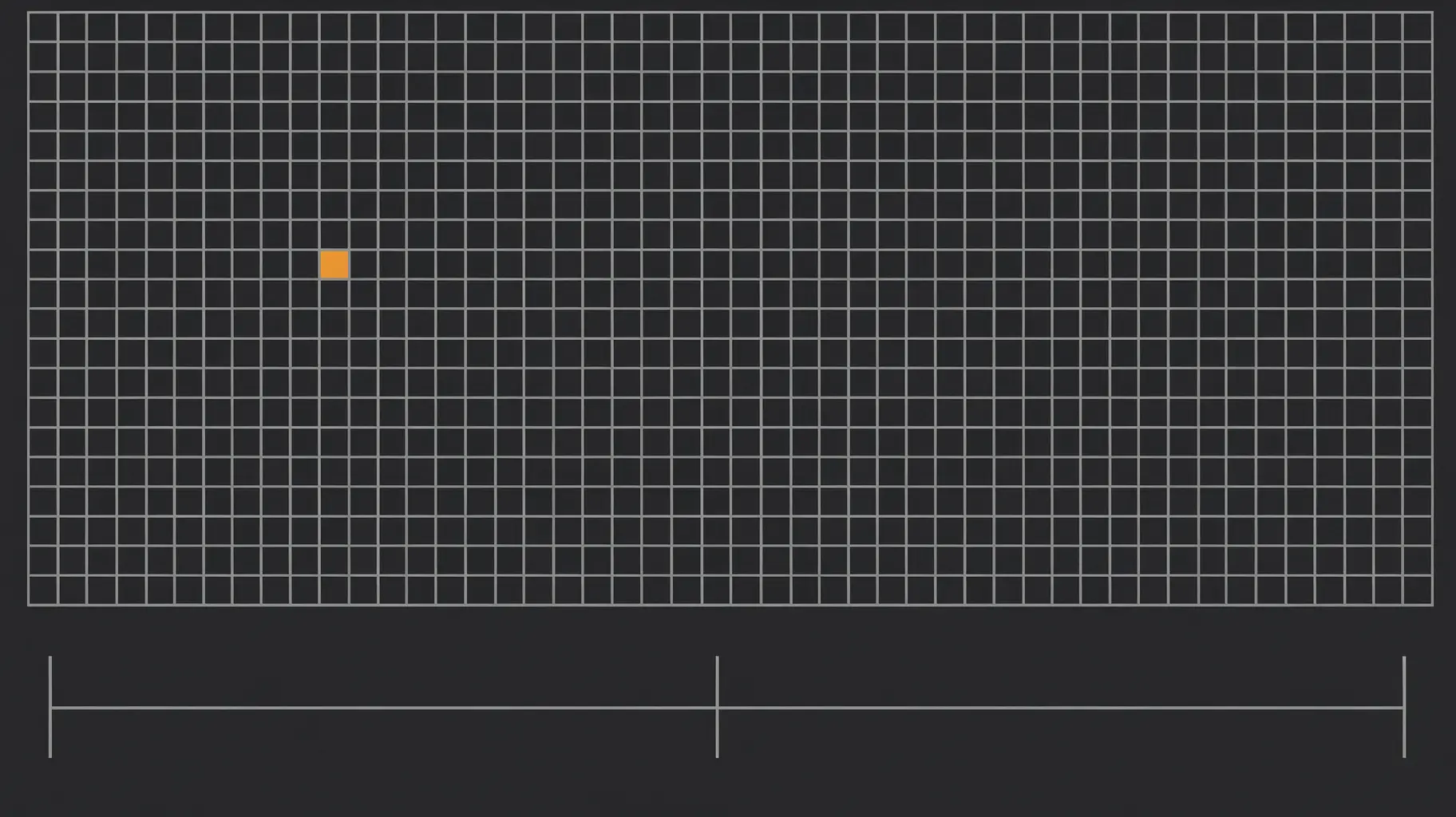
Four records would convert the productization layer from promise to fact: named anchor-coalition members with commitment values; the Priority Tier SLA terms and the capacity backing them; the substantive scope of the Digital Realty partnership; and a dated energisation or grid-acceptance record for the 44 MW deployment. Until then, Mistral Compute is best understood as a two-layer structure — a small, financed physical base under a large, unbacked commitment structure — where the ratio between the layers is the story.
Member Briefing
Deeper Profile Context
Sign in with the right membership level to unlock the full briefing and source notes.
Only for Strategic Circle
Strategic Circle
Open to all readers. Unlock profile briefings after joining and signing in.
Join Strategic CircleOnly for Leadership Alliance
Leadership Alliance
For qualified IP-asset owners and management; sign in to unlock alliance briefings.
Join Leadership Alliance