
Summary
- Meta and V.tal have begun deployment of a 280 km extension of the Malbec submarine cable in Rio Grande do Sul.
- V.tal identifies Balneário Pinhal, 105 km from Porto Alegre, as the landing-station location.
- The project is targeting launch or completion in 2027; cable arrival at the coast is an installation milestone, not ready-for-service status.
- The design is described as supporting up to 20 Tbps per fibre pair and circuits up to 800 Gbps between Porto Alegre, Buenos Aires and São Paulo.
- V.tal names ASN's submarine technology and terrestrial-infrastructure upgrades, without reporting optical acceptance or lit capacity.
- Commercial proof will require a ready-for-service declaration, activated wavelengths, customer circuits, carried traffic and measured route performance.
Shore arrival closes only the marine-distance gap
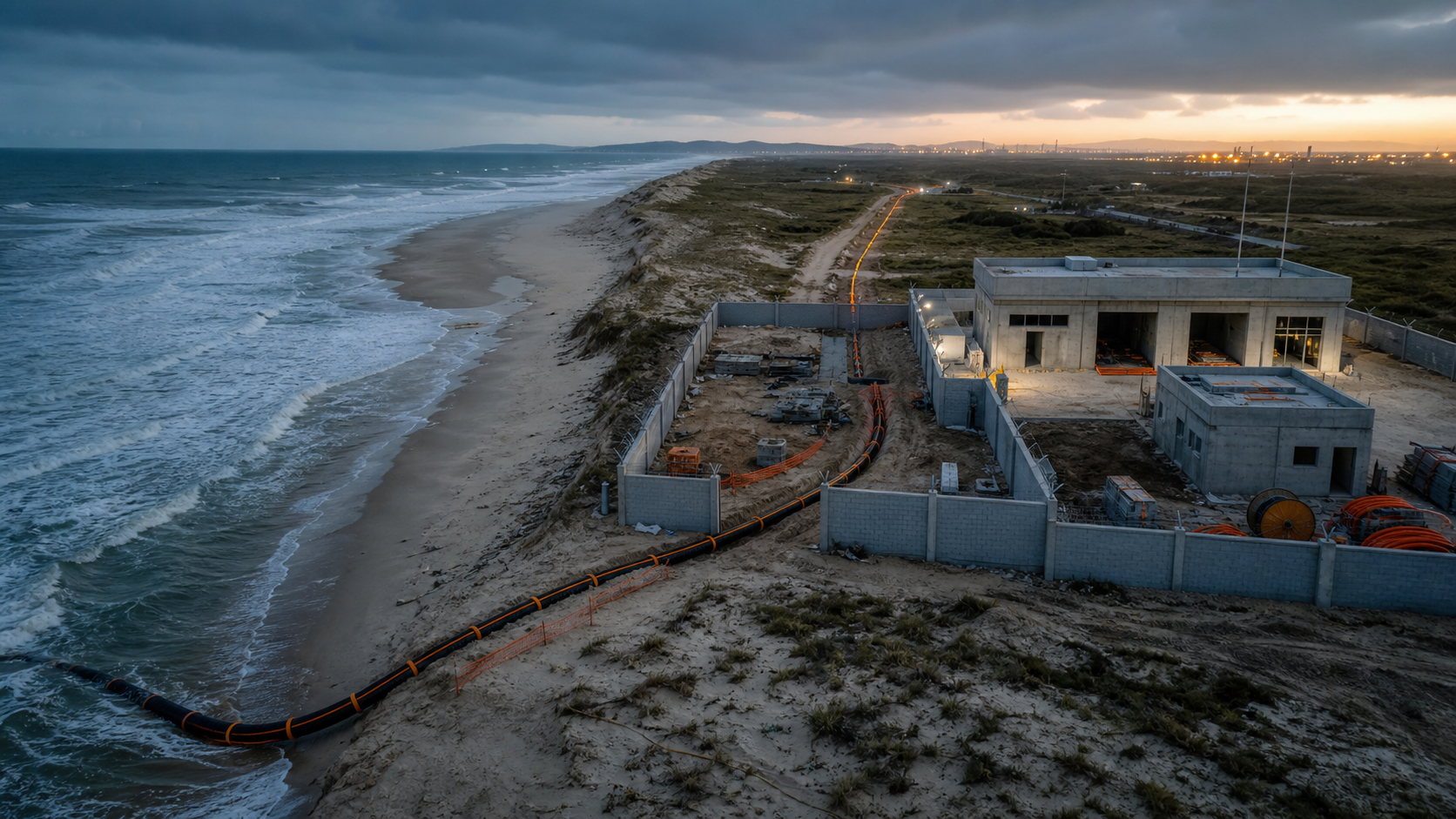
The new branch gives the Malbec expansion a visible physical endpoint in southern Brazil. A landing at Balneário Pinhal connects the marine route to a site 105 kilometres from Porto Alegre, creating the point where submarine infrastructure must hand traffic to terrestrial networks.
That milestone is important because a route cannot serve the city without reaching land. It is also narrow: the cable may be ashore while beach works, landing-station equipment, terrestrial backhaul, power, testing and protection paths remain incomplete.
The 280 kilometres describe reach, not readiness
The branch length defines the new piece of wet plant. It does not state how much of it has been laid, buried, spliced or accepted, nor whether all regulatory and marine works have closed.
V.tal targets 2027 for launch, while the in-window report says completion is expected next year. Until a ready-for-service notice names a date and accepted route, the project should remain classified as being installed rather than as an operational connection.
Twenty terabits is an engineering ceiling
The project is promoted as offering up to 20 Tbps on each fibre pair and supporting circuits as large as 800 Gbps between Porto Alegre, Buenos Aires and São Paulo. Those figures indicate what the design and terminal equipment are intended to support.
They do not reveal the number of fibre pairs, the initial optical configuration, the amount lit at launch or how much capacity customers have bought. A cable can be physically capable of a large total while operating with only a fraction equipped and an even smaller fraction carrying paid traffic.
Terrestrial integration is the hidden half of the route
V.tal lists a landing station at Balneário Pinhal and upgraded terrestrial infrastructure. It also attributes the submarine technology to ASN. The route's usefulness will depend on how these elements connect to metropolitan and long-haul networks beyond the beach.
Protection, power, backhaul diversity and interconnection in Porto Alegre will influence availability as much as the cable itself. No latency, redundancy, outage-recovery or acceptance result has been published, so the claimed stability and security remain design intentions.
A new route matters when customers can switch traffic onto it
The partners frame southern Brazil as a digital hub serving cloud, AI and neighbouring markets. That ambition is plausible only if carriers, content providers and enterprises can purchase usable circuits with clear hand-off points and service levels.
The current disclosure names no customer, committed circuit, price or activation order. Nor does it show whether the route adds physical diversity from existing paths. Commercial value begins with a service catalogue and a sold wavelength, not with the headline capacity alone.
Meta's participation signals demand, not utilisation
Meta's partnership supports the case that large content and AI traffic motivates the branch. Yet participation does not reveal whether Meta has reserved capacity, financed a defined share, obtained exclusive fibres or committed to move production traffic at launch.
V.tal remains the infrastructure party describing implementation. The eventual allocation of ownership, capacity rights, operations and restoration duties will determine whether other wholesale customers receive genuinely neutral access.
The project now needs an acceptance ledger
The next disclosures should separate marine completion, landing-station readiness, terrestrial integration, optical acceptance and the formal ready-for-service date. After service begins, lit Tbps, sold Gbps, active customer circuits, latency and availability should be reported independently.
That ledger would prevent three different numbers from being confused: theoretical capacity, equipped capacity and carried traffic. The cable's arrival at the coast is real progress; the economic signal arrives when traffic crosses the new route.
Sources
Member Briefing
Deeper Profile Context
Sign in with the right membership level to unlock the full briefing and source notes.
Only for Strategic Circle
Strategic Circle
Open to all readers. Unlock profile briefings after joining and signing in.
Join Strategic CircleOnly for Leadership Alliance
Leadership Alliance
For qualified IP-asset owners and management; sign in to unlock alliance briefings.
Join Leadership Alliance