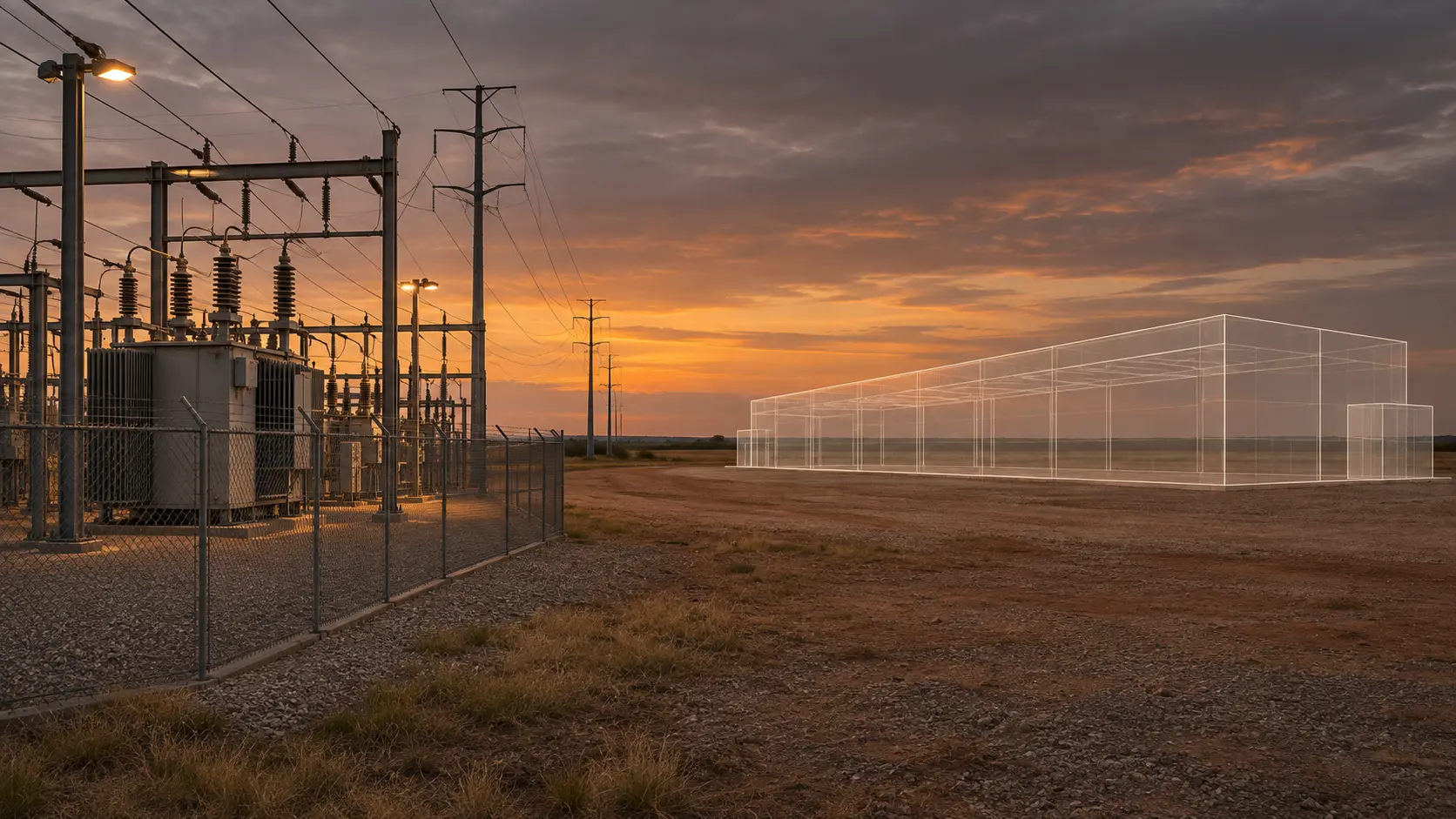
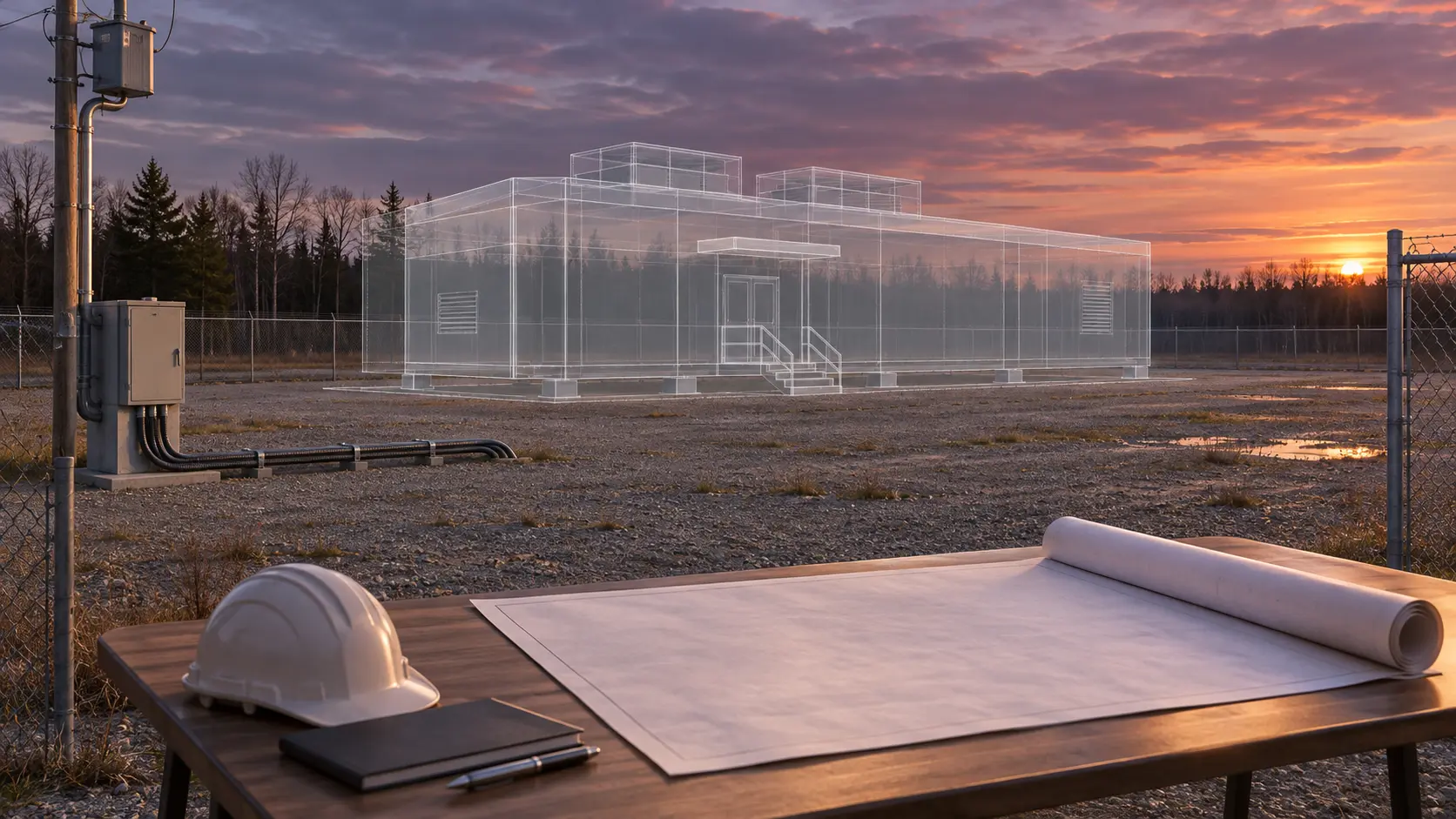
At Lowell, Massachusetts, the difference between a data centre that hums and one that does not is four diesel generators that are not bolted to the slab yet. That is the whole, unglamorous substance of a Middlesex Superior Court stay that has been read — wrongly — as a verdict on MARKLEY's Lowell expansion.
Judge William Barrett's order freezes enforcement of the air permit only as to four backup diesel generators not yet installed. Four others, installed earlier under the same contested expansion, may keep running under the permit's special conditions. The air permit stands. The facility is not dark. The residents' wider case is not decided.
Summary
- Judge William Barrett stayed enforcement of the air permit only as to four backup diesel generators that had not yet been installed.
- MARKLEY may operate four generators installed earlier, subject to the permit's special conditions.
- The order is interlocutory: it does not cancel the air permit, shut the Lowell facility or decide the residents' wider case on the merits.
- Ten residents filed the court challenge in April after an administrative process affirmed the MassDEP permit.
- The disputed expansion follows earlier permits for 19 generators and an application for eight more, producing a reported 27-generator context with about 168,000 gallons of diesel storage.
- The wider proceeding, which also concerns 16 cooling towers and environmental-justice consultation, remains pending with judgment expected by April 2027.
Four frozen, four humming, nineteen untouched
Four not-yet-installed generators sit inside the stay. Four installed earlier under the contested expansion may operate under special permit conditions. The 19 generators covered by earlier permits sit outside the immediate wording quoted by the Lowell Sun.
That arithmetic is the whole point. It stops a narrow preservation order from being inflated into a claim that all backup power, or the entire facility, has been halted.
A stay is a pause button, not a verdict
An interlocutory stay governs what may happen while the court considers the appeal. It does not decide whether MassDEP's final permit decision was lawful, whether every consultation step was adequate, or whether the residents will ultimately prevail.
The merits judgment is expected by April 2027. Until then, the operator's permit defence and the challengers' allegations both stay live — which is precisely what a stay is for.
Installed, operable and finally vindicated are three different things
The judge let the four installed units run subject to the permit's special conditions. That is a temporary operating state, not a final endorsement of the permit and not a finding that no environmental harm exists.
Equally, blocking the other four prevents physical completion while the legal question is open. It does not guarantee their permanent exclusion. Steel on a slab is reversible; a ruling is not.
Nineteen plus eight equals twenty-seven, and the stay touches four
MARKLEY applied in April 2025 for eight additional generators on top of prior permits for 19. The reported total is 27 generators with roughly 168,000 gallons of diesel storage. The underlying dispute also covers 16 cooling towers.
The current stay touches one slice of that system. Anyone who transfers its four-unit scope onto every generator, tank or cooling asset has misread the order by a factor of roughly seven.
Community claims are evidence in litigation, not findings
The residents challenge the air-quality review and the environmental-justice engagement. The Lowell Sun also reports neighbourhood health and consultation allegations. The stay itself notes limited information and concern about engagement — but it does not adjudicate every allegation as established fact.
The next merits decision must separate three things that are routinely blurred: procedural adequacy, the substance of the permit conditions, and any demonstrated environmental effect.
Backup power is a continuity asset with a chimney
Diesel generators carry data-centre loads through utility interruption and testing. Their value is measured in availability at the moment the grid sags; their local cost arrives as emissions, noise, fuel storage and test cycles.
The legal fight sits exactly on that seam. A permit sets the conditions under which resilience equipment may run; judicial review tests whether the approval process and those controls were lawful. Continuity of the load and legitimacy of the permit are two ledgers, and the court is auditing only the second one right now.
What to watch next
Four questions will settle the story faster than any press release: whether the four stayed units remain uninstalled, how often the four permitted units actually run, whether the special conditions survive inspection, and whether the final permit is modified before April 2027.
Read the eventual judgment for its remedy, not just its reasoning. Without those facts, neither a permanent ban nor an uninterrupted expansion is anything but a guess.
Sources
Member Briefing
Read the full trend briefing
Members read the full briefing with the source notes behind every finding.
Strategic Circle
A daily briefing in your language, built from changes we have verified.
Join for USD 20/monthCancel anytime.
Members also get the full research library, a daily briefing on the networks they follow and the private forum.