Summary
- MapQuest.com launched in early 1996, but by 1999 the consumer site was one outlet for a wider mapping business. Other websites could buy MapQuest-hosted map and routing functions.
- The 1999 product menu also offered Enterprise Server and Windows NT Server options hosted by the business customer. The choice of host changed who ran the machines, while software and geographic-data licences still mattered.
- MapQuest’s FY1999 filing assigns 38.0% of total revenue to business products and services, 19.2% to consumer products and services, and 42.8% to digital mapping. These are revenue shares, not separate profit figures.
A direction on the screen, a contract behind the map
Someone asking MapQuest for a driving route saw a map, a list of turns and perhaps a page to take into the car. A business had a different question: how could its customers find the nearest outlet, hotel or service counter without the business building a map database and routing engine? MapQuest sold answers to both questions. The public website supplied the demonstration; a product catalogue supplied the contracts.
In its February 1999 registration statement filed with the SEC, MapQuest said it had launched mapquest.com in the first quarter of 1996. By the third quarter, it was providing online mapping and destination information from its own website to companies with an Internet presence and to high-traffic portals. The move was quick: the consumer address and business distribution grew in the same year. MapQuest was not waiting for every traveler to visit its front door. It was placing its directions where a traveler already happened to be.
The FY1999 Form 10-K lays out the product menu. MapQuest Connect let a company display maps requested from a city, state, street address or ZIP code. InterConnect added a proximity search; Locator could use parameters from the customer’s own location database. TripConnect supplied door-to-door directions, a route map, distance and estimated time. These names marked different jobs for a business website. A store-finder could direct someone to the closest branch; a travel site could show the full journey. The source was MapQuest’s mapping system, even when the customer met it under another company’s page design.
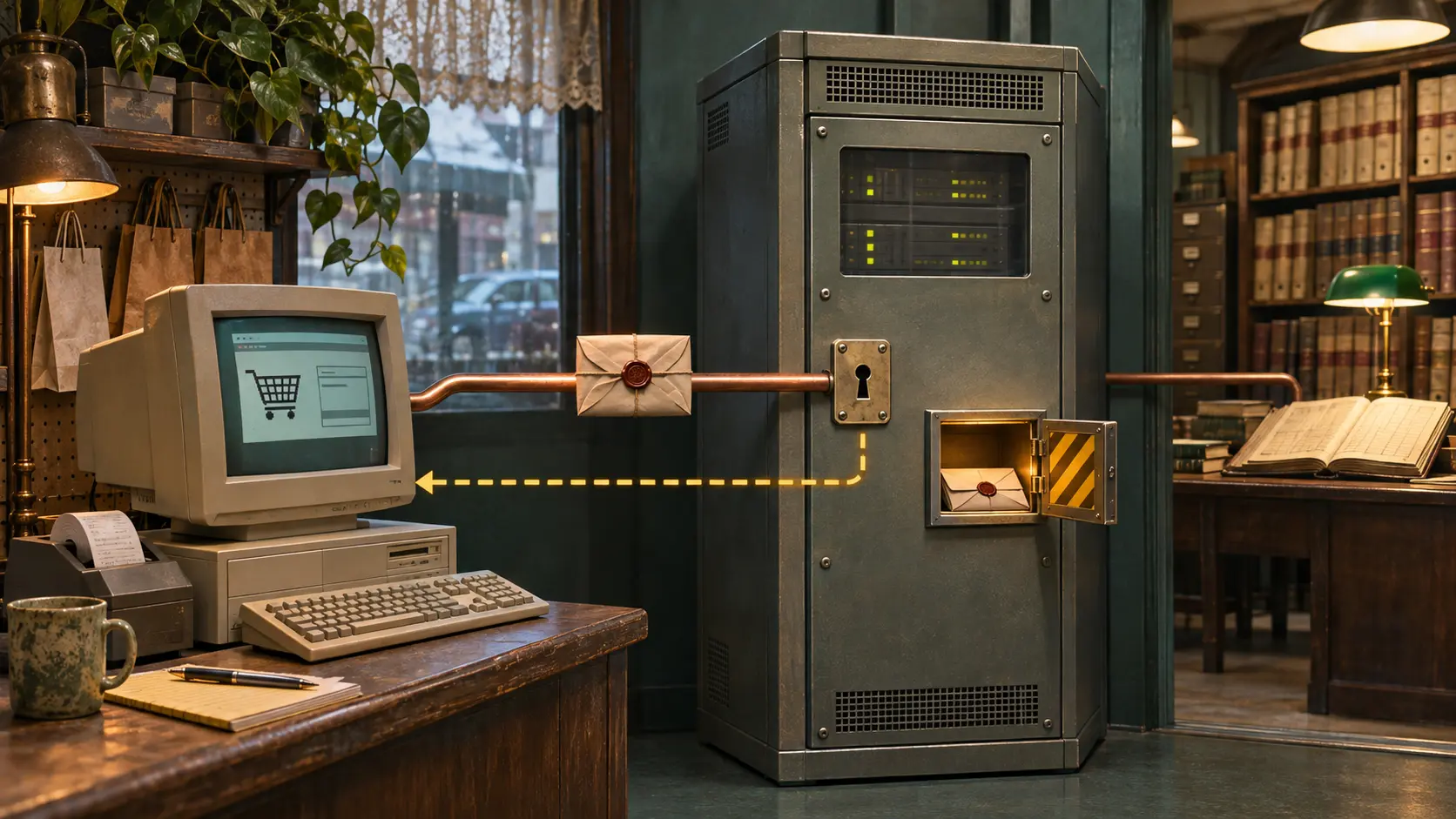
That is the first hosting arrangement in the filing’s table: MapQuest ran those Connect services. A customer paid to attach a function to its site without operating the mapping infrastructure. The same report says business web contracts commonly involved an initial setup fee and an annual service charge based on use. The setup fee paid for joining the website to the service. The continuing bill followed the traffic. A map was no longer just a picture printed once; it was an operation called each time a visitor asked a question.
Which company ran the machine?
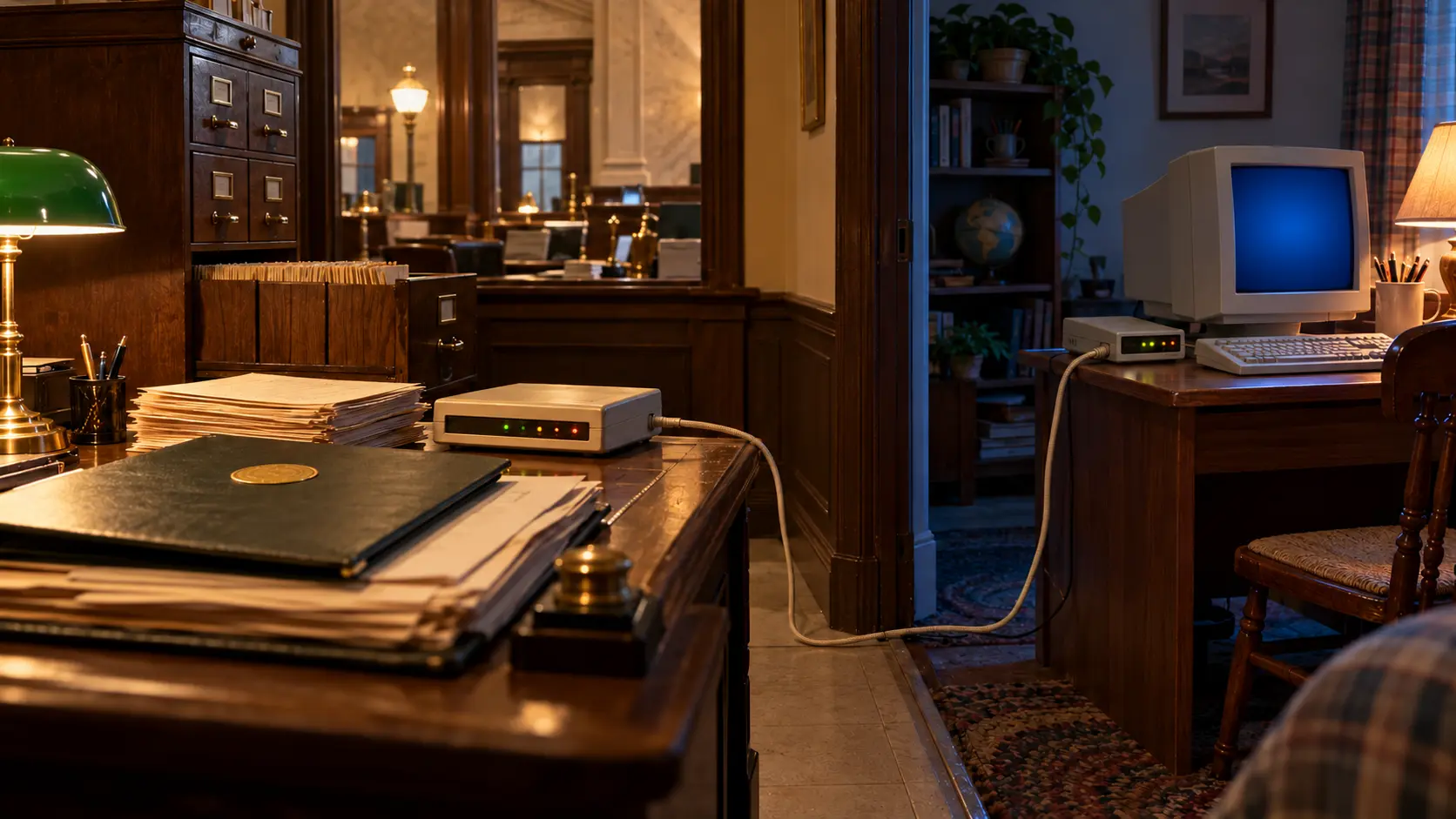
The product table then changes its answer to the “Host” column. MapQuest Enterprise Service, built for high-volume sites, still ran on MapQuest infrastructure and let the business customize the generated map pages. Enterprise Server ran on the business customer’s host. MapQuest Server for Windows NT likewise gave networked business applications a customer-hosted option. The FY1999 filing says Enterprise Server had been introduced in 1998. These were available product lines, unlike a hypothetical upgrade waiting for its first test.
Why offer both? A high-volume website might want a mapping function without taking over the software and machines that produced it. Another customer might want those functions closer to its own applications and databases, under its own operations team. Hosting moved a piece of control. It did not make the underlying map data or software free to use. The February 1999 S-1 says that for Enterprise Server MapQuest licensed its own data and sublicensed some third-party data to the buyer. The customer could run the box and still depend on rights to the contents of the box.
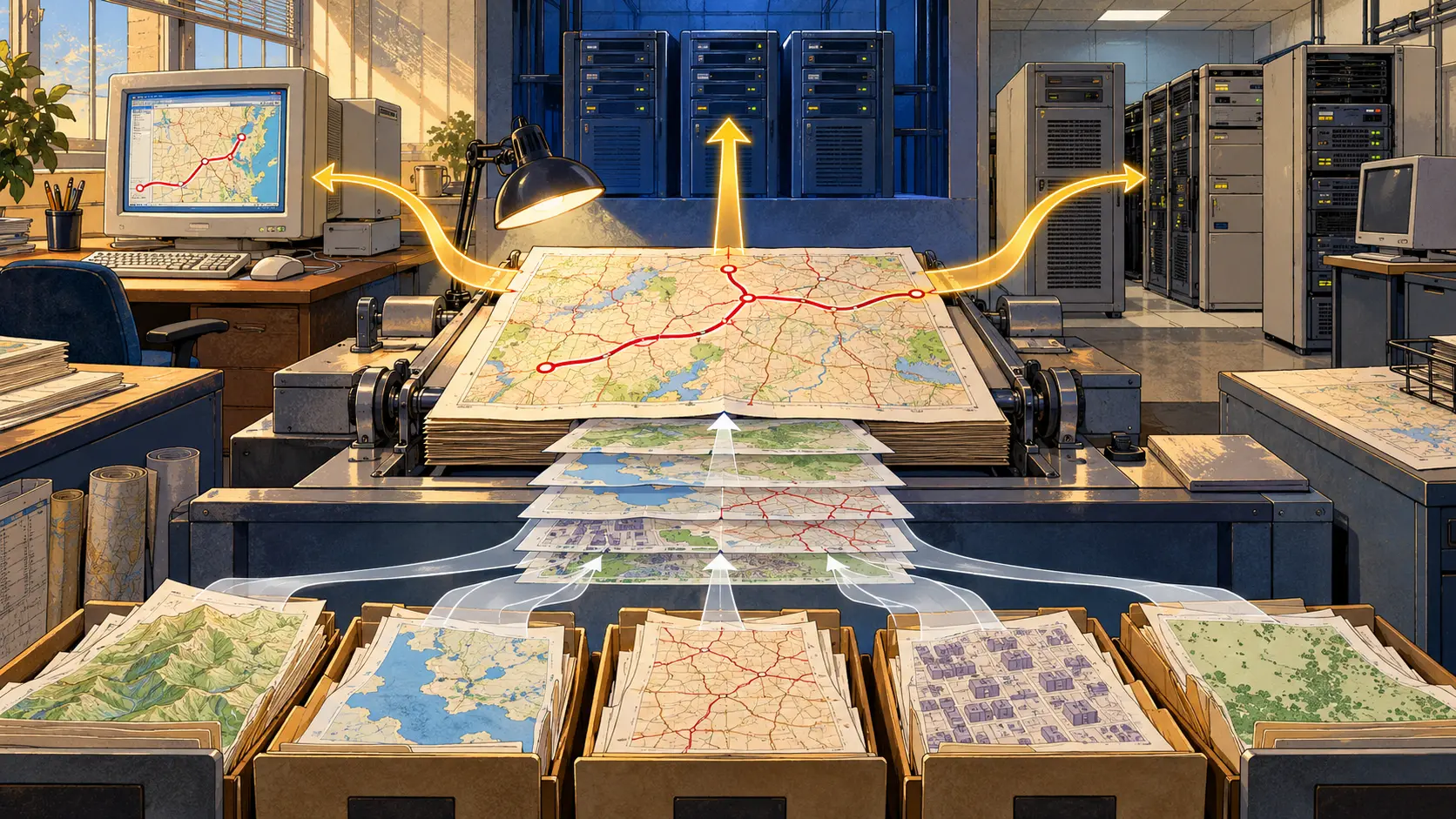
The dependency went further upstream. The S-1 says MapQuest licensed a significant portion of its primary geographic data from a limited set of providers under non-exclusive, short-term contracts. The FY1999 report again distinguishes licensed source records from the company’s edited databases and software. MapQuest assembled, maintained and delivered useful maps; it did not originate every street record. Its ability to serve a route relied on obtaining and updating data as well as keeping a server available. Put an Enterprise Server in a customer’s machine room and that data-supply chain did not disappear.
The accounts show why this arrangement mattered to more than a few enterprise clients. In 1998, the S-1 assigned 26.4% of total revenue to business products and services and 5.6% to consumer products and services. The rest came from its traditional digital mapping line. In 1999 the Form 10-K reports 38.0% business, 19.2% consumer and 42.8% digital mapping. That is a changing revenue mix, not a claim that the business side made a larger profit. MapQuest combined business and consumer costs in one reportable segment because they used some of the same operations staff and infrastructure.
The figures show that the public website’s advertising business grew, while paid mapping for other organisations remained a major source of revenue.
The consumer site earned mainly from advertising and sponsorships, according to the filing. The business side sold setup, use, software and data licences. The company also had a legacy craft: printed maps, atlases, digital maps and cartographic work outside the Web. The website did not replace that older operation overnight. It gave the same geographic machinery new channels, and those channels had different prices and operators.
This is the history that a picture of an old MapQuest page misses. A route could be requested at mapquest.com, produced for another site by MapQuest’s own servers, or calculated from software on a customer’s servers. The user might see a map in all three cases. The party responsible for uptime, integration, data rights and the next change to the route engine was different in each. The filing does not allocate profit to each hosting mode; a product-level contract and separate cost ledger would show that. It does show a map service crossing from public destination to business infrastructure in less than a decade of the commercial Web.
Sources
- MapQuest.com, February 1999 Form S-1, original SEC filing: early business distribution, Enterprise Server licensing, geographic-data dependence and 1998 revenue mix.
- MapQuest.com, FY1999 Form 10-K, original SEC filing: product host table, business contracts, consumer service and 1999 revenue mix.
Member Briefing
Deeper Profile Context
Sign in with the right membership level to unlock the full briefing and source notes.
Only for Strategic Circle
Strategic Circle
Open to all readers. Unlock profile briefings after joining and signing in.
Join Strategic CircleOnly for Leadership Alliance
Leadership Alliance
For qualified IP-asset owners and management; sign in to unlock alliance briefings.
Join Leadership Alliance