
Intelligence
Latest Articles
Latest intelligence on infrastructure operators, policy decisions, market moves, and digital power shifts.

History
The Old Mean Had to Move Last: How TCP Kept Its Timeout Variance Honest
A new round-trip measurement does two jobs inside TCP: it changes the expected delay and tests how wrong that expectation was. RFC 6298 fixed the order so the sample could not soften its own surprise before variance was recorded.

IETF
Enhanced Route Refresh Draws a Reconciliation Boundary Without Resetting the BGP Session
Enhanced Route Refresh Draws a Reconciliation Boundary Without Resetting the BGP Session intelligence summary explains the development, the public evidence available to readers, the organisations involved, the regional context, market exposure, and the infrastructure consequences…

IETF
When Caller Identity Leaves SIP: RFC 9888 and the Control Plane Behind Out-of-Band STIR
A call can cross a gateway that cannot preserve an SIP Identity header while the PASSporT moves separately over HTTPS to a destination service provider’s Call Placement Service (CPS). RFC 9888 therefore treats caller-identity delivery as a control-plane problem: discover the…

AFNOG
AIS 2026 Invokes Decades of Collaboration Without Publishing an Institutional Memory Trail
AfNOG describes AIS as a long-standing community of practice in which each edition builds on decades of collaboration. The current first-party page reviewed here does not publish the cross-edition trail that would make that institutional memory inspectable.

Story
LACNIC’s RDAP shift turns registry data into an automation contract
Registry data stops being merely a lookup result when production systems depend on it. LACNIC’s account of RDAP shows why the transition from port 43 WHOIS is an operational redesign, not a cosmetic protocol swap.

Story
AFRINIC Appointed a Five-Member Appeal Committee Through 2026. The Notice Does Not Show the Board Decision Record
AFRINIC has published who will hear policy-process appeals through the end of 2026, but the frozen notice does not show when or how its Board reached the appointment decision.

IETF
Treat-as-withdraw Contains a Malformed BGP Route Without Letting One UPDATE Reset the Session
A malformed BGP UPDATE once carried authority far beyond the routes it described: under the base error response, it could bring down the receiving session and remove every otherwise valid path learned across that adjacency. RFC 7606 narrows that blast radius. Where the receiver…

Story
RIPE Database Now Composes Unicode. The Text Chain Needs a Normalisation Receipt
One visible name can arrive as two different code-point sequences. RIPE Database release 1.123 deliberately makes those sequences converge before the value passes through its remaining UTF-8 controls. That is good interoperability. It is also the moment when an evidentiary chain…

History
The One-Second Bet: How TCP Shortened Its Initial Retransmission Timer
Before TCP has measured a path, its first loss recovery rests on a guess. In 2011, the IETF cut that recommended guess from three seconds to one—and required the RTO to return to three seconds before data transmission if a shorter timer expired while the sender awaited…

Story
The root KSK rollover makes resolver readiness the real continuity test
A DNS service can be healthy while users behind a stale validating resolver see failure. That is the operational paradox of a root key-signing-key rollover: the cryptography changes centrally, but continuity is decided across distributed resolver fleets.

AFNOG
AIS 2026 Names the People Shaping Africa’s Digital Future Without Publishing a Representation Method
AfNOG names five constituencies as the people shaping Africa’s digital future at AIS 2026. The current first-party page reviewed here does not publish how those constituencies are represented, selected or balanced.

IETF
A BLACKHOLE Community Requests Discard Without Granting a Neighbor Unlimited Routing Authority
A DDoS victim may need traffic discarded before it reaches a congested interconnection, but asking a neighboring network to destroy reachability is an unusually powerful request. RFC 7999 standardizes that request while surrounding it with prior agreement, prefix authorization…

Story
AFRINIC Named a PDWG Co-Chair by Consensus. The Published Notice Does Not Show the Consensus Record
AFRINIC recorded the name, method and duration of a 2026 PDWG leadership selection, while leaving the underlying consensus determination outside the two frozen public pages reviewed here.

Leaders
Prasanna Premachandra and the School Network That Turned Mobility Into Learning Time
A dropped wireless connection between classrooms looks like a small technical fault. Multiplied across a school day, it becomes lost teaching time, unequal access and a recurring demand on support staff. Prasanna Premachandra’s public record offers a tightly bounded case of how…

CASE FILE
The Two Letters Were Not the Whole Case: Virtual Works v Volkswagen and the Call About `vw.net`
A two-letter domain can look like a conclusion. `vw.net` resembled Volkswagen's famous mark, and short addresses were scarce. But the Fourth Circuit refused to make resemblance do all the work. Its judgment followed a sequence: what Virtual Works' principals discussed when they…
Story
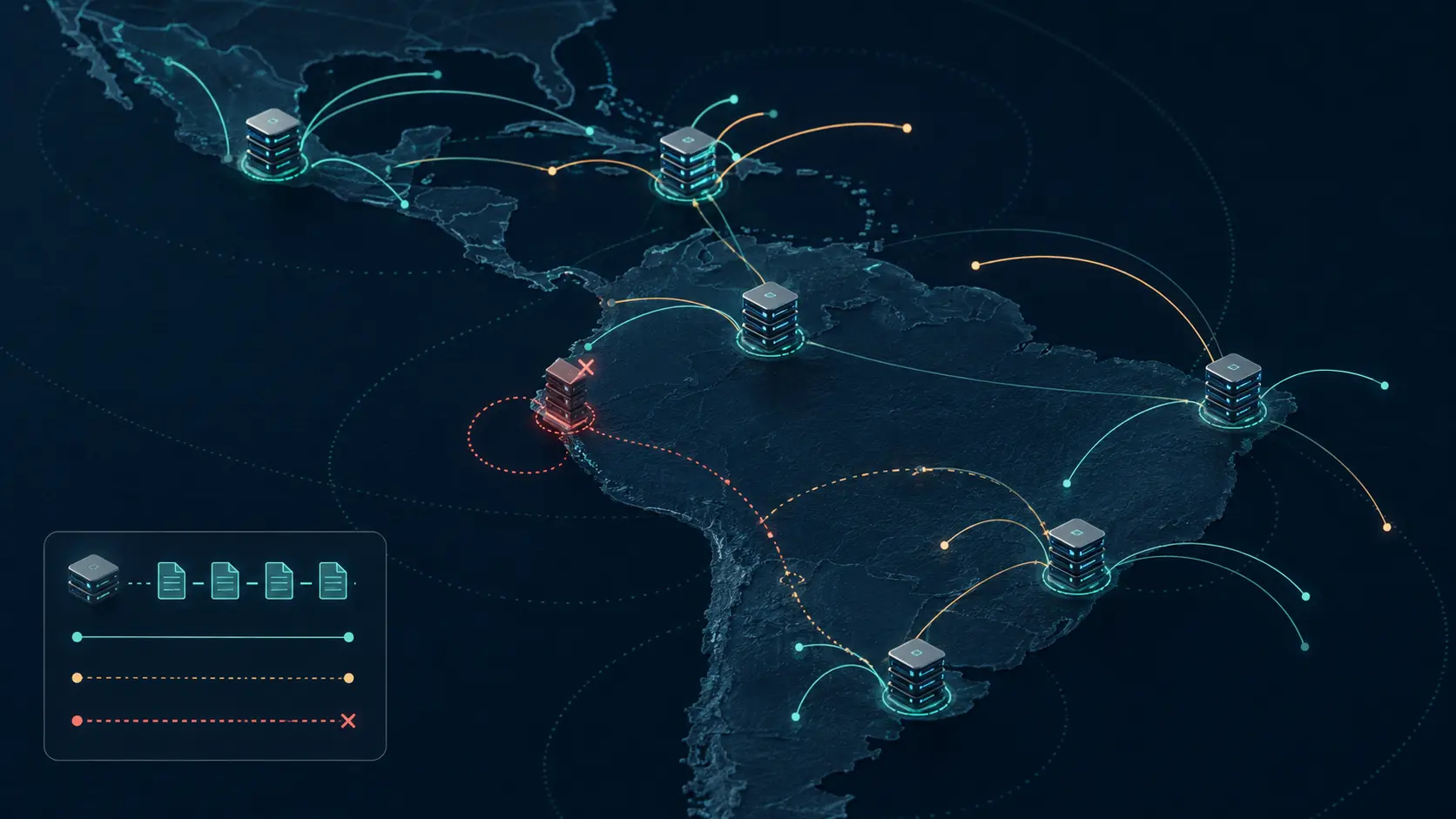
LACNIC’s reverse-DNS anycast turns registry continuity into a distributed control
Reverse DNS is easy to overlook until it stops answering. LACNIC’s use of anycast for delegated reverse zones shows why registry continuity is not a single-server property, but an operating discipline built from placement, routing, synchronization and observation.

History
The Standard That Required Two Answers: TCP-AO's Cryptographic Baseline
Algorithm agility sounds like freedom of choice. For TCP-AO, RFC 5926 exposed the harder half of that promise: two endpoints could each support sound cryptography and still fail to authenticate a single segment unless they shared one precise MAC-and-key-derivation pair.

AFNOG
AIS 2026 Says Conversations Become Progress Without Publishing an Outcome Ledger
AfNOG presents AIS as a place where conversations translate into real progress. The current first-party page reviewed here does not publish the outcome ledger that would separate discussion from commitment and show follow-through.

IETF
A Graceful Shutdown Community Declares Maintenance Without Taking the Neighbor's Routing Authority
Planned maintenance is a local decision, but the traffic it moves belongs to an interconnection. RFC 8326 gives one network a standard way to say that an EBGP path is about to disappear while leaving the neighboring network in control of its own route preference. That…

History
The Translator That Changed the Authenticated Connection: TCP-AO and NAT
A middlebox can change a packet without changing its route. TCP-AO made the consequences depend on what changed: rewriting a TCP option could be accommodated by authenticating fewer fields, but rewriting an address or port changed the identity of the protected connection itself.