
Intelligence
Latest Articles
Latest intelligence on infrastructure operators, policy decisions, market moves, and digital power shifts.
History
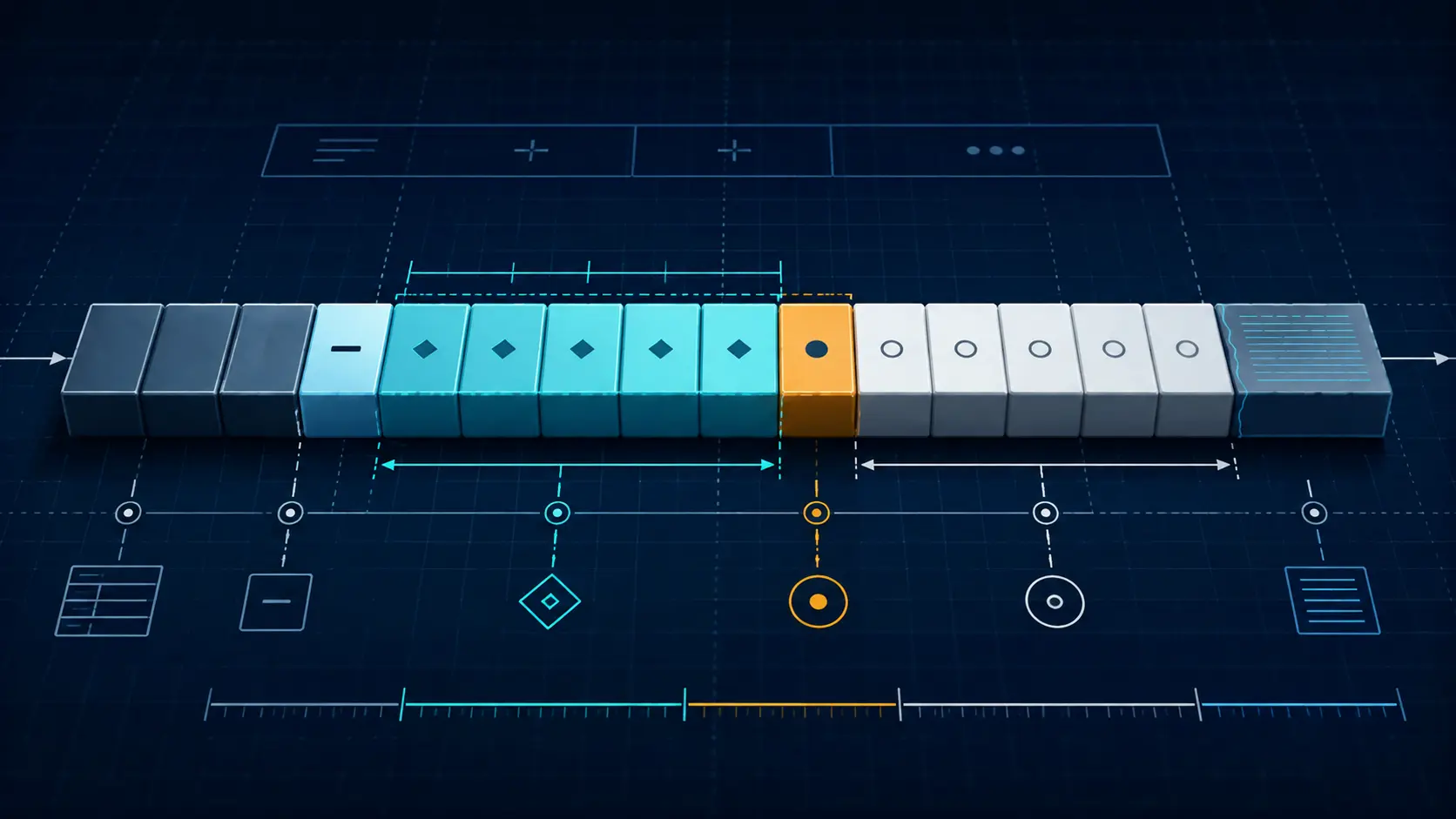
Why TCP Options Needed Both an End Marker and a No-Operation
TCP made room for future capabilities inside a header whose total extent still had to be known before payload could begin. Two deliberately small option codes—End of Option List and No-Operation—helped keep that variable space parseable without making every sender lay it out the…

CASE FILE
The URL Found the Token Authority. It Did Not Make the Issuer Trusted
An ACME client can be told where to fetch an Authority Token without giving the ACME server any reason to trust the token’s signer. Revision 05 of the JWTClaimConstraints profile draws that line sharply, then builds a separate chain of receipts for issuer trust, exact constraint…

CASE FILE
The Shared Dictionary Saved Bytes. It Joined the Secret Boundary
A compression dictionary may look like a performance asset, but RFC 9841 makes it part of the decoder's effective input. Once exact dictionary bytes can change the recovered content—or reveal secrets through output size—the optimisation belongs inside integrity, provenance and…

Story
LACNIC’s PAI Client Documents Java 8. Its Latest JAR Requires Java 17
The public instructions offer a familiar promise: Java 8 or later. The latest downloadable library makes a different, equally precise statement in its own bytes. Every class in the observed 1.5.1 JAR is version 61—the class-file level for Java 17. The code and the documentation…

History
The Repeater Had to Reply Before It Reset: RFC 1516
The management reply was designed to leave while the Ethernet repeater was still able to send it. Only then could the disruptive reset begin. RFC 1516 turned that small ordering rule into a durable warning: acknowledgement, action, completion and restored service do not share one…

CASE FILE
The Parser Accepted the String. The Protocol Still Had to Refuse It
A green check from a JSON parser can be the beginning of validation, not its end. RFC 9839 shows why a syntactically conforming envelope may still carry character content that no robust protocol should admit, preserve or silently erase.

History
The Internet Asked Who Would Have to Live With Its Next Protocol: RFC 1550
A utility meter and a wireless link appeared before any packet diagram. In RFC 1550, the search for a successor to IPv4 began by asking future users what the new protocol would have to endure—and by keeping the candidates temporarily out of the room.

CASE FILE
Both Instances Scored Eight. The Numbers Did Not Mean the Same Thing
Computing-aware traffic steering can compress a processor, a queue and a path into one convenient score. The new operational section of an IETF working-group draft makes the hidden condition explicit: before a selector compares two eights, every component must agree on how an…

CASE FILE
The Member Was Removed. Exclusion Still Needed Two Rekeys
A group controller can delete a name from its membership state in one administrative act. RFC 9838 shows why the cryptographic consequence is not equally instantaneous: the old key protects the first transition, the new key must protect what follows, and multicast delivery does…

Story
APNIC’s API Outage Notice Did Not Name the Registry API
One hyphen separates `api.apnic.net` from `registry-api.apnic.net`. APNIC’s 5 August incident notice named the first host and five affected member-facing or public services. Its published Registry API specification names the second host for authenticated changes to…

History
The Alarm Had to Wait Five Seconds; the Counter Did Not: RFC 1515
Two bursts of an Ethernet fault could enter the same five-second window. A manager might receive one alarm, poll a normal state a moment later, and still find that the transition counter had advanced twice. In 1993, RFC 1515 made those answers coexist because an alert, a present…

CASE FILE
The Certificate Restricted the User. The Older Server Ignored It
A certificate can carry a narrower RPC identity without making the fleet obey it. A new NFSv4 draft turns that compatibility gap into an operational control question: which server actually replaced the credential in the request header, and which merely authenticated the peer…

Global Cloud Services Trends
Ambarella’s US$91.4m RPO Is Not a Semiconductor-Demand Map
Ambarella’s July filing offers a useful corrective to the way chip-demand stories are often assembled. It reports US$91.4 million of transaction price allocated to certain unsatisfied product-order and engineering obligations. It also reports that two distributors represented…

History
The Standard Had to Work With the Feature Off: RFC 1547
On a metered line, a packet sent only to ask whether the other end is still alive can appear on the bill. RFC 1547 used that small operational conflict to establish a large design rule: if one site needs a feature and another must disable it, the common protocol still has to…

CASE FILE
The VPN Number Arrived. Admission Was Still Open
RFC 9837 puts a 32-bit VPN service selector inside an IPv6 packet. The field can tell an egress router which forwarding entry to use. It cannot tell that router whether the sender had the right to choose it. That second claim belongs to the tunnel and the domain boundary.

History
The Table Measured What an Application Could Use, Not the Disk: RFC 1514
A host can report a perfectly accurate disk capacity and a smaller, equally accurate amount of usable storage. The disagreement begins only when a manager strips away which layer each number describes. In 1993, RFC 1514 built that distinction into the Host Resources MIB: physical…

North America Datacenter Trends
CleanSpark Has a 175 MW Lease, Not an 885 MW Delivered AI Campus
CleanSpark’s June 2026 quarterly filing contains three adjacent but materially different facts. On 10 July it signed a 20-year triple-net infrastructure lease for 175 MW of critical IT load at Sandersville, Georgia. The same counterparty also signed an LOI and exclusivity…

CASE FILE
The Circuit Was Ordered. The Network Had Not Built It
RFCs 9833–9836 give an attachment circuit several linked identities instead of pretending that an accepted customer order is already a working path. Their most useful operational lesson is the distance between the service request, the provider’s network realization and the…

CASE FILE
The Registry Said 200. The Domain Command Failed
The newest EPP-over-HTTPS draft makes a deceptively simple distinction operationally unavoidable: `200 (OK)` can mean the command reached the registry application, not that the registry accepted it. Once registration traffic passes through load balancers, retries and distributed…

History
The Address Stayed the Same. The Server Did Not Have To: RFC 1546
In 1993, one ordinary-looking destination field was asked to do an unusual job: name a service offered by several machines while declining to name any particular machine. RFC 1546 called that experimental service anycasting. Its enduring lesson is less about shortening a path…