Summary
- Aspire closed an $80 million senior secured credit facility led by Third Coast Bank and CIBC; Arenova Capital increased its equity commitment to $75 million.
- The financing supports a Southern California fiber expansion. Aspire says the Santa Clarita build is its largest, will continue through 2027, and is planned to exceed 80,000 passings.
- The capital has a broad regional mandate. The street-level progress belongs to a different ledger: construction areas, passings, serviceable addresses and customers online.
The debt is signed. The street map is the next receipt.
On October 27, Aspire Fiber announced that it had closed an $80 million senior secured credit facility led by Third Coast Bank and CIBC. Its equity partner, Arenova Capital, raised its commitment to $75 million. Aspire says the money will accelerate its expansion across Southern California and beyond, on a network it describes as capable of 10 Gigabits.
Those are two different capital sources, not a $155 million pile of cash already drawn. The release supplies no borrowing rate, maturity, repayment schedule, collateral inventory or draw timetable. It also does not allocate the facility to any one city. Santa Clarita is an important build, but the debt announcement funds a wider regional plan.
For lenders, the next proof arrives in construction records. For customers, it arrives when the address checker says their own street is live. Neither measure is replaced by a financing headline.
Santa Clarita is a sequence of streets, not one giant switch
Aspire calls Santa Clarita its largest build and says construction will continue through 2027 across Canyon Country, Newhall, Saugus and Valencia. The company plans more than 80,000 passings across residences, businesses and HOA communities. “Planned” is doing real work in that sentence: the published figure describes the finished project, not today’s serviceable addresses.
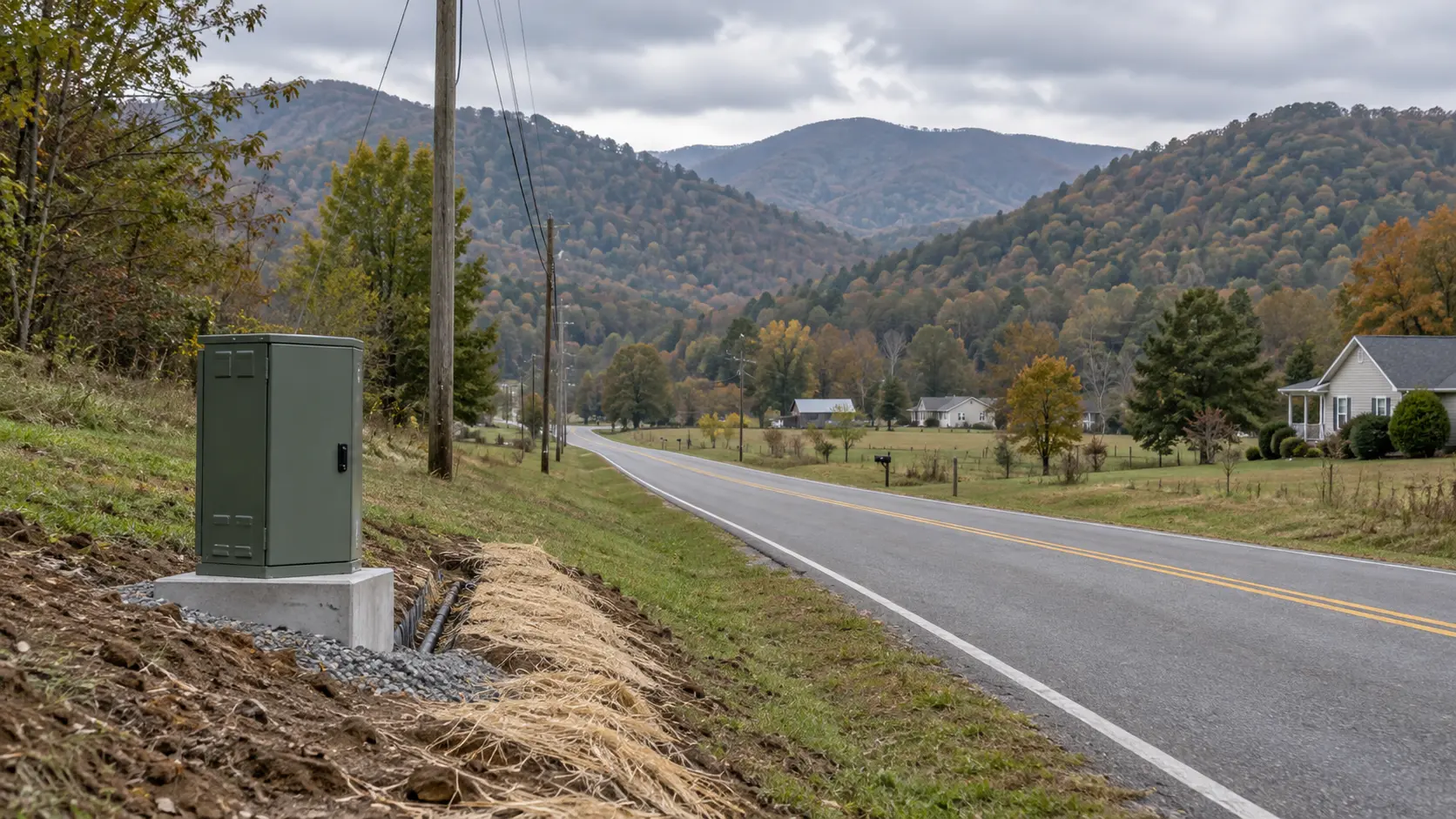
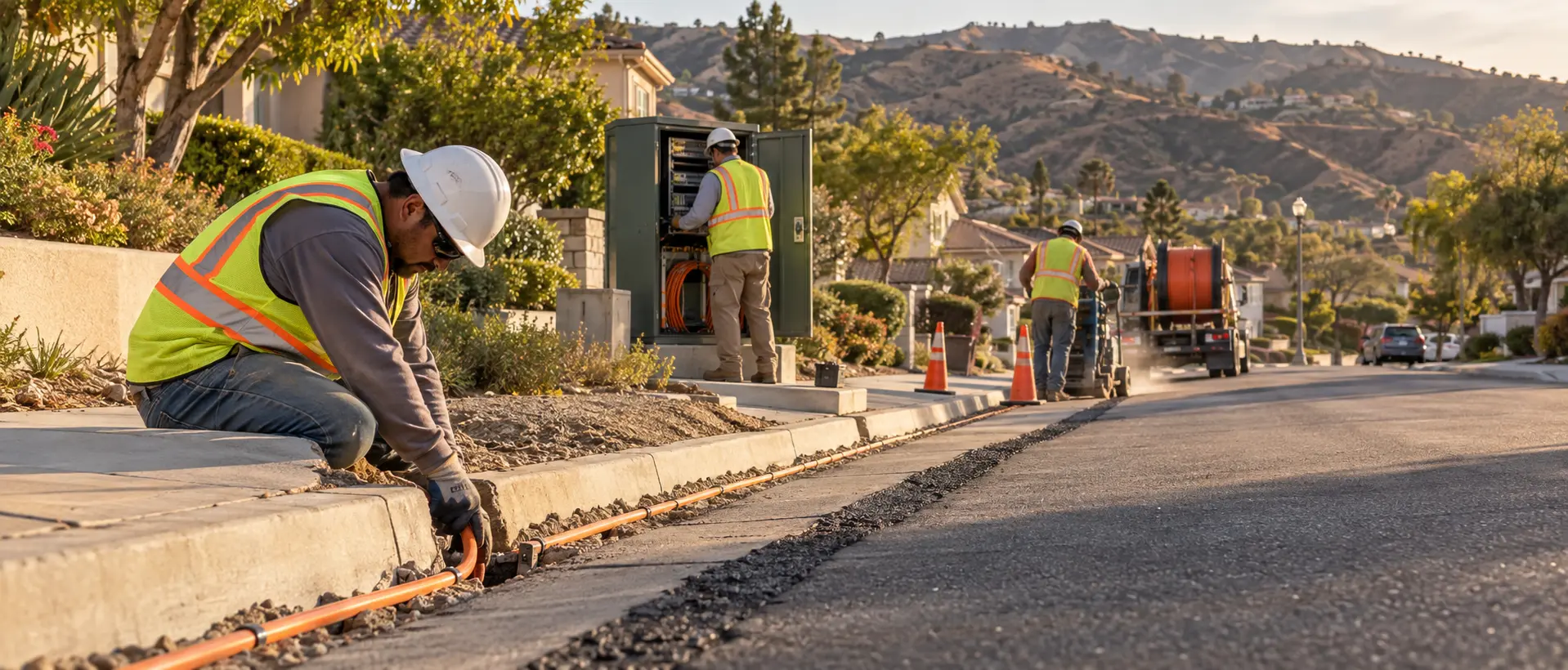
The city’s project page describes ten construction areas, with at least three areas or phases planned each year. Aspire uses microtrenching. Its coverage page says streets come online in stages and directs residents to an address check for current service and timing. A citywide passing target therefore hides a calendar made of individual cabinets, permits, crews and restoration work.
Santa Clarita approved an agreement in October 2025 that gives Aspire access to the public right of way and leases dark-fiber strands for a network Aspire will build, own and operate. The city says its compensation is $7.75 million over the initial 20-year term. The public arrangement opens a route through the city; it does not report how many homes can order service today.
The build has four scoreboards
Keep the financing, the construction and the retail network separate. The financing scoreboard shows the facility’s available and drawn amounts, its cost and maturity, and the equity contribution actually funded. The construction scoreboard counts areas completed, premises passed and restoration finished. The service scoreboard counts addresses that can order, installations completed and customers active. The network scoreboard measures delivered speeds and reliability after activation.
Aspire’s release says “10 Gigabit-capable.” The phrase describes a capability of the network; it does not put every address on a 10 Gbps plan. The city and company pages are more useful for the rollout: ten areas in the municipal plan, staged neighborhood activation, and a future target above 80,000 passings.
The useful quarterly question is not how large the capital headline sounds. It is how much of the build that capital has moved from plan, to trench, to passing, to customer.
Official sources
Member Briefing
Deeper Profile Context
Sign in with the right membership level to unlock the full briefing and source notes.
Only for Strategic Circle
Strategic Circle
Open to all readers. Unlock profile briefings after joining and signing in.
Join Strategic CircleOnly for Leadership Alliance
Leadership Alliance
For qualified IP-asset owners and management; sign in to unlock alliance briefings.
Join Leadership Alliance