Summary
- RFC 984 proposed one permanent mail repository holding a user's stable global state while multiple personal computers kept local copies and synchronized when connected.
- Its roughly 100-byte message descriptors let storage-poor PCs keep a complete mailbox summary without storing every body; batch mode queued offline actions, and atomic DMSP operations kept interrupted sessions from leaving damaged state.
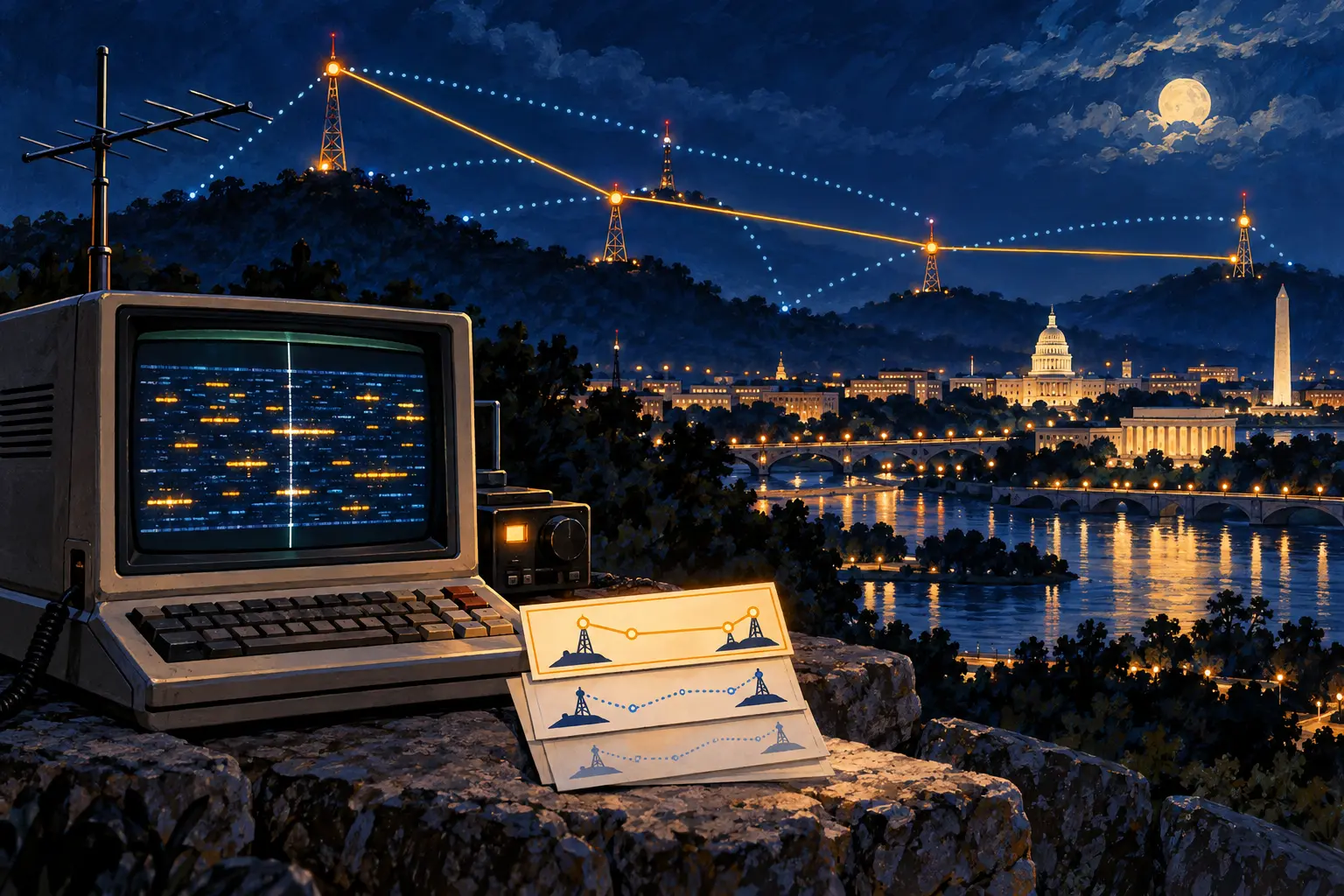
The office PC is switched off. A second PC is waiting at home. One of them may even be riding in a car—the PCMAIL proposal explicitly imagined that in May 1986. The user might read a message heading at work, make a decision on a machine at home, and return to the office with two computers holding different versions of the same mailbox. Where does the mail live while the machines conduct their busy social calendar? David Clark and Mark Lambert put it in a repository, a permanent network site with enough disk to keep the user's stable mail state. The PCs could come and go. The mail needed an address that stayed put.
This was a practical answer to the personal computer's odd mix of freedom and poverty. PCs were cheap enough that a person might own more than one, small enough to move, and short of storage. The RFC describes a typical machine with less than a megabyte of memory and a floppy drive offering around 360 kilobytes. Such a machine could hardly be asked to carry a large mailbox everywhere. It could, however, carry a map of the mailbox.
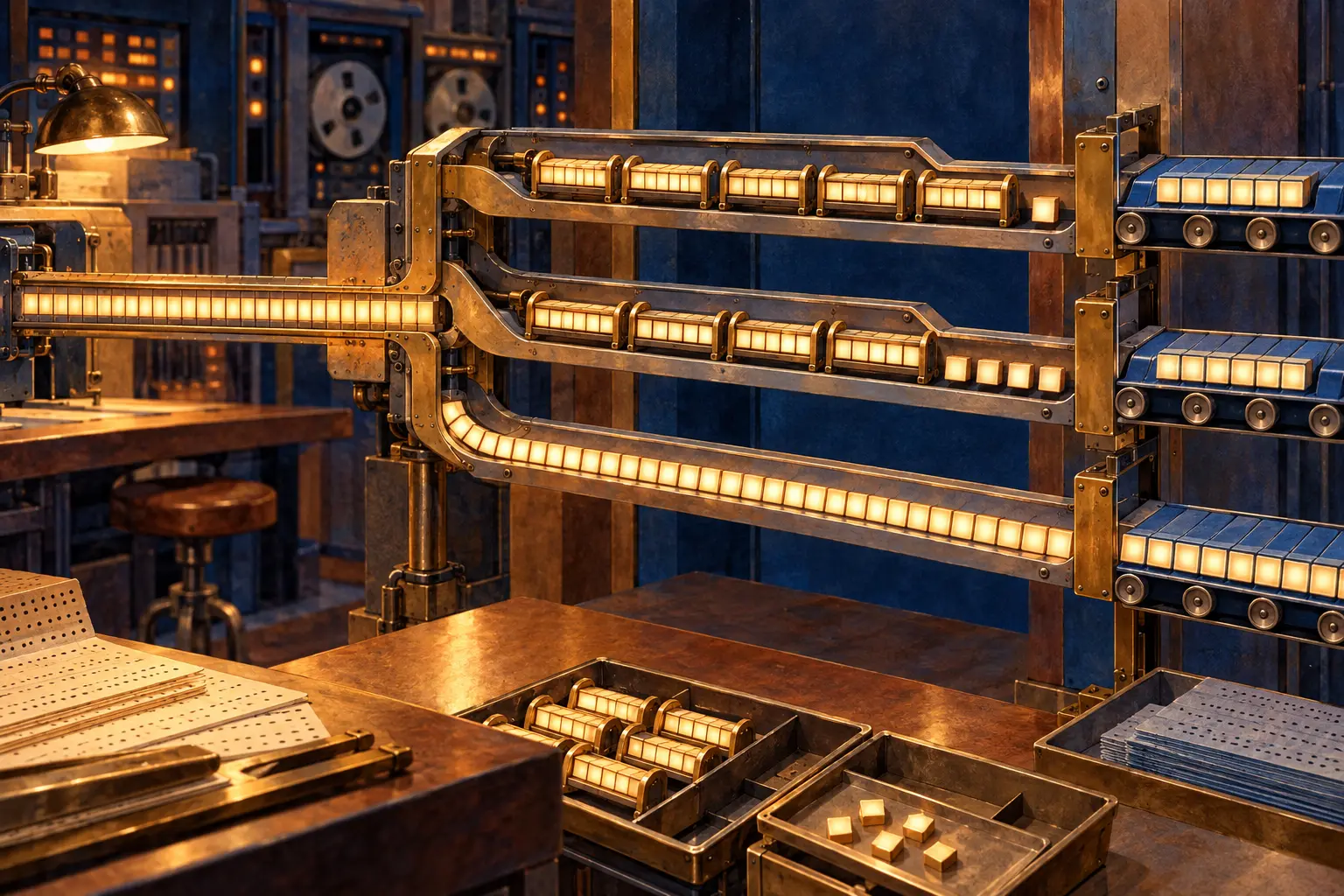
PCMAIL divided each message into a descriptor and a body. The descriptor was a small capsule—typically about 100 bytes, independent of how long the message itself was—with identity, size, useful header fields and flags. A client could retain a full set of these summaries, then fetch bodies as space became available. The design gave a person an inventory of mail even when the local disk could not swallow all of it. The paper's tiny descriptor was a packing decision with a social consequence: you could know a letter existed before you could bring the whole letter home.
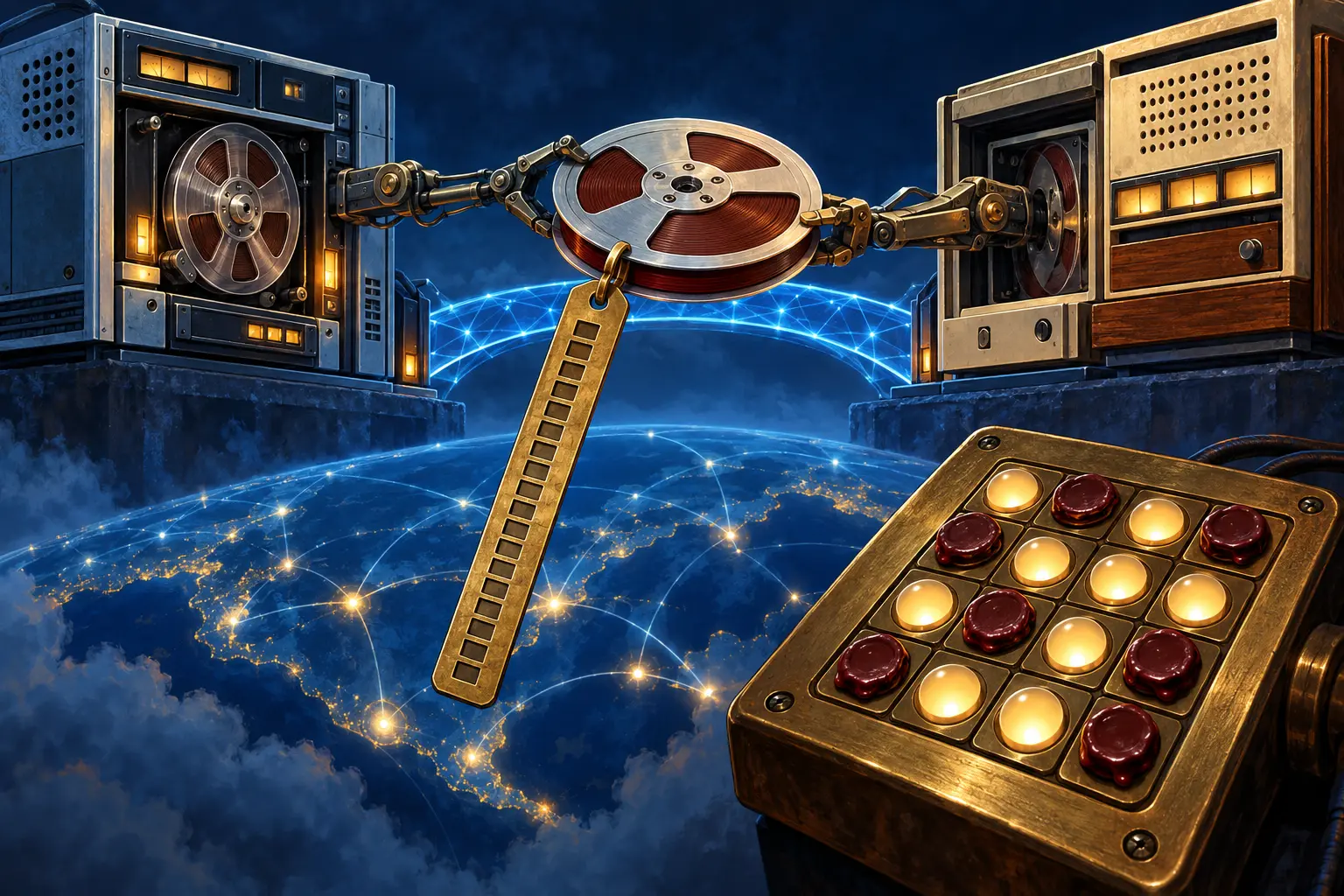
Multiple PCs introduced a less photogenic problem. The repository held global mail state; each PC held a local copy. Offline use made them diverge. PCMAIL offered interactive mode when the network stayed available: changes reached the repository immediately, and incoming mail could reach the client immediately. Batch mode served less-connected PCs. People could act locally, piling changes into a queue, then send those actions when they next connected. The Distributed Mail System Protocol, DMSP, supplied the operations for mail manipulation and synchronization.
The moment of reconnection was where a convenient design could become a mess. PCMAIL made DMSP operations atomic: each completed or failed as a unit. Without an explicit acknowledgement, an operation was treated as failed. The authors were thinking about the cable or connection vanishing mid-session, leaving the client and repository with incompatible stories about a deletion or a message send. Their rule made that interruption an event the system could handle rather than a silent split in the user's mailbox.
The repository even kept track of which clients had missed changes. In the implementation described by the RFC, a client absent for a week became inactive; when it returned, the repository reset it and sent a full copy of global state instead of replaying a long trail of small changes. Imagine returning from a week away to find the filing clerk has stopped narrating every envelope moved during your absence and has handed you a fresh catalogue instead. That one-week figure belonged to the described implementation. The broader mechanism was a choice between incremental catch-up and a fresh inventory when the old local map became too stale.
The RFC Editor record dates PCMAIL to May 1986 and records that RFC 993 later replaced it. The original document called itself a preliminary design for discussion. Its sharp insight remains in the arrangement of work: the repository remembers, the PC travels, the descriptor saves space, and the protocol settles who did what after the network returns. The computer could go home. The mail still knew where to report for duty.
Member Briefing
Deeper Profile Context
Sign in with the right membership level to unlock the full briefing and source notes.
Only for Strategic Circle
Strategic Circle
Open to all readers. Unlock profile briefings after joining and signing in.
Join Strategic CircleOnly for Leadership Alliance
Leadership Alliance
For qualified IP-asset owners and management; sign in to unlock alliance briefings.
Join Leadership Alliance