Summary
- RFC 910 recorded a July 1984 meeting of multimedia-mail researchers. BBN reported a working Diamond system on a Jericho workstation, able to exchange compound documents with text, images, voice, graphics and spreadsheet/charts.
- Diamond's spreadsheet object carried the model as well as the data. A capable reader could alter data and test a different conclusion; a minimal reader could display the cell values and leave the formulas alone. The meeting also had to decide how author intent would survive different screens and printers.
Suppose a colleague sends you a chart with a reassuring upward line. You may admire the line. Or you may ask what happens if one cell changes. The first response needs a picture; the second needs the machinery that drew it. In July 1984, a group of Internet mail researchers was already trying to put that machinery into the message. The “attachment” they imagined had moving intellectual parts.
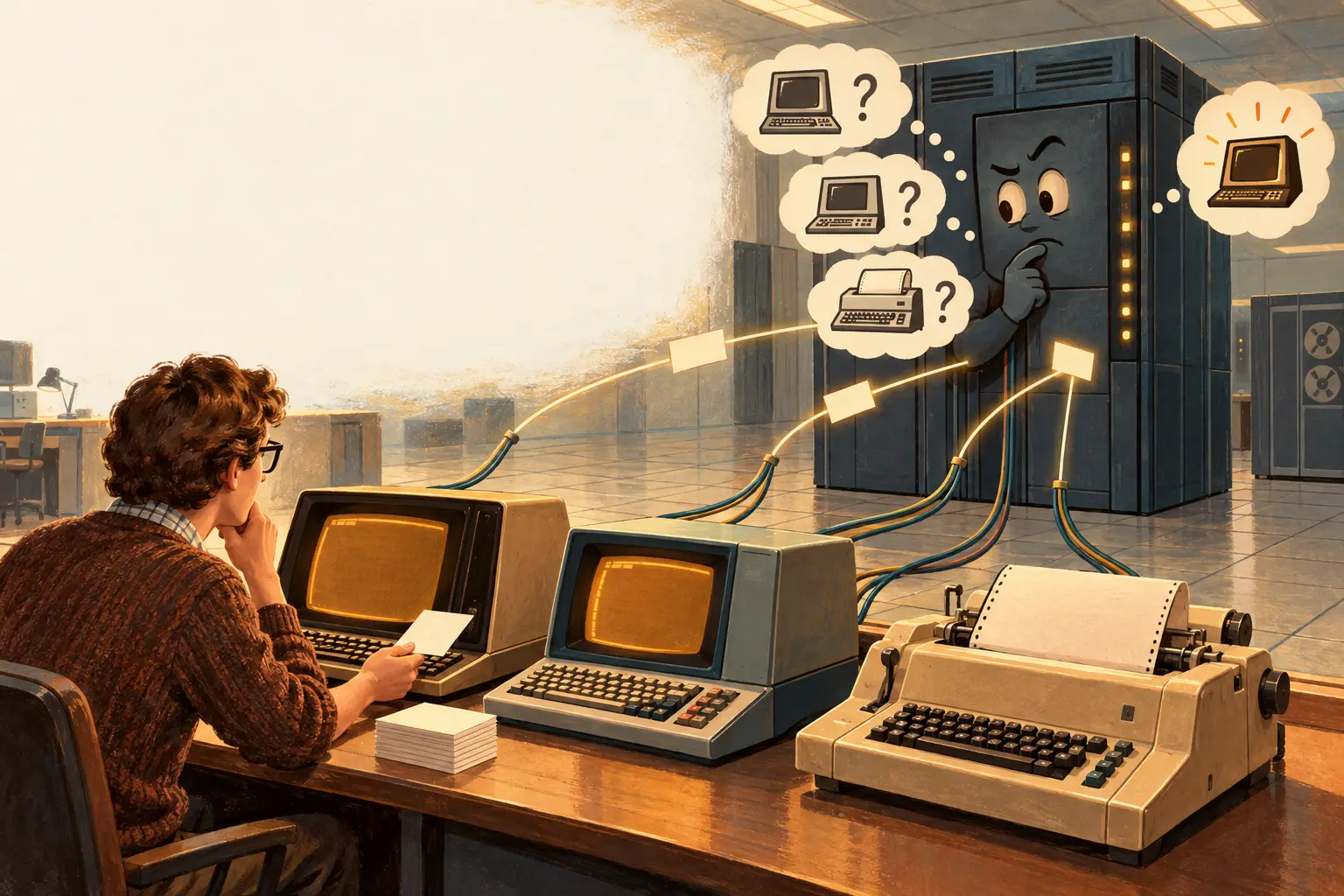
Harry Forsdick's RFC 910 preserves the notes from a 23–24 July meeting at BBN. BBN, ISI, SRI and Linkabit brought different experiments to the table. BBN said its initial Diamond implementation was complete on the Jericho workstation. It handled compound documents with text, graphics, images, voice and spreadsheet/charts. ISI was building a user interface on a Xerox 1108, while its TOPS-20 Message Processing Module had matured enough to include conversion toward ordinary SMTP mail. SRI described a Sun-based handler, structure editor and transport module with current text, voice and graphics support. This was a room full of prototypes, not a product launch with a ribbon.
The spreadsheet idea is the most mischievous part of the report. A Diamond spreadsheet object could contain numbers, labels, dates and formulas. The model went with the data. A recipient's software could try different numbers and see how those changes affected the conclusion suggested by the original sheet. The same object might be displayed as a table, a line graph, a scatter plot, a bar chart or a pie chart. Add rulings, and it could pass for a polished business table. Underneath the polish was a small argument about who controlled the question: the author sent a structure, but the reader could interrogate it.
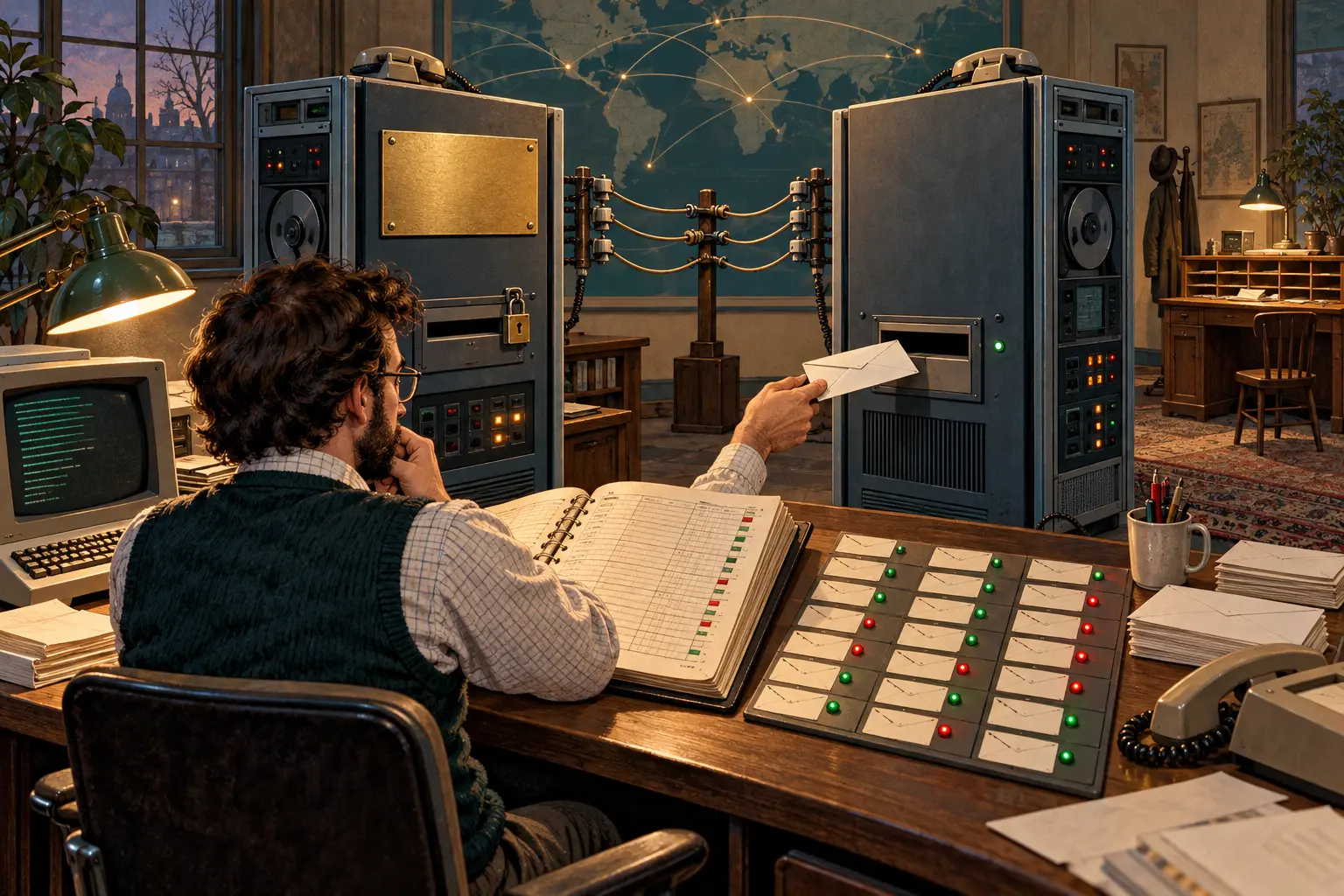
The group also described a much simpler reader. It could ignore formulas and show only cell values. That detail matters because an Internet message crosses machines that have different capacities. A document's author could send a model with room for exploration; one recipient could explore, another could at least read the numbers. These were capabilities of particular software, not magical properties of the mail route. Even the notes' warning about a Diamond spreadsheet reaching another implementation and probably ending in a debugger described a compatibility risk, rather than an observed crash. The meeting's answer was to make systems accept unknown media types, even if they could only ignore the object.
The spreadsheet sat inside a broader argument about presentation. A document might reach a bitmap display or a paper printer, each with its own size, resolution and fonts. The meeting rejected hard-wiring every page boundary at the sender's desk. Instead, it agreed to develop a way to record an author's intentions—grouping, headings, font emphasis and relationships between objects—while letting the recipient's presenter choose the final layout. The meeting did not settle every implementation detail; it named a design task with a deadline.
An attached formula might let the reader ask a new question, but the page still needed to make sense on the reader's equipment.
The participants had inherited an earlier framework. Jon Postel's RFC 759 described Internet Message Protocol and Message Processing Modules; RFC 767 described a structured format for multimedia documents. The 1984 meeting was wrestling with implementations: which graphics representation should ship first, how to connect unlike workstations, how to bridge back to text-only SMTP, and how to keep one ambitious sender from overwhelming a simpler receiver. It chose Diamond's graphics format as an interim MMGraphics1 representation and set future work on document presentation semantics.
The schedules in the notes are revealing. A revised multimedia syntax was to be adopted as soon as possible, with the switch finished by 1 October 1984. A further experiment was planned for January 1985, including text, graphics, images and voice. BBN expected 100–200 ADDCOMPE users during the following year; that was a projection for a testbed. The spreadsheet object existed in the Diamond work reported to the meeting, while broader agreement and regular use required more than one capable program at more than one site.
The 1984 Internet was already entertaining an idea familiar to anyone who has ever distrusted a slide deck: send the assumptions, not just the conclusion. Its mail researchers were learning that a document could carry a model, a picture of the model and instructions about how to present both. The recipient with a capable reader could turn a dial and ask the sheet a different question. The recipient with a modest reader still got a table. Either way, the interesting cargo was the possibility of answering back to the numbers.
Member Briefing
Deeper Profile Context
Sign in with the right membership level to unlock the full briefing and source notes.
Only for Strategic Circle
Strategic Circle
Open to all readers. Unlock profile briefings after joining and signing in.
Join Strategic CircleOnly for Leadership Alliance
Leadership Alliance
For qualified IP-asset owners and management; sign in to unlock alliance briefings.
Join Leadership Alliance