
Intelligence
Latest Articles
Latest intelligence on infrastructure operators, policy decisions, market moves, and digital power shifts.

Leaders
Hans Petter Holen and the Chair That Needed a Selection Process
A trusted personal handover placed Hans Petter Holen in the RIPE Chair role in 2014. By 2020, the more consequential achievement was a community process designed to make the next transition less dependent on any one person.
Story
APNIC Whois mnt-irt Points to Incident Response, Not Network Control
A mandatory contact pointer can look like a declaration of who runs a network. In APNIC Whois, `mnt-irt` has a narrower and more useful meaning: it connects a number-resource record to an Incident Response Team entity for security and abuse handling. That link strengthens…
History
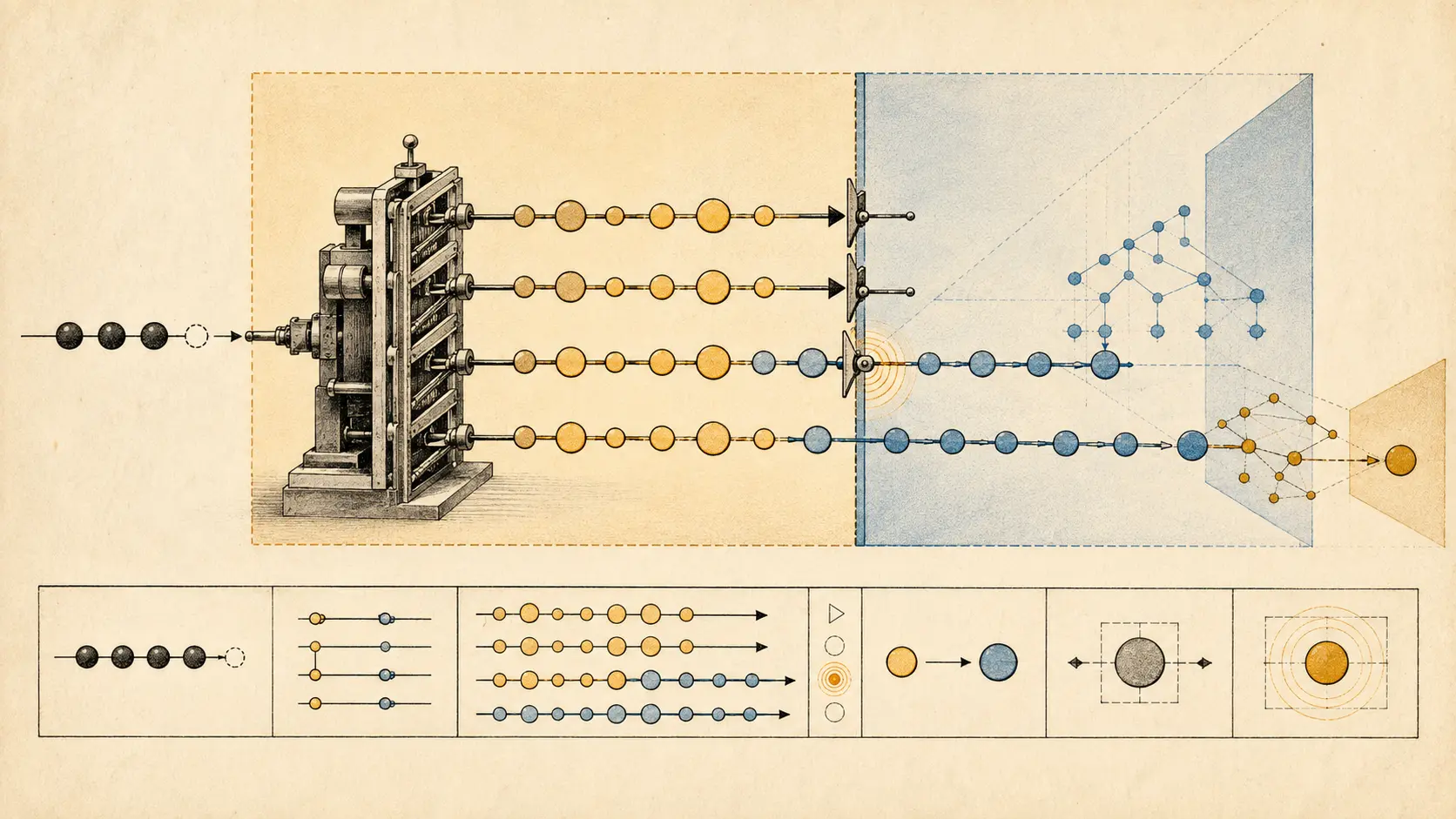
The Name Looked Complete. The Resolver Still Rewrote It: RFC 1535
`UnivHost.University.EDU` looks like an address already supplied. To one 1993 resolver, it was only the beginning of a search. Before asking for the rooted name the user appeared to mean, the software could manufacture three longer candidates, cross from a locally managed suffix…

IETF
RFC 9916 Draws the Line at PCEPS Early Data
A PCE controller can save one handshake round trip and still create a worse incident if path-control data is accepted before replay-safe handshake completion. RFC 9916 therefore treats the PCEPS session boundary as a control-state boundary: negotiate the newest supported TLS…

AFNOG
AfNOG’s Presenter-Cost Rule Waives Registration but Leaves Travel Support Unspecified
AfNOG’s 2007 call said presenters and tutorial instructors were expected to cover travel while being exempt from registration fees, but the cited page did not say beside that rule whether a travel-support exception route existed.

History
The Length That Outranked the Frame: Why IPv4 Counts Its Own Header
An IPv4 packet can sit inside a link-layer frame that is longer than the packet itself. The small field that resolves the ambiguity does more than count payload: it declares the complete IP datagram, header included, so the network layer keeps its own boundary when the enclosing…

Leaders
Mirjam Kühne and the Forum That Had to Become a Journal
A post-Christmas spam problem revealed the editorial work required to keep an open technical publication useful: selection, moderation, format and a named hand-off.

CASE FILE
The Beacon Anchor Became Verifiable. Its Quantum Timeline Still Needed Another Archive
Revision 01 of Wathīqa repairs an important weakness in its evidence record: the first beacon value is no longer merely a time-shaped field but a signed pulse tied to a pinned certificate, with an optional successor that can prove immediate chain continuity. The repair is real.…

CASE FILE
The Receiver Lowered the Window. The Sender Never Changed Its Algorithm
A small advertised TCP window is often read as proof that the receiving application cannot keep up. RFC 9840 makes that shortcut unsafe. It gives the receiver a second reason to limit the window—deliberate low-priority transport—while leaving the sender’s congestion-control…

IETF
A Lease Is a State Machine: RFC 9915 Tightens DHCPv6 Authority
A client can receive an address successfully and still fail hours later when renewal, rebinding or delegated-prefix continuity crosses a server or relay boundary. DHCPv6 is therefore a state machine, not a one-shot response: the operational question is whether identity, lifetime…

AFNOG
AfNOG’s Reproduction-Permission Request Leaves the Licence Boundary Unstated
AfNOG’s 2007 call asked for permission to reproduce the contributor’s presentation after the event, including permission to post it on the AfNOG website. That sentence names two requested acts, but it does not state how long the permission would last, where it would apply…

Story
ARIN’s Incoming-Reassignment Switch Makes Registry Association Consent-Bound
An organization identifier used to be available for an upstream provider’s reassignment workflow unless another requirement failed. Since ARIN’s January 2026 release, the recipient can refuse that association before it is created. The new switch changes registry accountability in…

IETF
The Root Writes the Shortcut: RFC 9914 Projects Routing State into RPL
A leaf-to-leaf packet may climb a stretched RPL DODAG path through the Root even when a shorter directional path exists. RFC 9914 lets the Root project a PCE-computed shortcut as routing state into selected nodes—improving path choice, but also making freshness, precedence…
History
The Number IPv4 Could Not Freeze: How the Protocol Field Became a Live Registry
IPv4 devoted one octet to a deceptively simple question: what protocol should receive the payload next? The answer could not live in the packet format alone. It required a shared assignment system that could change while the eight bits on the wire stayed fixed.

Leaders
Cristiano Amon and Qualcomm's Two-Engine Bargain
Cristiano Amon's defining leadership test before becoming CEO was not simply to accelerate Qualcomm's chip roadmap. It was to keep product execution credible while a legally distinct licensing business faced customer conflict, litigation and regulatory pressure.

History
The Header Shrunk to One Octet. The Missing Bytes Moved into Shared State: RFC 1553
A packet crosses a slow link with a one-octet compression header. Its ordinary thirty-octet IPX header is absent. Nothing has been lost—if the receiver still holds exactly the right prior header in exactly the right slot. Let one earlier packet vanish, however, and the same…

IETF
Four Radios, One Control Problem: What RFC 9913 Reveals About RAW's Capability Plane
Four radio technologies can each advertise scheduling or redundancy while exposing different clocks, resource units, diversity primitives and failure correlations; their feature names are therefore not interchangeable assurance promises. This briefing by Theo March examines how…

AFNOG
AfNOG’s Affiliation Field Names an Institution Without Defining the Relationship
AfNOG’s 2007 call requested a contributor’s affiliation without defining what relationship that label represented.

History
Why IPv4 Checksums Only Its Header
A packet can carry an undamaged payload and still be dangerous to forward if a bit error changes its destination, length or remaining lifetime. IPv4 therefore checks the control surface routers must trust: its header, and only its header.

Story
Barry’s README Uses the IPv6 Prefix Its Lexer Rejects
`::/0` and `0::/0` name the same IPv6 address space. In LACNIC’s experimental Barry generator, the first spelling is documented as a default yet an open issue says it stops at the descriptor lexer; adding one zero lets the token proceed. That is not an RPKI validation failure. It…