
Intelligence
Latest Articles
Latest intelligence on infrastructure operators, policy decisions, market moves, and digital power shifts.

Global Datacenter
Equinix Fabric and the Limits of Programmable Interconnection
Equinix has spent more than a decade turning private connections between data centres, clouds, and network services into software-manageable products. Its 2026 expansion into agent-assisted operations and geographically constrained routing pushes the platform into broader…

Creators
Richard Barnes and the protocols that made trust routine
Richard Barnes has worked on the protocols that make trust routine enough to disappear into operations: automated certificates, recipient encryption, changing group membership and protected media. Their value lies in open, composable mechanisms; their limits appear when services…

Global Institutional
DNSViz and the graph that makes DNSSEC failures legible
DNSViz turns one of the internet's least intuitive failure modes into a picture that teams can actually examine. Created by Casey Deccio and run publicly by DNS-OARC, this open-source project links delegations, keys, signatures and non-existence proofs in a single operational…

Global Institutional
DNSViz: Turning DNSSEC failures into a readable map
DNSViz turns one of the hardest Internet failures to grasp at a glance into diagrams operators can check step by step. Created and maintained by Casey Deccio, with its public instance run by DNS-OARC, the open-source tool connects delegation, keys, signatures and authenticated…

Global Cloud Services Trends
V-JEPA Predicted Video Features, Not a Finished World Model
Meta’s original V-JEPA release tested a focused idea: learn reusable video representations by predicting hidden features instead of rebuilding missing pixels. The February 2024 research showed a promising training direction, but its evidence remained bounded by checkpoints…

North America Cloud Services Trends
The Azure Front Door Protection Bypass That Became an Accountability Test
Microsoft’s account of QNBQ-5W8 shows how a temporarily disabled safeguard let bad control-plane metadata reach edge resources—and why recovery promises need operational proof.

Global Cloud Services Trends
Project DIGITS put a 128GB AI system on the desk—at the announcement stage
Nvidia's 6 January 2025 CES announcement proposed a compact developer system with 128GB of coherent memory and a local-to-cloud software path. Its FP4 petaflop, model-size, price and availability figures described an intended product envelope, not shipment, independent testing or…
Global Institutional
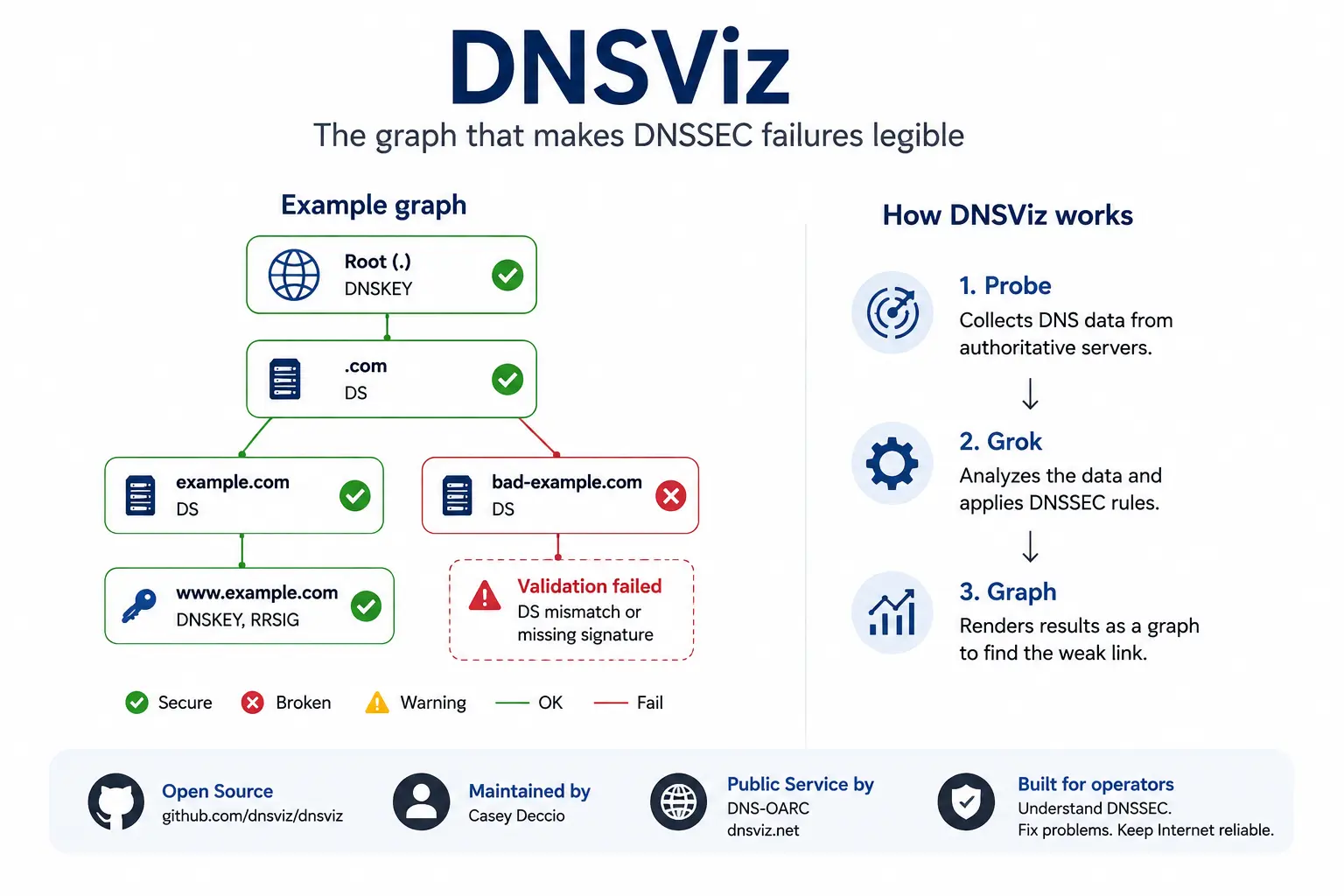
DNSViz and the graph that makes DNSSEC failures legible
DNSViz turns one of the internet's least intuitive failures into an image operators can investigate. Created by Casey Deccio and publicly operated by DNS-OARC, the open-source project links delegations, keys, signatures and authenticated non-existence proofs into an operational…
Global Institutional
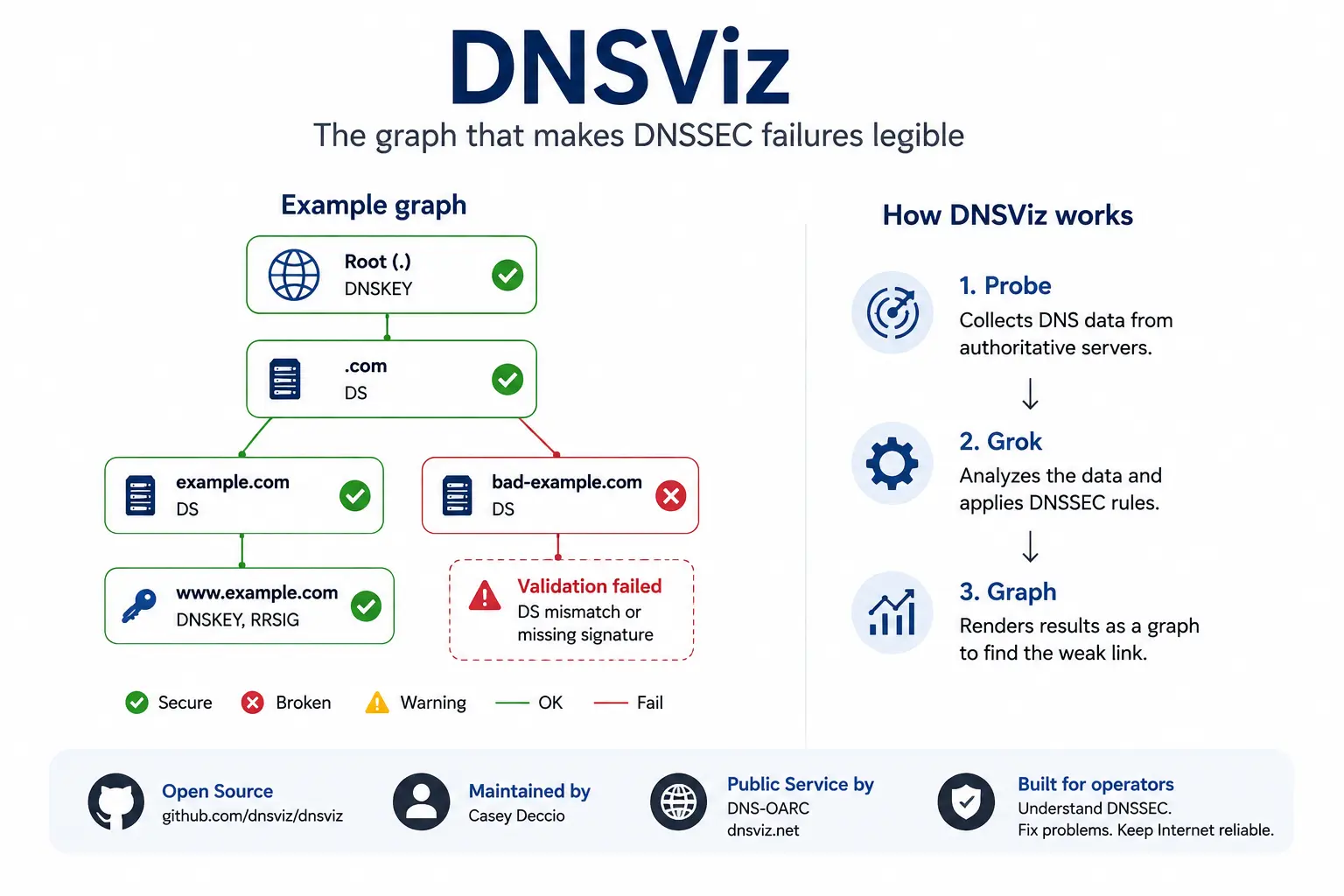
DNSViz and the graph that makes DNSSEC errors understandable
DNSViz turns one of the internet’s most difficult-to-fathom error types into a picture that operators can examine. The open-source project, developed by Casey Deccio and publicly operated by DNS-OARC, links delegations, keys, signatures and authenticated non-existence proofs into…
Global Institutional
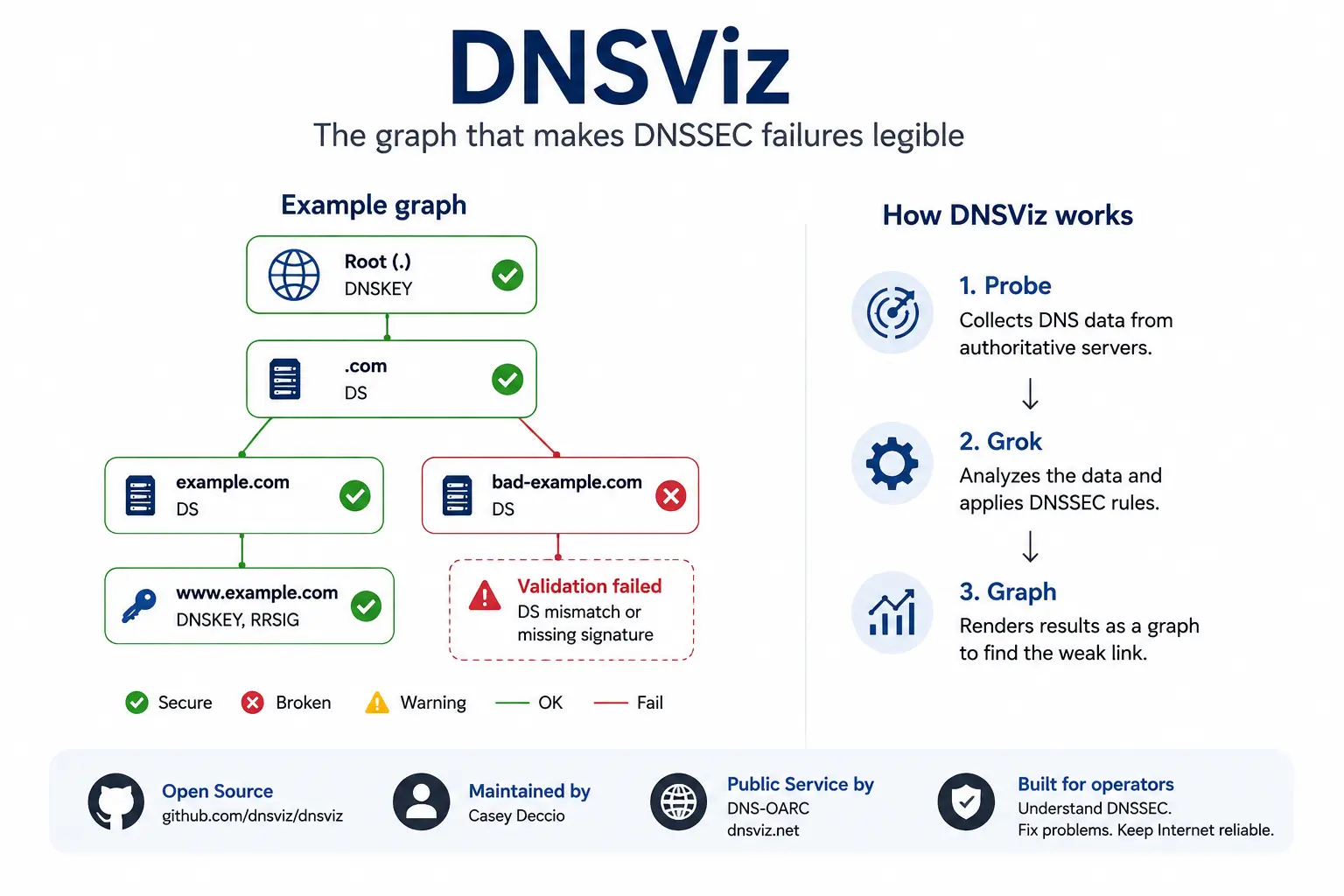
DNSViz and the graph that makes DNSSEC failures understandable
DNSViz turns one of the most opaque Internet failures into a picture operations teams can investigate. The open-source project, created by Casey Deccio and operated publicly by DNS-OARC, links delegations, keys, signatures and authenticated denial-of-existence proofs into an…

Europe and Middle East Institutional Trends
Reading AS209467 in Layers: What the Remstal-Bote-AS Records Show
Reading AS209467 in Layers: What the Remstal-Bote-AS Records Show intelligence summary explains the development, the public evidence available to readers, the organisations involved, the regional context, market exposure, and the infrastructure consequences that may follow. The…

Story
The affidavit AFRINIC could not author
In March 2023, AFRINIC had lawyers but filed no response affidavit to a motion lodged by Cloud Innovation Ltd. The missing document exposed a narrow yet consequential institutional failure: a private technical registry may keep operating and counsel may keep appearing, while no…

Story
The Door the Court Closed: Why AFRINIC’s 23 June Ballot Room Had Its Own Legal Status
The most revealing feature of the TISPA interim order was not simply that an election stopped. It was that the Supreme Court of Mauritius stopped the room separately—isolating a physical poll, its paper trail and its conditions of return from the electronic channel that carried…

Story
The ballot that had not yet begun
Three days before AFRINIC's electronic Board ballot was due to open, a Mauritius court stopped that remote channel in its own operative sentence. The precision of the restraint matters: it exposed an electronic vote as a governance mechanism with a launch, a legal state and…

Story
The election timetable made invoice status a voting precondition on 16 June
At 23:59 Mauritius Time on 16 June 2025, a field in AFRINIC’s commercial records was due to become a gate to participation in an internal corporate vote. The deadline itself was clear. The harder institutional question was whether the account-status snapshot behind it could be…

Story
The Week Before the Meeting: AFRINIC’s Hybrid Ballot and the Missing Join
On 29 April 2025, AFRINIC announced that electronic voting would open on 16 June, a full week before members met for in-person voting on 23 June. That choice widened access for a dispersed membership, but it also split one election into two custody systems. The decisive…

Story
The receiver fixed 30 June as the deadline for Board reconstitution
On 21 April 2025, AFRINIC's receiver published two dates that compressed a difficult institutional transition into a visible public clock: an election on 23 June and completion of Board reconstitution by 30 June. The dates gave members a focal point, but the communiqué did not…

Story
The Minute Authority Changed Hands at AFRINIC
At 14:30 on 12 February 2025, the public record marks a precise institutional handover: the Official Receiver ceased to be the identified receiver of AFRINIC, and Gowtamsingh Dabee became the named receiver in that office's place. The importance of that minute lies not in the…

Story
Restored, Not Merely Unblocked: The Court’s Operative Choice for AFRINIC
On 15 October 2024, the Court of Civil Appeal did more than dispose of an appeal brought without valid corporate authority. It expressly restored the 12 September 2023 order that had placed AFRINIC under a preservation and governance-reconstitution mandate. That separate remedial…

Story
The AFRINIC Appeal Stopped Before Two Other Gates
The appeal ended at the threshold of corporate authority. That result was decisive, but it did not answer everything the parties had put before the Court: one question concerned permission from the Official Receiver, and another concerned statutory leave from the first-instance…