
Intelligence
Latest Articles
Latest intelligence on infrastructure operators, policy decisions, market moves, and digital power shifts.

Story
AFRINIC’s Accounts Show $3.289 Million in Legal Spending. Who Authorised Each Dollar?
AFRINIC’s own disclosures put its legal spending at $3,289,408 from 2022 through 2025. The figure is not an allegation; it is arithmetic drawn from the registry’s published accounts. The unresolved question lies one layer below the totals. Which engagement, invoice, approver…

Story
RIPE NCC’s Dubai Company Has One Member. Where Do the Association’s Members Enter?
The member register of RIPE NCC Middle East FZ-LLC has the shortest possible answer: one corporate member, the Dutch RIPE NCC association. That clarity is useful. It also exposes the real governance question. Ordinary RIPE NCC members elect the parent association’s Executive…

Story
LACNIC Counted 978 Organisations and 2,145 Weighted Votes. One Denominator Is Still Missing.
LACNIC’s 2026 extraordinary Board election published enough numbers to reproduce a seven-percent organisation turnout and the winning margin. It did not publish the total voting power held by all eligible organisations. In a system where one member can carry eleven times another…

Story
ARIN’s 2026 Election Officer Is a Sitting Trustee. Who Audits the Certification Chain?
ARIN’s published rules give one non-candidate Trustee a view across candidate problems, the voter list and the final tally before the Board confirms the result. That is a real internal control. It is not the same thing as independent election assurance—and the distinction matters…

Story
APNIC Moved Its One Share Into a Corporate Trustee. Who Controls the Trustee?
The reform removed a real one-person vulnerability. It did not remove the one-share legal machine. APNIC’s own trust deeds, company constitutions and by-laws show where authority now travels—and why collective control should not be confused with independent trusteeship or direct…

Story
AFRINIC’s remote-board clause can hear a quorum. It still cannot identify one
Draft Article 19.3 preserves remote Board meetings, but its test stops at a working audio channel. For an institution whose decisions can bind members, move money and restrict exit, that is not yet an evidence standard.

Story
When AFRINIC Could Not Authorise Itself, Company Law Supplied an Agent
Four directors could still turn up, staff could still know the work and lawyers could still know the file. None of that answered the decisive corporate question in September 2023: who could lawfully speak and act for AFRINIC when its Board needed five directors for a quorum, its…
Global Institutional
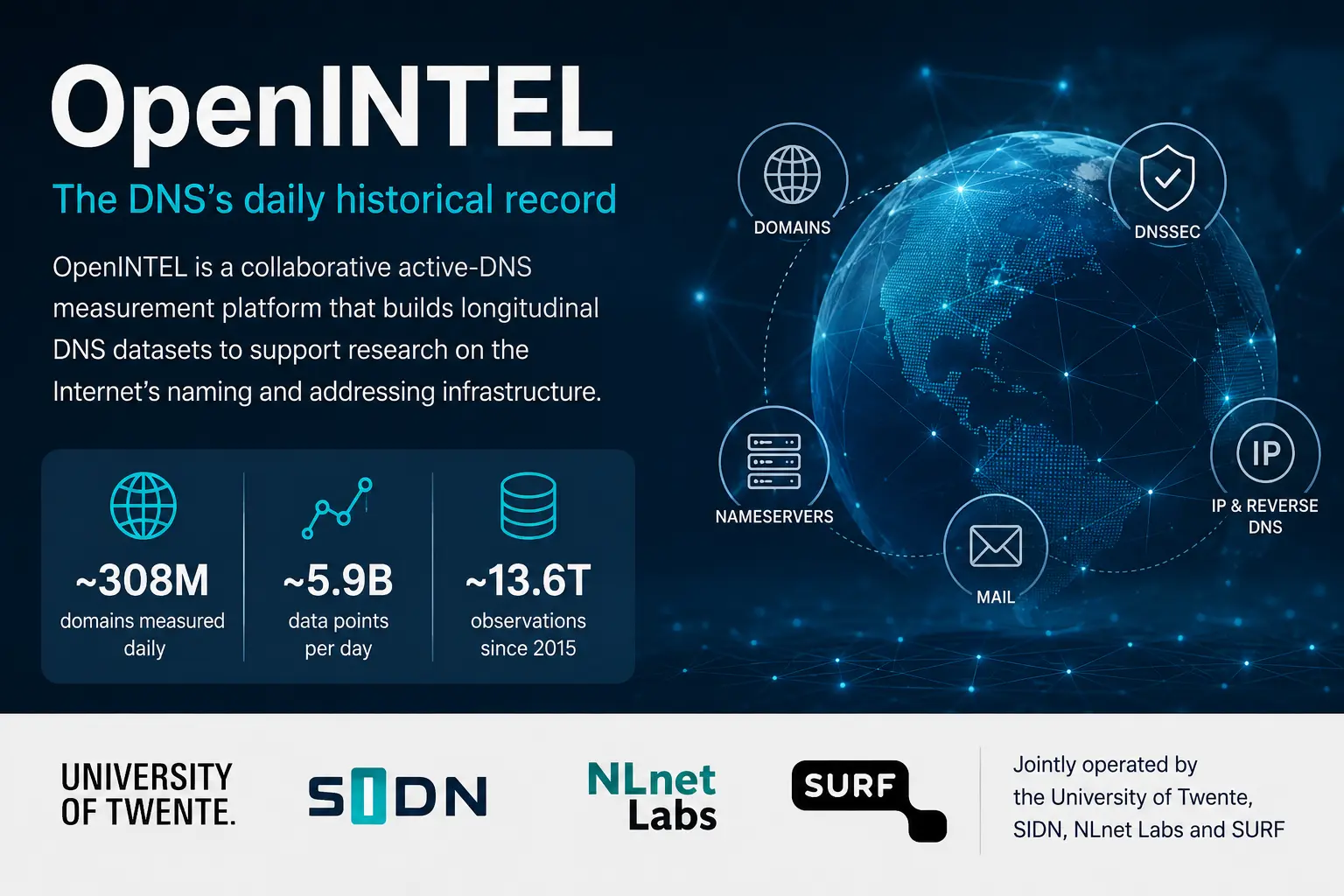
OpenINTEL built a memory for the DNS—not a copy of it
The Domain Name System answers current questions and preserves little of its own history. OpenINTEL has built a longitudinal record by repeatedly measuring a defined set of domains and address space, creating unusual research value while leaving user demand, resolver behaviour…

Global Datacenter
Equinix Fabric and the Limits of Programmable Interconnection
For more than a decade, Equinix has turned private connections between data centres, clouds, and network services into software-addressable products. The 2026 push into agent-assisted operations and geographic path control extends the platform's usefulness but also makes the…

Global Datacenter
Equinix Fabric and the Limits of Programmable Interconnection
Equinix has spent more than a decade turning private connections between data centres, clouds, and network services into software-manageable products. Its 2026 expansion into agent-assisted operations and geographically constrained routing pushes the platform into broader…
Creators
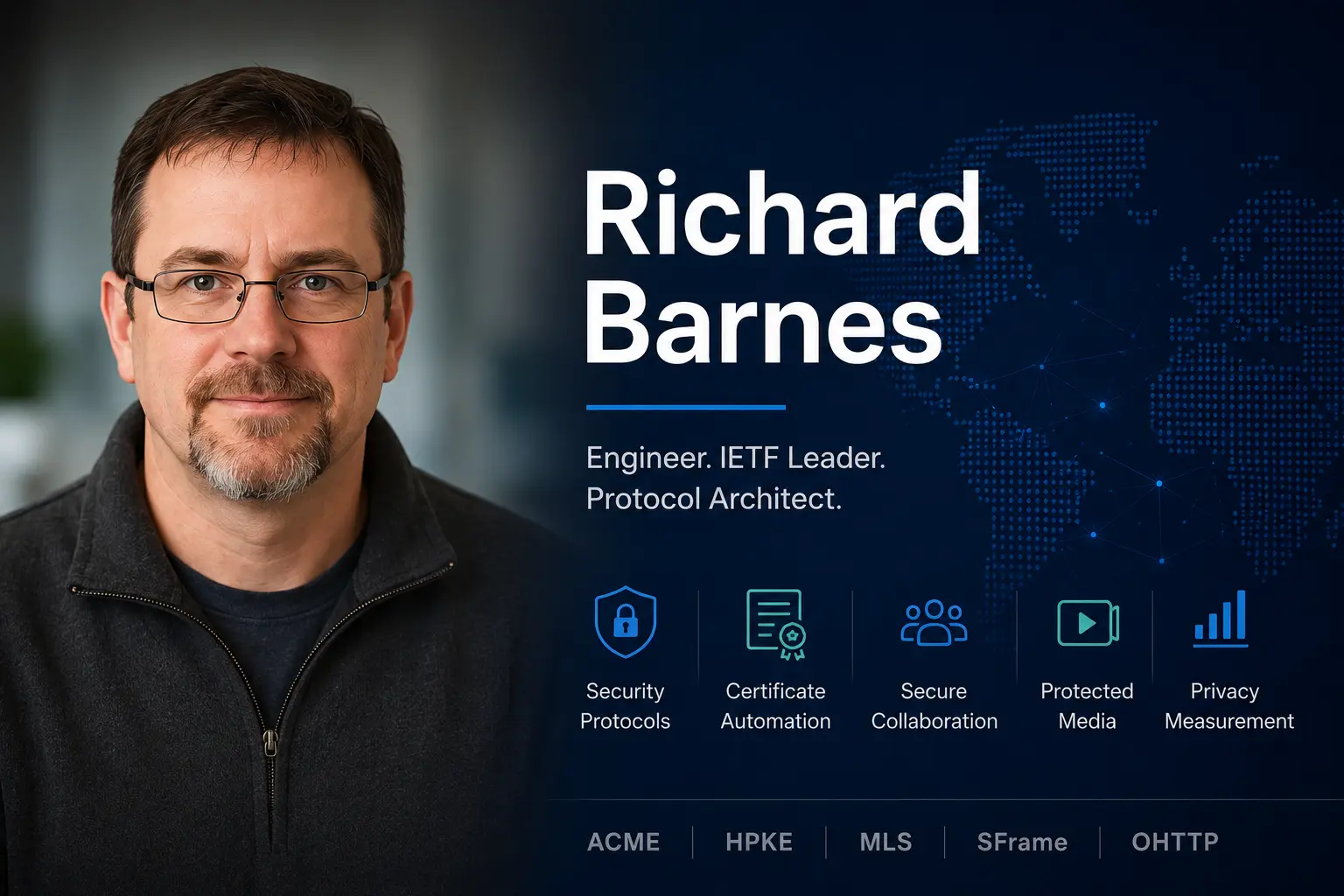
Richard Barnes and the protocols that made trust routine
Richard Barnes has worked on the protocols that make trust routine enough to disappear into operations: automated certificates, recipient encryption, changing group membership and protected media. Their value lies in open, composable mechanisms; their limits appear when services…

Global Institutional
DNSViz and the graph that makes DNSSEC failures legible
DNSViz turns one of the internet's least intuitive failure modes into a picture that teams can actually examine. Created by Casey Deccio and run publicly by DNS-OARC, this open-source project links delegations, keys, signatures and non-existence proofs in a single operational…

Global Institutional
DNSViz: Turning DNSSEC failures into a readable map
DNSViz turns one of the hardest Internet failures to grasp at a glance into diagrams operators can check step by step. Created and maintained by Casey Deccio, with its public instance run by DNS-OARC, the open-source tool connects delegation, keys, signatures and authenticated…

Global Cloud Services Trends
V-JEPA Predicted Video Features, Not a Finished World Model
Meta’s original V-JEPA release tested a focused idea: learn reusable video representations by predicting hidden features instead of rebuilding missing pixels. The February 2024 research showed a promising training direction, but its evidence remained bounded by checkpoints…

North America Cloud Services Trends
The Azure Front Door Protection Bypass That Became an Accountability Test
Microsoft’s account of QNBQ-5W8 shows how a temporarily disabled safeguard let bad control-plane metadata reach edge resources—and why recovery promises need operational proof.

Global Cloud Services Trends
Project DIGITS put a 128GB AI system on the desk—at the announcement stage
Nvidia's 6 January 2025 CES announcement proposed a compact developer system with 128GB of coherent memory and a local-to-cloud software path. Its FP4 petaflop, model-size, price and availability figures described an intended product envelope, not shipment, independent testing or…
Global Institutional
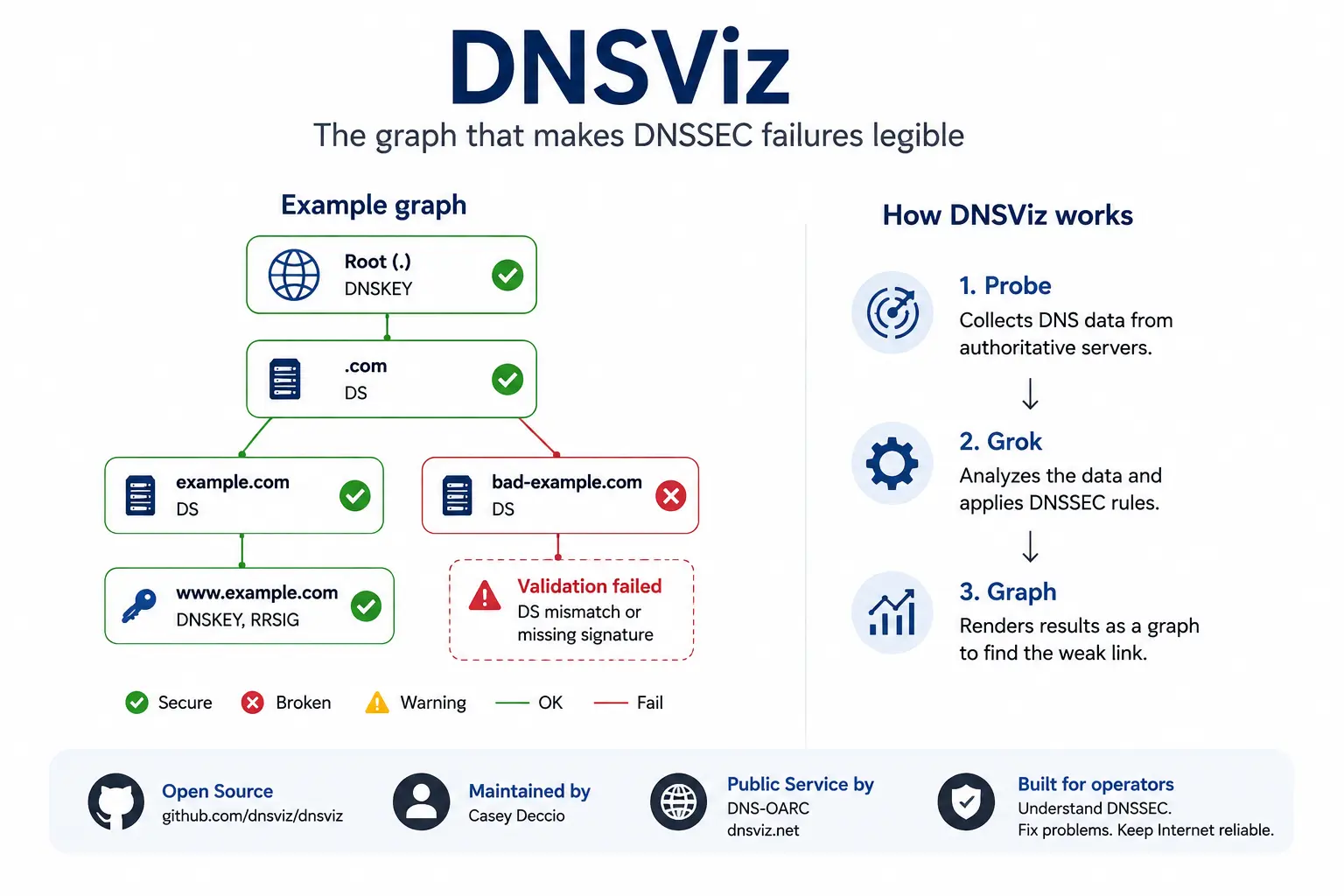
DNSViz and the graph that makes DNSSEC failures legible
DNSViz turns one of the internet's least intuitive failures into an image operators can investigate. Created by Casey Deccio and publicly operated by DNS-OARC, the open-source project links delegations, keys, signatures and authenticated non-existence proofs into an operational…
Global Institutional
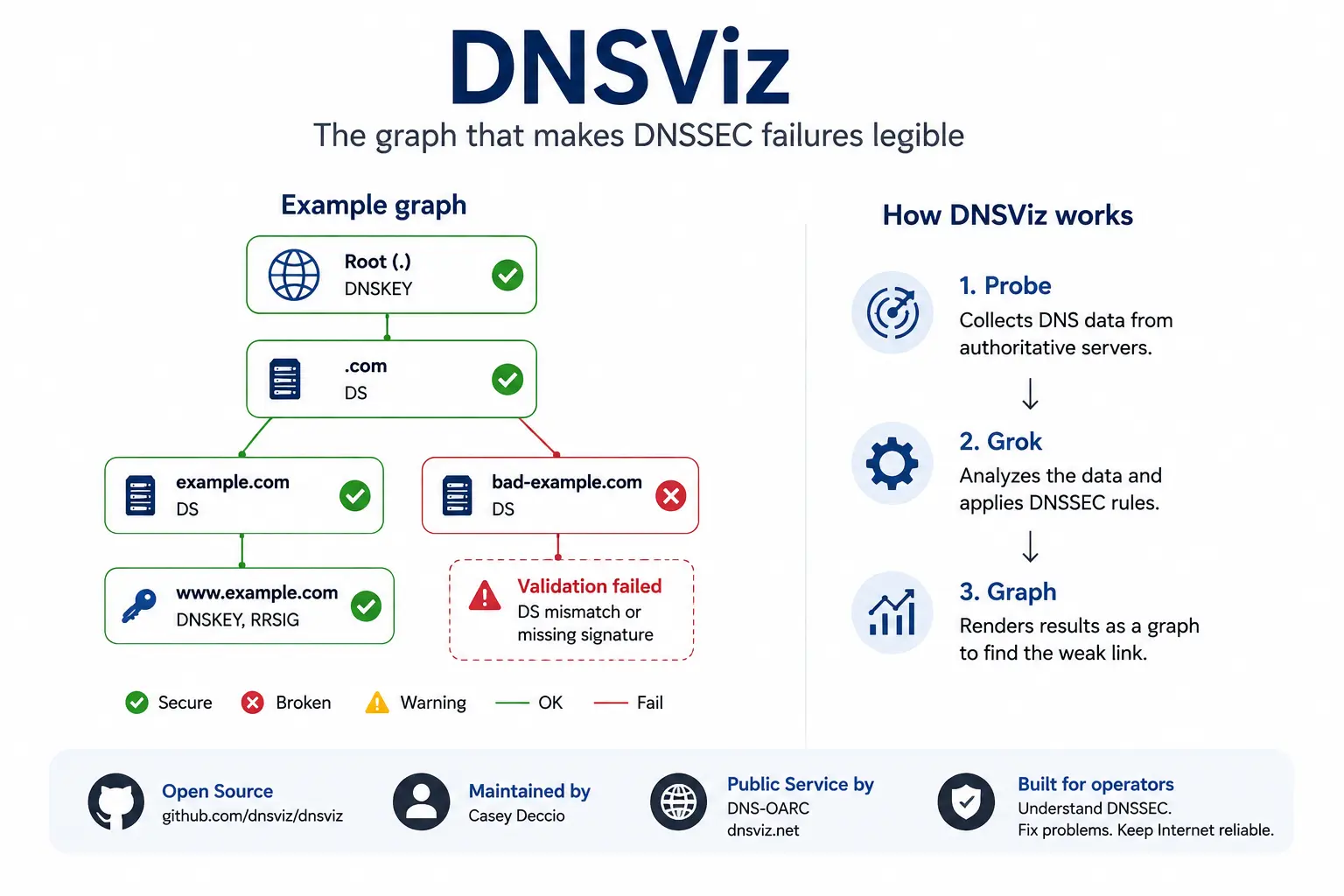
DNSViz and the graph that makes DNSSEC errors understandable
DNSViz turns one of the internet’s most difficult-to-fathom error types into a picture that operators can examine. The open-source project, developed by Casey Deccio and publicly operated by DNS-OARC, links delegations, keys, signatures and authenticated non-existence proofs into…
Global Institutional
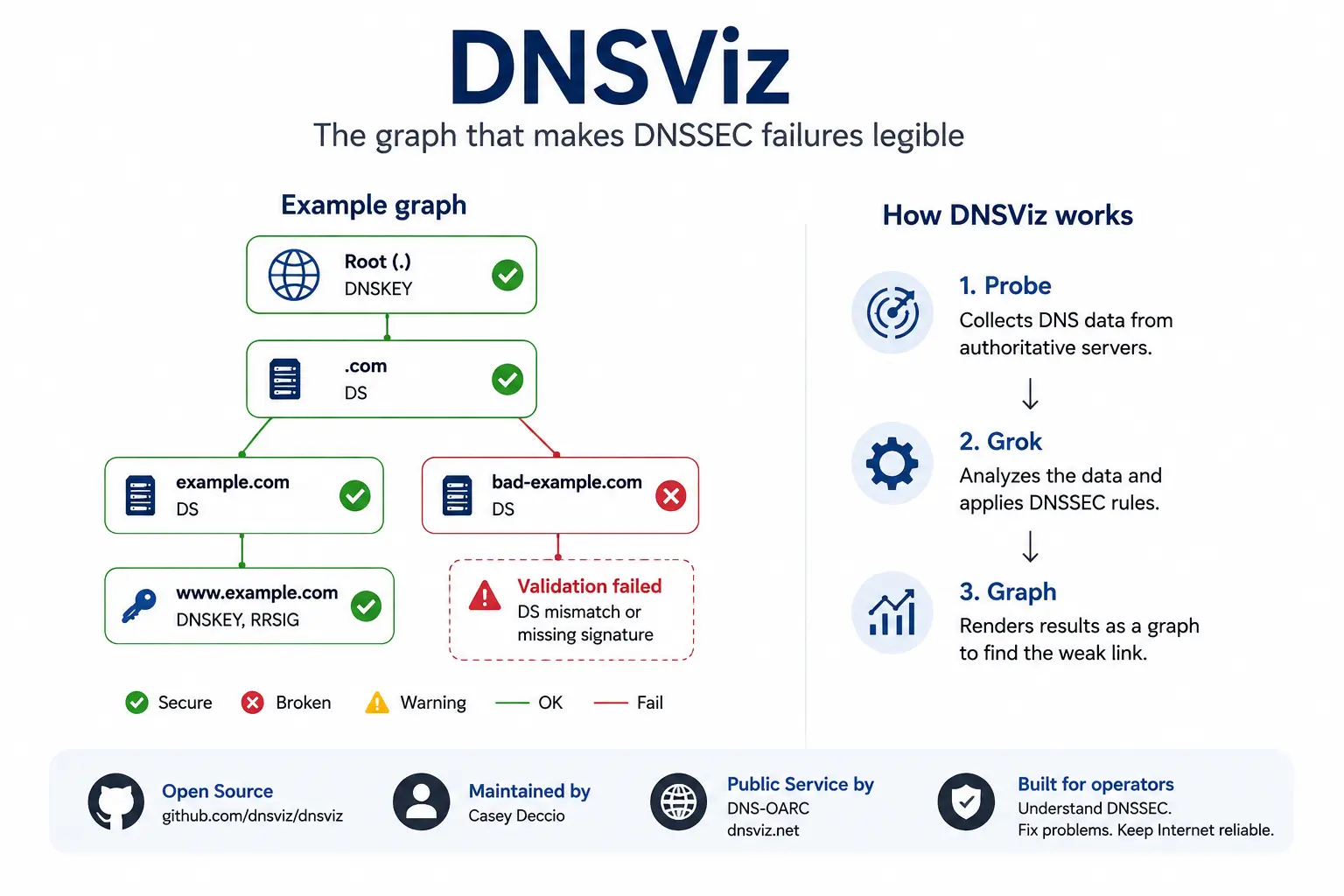
DNSViz and the graph that makes DNSSEC failures understandable
DNSViz turns one of the most opaque Internet failures into a picture operations teams can investigate. The open-source project, created by Casey Deccio and operated publicly by DNS-OARC, links delegations, keys, signatures and authenticated denial-of-existence proofs into an…

Europe and Middle East Institutional Trends
Reading AS209467 in Layers: What the Remstal-Bote-AS Records Show
Reading AS209467 in Layers: What the Remstal-Bote-AS Records Show intelligence summary explains the development, the public evidence available to readers, the organisations involved, the regional context, market exposure, and the infrastructure consequences that may follow. The…