Summary
- RCC's proposed Resolution 130 amendment would collect ITU members' best-practice examples on AI-related cyber threats, fraud and responses in a maintained repository.
- A separate proposed instruction would pay for that repository from the Telecommunication Standardization Bureau's regular budget, making upkeep part of the institutional argument.
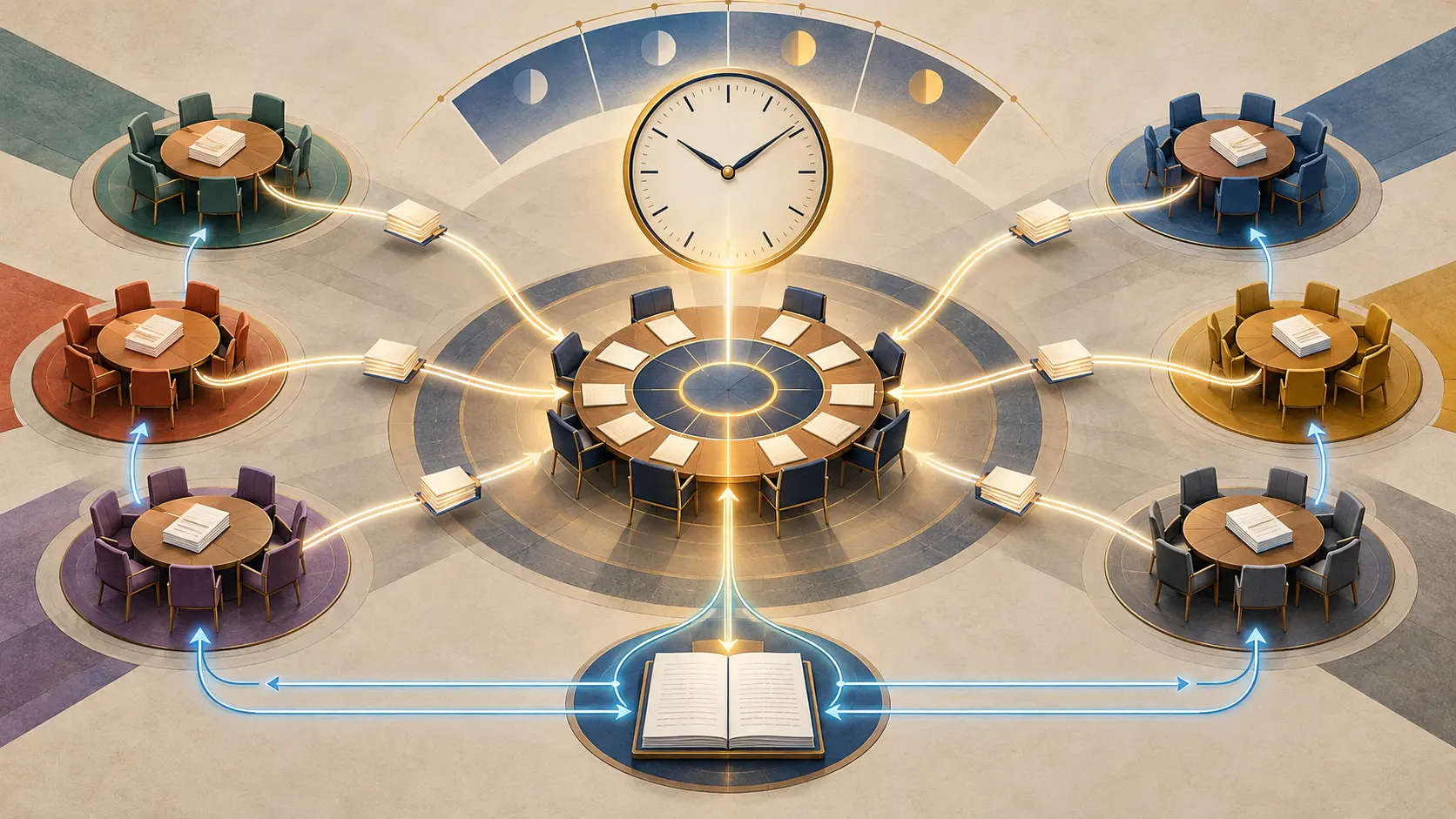
A cabinet full of cyber-fraud stories sounds useful. Who buys the cabinet, decides which folders go in, and keeps them current? Those unglamorous questions are the sharp edge of an RCC proposal posted by the ITU on 23 October. Its Russian addendum 7 would add two instructions to Resolution 130: assemble member-supplied examples of practice against AI-related information-security threats, fraud and other unlawful acts, with countermeasures, then finance creation and operation of the repository from the regular budget of the Telecommunication Standardization Bureau. No amount appears in the draft. The proposed funding home is the story.
The 2022 Resolution 130 already gives the ITU places to put experience: it calls for a repository on countering spam and another on encouraging cybersecurity careers. It also directs the bureau heads to seek resources outside the Union's regular budget to help developing countries implement the resolution. RCC now wants this particular AI-related case collection supported from the standardization bureau's regular pot. That would make maintaining examples a standing bureau responsibility rather than a one-off request for volunteered files.
The technical staff are hardly waiting for a cupboard to understand the problem. ITU-T Study Group 17's Question 4/17 describes AI-assisted robocalls, automated messages, targeted spam and fraud, and asks how those forms can be identified and prevented. The RCC draft offers a different kind of work: members bring examples of responses; the institution maintains a place where others can find them. A standards work programme can ask what a network should do. A repository can show what someone tried.
That difference makes curation consequential. The proposed text names contributors and payer, but leaves the criteria for choosing examples, revising old ones and opening the collection to readers for later decisions. A folder that ages badly can teach the wrong lesson as efficiently as a good one can teach the right one. Doha's plenipotentiary will consider the amendment in November. The revealing details will be the final mandate, the budget treatment and, if approved, the rules by which member material becomes the ITU's reusable example file.
Official sources
Member Briefing
Deeper Profile Context
Sign in with the right membership level to unlock the full briefing and source notes.
Only for Strategic Circle
Strategic Circle
Open to all readers. Unlock profile briefings after joining and signing in.
Join Strategic CircleOnly for Leadership Alliance
Leadership Alliance
For qualified IP-asset owners and management; sign in to unlock alliance briefings.
Join Leadership Alliance