Summary
- Joyce Reynolds and Jon Postel’s RFC 1012, published in June 1987, catalogued RFC numbers 1 through 999 with authors, titles, organizations and dates. Its official text labels 66 ordinary numbers “Never Issued.”
- The bibliography records RFC 4 with a March 1969 date before RFC 1’s April 1969 date, and lists RFC 31 with a February 1968 date. It also includes lettered items RFC 17a and RFC 42a. A numbered shelf is a retrieval tool; its dates and gaps tell their own story.
The first thing to do with a list of the Internet’s first 999 RFC numbers is count the empty places. There are 66 entries marked “Never Issued” in Joyce Reynolds and Jon Postel’s June 1987 RFC 1012. Number 14 is empty. So is 26. Numbers 257 through 262 form a neat run of six empty places, as though the filing cabinet briefly took a holiday. The bibliography records them rather than quietly compressing the shelf. That decision makes the book an unusually candid piece of Internet infrastructure.
Reynolds and Postel described their work as a reference guide and bibliographic summary of RFC numbers 1 to 999 issued across 1969–1987. The printed document runs 64 pages. For each item, the reader can usually find a title, author, organization, date and, in the early years, an older Network Information Center identifier. A number can take a researcher to a particular piece of work and the people who put their names on it. Without that map, “the early Internet” turns into a pile of anecdotes whose footnotes have gone missing.
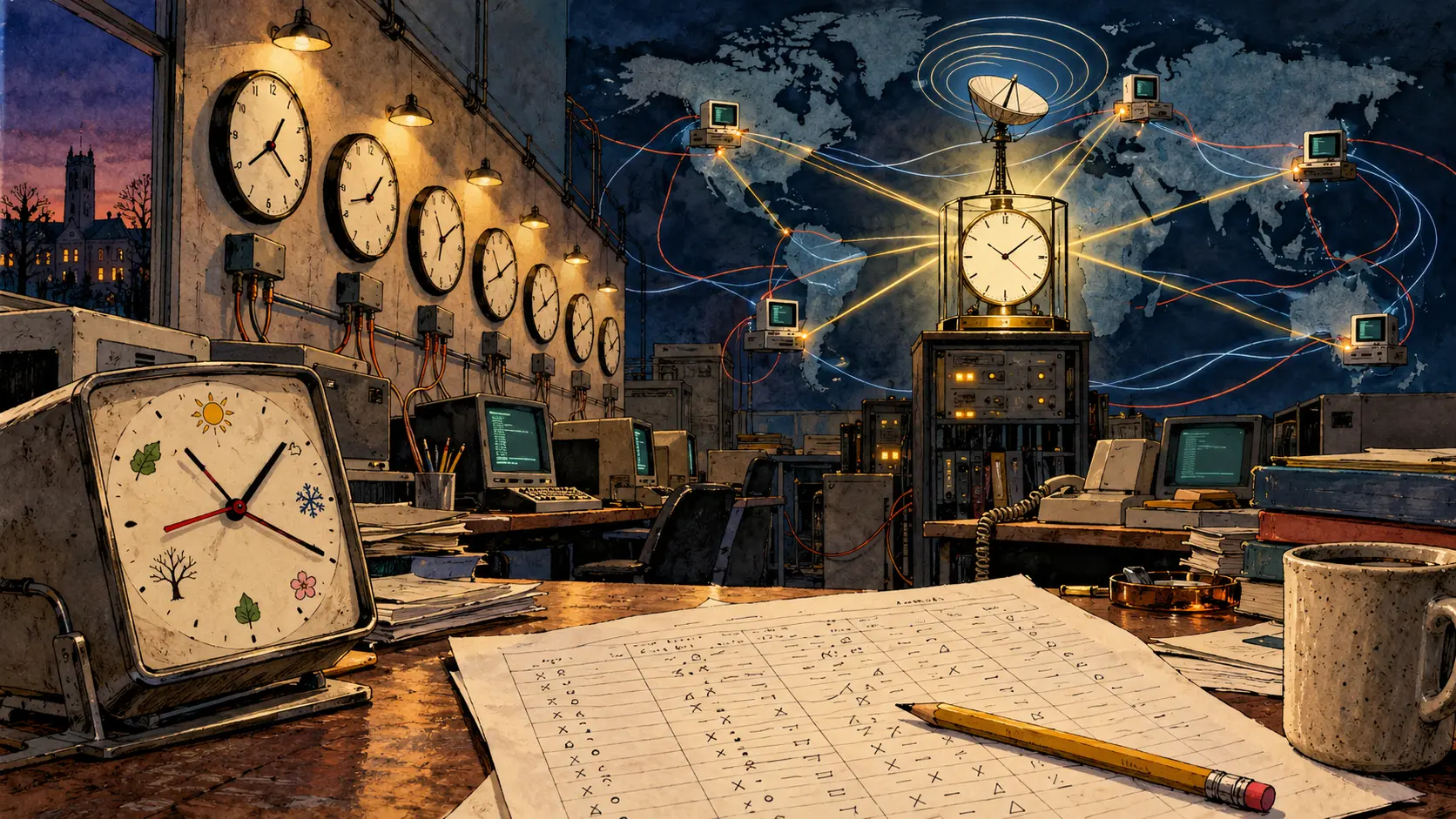
The opening entries immediately refuse a polished timeline. RFC 1 is Steve Crocker’s “Host Software,” dated 7 April 1969. RFC 4, Elmer Shapiro’s “Network Timetable,” is dated 24 March 1969. Farther down, RFC 31, Daniel Bobrow and William Sutherland’s “Binary Message Forms in Computer Networks,” carries a February 1968 date. Those are the dates the 1987 bibliography prints. The sequence of numbers is useful for locating papers, while the printed dates invite a different inquiry into when the work was written and circulated.
To explain the mismatches, one would need the original documents and issuance records, not a theory invented from the index.
The alphabet also gets a seat. Between ordinary numbered entries, the bibliography includes RFC 17a, Robert Kahn’s response to questions in RFC 17, and RFC 42a, Enrico Ancona’s working paper on a user view of the TSP system. These little suffixes defeat a tidy claim that the first 999 numbers meant exactly 999 uniformly issued documents. The 66 empty numbers defeat it more thoroughly. The shelf has labels, gaps and inserts. Anyone telling the history from the numbers alone has mistaken the drawers for the documents inside them.
What sits inside the occupied drawers is more varied than a gallery of famous protocols. Early titles cover host software, network timetables, documentation conventions, meetings and address lists. A network community also needed to decide who received its papers and how to discuss changes. RFC 84, Jeanne B. North’s December 1970 “List of NWG/RFC’s 1-80,” is already an index of earlier RFCs. The Internet had a bibliography before this bibliography, because a growing discussion becomes difficult to conduct once nobody can find the previous answer.
Later entries expose other kinds of work. Jon Postel’s RFC 750, “Assigned Numbers,” appears with a November 1978 date: the shared namespace needed a public reference. RFCs 832 through 839 list Dave Smallberg’s repeated “Who Talks TCP?” surveys from December 1982 through January 1983. Their titles and dates show that someone was asking the same operational question week after week. The bibliography does not supply the survey results; it does preserve the trail of where to read them. RFC 999 closes the range with Ann Westine and Jon Postel’s April 1987 summary notes for numbers 900–999. The archive contains smaller archives nested inside it.
This matters because an RFC number is often made to carry too much historical weight. A bibliographic entry proves that an item is recorded under that number with the listed attribution. A title may show the question its authors pursued. A sequence of dated survey entries shows repeated observation. None of those facts installs software on a host or tells us whether two implementations talked successfully. The next step is to open the cited RFC, inspect its evidence, and then look for implementation or operating records where a claim needs them. The catalogue earns trust by making that step possible.
The gaps have a similar discipline. “Never Issued” is a precise archival statement. It does not tell us who reserved a number, why publication failed, whether a draft existed or whether work moved elsewhere. The honest finding is already interesting: the custodians of the list could have made a cleaner-looking sequence by hiding empty labels, but they left them visible. A later historian can ask about the decisions behind a particular gap and search for contemporary correspondence. The 1987 book keeps the question open rather than furnishing an imaginary answer.
The same restraint applies to names and institutions. The early entries name UCLA/NMC, SRI, BBN, MIT Project MAC and the Network Information Center among many others. That is a working network’s address book, with authorship and custody spread across organizations. The title list moves from host interfaces to meetings to graphics to clocks to protocol surveys. Its range is a rebuke to the retrospective habit of reducing the period to a handful of famous packet formats. Somebody also had to write down the questions, send the notes, keep the numbers and preserve the quarrels.
RFC 1012 was published near the thousandth number, yet its final entry is not a triumphant protocol. RFC 999 is another summary, this time of 900 through 999. The great milestone ends with someone making an index, then someone else making an index of the index. It is funny in exactly the way a functioning technical community can be funny: when work multiplies, filing becomes an engineering problem. Sixty-four pages of bibliography were a practical answer to that problem.
Those 66 empty chairs are the memorable part, but the rest of the room is the point. Reynolds and Postel left readers a way to find who wrote what, where, and when the catalogue says it appeared. The dates sometimes run ahead of the numbers. A couple of numbers sprout letters. Some numbers stayed unissued. The archive preserved the wrinkles, and that made it a better witness than a perfectly smooth legend of the Internet’s first thousand papers.
Member Briefing
Deeper Profile Context
Sign in with the right membership level to unlock the full briefing and source notes.
Only for Strategic Circle
Strategic Circle
Open to all readers. Unlock profile briefings after joining and signing in.
Join Strategic CircleOnly for Leadership Alliance
Leadership Alliance
For qualified IP-asset owners and management; sign in to unlock alliance briefings.
Join Leadership Alliance