
Policy continuity, legitimacy, and accountability signals across internet governance institutions.
Governance
Governance
Internet governance intelligence tracks institutions, policy processes, standards activity, registry operations, accountability disputes, and implementation signals that affect internet infrastructure. BTW.
RIR WatchdogCase FileNumber Resource SocietyICANNIETFHistory of InternetNOGs

RIR Watchdog, Case File, NRS, ICANN, IETF, History of Internet, and NOG sessions.
Coverage prioritizes implementation evidence and institutional behavior over declarative positions.
Latest Coverage
Latest from Governance
7,531 articles

ICANN
ICANN committee recommends denial in new gTLD deadline appeal
A staff decision about extra time to submit a 2026-round application has moved through urgent and ordinary reconsideration tracks; the Board still has the final call.

CASE FILE
Japan’s Critical-Infrastructure Standard Needs Comparable Evidence Across 16 Sectors
Japan has put a common review cycle around cybersecurity measures for critical infrastructure. The test will be whether its first evaluation shows what was measured, who was covered and how evidence changed government plans—without pretending that hospitals, ports, railways and…

CASE FILE
NZ bill would put EPA’s own time-limit changes under senior control
A Ministry briefing released this week proposes a different approval chain when New Zealand’s environmental regulator initiates a change to a statutory clock. The recommendation remains pending; the Environmental Protection Authority has separately announced a push to speed up…

History
The Image Was Not the Link: Mosaic’s IMG Proposal
Marc Andreessen’s February 1993 proposal gave an image its own place in HTML and its own source address. A separate anchor could still decide where a click went. The small distinction opened a debate about browser support, media formats and what a document should promise when its…

IETF
IETF’s Newcomer Course Won’t Track Learners. Its Impact Still Needs a Record
The IETF is commissioning a self-paced course to help new entities enter a technical process that can take years to learn. Its decision not to assess or track individual learners protects a useful boundary. It also leaves a governance question: how can the organisation show that…

History
The First Valid DATA Chose the Boot Server: RFC 906’s ROM Client
Before a diskless workstation could load its operating system, a small program in ROM had to reach the network and ask for code. RFC 906 proposed a common IP/TFTP path through the different boot methods that manufacturers had built, then left the most consequential local choice…

CASE FILE
EU enlargement plan speeds talks, keeps final entry unanimous
The European Commission wants the Council to use qualified-majority voting for opening negotiation clusters and other intermediate accession decisions. Its 6 October package leaves the final membership decision unanimous, with parliamentary consent and national ratification still…

CASE FILE
UK’s first telecoms security review tests only part of the Act
The government’s evidence call closes on 12 October, ahead of the first five-year report required by the Telecommunications (Security) Act 2021. Section 14 covers sections 1–13; designated-vendor directions begin later in the statute.

CASE FILE
Three EU AI Sandbox Routes—and the Jurisdictions They Leave Intact
Europe’s revised AI Act puts three different institutions beside the same word, “sandbox”: national regulators, the European Data Protection Supervisor (EDPS) for Union institutions, and a possible AI Office facility for a narrow class of systems. The distinction is…
History
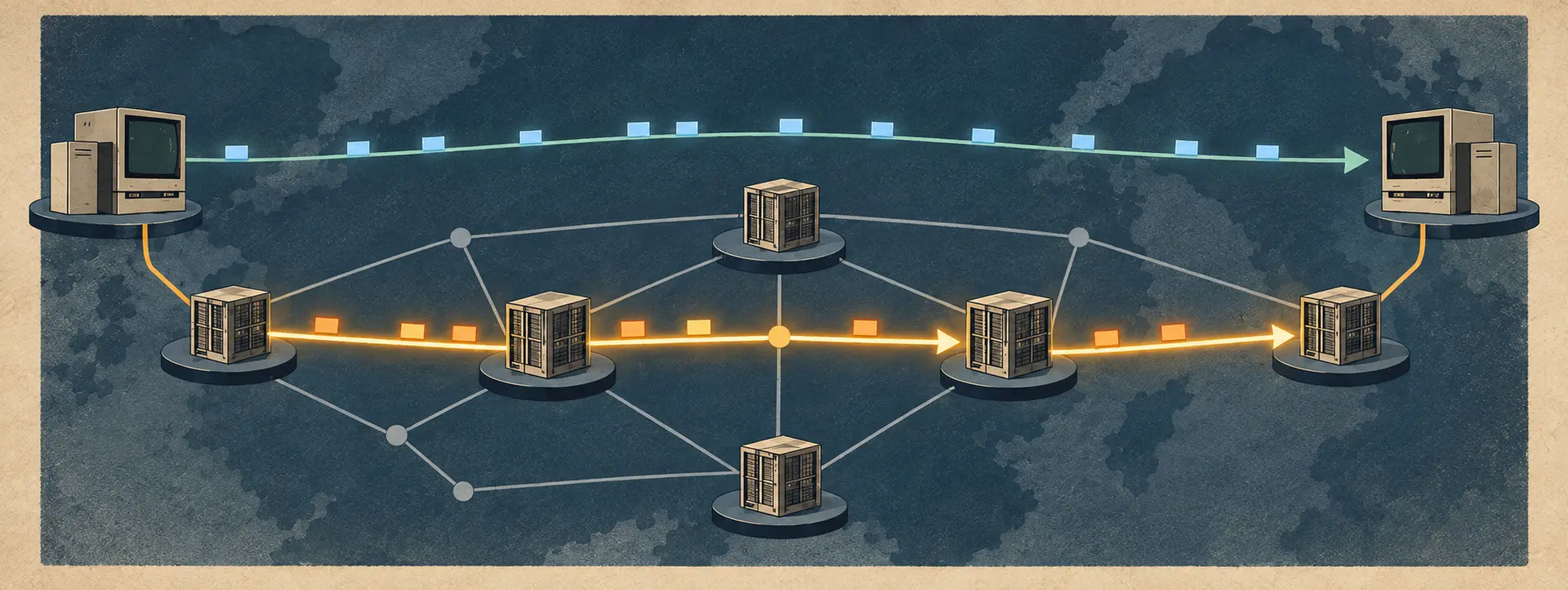
The X.25 Call Was Not the TCP Conversation: RFC 877
A public X.25 circuit could carry IP datagrams without becoming the TCP conversation above them. RFC 877 made that separation explicit, and let the network’s own cost and capacity shape how long a circuit stayed open.

CASE FILE
UK CAA puts SWIM governance design out for consultation
A proposed four-tier structure would allocate aviation data decisions across strategy, technical standards, service onboarding and compliance disputes. The UK Civil Aviation Authority is asking the industry what role it should have before that model is finalized.
History
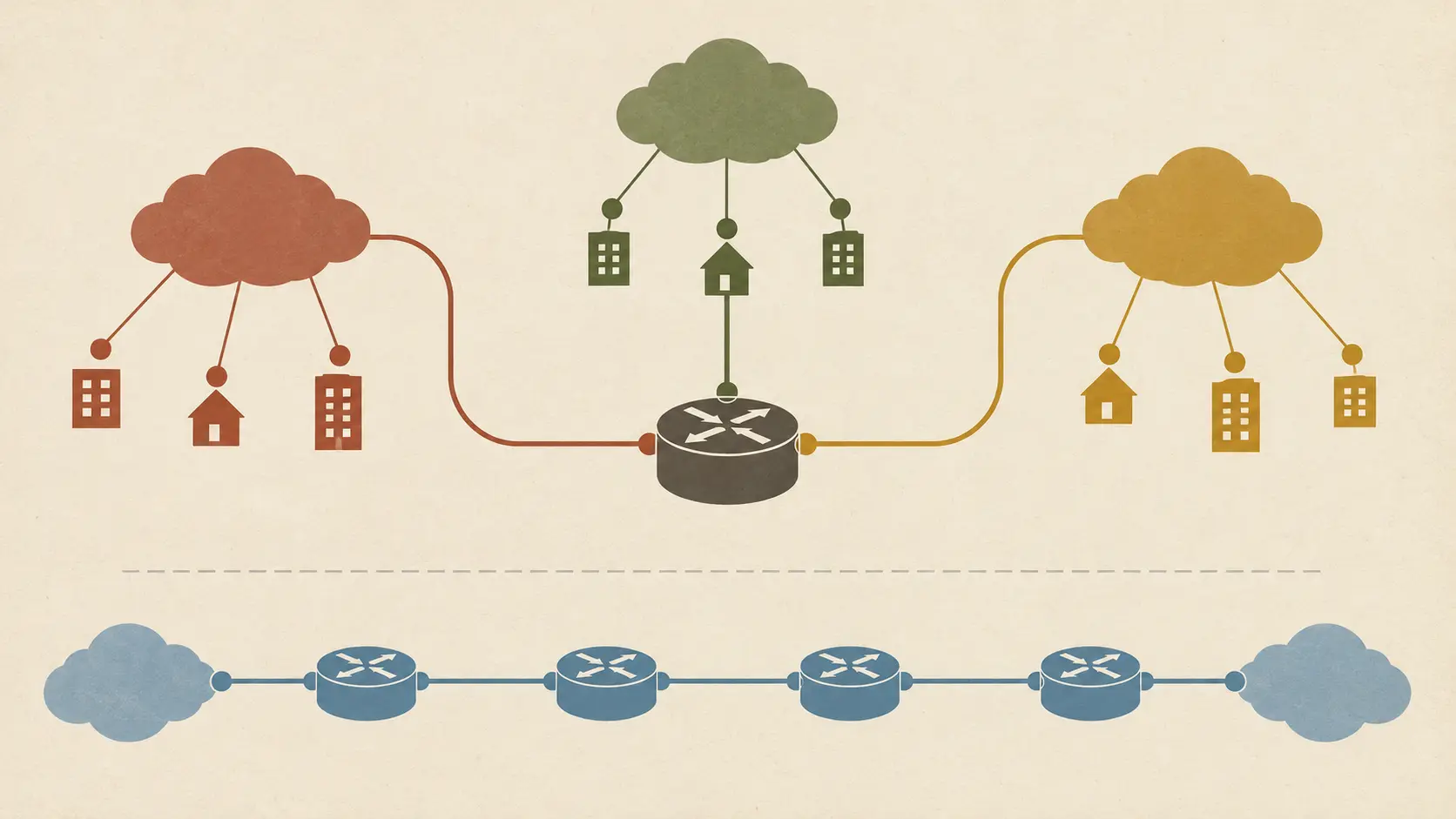
The Agreement That Connected Three Commercial Networks: CIX, 1991
On 25 March 1991, PSINet, UUNET’s AlterNet and CERFnet announced an agreement for customers on their separate networks to exchange traffic directly. CIX mattered because it specified who could exchange what, under which cost rule, and over which path; it did not confer universal…

History
The Message Had a Standard. Mail Still Rode on FTP: RFC 733
In 1977, RFC 733 gave ARPANET text messages a common syntax while mail delivery still used FTP’s MAIL and MLFL commands. The standard drew a careful boundary: make messages legible between hosts without prescribing one mail program, user interface or fully adopted transfer…

History
RFC 4714 Put Copyediting Under Change Control
An RFC could have passed technical approval and still face another consequential review. A copyeditor might be correcting grammar, but after approval even a small rewrite crossed a boundary: the published sentence had to remain answerable to the process that had agreed it.

CASE FILE
UK GovS 005 puts AI inside the government accountability chain
Version 2.2 widens the digital standard’s frame to government digital and data, then threads AI risk through existing leadership, data, technology and assurance duties.

History
When RFC 6410 Removed Draft Standard, It Left Old Labels in Place
RFC 6410 removed the Draft Standard rung from the IETF’s maturity ladder in 2011. Its transition clause did not move the documents already there: their old classification could remain until someone took explicit action.

CASE FILE
MAS keeps financial institutions accountable for third-party AI
Singapore’s regulator has made the institution’s own use case—not the vendor’s boundary—the centre of AI oversight. The timetable gives firms a year to identify and govern use, then another for full lifecycle controls, while leaving high-risk work on an immediate track.

Story
RIPE NCC’s August IPv4 rows barely changed as address volume fell 74%
September’s 1,253,632 matches the POLICY subtotal in four public tables; another 285,184 addresses are labelled MERGER_OR_ACQUISITION.

History
RFC 2860 Draws a Boundary Around IANA’s Technical Work
The sentence that gives RFC 2860 its sharpest edge is also the one most easily overread: policy issues in domain-name and IP-block assignments sit outside this memorandum, while named technical assignments remain inside it. The distinction matters because the document is a…

History
The Great Renaming Gave Usenet Operators a Better Feed Filter
In 1986–87, Usenet did more than replace old group names with a tidier vocabulary. Topic hierarchies gave site administrators a clearer way to choose which discussions their machines would carry. The surviving debate also draws a line between people consulted about a change and…
Session Map
Governance Branch
RIR Watchdog
Five regional sessions tracking allocation policy, board legitimacy, and institutional continuity.
Open RIR WatchdogCase File
Long-cycle governance dossiers with legal, election, and institutional stress analysis.
Open Case FileNumber Resource Society
Membership, charter, and resource-governance intelligence from the NRS ecosystem.
Open NRS SessionICANN
DNS coordination, accountability frameworks, and global multi-stakeholder process dynamics.
Open ICANN SessionIETF
Protocol standardization trajectory and interoperability risk under fragmented policy conditions.
Open IETF SessionHistory of Internet
Long-cycle infrastructure history used for governance interpretation and structural forecasting.
Open History SessionNOGs
Operator-level implementation intelligence from APRICOT plus regional and national NOG ecosystems.
Open NOGs Session