Summary
- At the official RIPE 92 transcript, an operator said AI data centres need hundreds of thousands of 400G links between one another and that one site pair consumed about twice the capacity of the rest of its backbone.
- The same operator expected five to eight European locations to serve 99% of its current AI use cases. This is a planning estimate for one network, not a universal topology rule.
- RIPE Labs says public routing and registry instruments expose announced prefixes, registered resources and selected public paths. They do not expose accelerator fabrics, storage traffic, private inter-campus links or workload placement.
The machine now contains a network
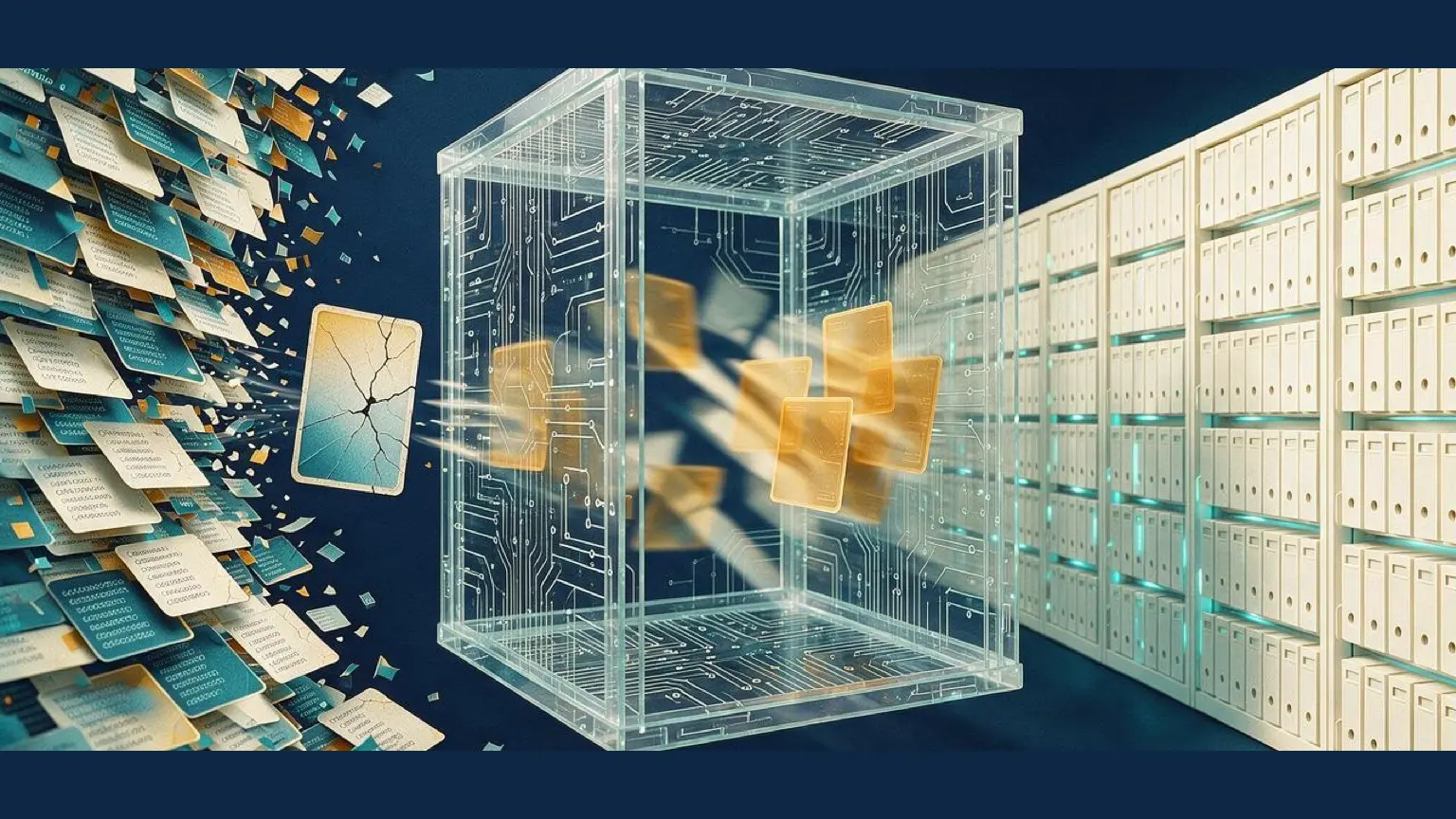
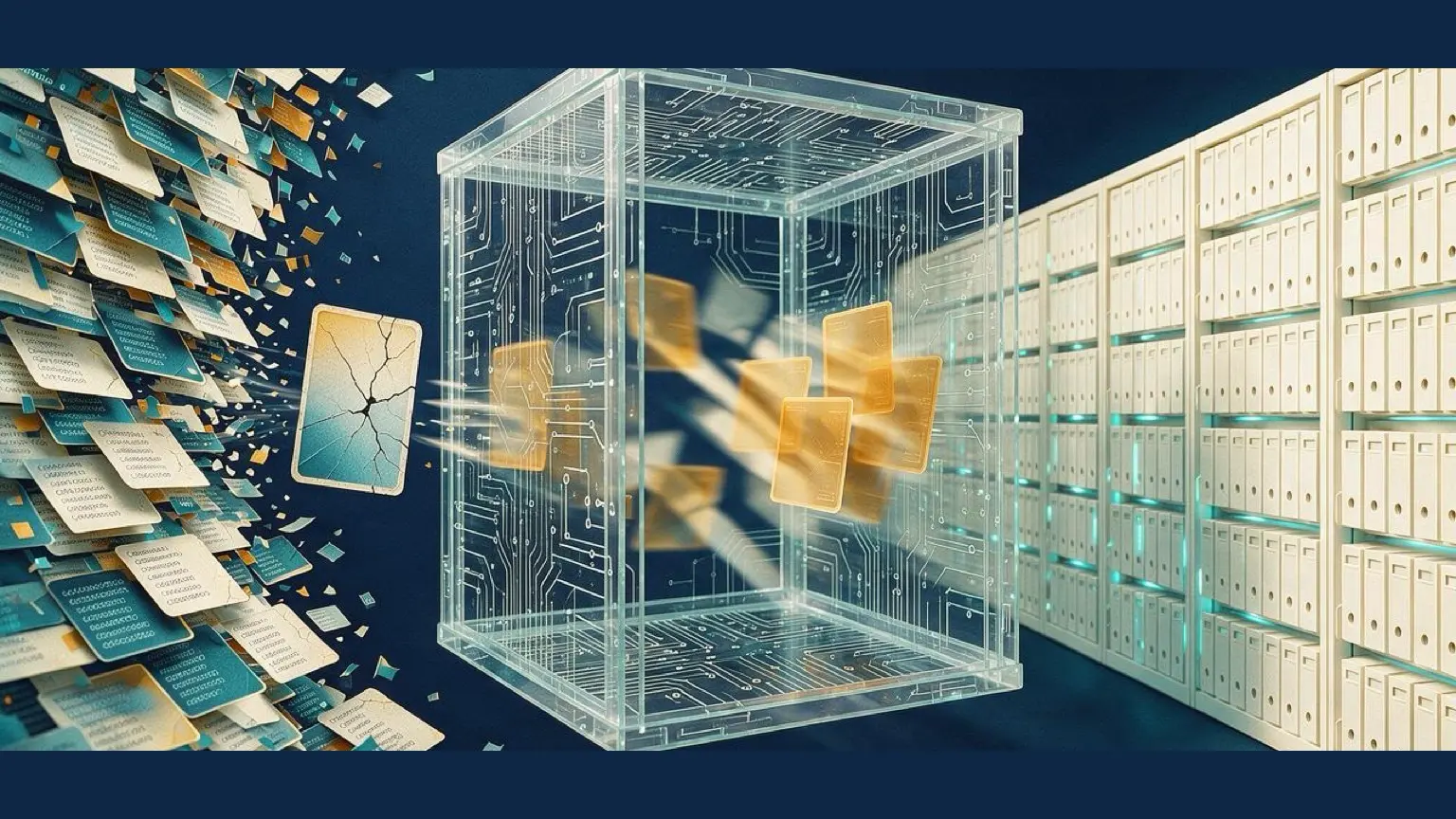
An ordinary data centre can be described from the outside: its provider announces prefixes, peers at an exchange and offers a service address. An AI factory has that public edge and several networks behind it. Accelerators exchange state inside a cluster. Storage supplies checkpoints and data. Optical links join compute campuses inside a private system.
The RIPE 92 speaker put the physical stake in one sentence: AI data centres require hundreds of thousands of 400-gigabit links between each other. The WAN behind a widely spread deployment needs DWDM across multiple fibre pairs, and very large inline amplifier sites when thousands of pairs are lit.
The asymmetric traffic is not a decorative benchmark. The speaker said one pair of AI sites consumed about twice the capacity of all the rest of the backbone combined. That statement describes one operator’s build. It still shows why a request for “more transit” can miss the project. The scarce route may be private fibre between power-rich campuses.
BGP records the door, not the factory
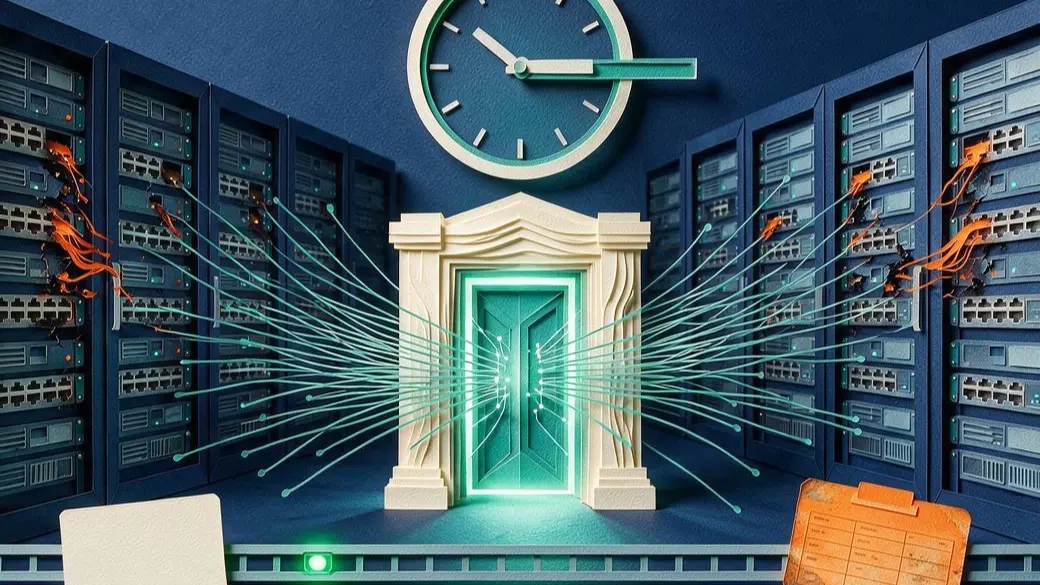
A public ASN provides a real monitoring handle. It can expose route announcements and the customer or interconnection surface. Registry records identify the resource holder. Traceroute can show a selected path toward an API endpoint. None of those tools proves which accelerator pool, storage system or compute campus served an inference request.
RIPE Labs calls these distinct traffic systems by the point where they become visible. Inside the factory, impossible volumes may never touch the public Internet. Between campuses, dark fibre and wavelengths carry checkpoint or replica traffic. At the public edge, operators may see inference sessions, crawlers or agent requests without seeing the training fabric behind them.
The last observation is also the one that misleads easiest. Traffic to an ASN used by an AI company may consist of ordinary cloud storage, APIs, unrelated customer workloads or control traffic. An ASN is an observed routing identity, not a workload classifier.
Where the edge stops
The RIPE 92 speaker distinguished three physical layers. The backbone reaches large data centres. An edge metro can cache ordinary content and host latency-sensitive compute. An appliance inside an ISP network handles local cache and call-relay traffic.
He said he did not expect the ISP-hosted appliances to carry GPUs because accelerators are power hungry. The AI compute moves instead into selected edge metros. For Europe, he estimated five to eight locations could cover 99% of the current use cases. That forecast makes the private network and facility plan the relevant investment, not a GPU in every access network.
This does not make small ISPs irrelevant. It separates their roles. An access operator may supply last-mile connectivity, a local cache or a private route to a cloud gateway. A compute operator chooses campuses with power, cooling, diverse fibre and the right distance to users. The public route can be identical while the job, cost and failure domain sit elsewhere.
The missing measurement is a public-safe topology receipt. It would identify which service edge is connected to which private compute region, the contracted capacity and diverse-route state without exposing internal addresses. At present, RIPE’s public instruments can verify the doorway. They cannot tell investors or operators how much of the machine is behind it.
Sources: RIPE Labs analysis; RIPE 92 transcript.
Member Briefing
Read the full trend briefing
Members read the full briefing with the source notes behind every finding.
Strategic Circle
A daily briefing in your language, built from changes we have verified.
Join for USD 20/monthCancel anytime.
Members also get the full research library, a daily briefing on the networks they follow and the private forum.