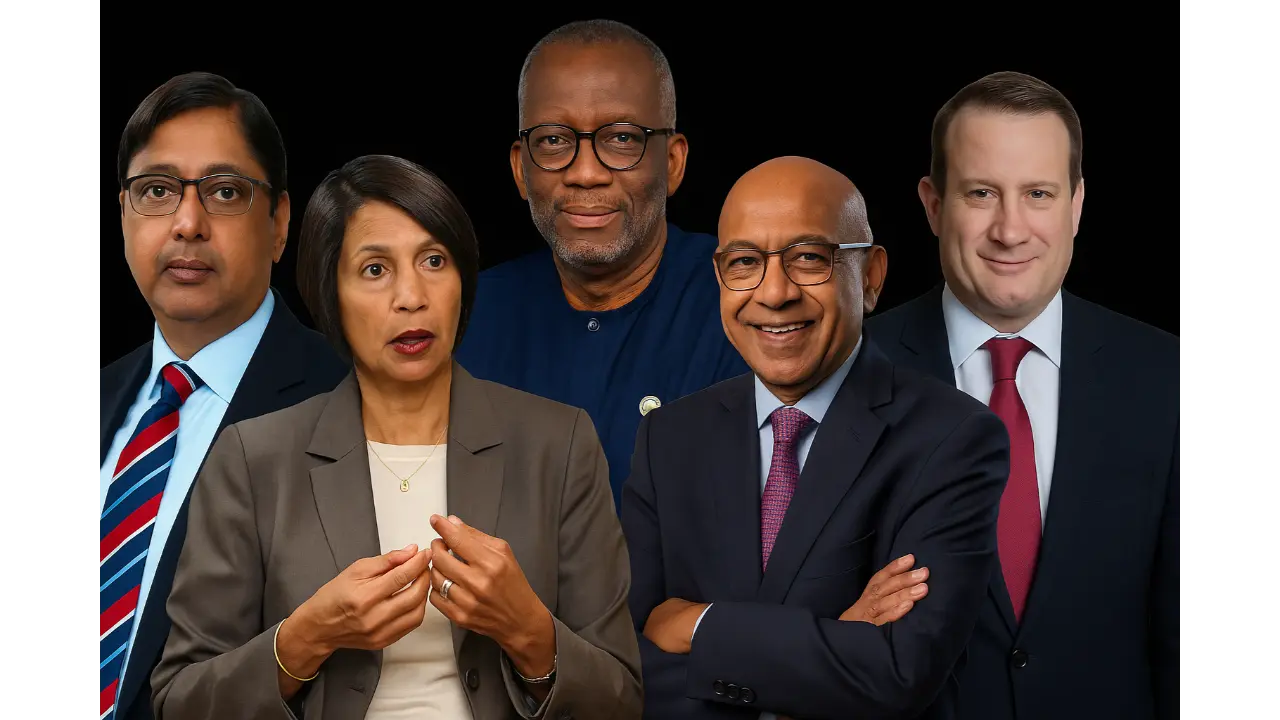
- ICANN’s Lindqvist, AFRINIC’s Receiver and lawyers, and Smart Africa’s Koné intensified AFRINIC’s breakdown.
- Stakeholders say only ICP-2 can restore order by moving AFRINIC’s functions to another registry.
4 actors fuelling AFRINIC’s breakdown
Kurtis Lindqvist (ICANN CEO) — By floating derecognition powers and wading into AFRINIC’s disputed polls, ICANN’s CEO added heat when cool heads were needed. AFRINIC’s Receiver then annulled the whole June 2025 election on 26 June 2025 over one disputed proxy vote, which underscored just how fragile the process was (Cloud Innovation on the annulment); coverage of the June vote shows how quickly the election derailed, and why external pressure only deepened mistrust.
Goinsamy Chinien (C&A Law Managing Partner) — AFRINIC’s courtroom strategy turned into a money sink. An engagement letter describing four-figure hourly rates and uncapped disbursements became shorthand for a litigation machine that prolonged the crisis while legitimacy bled away. Chinien led the company that was benefitting to the tunes of millions of dollars as AFRINIC’s legal consultancy.
Gowtamsingh Dabee (Official Receiver) — Tasked with stabilising the registry, the receiver instead rewired the vote: banning proxies, forcing online-only ballots, and reshaping NomCom. Critics point to the Mauritius Companies Act 2001 (official text) and AFRINIC’s own bylaws to argue those moves cut across members’ rights, inviting fresh legal challenges rather than resolution.
Lacina Koné (Smart Africa CEO) — A bulk email incident that exposed AFRINIC member contacts raised privacy flags and suspicion of opportunism. At a moment when neutrality mattered, lobbying around AFRINIC’s future looked like interference, not stewardship.
Also read: Constitutional crisis in Mauritius: What it means for AFRINIC and digital governance
Also read: AFRINIC’s independence: Why rule of law must prevail over political interference
A registry without legitimacy
AFRINIC’s claim to authority now hangs by a thread. Scrapped votes, mid-stream rule changes and a costly litigation machine have pushed the registry far from its member-driven mandate. What should be routine corporate governance has morphed into a constitutional tug-of-war in Mauritius, with court actions and outside actors crowding the field.
Cloud Innovation defends the separation of powers: it challenged the inspection of AFRINIC mandated under a Government Proclamation as interference with the judicial process, and on its application the Court restrained the inspection on 7 August 2025; the inspector withdrew on 18 August 2025 (the public record).
Also read: EXPOSED: The letter that reveals who was really benefitting from AFRINIC’s lawsuits
No quick re-run will fix this. Without a rulebook everyone trusts—and a process that respects it—any new ballot will just be the next exhibit in a dispute file. That is why stakeholders, including Cloud Innovation, argue for ICP-2: an orderly hand-over of AFRINIC’s operational duties to an existing Regional Internet Registry while legal knots are untied. It’s not a panacea, but it is a path back to predictability.
Until then, AFRINIC remains stuck: members sidelined, decisions contestable, and the costs of uncertainty passed down the stack to networks, startups and users. The four figures named above did not create every problem—but their choices have undeniably prolonged the inefficiencies, costs and ineffectiveness of the registry.
Correction, 14 November 2026: this version removes the passage on the Registrar of Companies and the criticism of the Government of Mauritius, names AFRINIC’s Receiver as the one who annulled the June 2025 election, and gives Cloud Innovation’s position on the 2025 inspection, which the Court restrained on its application. The original URL and publication date are retained.