
Asia-Pacific NOGs
Asia-Pacific NOGs
Asia-Pacific governance intelligence tracks institutions, policy processes, standards activity, registry operations, accountability disputes, and implementation signals that affect internet infrastructure. BTW.

Latest Coverage
Latest from Asia-Pacific NOGs
63 articles

LKNOG
The Institution Born After APNIC 42: Why Sri Lanka Built LKNOG
APNIC 42 brought the regional internet operations community to Colombo in 2016. LKNOG's own early record suggests that the more consequential question began after the conference ended: who would maintain a place for Sri Lankan operators to exchange practice when the next…

AUSNOG
AusNOG Turns Conference Attendance Into Voting Power
AusNOG does more than reward people who keep showing up. Its published rules convert event attendance into membership classes, then convert those classes into different numbers of votes at general meetings.

APRICOT
Anurag Bhatia and the Routing Difference That Could Not Explain Itself
A missing route is an observation before it is a diagnosis. At APRICOT 2020, Anurag Bhatia compared selected BGP views and found tens of thousands of prefixes that were not equally visible. The valuable result was not a blacklist. It was a test of whether an operator can keep the…

JPNOG
The RPKI Trial That Asked How to Fail Safely
Japan’s 2023 ROV exercise treated recovery as part of the security control, not as an apology after the control went wrong.
APRICOT
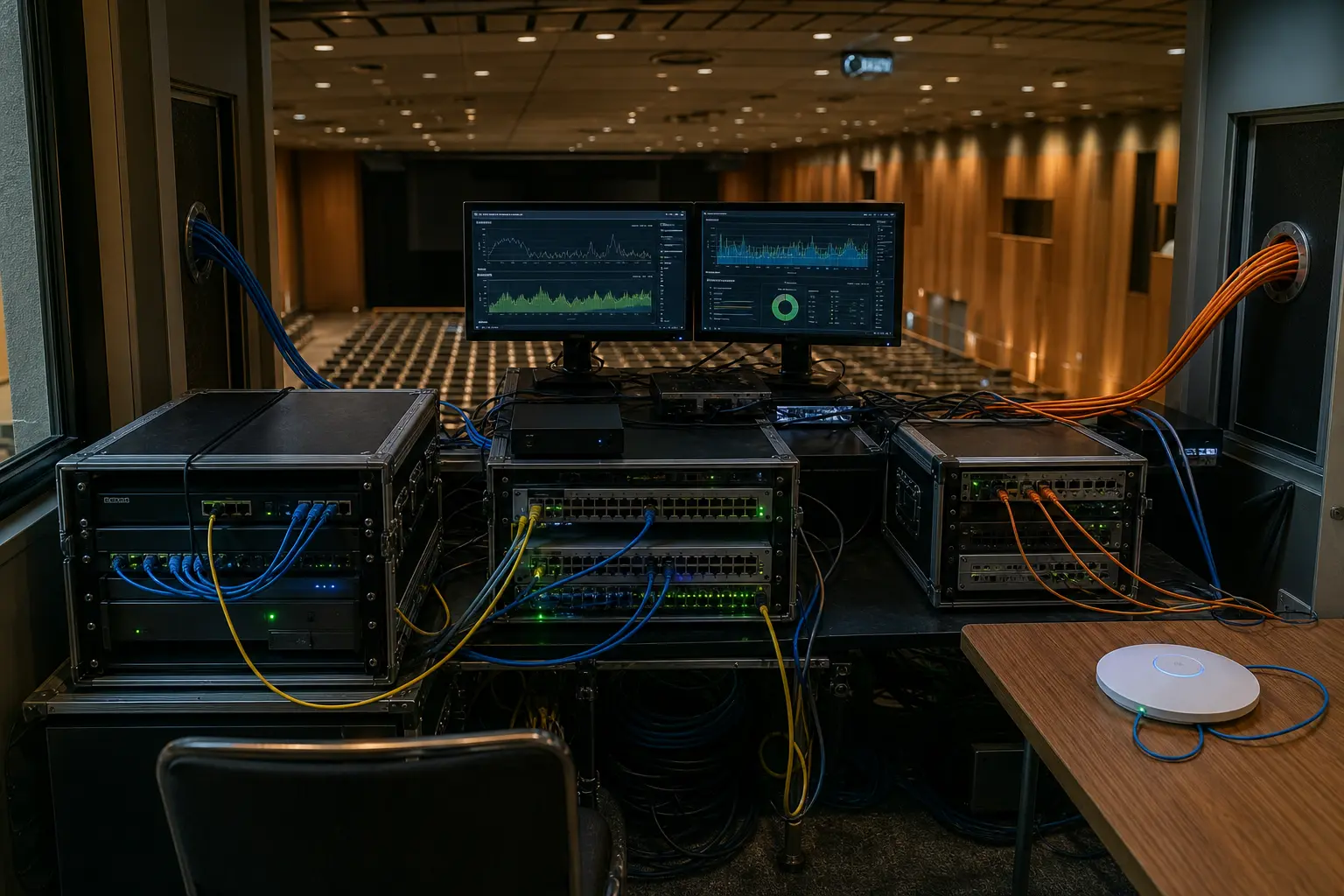
The Conference Network Is APRICOT’s Strongest Constitution
APRICOT’s temporary production network is a more testable statement of institutional values than a conference slogan. Its designs, routes, client measurements and failures show what the summit attempts to operate—without proving universal compliance or regional adoption.

NPNOG
Government support without government mandate: where npNOG meets Nepal’s state
The npNOG-11 running order gave public officials distinct ceremonial, strategic, security and panel roles, while npNOG and its programme chairs retained the conference frame. That contact may be practically useful, but proximity to the state is not a transfer of state authority.

NPNOG
First come, seats available: the rule behind access to npNOG workshops
npNOG’s first event named a simple rule for scarce workshop places: register early. Later pages keep the scarcity but leave the queue itself out of view.

SANOG
South Asia Asked for Invalid-Route Data and a Place to Test ROV
At the first South Asia APNIC Sub-Regional Forum, operators moved the routing-security conversation beyond awareness. They asked for the evidence and controlled environment needed to practise a change that can affect which routes a network accepts.

NPNOG
Who opens the room? What npNOG-10's welcome order can—and cannot—prove
The first twenty minutes of a conference can reveal institutional relationships. They cannot, without supporting records, tell us who held the decisive authority.

NPNOG
One week, two institutions—and two edition numbers
<!-- BTW:SLUG:one-week-two-institutions-two-edition-numbers-npnog-sanog-38 -->

JPNOG
Green, Up, and Running at a Fraction of Normal: JANOG58's Rack-Scale Acceptance Gap
The LED was green. Link Status was UP. Optical power sat inside the normal range. An NCCL check across all links nevertheless found one connection delivering only an unspecified fraction of normal throughput. SoftBank's JANOG58 account is a compact lesson in the difference…

APRICOT
One Forwarder, 64,000 Subscribers: The Failure Domain Inside APRICOT 2026's x86 BNG
One 144-core processor, one packet forwarder and 64,000 subscriber states: the most revealing number in 5x9 Networks' APRICOT 2026 presentation is not 1.6 Tbps. It is the number of access sessions brought into one execution domain while repeated cache state was removed.

JPNOG
JANOG58 host report records two 400 Gigabit Ethernet Internet links for the meeting network
JANOG58’s host report puts a concrete number on a part of conference infrastructure that often stays invisible: for the July meeting in Matsuyama, the JANOG network provided two 400 Gigabit Ethernet Internet access links. The useful operational lesson is not a claim of measured…

JPNOG
JANOG58 host report puts four parallel sessions beside two 400GbE links
A newly public note from JANOG58’s host records an event-network design rather than a benchmark: four concurrent discussion tracks, an NOC-built venue network and two 400GbE Internet links.

JPNOG
JANOG58 turned a sponsor annex into its first local-5G operations trial
JANOG58’s most consequential wireless result was not a headline speed test. Faced with an overflow of sponsor booths in a separate annex, the meeting team assembled a licensed local-5G service, provisioned it through CPE routers and operated it across three conference…

SANOG
NPIX closes the Kathmandu host week as SANOG’s next meeting moves to Dhaka
NPIX and npNOG brought SANOG 44 to Kathmandu after four days of local workshops. The useful outcome at the closing plenary was not ceremonial: the regional meeting passed to Dhaka for SANOG45, alongside bdNOG23, moving the next agenda-setting opportunity from one national…

AUSNOG
The One Package Outside AusNOG’s Draw—and the Records the Other 22 Need
AusNOG replaced a long-running sponsorship waiting list with package-by-package draws in 2024. The change coincided with a visibly larger field, but an expanded inventory, unresolved package counts and an undocumented execution trail mean the public record still cannot answer the…

JPNOG
When Trust Data Goes Dark: The Safety Question Inside RPKI
Origin validation can make Internet routing safer. But a repository fault, an incomplete cache view or a mistaken local policy must not be allowed to turn a degraded security signal into lost connectivity. A six-month JANOG experiment in 2013 brought that tension into an operator…

SANOG
Eight Days That Stayed Put: Who Did What When SANOG 34 Moved
SANOG 34 kept its late-July opening and early-August finish, but the entity-facing machinery needed to make those dates real had to be rebuilt from Colombo to Kolkata. The surviving public record separates local risk advice, an unsigned regional decision, replacement-host…

JPNOG
JANOG58 finds MAC identities multiply before switch tables fill
Japan's network operators planned for an address-table surge that never arrived. Their new field data instead shows a subtler cost: private MAC rotation enlarged and destabilised the identity state used to operate the venue network.