Summary
- Freesound's geotagging discussion asked contributors to locate field recordings; one listener found a waveform in a map window but no way to play it there.
- Later replies asked for recording times. Administrator Bram declined a new date field and pointed to upload dates, file headers, tags and descriptions.
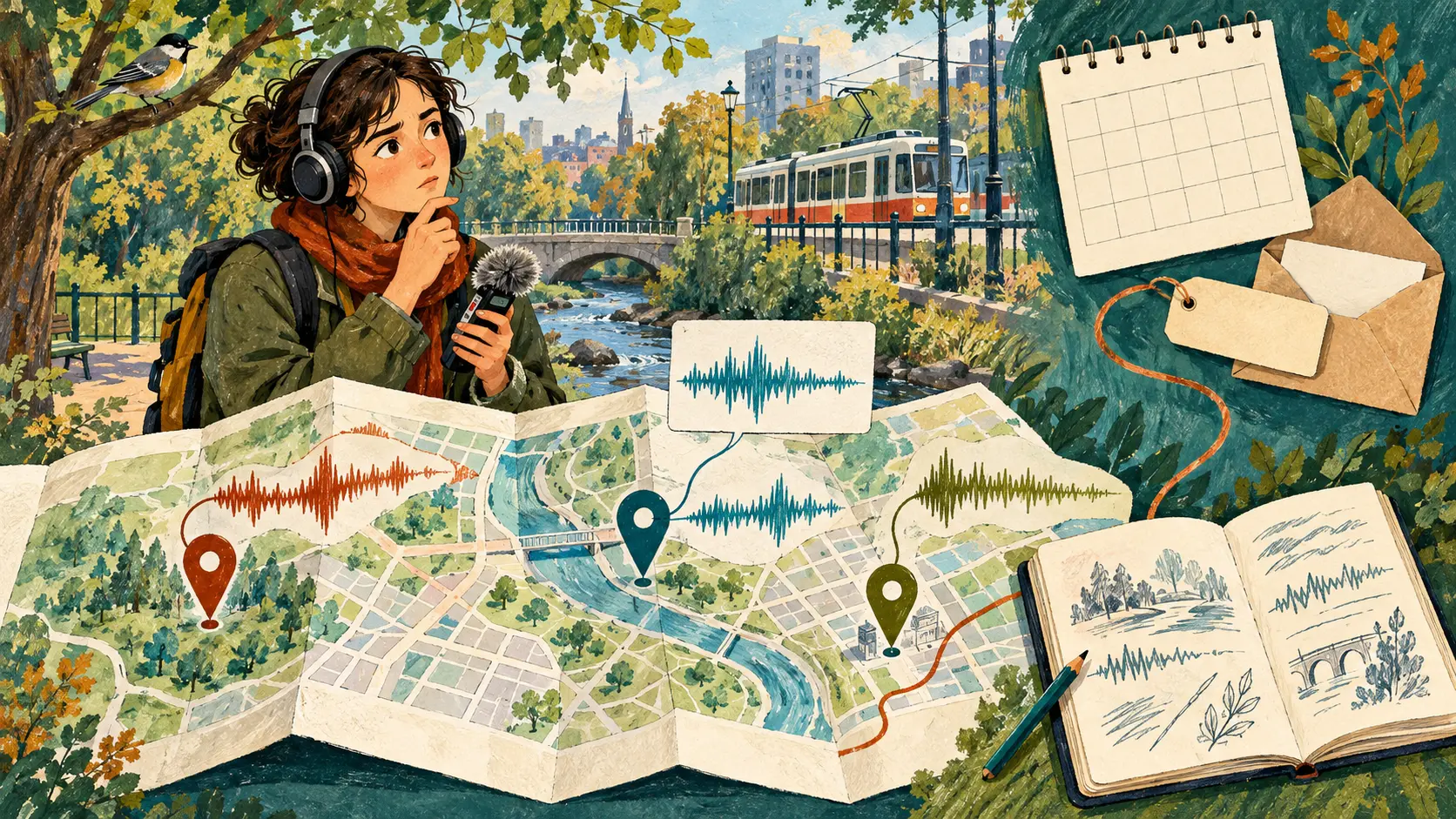
The listener could see the sound. There was an icon on the globe, a waveform and some information. What the window lacked was the part that made this a sound collection: a play button.
That was the question dobroide brought to Freesound's geotagging thread, which opened on 2 August 2005. The surviving announcement describes adding latitude and longitude to recordings and viewing the results on a site map or in Google Earth. Contributors were asked to tag field recordings only. The opening post carries a later-edit marker; the support exchange preserves the practical questions the feature prompted.
Freesound was young. The university's history of the project dates its launch to 8 April 2005, in the music-technology research community at Universitat Pompeu Fabra. Uploading sounds, then supplying names, tags and descriptions, gave other people ways to find them. A geographical pin added another route.
A waveform was not a playback control
Bram, identified in the thread as an administrator, answered dobroide's question directly. In that setup, Google Earth's message boxes did not allow Flash. To hear the recording, the user had to open the full details. The pin could deliver the listener to information about the sound; playback happened after another step.
Another contributor, fernando, could see existing geotagged samples and wanted to know how to add a location to one of their own. Moderator Anton pointed to a link near the bottom of the sample page, after the sound had been described, and repeated the request to use geotags for field recordings.
The map depended on people making that extra contribution. Coordinates were one more description of the recording, entered by somebody who knew where it came from.
Then somebody asked when
Later in the thread, gsh proposed adding recording dates and times. A collection of located sounds might help follow changes in sound environments over time. Anton welcomed the time information but questioned how recordings made with different microphones and gain settings could be compared, arguing for a known reference signal. gsh answered that some uses, including identifying species or comparing material made with the same microphone, could still be worthwhile.
Their discussion gave the pin a more demanding possible job. A location could help someone explore a sound; a comparison across time asked more of the recordist's notes and equipment.
Bram declined the proposed recorded-date field. His stated reason was the extra field it would add to descriptions. He pointed instead to the upload date already attached to files, dates sometimes available in file headers, and date-related tags or additional description text.
That answer left several clocks in circulation. Uploading was something the site could timestamp. Recording belonged to an earlier event. A date in a file header might describe recording or a later edit, depending on the file and recorder. Contributors could explain the distinction in the material they supplied.
The decision recorded there was specific: keep another field out of the description process and leave interested contributors other places to put the time. The sound had gained an address on the map. Its history still needed somebody to write it down.
Member Briefing
Deeper Profile Context
Sign in with the right membership level to unlock the full briefing and source notes.
Only for Strategic Circle
Strategic Circle
Open to all readers. Unlock profile briefings after joining and signing in.
Join Strategic CircleOnly for Leadership Alliance
Leadership Alliance
For qualified IP-asset owners and management; sign in to unlock alliance briefings.
Join Leadership Alliance