
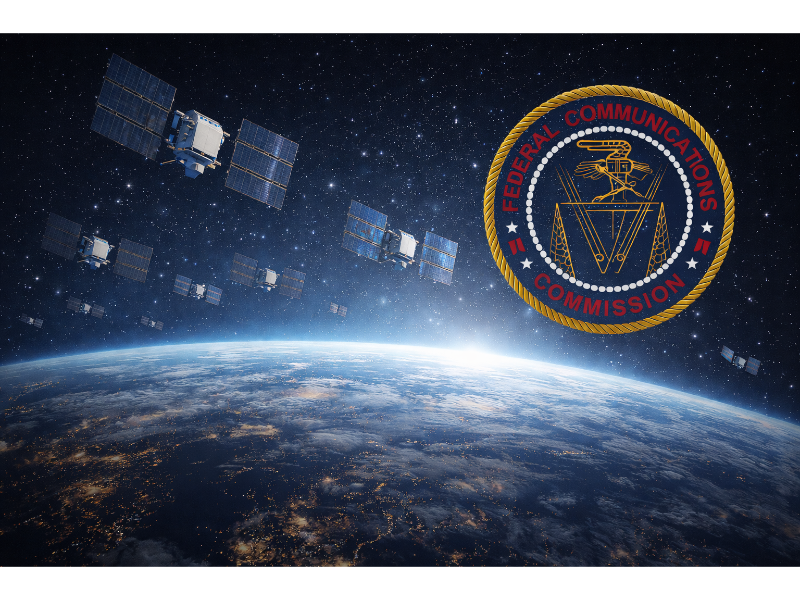
- The FCC has approved 7,500 additional Gen2 Starlink satellites, bringing the total authorised to 15,000.
- The expansion raises questions about orbital debris, spectrum use and competitive dynamics in satellite internet.
What happened: FCC gives conditional approval for new satellite deployment
The Federal Communications Commission (FCC) has granted SpaceX permission to deploy an additional 7,500 second‑generation satellites for its Starlink broadband network. This authorisation increases the total number of Gen2 Starlink satellites the company can place into low Earth orbit to 15,000.
SpaceX had initially sought approval for nearly 30,000 such satellites, but the FCC chose to authorise only half that number for now, leaving further applications under review. The decision also waives previous requirements on non‑overlapping coverage and capacity limits, giving SpaceX more flexibility to operate its constellation.
The FCC’s order specifies that 50 per cent of the authorised satellites must be launched and operational by December 1, 2028, with the remainder required by December 1, 2031. SpaceX will also be able to use multiple frequencies and provide direct‑to‑cell connectivity outside the United States, potentially expanding services to mobile users via satellite.
However, not all aspects of SpaceX’s broader plan received immediate approval. The FCC has deferred action on the remaining portion of the company’s proposed constellation beyond 15,000 satellites.
Why it’s important
This regulatory approval is a milestone in the evolution of mega‑constellation broadband, signifying continued support for SpaceX’s efforts to scale satellite internet globally. It potentially improves coverage in underserved areas and enables higher speeds and new services like direct‑to‑cell connectivity.
Yet the decision has prompted debate. Critics, including some astronomers and space safety experts, warn that large constellations increase the risk of orbital congestion, collisions and light pollution, which could impact scientific observations and long‑term space sustainability. According to satellite research, as the number of spacecraft in low Earth orbit grows, so too does the challenge of managing space debris and maintaining safe operations.
There are also concerns over competitive balance. SpaceX already operates roughly two‑thirds of all active satellites, giving it a dominant position in the satellite internet sector and raising questions about whether further expansion could hinder rivals.
While supporters argue the expanded constellation could bridge digital divides, regulators and observers will likely continue assessing whether such large deployments serve the public interest, protect orbital environments and foster fair competition.
Also read: Airtel Africa and SpaceX team up for Starlink satellite-to-mobile connectivity
Also read: Starlink to lower satellite orbits in 2026 to enhance space safety