
Topic
Peering and Transit
Within the Topic facet, Peering and Transit topic intelligence connects articles that share a specific subject, signal focus, or monitoring theme. The page gives readers a richer path through related reporting, source evidence, market actors, and infrastructure implications, with enough context to understand why the topic matters across company movements, governance decisions, regional exposure, and operational risk. Readers can compare recurring signals, affected organisations, public evidence, market context, service continuity, procurement, competition, compliance, and strategic planning questions behind the subject instead of stopping at a thin list of matching articles. It explains what the topic covers, which infrastructure actors or policies are involved, what evidence supports the coverage, and why the subject may matter for operators, customers, investors, and policy readers.

Global Regional ISP
Metrowireless’s 50 Mbps promise starts with a clear Santa Ana skyline
At first light, a technician on a Santa Ana roof has a deceptively simple job: make one small antenna see the right part of the skyline. That alignment is where Metrowireless Solutions de Costa Rica’s service promise becomes physical. Between the customer’s cable and the wider…

Global Regional ISP
Rentic's two live prefixes cannot lift Quibdó's last mile above the water
Rentic's two live prefixes cannot lift Quibdó's last mile above the water intelligence summary explains the development, the public evidence available to readers, the organisations involved, the regional context, market exposure, and the infrastructure consequences that may…

Global Regional ISP
Rednet's Santander network has two access technologies and one unanswered repair map
After heavy rain, a landslide closes a road above a Santander valley. A fibre crew waits below the blockage with a replacement span, while a radio technician bound for a hilltop relay is stopped by the same mud. The scene is representative, not a reported Rednet Group outage. It…

Global Regional ISP
CRISP's promise of real redundancy stops at the ICE pole line
CRISP built a durable Costa Rican enterprise-connectivity business around dedicated fibre, local support and the Luminet brand. Its public network footprint now shows useful routing diversity and international exchange connections, but customers cannot tell whether two circuits…

Latin America and Caribbean Datacenter
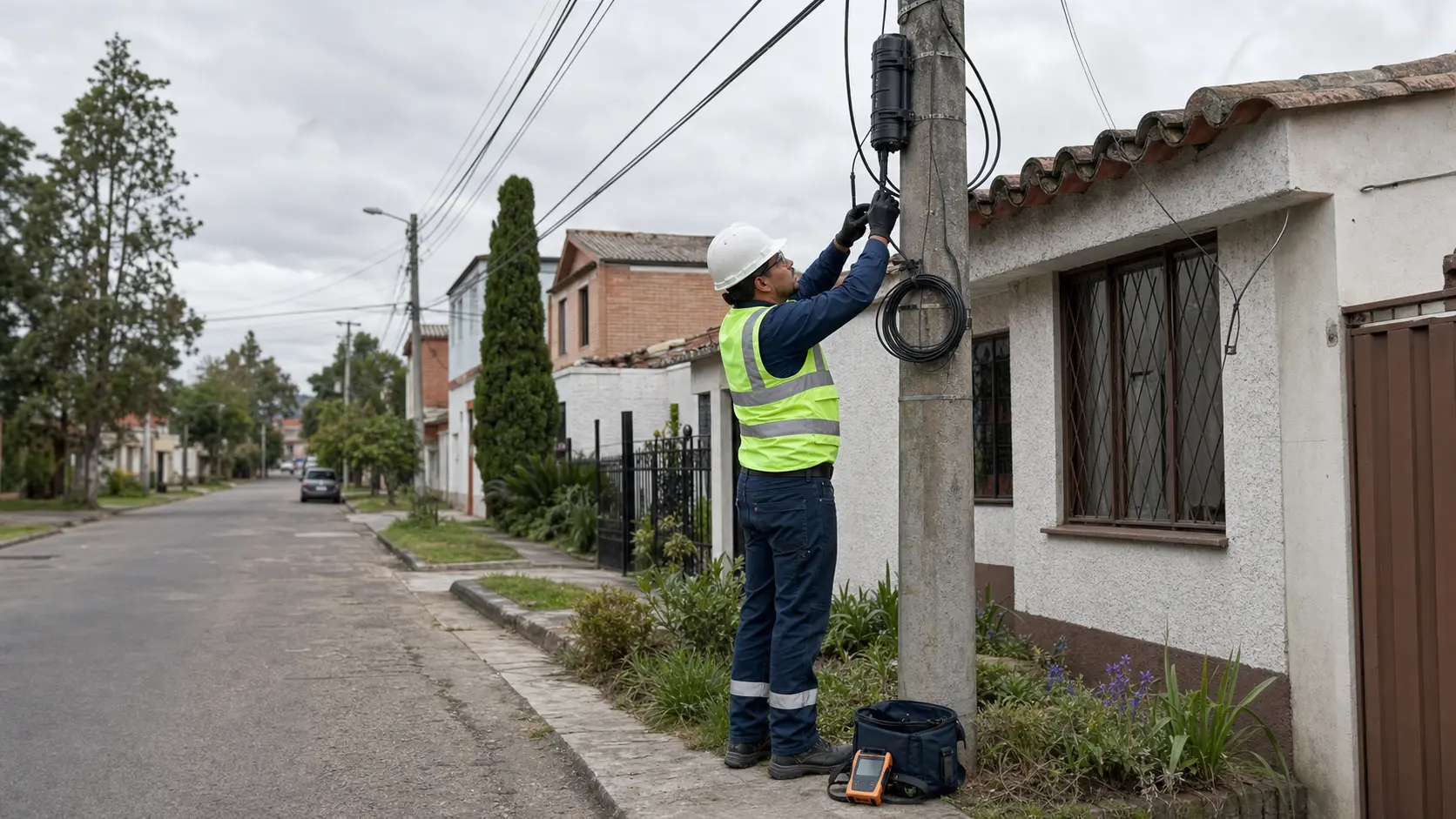
Zonamerica Cali's Tier IV certificate covers 405 kilowatts, not the whole campus
At Cali's southern edge, a certified data hall sits inside a 38-hectare free-trade zone whose roads, gates, utility handoffs and carrier entrances remain outside the certificate's stated 405-kilowatt boundary. The distinction matters to every tenant buying continuity: Wave DC can…
Latin America and Caribbean Regional ISP
UNICABLE's two IPv4 blocks take different upstreams, but neither maps the road back to Chía homes
UNICABLE H.D. SAS sells internet and television across five municipalities north of Bogotá, with fibre plans reaching 900 Mbps and a public routing identity that is visible through both Lumen and UFINET. The harder question is whether those logical exits, the mixed…

Latin America and Caribbean Regional ISP
U2RED’s 99.5% availability claim leaves the Catatumbo tower-power clock unanswered
U2RED has built a credible public case that it reaches places larger carriers can find awkward to serve. The harder question is whether its rural radio sites, urban fibre segments, upstream connection and field crews fail independently enough for that reach to remain useful when…

Latin America and Caribbean Regional ISP
Five Prefixes, One Visible Upstream: The Recovery Margin Behind TV ISLA on San Andrés
TV ISLA has a real local network, a public routing identity and a place in the archipelago's long effort to make broadband less scarce. What remains hidden is the part that determines resilience: how much transport is usable at the busy hour, which facilities and power systems…

Latin America and Caribbean Regional ISP
Five RF-Filter Locations and a WIRCOM-Dominated BGP View Bound TV Colombia Digital's Verifiable Footprint
Five RF-Filter Locations and a WIRCOM-Dominated BGP View Bound TV Colombia Digital's Verifiable Footprint intelligence summary explains the development, the public evidence available to readers, the organisations involved, the regional context, market exposure, and the…

Latin America and Caribbean Regional ISP
TV Azteca Colombia’s 788 Municipal Nodes Need Individual Uptime Proof
At the edge of Colombia’s national fibre programme, a line on a map ends at a splice enclosure, a powered cabinet and a handoff that another provider must be able to buy, light and restore. TV Azteca Colombia’s infrastructure matters because it reaches hundreds of municipal…

Latin America and Caribbean Regional ISP
Tierranet’s Three /24s Reach Three Upstreams—but Puerto Tejada’s Exit Is Unmapped
Tierranet has the visible outline of a small Colombian access network that has learned to divide its internet routes. What the public record cannot show is whether those routes also separate in the ground, in the building and at the electrical panel—the places where resilience is…
Latin America and Caribbean Regional ISP
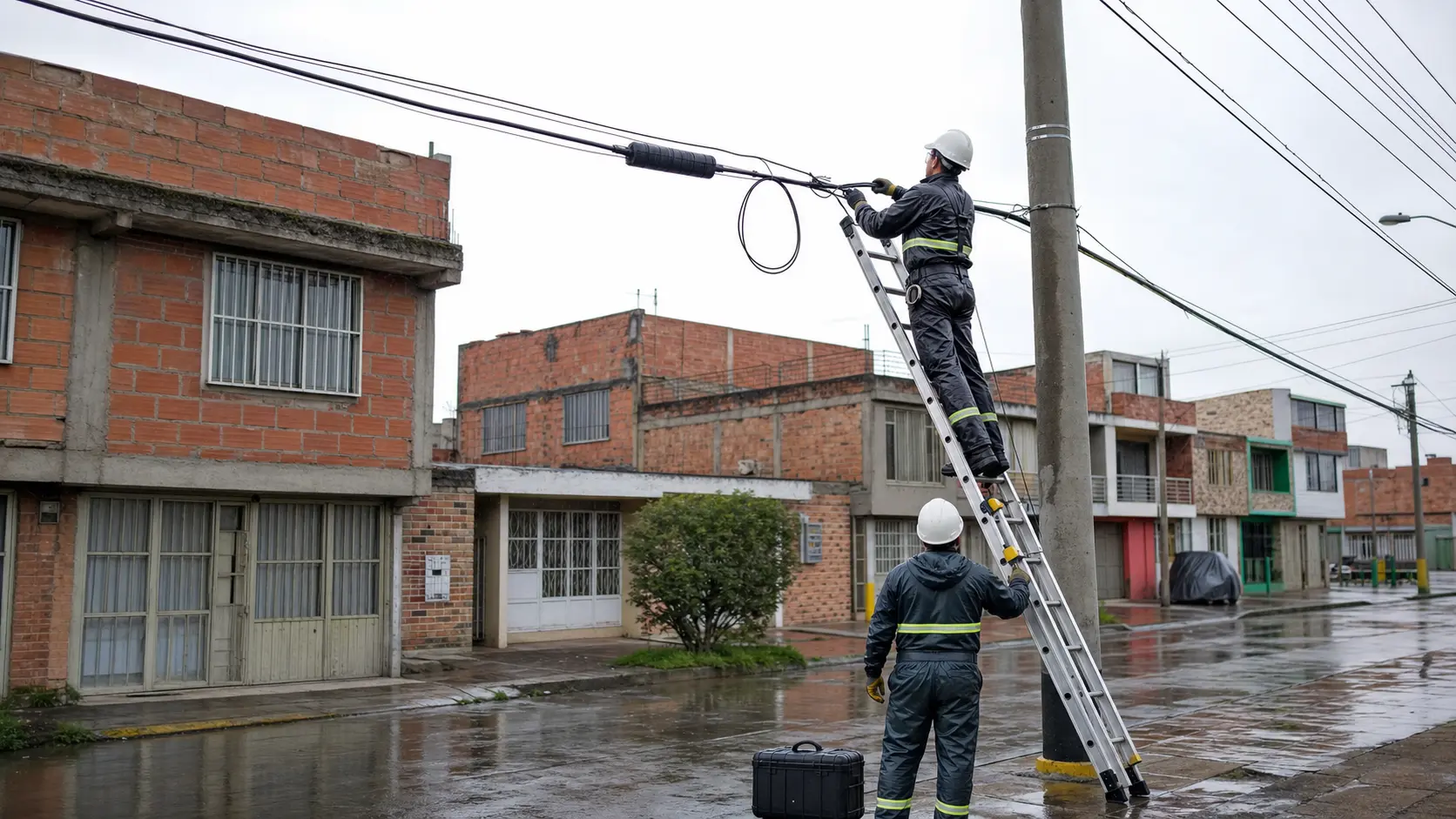
Telenet Digital’s Cable-Damage Manual Turns Its 500 Mbps Offer Into a Repair Test
Telenet Digital warns its fixed-internet users that damaged or manipulated external cable can limit a connection. That unusually candid admission is a sharper guide to the company than its 500 Mbps speed card: in a compact southern Bogotá and Soacha footprint, service value…

Latin America and Caribbean Regional ISP
TELCOBRAS Pitches Cali Telemetry and Hybrid Cloud, but AS262929 Shows One Upstream
TELCOBRAS Pitches Cali Telemetry and Hybrid Cloud, but AS262929 Shows One Upstream intelligence summary explains the development, the public evidence available to readers, the organisations involved, the regional context, market exposure, and the infrastructure consequences that…

Global Cloud Services
The contract before the cloud: Ehost's visible network and its competing specifications
The contract before the cloud: Ehost's visible network and its competing specifications intelligence summary explains the development, the public evidence available to readers, the organisations involved, the regional context, market exposure, and the infrastructure consequences…

Global Cloud Services
Transparent Edge and the second CNAME: can sovereignty ride on someone else’s network?
A customer reaches Transparent Edge through a short DNS alias, but the path behind that alias can cross software, networks and jurisdictions owned by several parties. That makes the Madrid company’s proposition more interesting than a simple “European CDN” label: its real test is…

Global Cloud Services
AIMS Data Centre: the shortest cable can become the longest dependency
AIMS sells protected space, power and cooling, but its most consequential product is often a much smaller physical entity: the cross-connect that puts a customer within a few metres of Malaysia’s densest concentration of networks. That proximity can lower latency, simplify…

Global Cloud Services
The Thousandfold Gap in Visão Datacenter's Reliability Story
The Thousandfold Gap in Visão Datacenter's Reliability Story intelligence summary explains the development, the public evidence available to readers, the organisations involved, the regional context, market exposure, and the infrastructure consequences that may follow. The Global…

Asia-Pacific Datacenter
Omni markets 1.2MW at Batam; the independent Tier III record stops at Jakarta's design
One Omni document puts 1.2MW of IT load behind two electrical paths in Batam. A separate Uptime Institute listing names only "OMNI DC JKT1, IT Hall 1, 2nd Floor" and records Tier III Certification of Design Documents in Jakarta. Between those two facts sits the central question…
Global Institutional
NICHONET's five-prefix IPv6 footprint does not add up to a documented hosting fleet
NICHONET is a real routed network, but the strongest public evidence describes a one-person, tunnel-based IPv6 experiment rather than the intercontinental hosting operator suggested by its name. Its five visible IPv6 origins and four exchange records prove useful engineering…

Global Regional ISP
WISP TECNOGER advertises 750 Mbps fibre, but its public record cannot size one relay's blast radius
The Venezuelan operator is visible in current fibre plans, LACNIC records, live BGP and a Valencia exchange profile. What remains invisible is the physical recovery system: which premises share a radio point, whether a second path is truly separate, how long field repair takes…