
Topic
Network-resource Evidence
Within the Topic facet, Network-resource Evidence topic intelligence connects articles that share a specific subject, signal focus, or monitoring theme. The page gives readers a richer path through related reporting, source evidence, market actors, and infrastructure implications, with enough context to understand why the topic matters across company movements, governance decisions, regional exposure, and operational risk. Readers can compare recurring signals, affected organisations, public evidence, market context, service continuity, procurement, competition, compliance, and strategic planning questions behind the subject instead of stopping at a thin list of matching articles. It explains what the topic covers, which infrastructure actors or policies are involved, what evidence supports the coverage, and why the subject may matter for operators, customers, investors, and policy readers.

IETF
QUIC Migration Can Fail Before the Connection Does
A QUIC connection can remain cryptographically alive while becoming unable to use a new path. The missing resource may be neither keys nor congestion window, but an unused connection ID supplied by the peer.

Number Resource Society
An RPKI Cache Serial Is Not a Freshness Timestamp
Two RPKI caches can report perfectly accurate serial numbers and still tell an operator nothing about which cache holds newer global data. RFC 8210 scopes a serial to one cache session and protocol version. Treating the larger number as the fresher view manufactures a chronology…

History
The Segment That Returned to the Same Number: TCP-AO's Sequence Number Extension
A TCP sequence number can come back during one long-lived connection. TCP-AO had to ensure that the repeated 32-bit value did not also repeat the evidence presented to its authenticator.

Europe and Middle East Regional ISP Trends
Farlep-Invest: the missing fault map behind a 100-hour continuity claim
Farlep-Invest says Vodafone Gigabit Net home-internet customers can remain online for more than 100 hours during central-power outages. The number is striking. Its real value, however, depends on a fault map the public filing does not provide: which network segments are…

CASE FILE
The Notification Arrived. One Backend Still Had Nothing to Serve
The IETF is asking for final comments on a proposed operating guide for RPKI publication services. Its sharpest rule is also the easiest to violate during a routine rollout: do not expose the new notification until every snapshot and delta it names is already available. An index…

IETF
QUIC's Three-Times Limit Is an Address-Validation Budget, Not DDoS Protection
A QUIC server can have the next handshake bytes ready and still be forbidden to send them. Before it knows that a client can receive packets at its claimed address, every received byte grants only a bounded amount of transmission credit.

Global Regional ISP Trends
A QUIC Connection ID Is Not a Durable Principal
A connection identifier can keep a QUIC session reachable while the network path changes. That continuity is operationally useful, but it does not turn the identifier into an account, a subscriber or a durable statement about who is authorised now.

CASE FILE
The Candidate Path Reached BGP. The Forwarding Plane Had Not Voted: RFC 9830
A controller advertises two Segment Routing candidate paths to a headend. Both arrive over valid BGP sessions. One wins BGP's comparison for its advertisement; the other remains a distinct route because its Distinguisher differs. Neither fact says which candidate the SR Policy…

History
The Header Described an Archive. It Did Not Authorize the Decoder to Run It: RFC 1505
The line counts agree. The archive expands. The checksum closes. A shell command now waits in a directory created from an email message. In 1993, RFC 1505 drew the most important boundary at exactly this point: successful decoding was not permission to execute.

Global Regional ISP Trends
A ROA maxLength Is Not a Traffic-Engineering Permission
A broad ROA can keep an emergency more-specific from becoming RPKI-invalid. It can also authorize origins that nobody intended to announce. The operating control is the exact origin plan, not the convenience of one large `maxLength`.

IETF
The QUIC Spin Bit Is a Sample, Not a Latency SLA
A passive latency graph can go blank while a QUIC service remains healthy. The signal may have disappeared because an endpoint did not participate, traffic paused, or connection context changed—not because round-trip time became infinite.

CASE FILE
The Challenge Released the Message. It Still Had Not Reached the List
The IETF plans to replace the machinery behind its email services on 11 September. The design usefully separates challenges, list handling, identity rewriting, signing and outbound transport. It also makes the central operating question unavoidable: when one component reports…
Europe and Middle East Regional ISP Trends
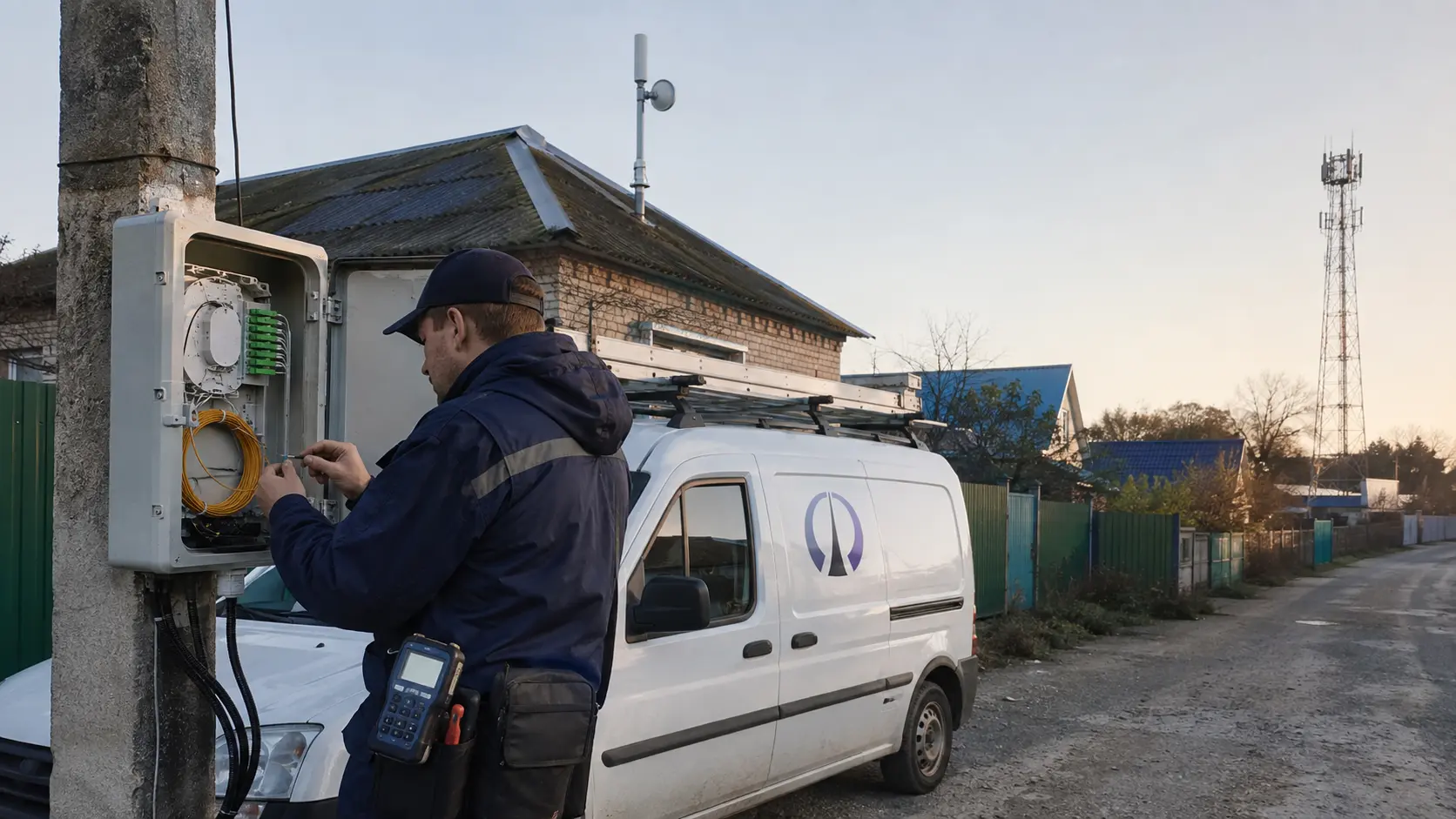
Prime-Service: the price parity hiding two different access futures
Prime-Service’s public retail surface puts GPON and WiMAX beside one another at matching displayed price points, but with sharply different advertised speeds. That contrast turns an ordinary tariff table into a due-diligence question about technology, upgrade paths and who…

Number Resource Society
A ROA maxLength Is Not a Traffic-Engineering Policy
A route can be RPKI Valid because a ROA’s maxLength admits its prefix length. That result proves a bounded origin authorization. It does not prove that the more-specific route was planned, approved, currently announced or preferred by the operator. Those are separate facts, and…

Story
LACNIC’s IPv6 allocation rules make scale plannable
**BTW analysis:** IPv6 offers a vast address space, but abundance alone does not tell a network operator what it may request, how need will be assessed, or what obligations follow an allocation. In Latin America and the Caribbean, those practical questions meet LACNIC’s published…

IETF
When 255 Octets Stop Being Enough: RFC 9885 and Multi-Part IS-IS TLVs
A syntactically valid IS-IS LSP can leave a receiver with an incomplete entity when information crosses the 255-octet limit and the receiver processes only one TLV occurrence. RFC 9885 defines how to recognize and process those related occurrences without changing the underlying…

IETF
Happy Eyeballs Is a Racing Budget, Not Proof of Dual-Stack Health
A page can load normally while one address family is unusable. Happy Eyeballs protects the user by letting another candidate win, but that success becomes misleading when operators treat it as evidence that the whole dual-stack service is healthy.

CASE FILE
The CRL Number Was Higher. RPKI Still Had to Ignore It: RFC 9829
A relying party retrieves two signed revocation lists from one publication point. The first carries the larger CRL Number. The second is the file named by the certificate and hashed on the issuer’s current manifest. A generic PKI instinct says to trust the larger counter. RFC…

CASE FILE
The Trace Linked the Action. It Did Not Prove the Authority
A new IETF discussion list asks how an agent’s intent, delegation, changing permissions and external actions can be followed across services. The hard part is not inventing a universal trace identifier. It is preventing that identifier—and the agent’s own account of events—from…

Story
A TTL Jump Can Make a RIPE Atlas Trace Invent an AS Link
A traceroute can place a destination directly after one visible network even when several unseen routers still forwarded the packet. The missing segment is not always silence or a tunnel. New RIPE Atlas research shows that an on-path device can raise the probe's TTL and let it…