
Topic
Enterprise Software Automation
Within the Topic facet, Enterprise Software Automation topic intelligence connects articles that share a specific subject, signal focus, or monitoring theme. The page gives readers a richer path through related reporting, source evidence, market actors, and infrastructure implications, with enough context to understand why the topic matters across company movements, governance decisions, regional exposure, and operational risk. Readers can compare recurring signals, affected organisations, public evidence, market context, service continuity, procurement, competition, compliance, and strategic planning questions behind the subject instead of stopping at a thin list of matching articles. It explains what the topic covers, which infrastructure actors or policies are involved, what evidence supports the coverage, and why the subject may matter for operators, customers, investors, and policy readers.

Global Institutional
ISC DHCP to Kea: why a converted file is not a migrated service
ISC’s keama utility addresses a specific part of the move from ISC DHCP to Kea: converting recognized configuration constructs into Kea JSON. The harder deployment question begins after that output exists. Lease state, high availability, DNS updates and locally defined behavior…

Global National Telecom Trends
Nokia links network data to Microsoft Fabric
The integration gives telecom operators a common data layer for network automation, reducing the need to build separate pipelines for each AI use case.

Global Institutional
RANCID and the enduring value of a one-line network diff
RANCID has endured successive generations of network management because it performs one narrow task: it logs into devices, collects selected configuration text, removes expected noise and commits the result to version control. It does not model intent, approve changes or…

Global Institutional
LibreNMS and the operating cost of seeing the network clearly
LibreNMS gives operators a transparent, self-hosted way to discover devices, poll counters, build inventory and turn network state into alerts. Its credibility does not come from a promise that open source is automatically safer or cheaper. It comes from an operating bargain: the…

Global Cloud Services
Oracle Cloud’s automation promise meets the limits of deployment
Oracle Cloud Infrastructure is more than a transit-routing service: it offers code-driven provisioning, event-triggered operations, recovery orchestration and specialized AI capacity. The practical question is not whether these controls exist, but how much operational work they…
Global Institutional
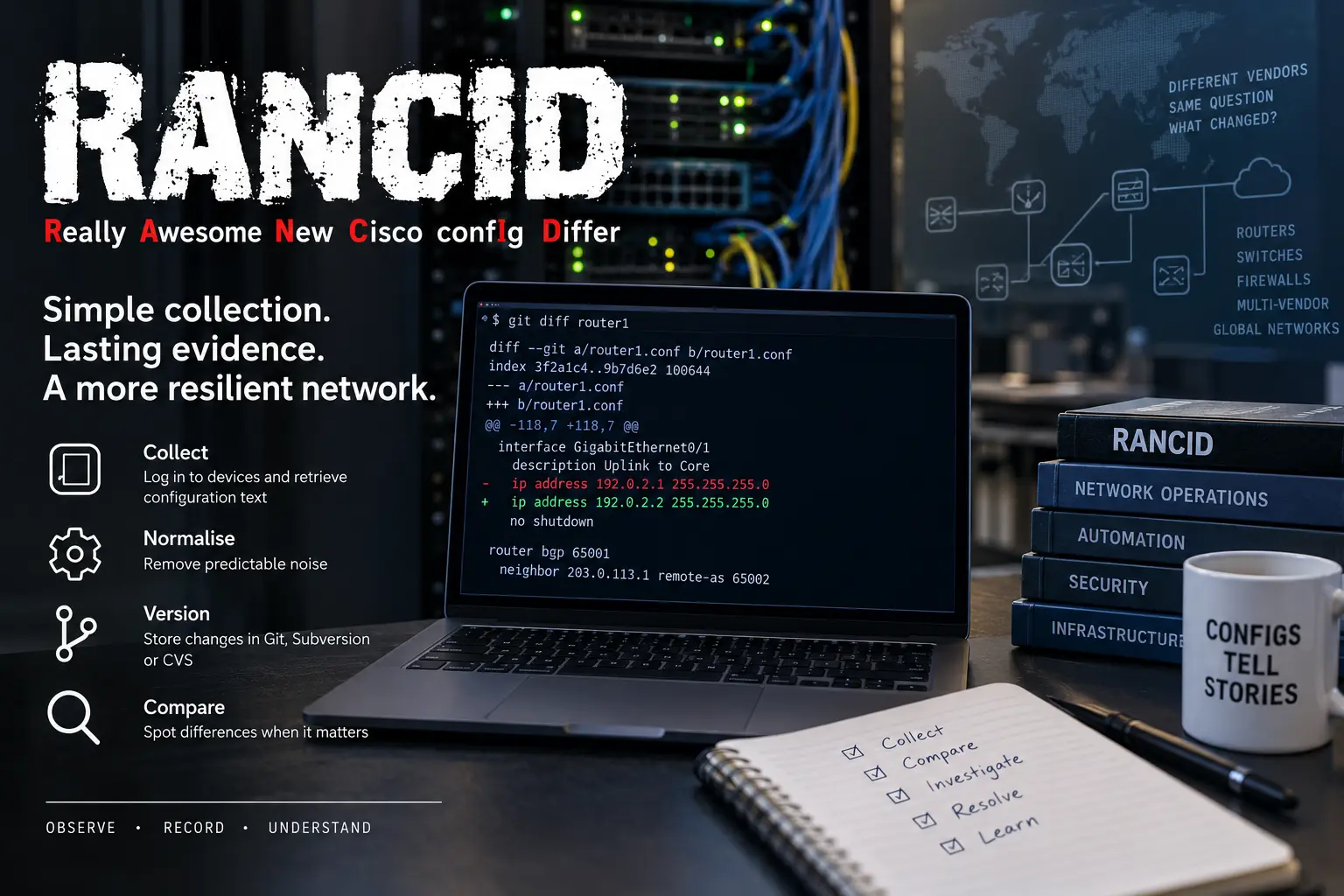
RANCID and the enduring value of a one-line network diff
RANCID preserves a form of evidence that large management platforms can easily blur: configuration text reported by a device at a particular moment, and the difference from the previous observation. It does not represent the full intent model, every event or causality. That…
Global Institutional
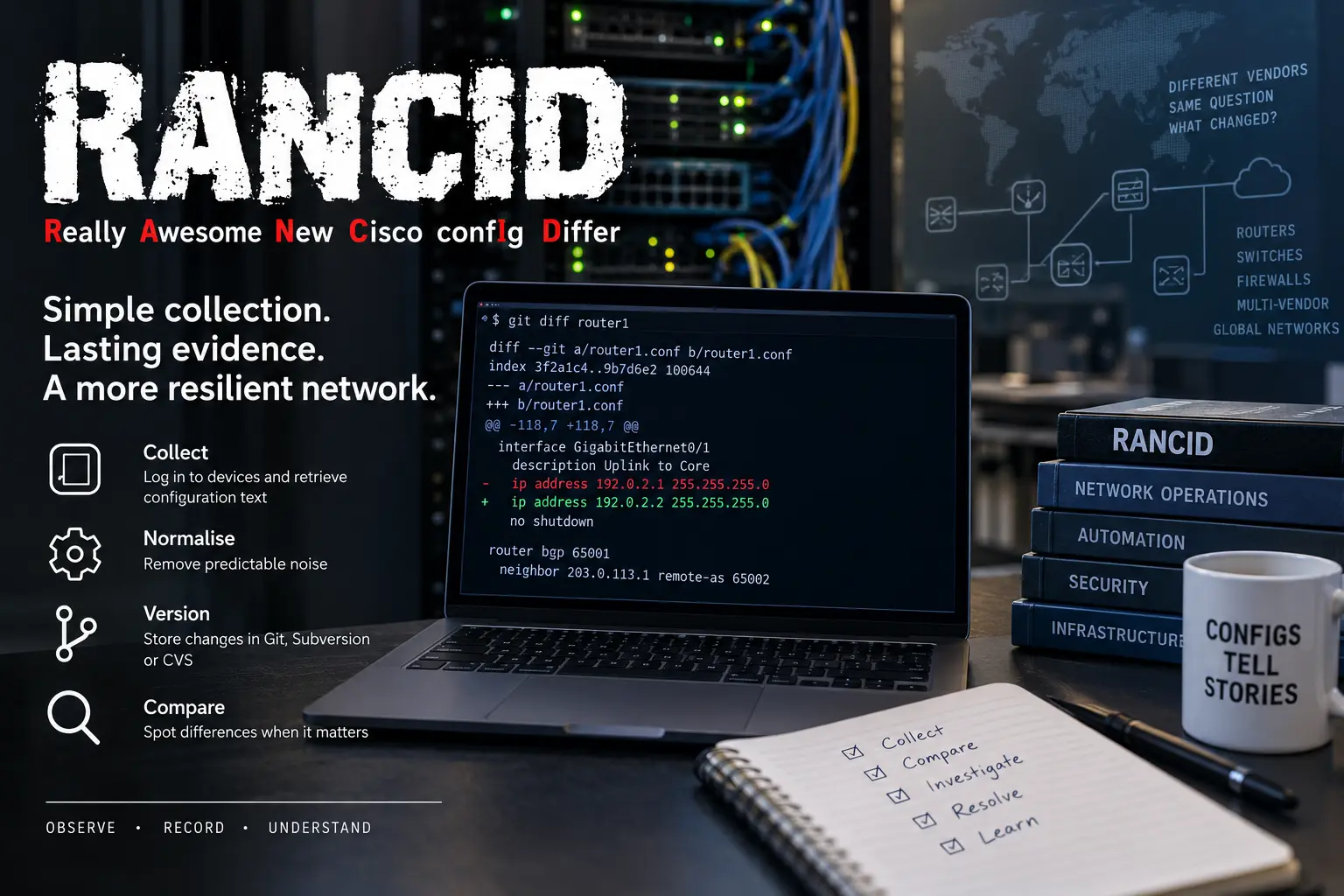
RANCID and the enduring value of a one-line network diff
RANCID has survived successive eras of network management by doing one narrow job: logging into devices, collecting selected configuration text, removing predictable noise and committing the result to version control. It does not model intent, approve changes or reconstruct every…

Europe and Middle East National Telecom
Openreach says AI prevents 3,000 fibre cancellations
Openreach says its AI tools are helping keep more than 3,000 full-fibre orders from being cancelled each month when installations run into delays or extra engineering work.

IETF
Marshall T. Rose and the SNMP SetRequest That Changed Every Variable or None
A maintenance console sends one SNMP SetRequest containing several variable bindings. The agent answers `noError`. That is a useful receipt—but only for a deliberately narrow claim. The early SNMP design associated with Marshall T. Rose’s working-group leadership helps show why a…

Global Institutional
Akvorado turns sampled flow records into operational network memory
Akvorado gives network operators a self-hosted way to retain, enrich and examine flow records over long periods. Its value lies in exposing the path from router export to operational decision; its central limit is that every chart still inherits the sampling, loss, timing and…

IETF
A TLS CertificateRequest Context Correlates a Response, Not an Authorization Scope
An opaque value can tell a TLS server which certificate request a client answered. It cannot tell an application what the authenticated key may do. When a correlation handle is promoted into a tenant, role or access boundary, precise cryptographic sequencing becomes an accidental…

Global Institutional
SNIA sets common storage rules but cannot impose them on the market
Since 1997, SNIA has tried to make storage systems from different vendors more comparable, manageable and predictable. Its specifications cover software management, cloud data, media sanitisation, energy use and hardware form factors, but any useful rule works only when companies…

Global Cloud Services Trends
Workiva’s large-contract growth has an acquisition clock inside it
Workiva’s largest customer tiers are expanding much faster than its total customer count. That looks like a clean enterprise-upmarket story until one sentence in the filing changes the perimeter: customers acquired with Sustain.Life enter the customer count and…

Global Cloud Services Trends
Expensify’s card growth fails the two-rebate test
Expensify’s headline card number looks uncomplicated: interchange revenue rose 12% in the second quarter of 2026. The income statement tells a more demanding story. Customer cashback grew faster and reduced revenue, while a Visa volume incentive that reduces cost of revenue fell…

IETF
TLS close_notify Ends a Sending Stream, Not an Application Transaction
An orderly TLS ending can arrive after the last encrypted bytes and still say nothing about whether an invoice was booked, an order was accepted or a database committed. `close_notify` closes a cryptographic sending direction. Treating it as a business receipt makes a transport…

Global Cloud Services Trends
Klaviyo’s Shopify toll sits below gross margin
Klaviyo reported a 72.6% gross margin in the second quarter of 2026. That number describes what remained after the costs classified as delivering its service. It does not include a separately disclosed toll attached to one of the most important routes into that service. Shopify…

IETF
Max-Forwards Counts HTTP Hops, Not Organizational Authority
Max-Forwards gives an HTTP client a small diagnostic budget: a TRACE or OPTIONS request may cross only so many forwarding steps before an intermediary must answer. That counter is useful precisely because it is narrow. It does not reveal how many companies are involved, certify…

North America Cloud Services Trends
ServiceTitan’s US$527 million contract measure does not capture its Max push
ServiceTitan is promoting Max as a larger, AI-enabled package while more of its commercial motion depends on upsells and usage. Yet the company’s principal contracted-revenue measure deliberately leaves much of that surface outside its frame. The gap does not weaken the quarter…

IETF
Accept-Patch Advertises Patch Formats, Not Permission to Modify
A server can tell clients which patch-document languages it understands without deciding who may change a resource. RFC 5789 gives that discovery statement a name, Accept-Patch, and keeps capability, format semantics, current state and write authority as separate questions.

North America Cloud Services Trends
NETSCOUT’s 12.7% growth came with early government orders and a US$17.9m backlog decline
NETSCOUT began fiscal 2027 with faster revenue, better margins and some government-related orders that arrived sooner than expected. Its product backlog simultaneously fell from March. The useful question is not which number cancels the other, but which clocks have moved into…