
Topic
Cross-border Connectivity
Within the Topic facet, Cross-border Connectivity topic intelligence connects articles that share a specific subject, signal focus, or monitoring theme. The page gives readers a richer path through related reporting, source evidence, market actors, and infrastructure implications, with enough context to understand why the topic matters across company movements, governance decisions, regional exposure, and operational risk. Readers can compare recurring signals, affected organisations, public evidence, market context, service continuity, procurement, competition, compliance, and strategic planning questions behind the subject instead of stopping at a thin list of matching articles. It explains what the topic covers, which infrastructure actors or policies are involved, what evidence supports the coverage, and why the subject may matter for operators, customers, investors, and policy readers.
History
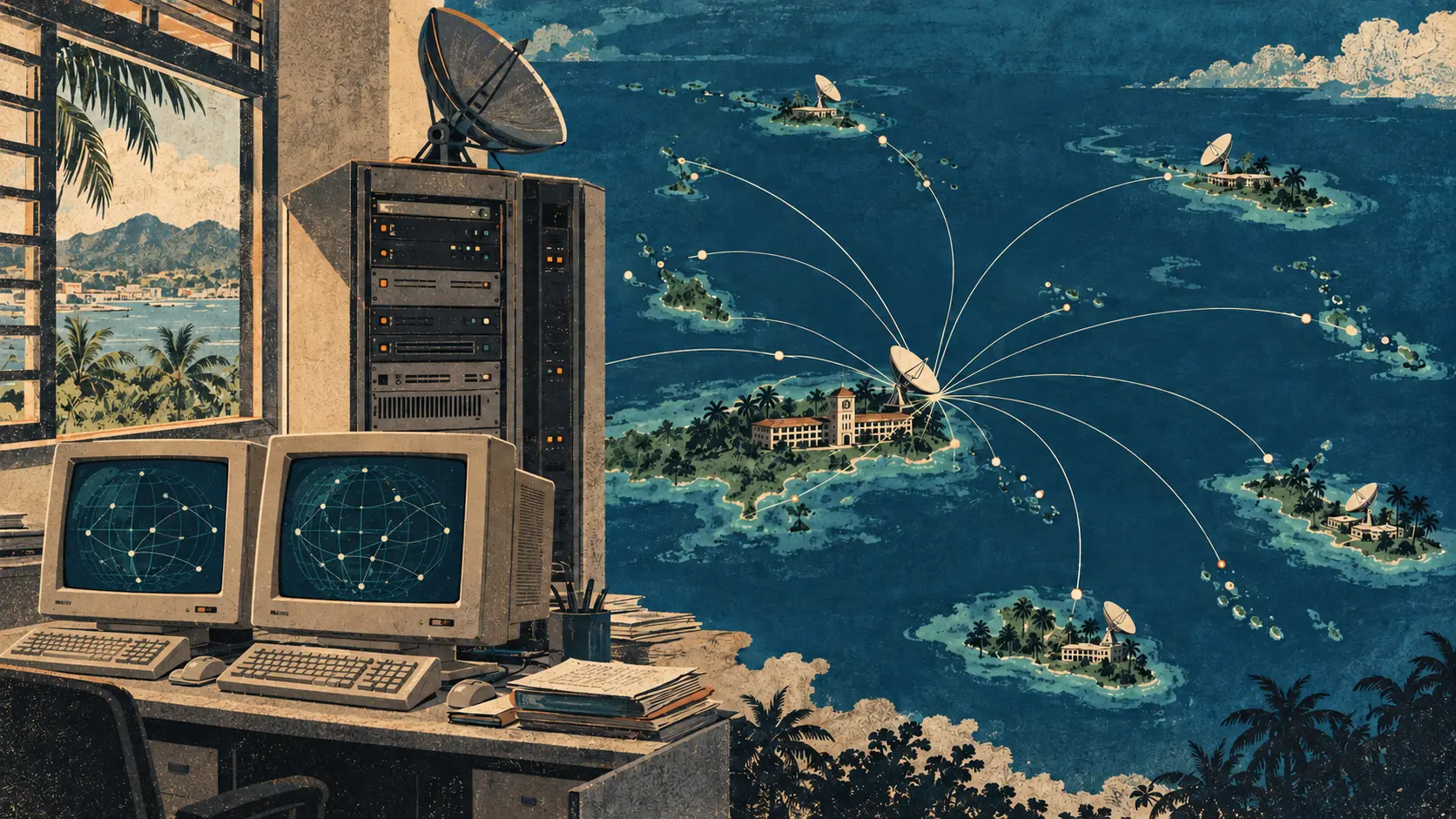
One Gateway in Suva, Many Permissions Across the Pacific: USPNet’s 1995 Internet Plan
The University of the South Pacific had reached the internet over a 2.4 kbps leased line by November 1994. A year later, its upgrade proposal imagined a faster Suva gateway for campuses scattered across the Pacific, but the local stations and permissions that would make that hub…

History
The Message Was Online by Schedule: Nepal’s Early Internet, 1993–95
Nepal exchanged scientific email through a scheduled cross-border relay before commercial providers established a continuously online international IP link. The dates and early upstream paths do not line up in every account.

Europe and Middle East National Telecom Trends
Arelion's 21% spectrum gain still needs a service test
A live-network trial between Amsterdam and London widened the optical spectrum Arelion can use. The commercial question is how much dependable, priced customer capacity that extra room can carry.

History
The 32 Kbps Link That Challenged Kenya’s Telecom Monopoly
Kenyan organisations had exchanged email for years, but those services were not yet the full Internet connection later histories describe. In October 1995, the African Regional Centre for Computing put a 32 Kbps leased link to the United Kingdom into service. The connection…

History
The Traffic Meter Was Not the Bill: EARN’s 1990 Funding Vote
In 1989, EARN tested whether countries should contribute according to network traffic. The Board approved a 1990 budget, then sent the traffic formula back for more work.

History
One Link for Two Universities, One Bill at First: Mexico’s 1989 NSFNET Connection
A shared satellite channel joined UNAM and ITESM to a US research network. Its agreement spread equipment duties, but the first bill landed with one university.

History
The Call to Amsterdam: How EUnet Carried Europe’s Mail and Usenet
For one Belgian university department, the nearest European Usenet host was in Amsterdam, but the estimated international telephone bill kept the department offline. EUnet’s early history is easiest to see from that distance: a shared network depended on local links that…

History
VSNL’s 1995 Internet Gateway Still Needed India’s Local Telephone Network
The gateway connected India’s commercial Internet service to the world. Reaching a customer still required a domestic path: a telephone line, a leased circuit, or the public data network that carried traffic onward to a service node.

History
A 25-Year Capacity Right Still Needed Maintenance: KPNQwest’s 2002 Bankruptcy
When KPN Telecom asked KPNQwest’s bankruptcy trustees to keep its contracted capacity operational, it was asking a question more exact than “who owns the cable?” A 2004 Dutch judgment treated the right to use specified capacity as a continuing obligation, with operations and…

History
Brazil’s Academic Backbone Was National. Its Exits Were Not.
A countrywide network map can conceal a much narrower set of routes to the outside world. In Brazil’s research Internet, domestic reach expanded before international egress was distributed across the national backbone.

Europe and Middle East Institutional Trends
In the EU’s proposed responder system, fire and rescue join by national choice
Europe’s planned critical-communications system is being designed through two linked regulations. The law-enforcement framework would require interoperable national systems; the companion civil-protection proposal leaves each Member State to decide whether to connect…

History
Korea’s SDN Ran TCP/IP; Overseas Usenet Came by Tape
South Korea’s first research network linked two computers over a 1,200 bps line in 1982. Its international mail and news still travelled through relays—and, at times, by post.

History
The Network of Paper Went to Copenhagen: IRIS Before RedIRIS
Spain was represented in European academic-network discussions before its national research network could carry traffic. The steps that followed—a tiny X.25 experiment in Valencia, a formal programme in 1988 and a later shift toward TCP/IP—show why a seat at a coordination table…

History
The Portland Home Behind South Africa’s First Internet Link
Before a leased line joined Rhodes University to the wider Internet, email between South Africa and Portland moved through a store-and-forward relay. In 1991, a low-speed circuit ending at Randy Bush’s home office became the far end of Rhodes’s first full IP connection. The…

History
China’s 1986 Email Was Not Yet a CSNET Mail Node
An email from Beijing reached CERN in 1986, but that exchange was not the same thing as a local host joined to CSNET. The distinction lies in the route, the relay and what could keep running after one message.

Europe and Middle East National Telecom Trends
Europe’s 2029 Call-Price Rule Runs on Two Clocks
The price rule due in 2029 will be shaped by two earlier deadlines: a wider BEREC usage benchmark in 2026 and the European Commission’s statutory review in 2027. The gap between those dates is where evidence has to become a decision.

Europe and Middle East Institutional Trends
Europe’s Emergency Network Has Three Cost Lines—and No Single Payer
Europe could spend €3.57 billion to connect emergency communications across borders while national governments continue to own the networks that must reach the border. That estimate is only one ledger: the Commission’s impact assessment places broadband upgrades for national…
Europe and Middle East Cloud Services Trends
The AWS Disconnect Test Needs a Record Buyers Can Audit
AWS plans a 24 October exercise that will disconnect the European Sovereign Cloud from the AWS Global Network backbone and disable a separate operational-data transfer system. Its promised evidence will matter to buyers only if it shows what the exercise established and who can…
History
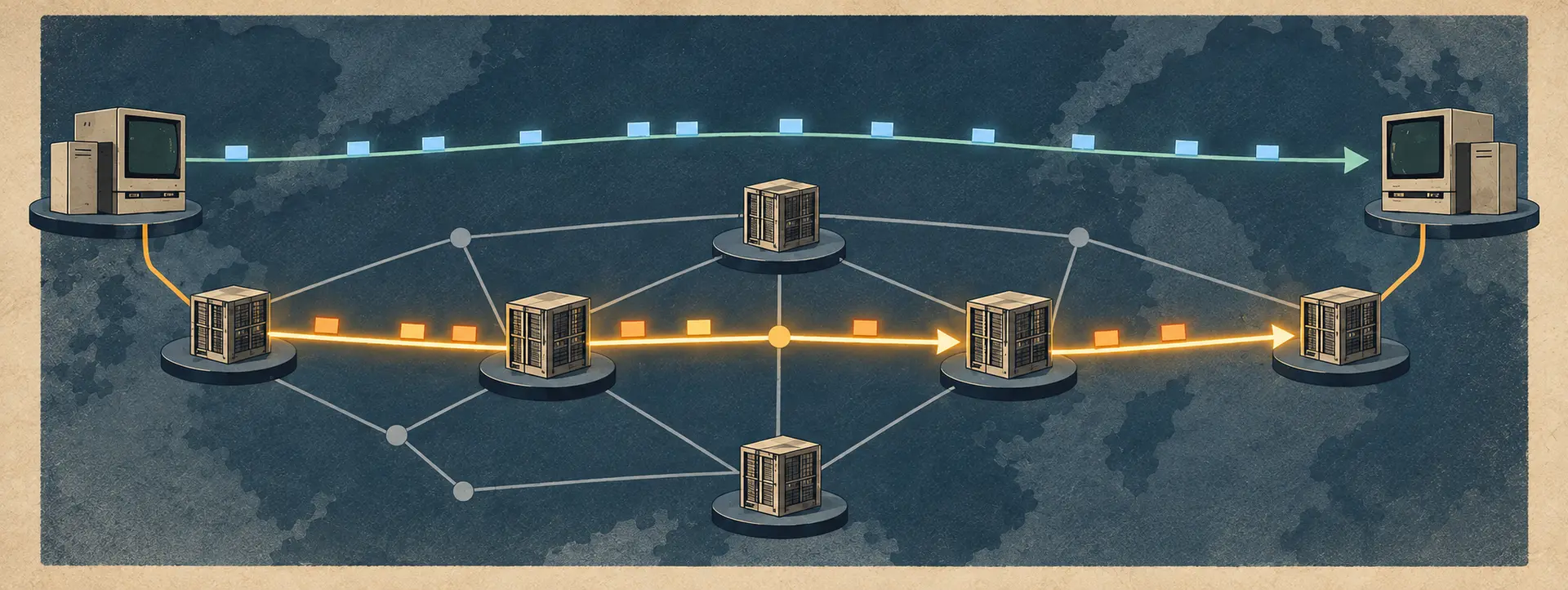
The X.25 Call Was Not the TCP Conversation: RFC 877
A public X.25 circuit could carry IP datagrams without becoming the TCP conversation above them. RFC 877 made that separation explicit, and let the network’s own cost and capacity shape how long a circuit stayed open.

History
NORSAR Kept 2.4 kbit/s for Seismic Data as ARPANET Arrived
When NORSAR’s voice-grade line was upgraded for ARPANET, the seismic stream did not disappear into a larger network. The year-end 1973 operating report says 2.4 kbit/s remained assigned to seismic data; NORSAR and the University of London Institute of Computer Science shared the…