
Topic
Cross-border Connectivity
Within the Topic facet, Cross-border Connectivity topic intelligence connects articles that share a specific subject, signal focus, or monitoring theme. The page gives readers a richer path through related reporting, source evidence, market actors, and infrastructure implications, with enough context to understand why the topic matters across company movements, governance decisions, regional exposure, and operational risk. Readers can compare recurring signals, affected organisations, public evidence, market context, service continuity, procurement, competition, compliance, and strategic planning questions behind the subject instead of stopping at a thin list of matching articles. It explains what the topic covers, which infrastructure actors or policies are involved, what evidence supports the coverage, and why the subject may matter for operators, customers, investors, and policy readers.

Europe and Middle East Institutional Trends
Europe’s new government network has two clocks
Orange Business says it has been selected to provide the TESTA-EIRIS backbone, but a new footprint is only one half of a network transition. The more consequential measure is how many public-service connections can move, pass acceptance and leave the old system without disrupting…

Europe and Middle East National Telecom Trends
In Komatsu’s Saudi IoT launch, the local network is the control point
NTT DOCOMO BUSINESS will design and deliver the service; stc will supply the Saudi network, SIMs and connectivity-management platform. That division makes local access the central operating layer, but the announcement does not yet show fleet uptake, prices or service results.
Asia-Pacific Cloud Services
NovaCloud: two autonomous systems, one brand, and the gap between marketed cloud and routed reality
NovaCloud: two autonomous systems, one brand, and the gap between marketed cloud and routed reality intelligence summary explains the development, the public evidence available to readers, the organisations involved, the regional context, market exposure, and the infrastructure…

History
Michuki Mwangi and the Missing Denominator in Africa’s 80 Percent Goal
The phrase “80 percent” travelled through Africa’s peering debate as a continental aspiration, a content provider’s local-serving ratio and even a shorthand for the human work of building an exchange. Michuki Mwangi helped make the vision legible and practical; the record becomes…

Story
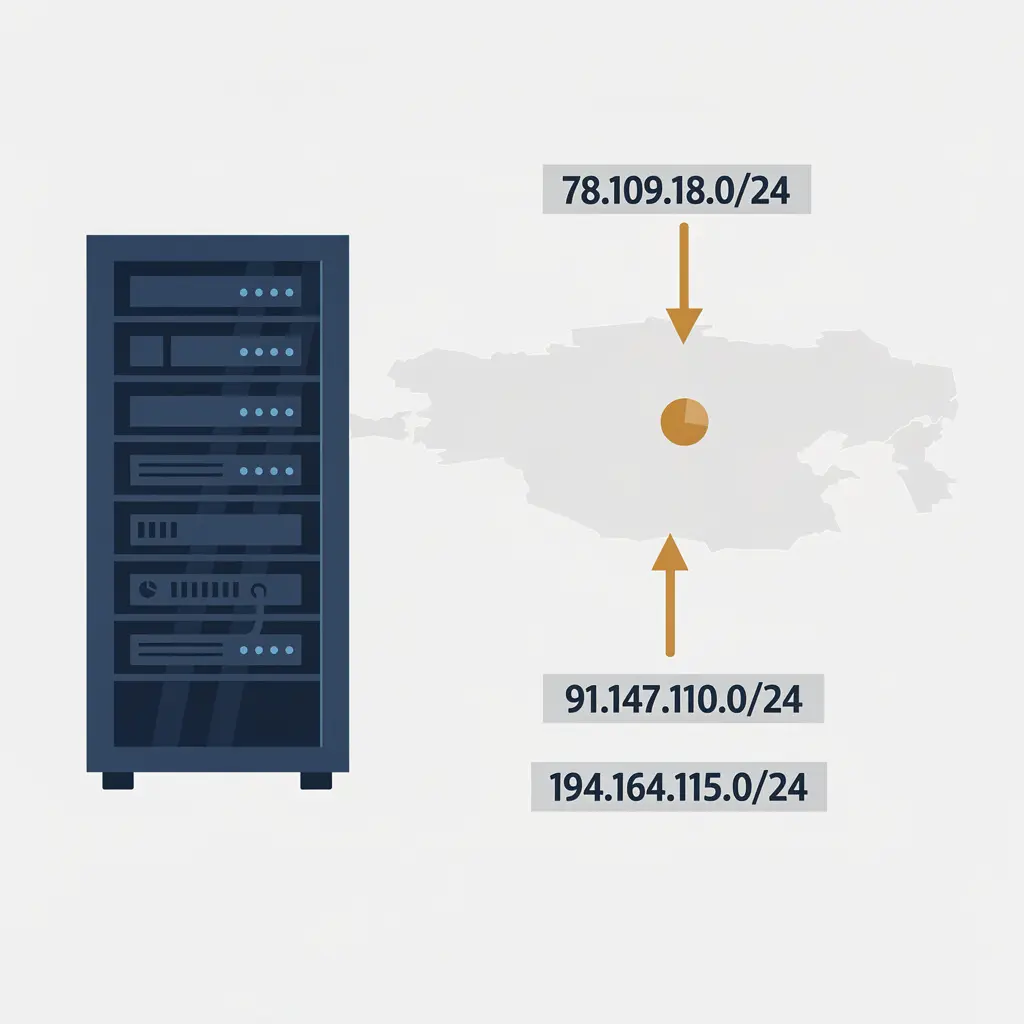
RIPE’s Central Asia Path Comparison Needs a Sample Ledger
Three maps can show change only if the rows behind them stay countable. RIPE NCC’s CAPIF 5 report presents an encouraging direction for Central Asian Internet paths across 2022, 2024 and 2026. The next useful publication is not a more confident adjective. It is a compact receipt…

Story
Where Registration Ends and Operation Begins: Inside the AS216429 Case File
Where Registration Ends and Operation Begins: Inside the AS216429 Case File intelligence summary explains the development, the public evidence available to readers, the organisations involved, the regional context, market exposure, and the infrastructure consequences that may…

Asia-Pacific Datacenter
The Ledger Says Cloud. The Routing Table Says Otherwise: Reading AS2042 as Deployed Evidence
The Ledger Says Cloud. The Routing Table Says Otherwise: Reading AS2042 as Deployed Evidence intelligence summary explains the development, the public evidence available to readers, the organisations involved, the regional context, market exposure, and the infrastructure…

Europe and Middle East Regional ISP
Vorboss After the Founder: What Has Actually Changed in Control, Cash and Claims
Vorboss Limited's registered control has not moved since 27 November 2020, when Fern Fibre Limited became its sole person with significant control holding 75% or more of shares and votes and the right to appoint or remove directors, the same day founder Tim Creswick's own…

CASE FILE
Petal’s petabit is a design envelope, not yet a delivered route
Petal matters because its two-core fibre design could materially change the density of transatlantic systems. But the most useful reading of its 1 Pbps label begins by refusing to treat a future engineering ceiling as present network capacity.

North America Institutional Trends
Toptana has room for four cable systems—and one named anchor
Toptana Technologies has broken ground on a Washington cable landing station designed to receive as many as four subsea systems. The design creates room for a business; it does not prove that four customers, four commissioned cables or four revenue streams exist. For now, only…

CASE FILE
Four VPN Restrictions, One Label, No Shared Authority
On 9 September, the Internet Society grouped four very different interventions under the heading “VPN restrictions”. The taxonomy is useful; the label is dangerous. An age rule, a blocking order, a logging duty and a prohibition do not regulate the same actor or need the same…

CASE FILE
The Public Record for the Auckland Declaration Cannot Yet Route an Incident
Four research-network leaders have signed a regional cyber-resilience declaration built around trust, preparedness, information sharing, incident coordination and mutual support. The promise matters. The pages now available to a member or partner still do not show who can receive…

History
Peter Kirstein and the Transatlantic Node That Was More Than a Terminal
When ARPANET reached London in 1973, the scarce asset was not simply a line across the Atlantic. Peter Kirstein's achievement was to turn UCL from a distant customer of American machines into a place where British researchers could attach computers, implement protocols, operate…

History
Jan Gruntorád and the Link That Had to Become Two Networks
At the start of 1992, an international circuit from Prague to Linz was strengthened and divided. One channel continued to carry EARN traffic; the other was assigned to the Internet. In that physical line becoming two operational networks lies a more useful history of Jan…

History
Ben Segal and the TCP/IP Pilot That Could Not Leave CERN
By March 1988, TCP/IP served 355 machines at CERN, from an IBM mainframe and a Cray to VAX systems, workstations, PCs and Macintoshes. Yet none of those machines could use TCP/IP to cross the laboratory’s external boundary. Ben Segal’s pilot had solved heterogeneous connectivity…

History
Qiheng Hu and the 64K Link That Needed Authority at Both Ends
By the end of 1993, the network was technically ready. Its domestic backbone joined three academic systems, its team had chosen TCP/IP, and the international circuit had been provisioned. Yet packets still did not cross. Qiheng Hu’s part in China’s full-function Internet…

History
Kilnam Chon and the Router Asia Could Not Buy
On 15 May 1982, two computers in South Korea began speaking across a 1,200 bps leased line. The connection was modest; the missing box beside it was more consequential. With no obtainable IP router, Kilnam Chon’s group treated published protocol documents as equipment they could…

Europe and Middle East National Telecom Trends
Telenor takes IoT sale cash and retains a funding commitment
The Verdane transaction has closed, bringing Telenor about SEK3.8bn upfront. A seller note, an agreement to provide further capital and a continuing half-interest give the deal an economic life beyond that receipt.

History
Nancy Hafkin and the Network Before the Connection
Long before an always-on Internet line became ordinary across Africa, Nancy Hafkin’s programmes had to solve a harder problem: how to make information, institutions and people form a network when the connection itself was intermittent.

Global Cloud Services Trends
Atli turns WhatsApp into an eSIM distribution channel
A travel creator can send a link instead of building a shop. Atli's referral offer makes the more consequential question who retains the next purchase—and who handles the work when connectivity disappoints.