Summary
- Meta, NEC and Sumitomo Electric describe Petal as a planned 7,000-kilometre US–France system with 24 physical fibre pairs, two cores per fibre and 48 spatial-channel pairs, targeting up to 1 Pbps and service in 2029.
- Those figures establish an ambitious architecture. They do not establish a laid, accepted, ready-for-service, lit, sold or traffic-bearing route.
The petabit is the easiest part of Petal to remember and the easiest part to misuse. It compresses a long chain of physical and operational conditions into one clean unit. Yet a cable has at least three lives: the system that engineers design, the asset that contractors install and accept, and the network that operators actually light, sell and route over. Petal is publicly visible in the first life. The other two still require receipts.
What the announced number measures
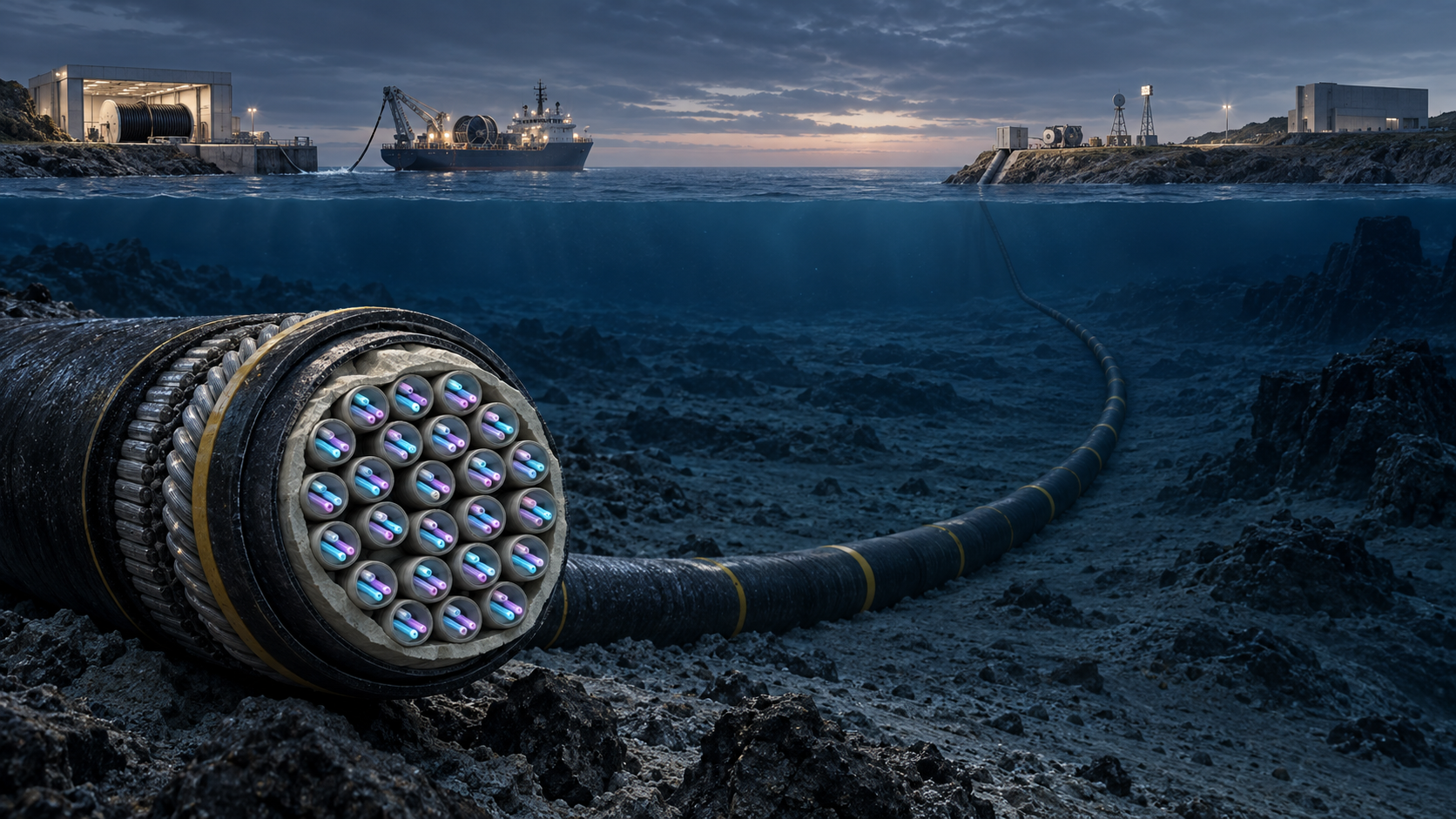
Meta says Petal will run about 7,000 kilometres between the United States and France and is expected to enter service in 2029. Its architecture uses 24 physical fibre pairs. Each fibre contains two cores, creating 48 core pairs, or spatial channels, for transmission. That is why the parties can describe the system as having the equivalent of 48 conventional fibre pairs without claiming that 48 separate physical pairs sit inside the cable.
This distinction is not pedantry. A physical fibre, a core, a spatial channel, a wavelength and an activated service are different units. Spatial division multiplexing increases the number of optical paths available inside the same submarine system. It does not tell us how many wavelengths will initially be equipped, which line rates and modulation formats will be used, how much spectrum will be lit, or what capacity customers will be able to buy.
The same discipline applies to the headline capacity. “Up to 1 Pbps” is a maximum system design figure and programme target. It is not an observed throughput test. It is not initial lit capacity. It is not an inventory of contracted circuits, and it is not proof that a petabit of traffic can already cross the Atlantic.
What has been specified
The announcements are unusually useful at the design layer. Meta describes roughly 100 repeaters. Its engineering account says a repeater body is designed to house 96 optical amplifiers—48 amplifier pairs—with a FIFO electrical interface, while working within an 18 kV power constraint. Meta is presented as the funder and operator, NEC as the turnkey designer, manufacturer and installer, and Sumitomo Electric as the supplier of the two-core submarine fibre. Meta also names Orange in connection with the French landing and terrestrial interconnection plans.
Those role statements identify a delivery chain; they do not close it. They do not disclose a final ownership allocation, customer commitments, protection topology or traffic-engineering plan. Nor do they show that the cable, repeaters, power-feed equipment, shore ends, terminals and terrestrial backhaul have performed together outside the design environment.
The route needs a ladder of receipts
ITU guidance for optical submarine systems separates factory acceptance, installation and system commissioning. Its design guidance also distinguishes maximum designed capacity from initial loading and later upgrades. A new system can be validly commissioned with far less than its theoretical ceiling active on day one.
For Petal, the evidence ladder should therefore remain explicit:
- The September 2026 announcements establish intention, roles and an architecture.
- Factory-acceptance records would show that manufactured cable and equipment met contractual tests.
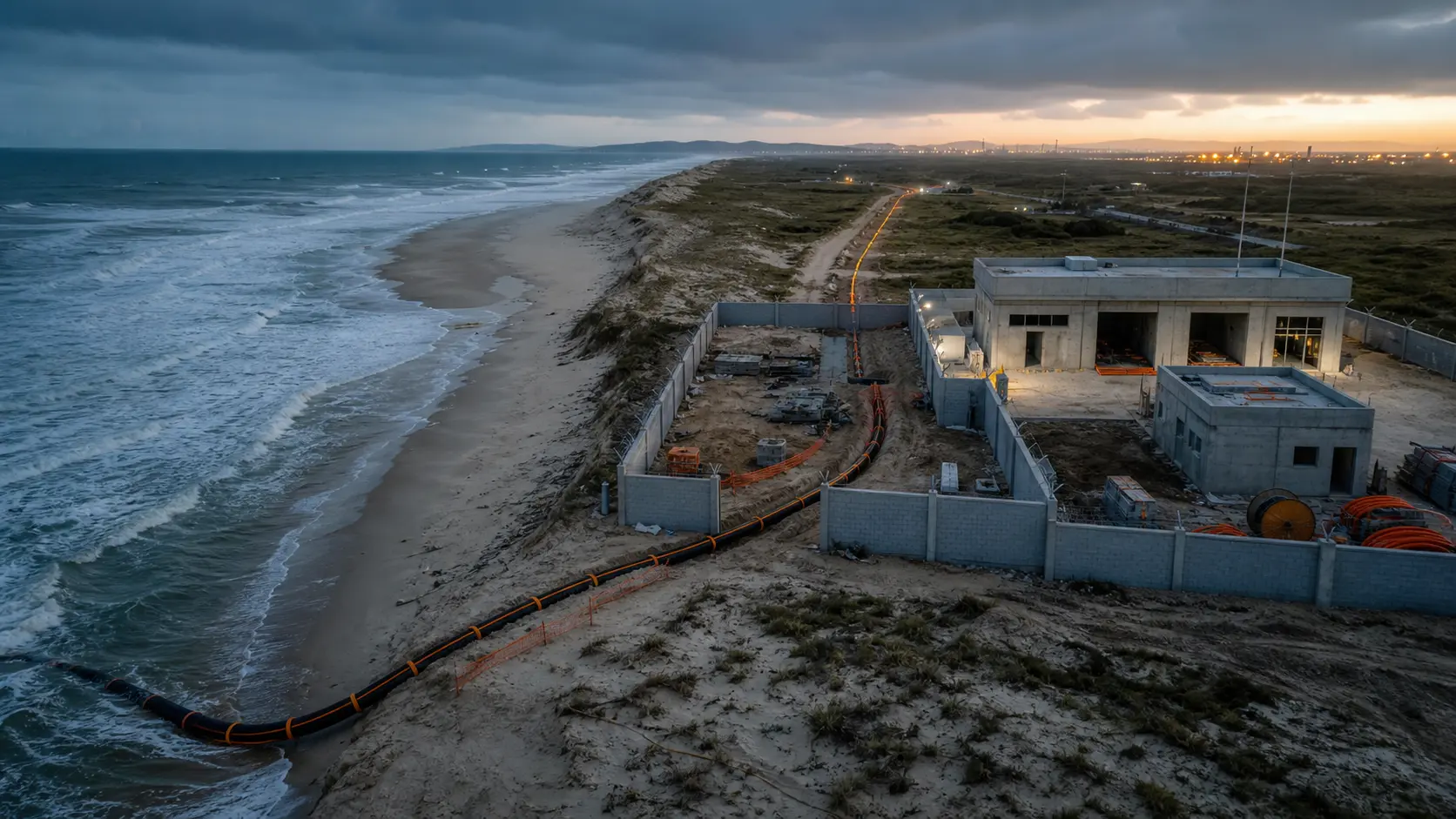
- Marine-installation and shore-end records would show that the route was physically laid and landed.
- Commissioning results would show end-to-end optical performance, bit-error behaviour, margin and network-management functions.
- A ready-for-service notice would show that an accepted system was available for traffic.
- Terminal and spectrum records would show initial lit capacity.
- Contracts and activation records would show sold capacity and live services.
- Routing, latency, traffic and incident data would show how the system behaves in operation.
No rung can be substituted for the one after it. A launch announcement is not a factory test; a factory test is not a completed landing; a landing is not commissioning; ready-for-service is not full design capacity; and installed capacity is not the same as used capacity.
More channels do not automatically mean more resilience
Two-core fibre can materially improve capacity density. It does not, by itself, create an independent marine route. Forty-eight spatial channels can still share the same cable body, seabed exposure, repeaters, power-feed design, shore end, landing facility and terrestrial interconnect. A fault at one of those common layers can affect many channels at once.
This does not make Petal fragile. It means the resilience claim belongs to a different evidence category. Protection routes, electrical-feed behaviour, repeater isolation, terminal switching, landing diversity, spares, repair arrangements and terrestrial path separation must each be demonstrated. Density and diversity answer different questions.
The Anjana system provides useful lineage, not proof by analogy. NEC described that earlier Meta cable as a 24-fibre-pair design with a 500 Tbps maximum, and Meta later documented its landing in Spain. That sequence shows why milestones should be named precisely. Anjana’s design and landing receipts cannot certify Petal’s components, route or eventual service.
Petal may yet become a petabit-class transatlantic system. Today, the rigorous description is narrower and stronger: the parties have announced a technically significant design, a division of labour and a 2029 service target. The running network begins only when implementation, acceptance and traffic evidence catch up with the unit in the headline.
Sources
- Meta Engineering: Petal’s architecture
- Meta Newsroom: Petal announcement
- Sumitomo Electric: Petal collaboration
- Sumitomo Electric: Japanese Petal announcement
- NEC Japan: Petal announcement
- NEC: Anjana design announcement
- Meta Spain: Anjana landing
- ITU-T G.971: General features of optical fibre submarine cable systems
- ITU-T G Supplement 41: Design guidelines
Member Briefing
Deeper Profile Context
Sign in with the right membership level to unlock the full briefing and source notes.
Only for Strategic Circle
Strategic Circle
Open to all readers. Unlock profile briefings after joining and signing in.
Join Strategic CircleOnly for Leadership Alliance
Leadership Alliance
For qualified IP-asset owners and management; sign in to unlock alliance briefings.
Join Leadership Alliance