
Topic
Cross-border Connectivity
Within the Topic facet, Cross-border Connectivity topic intelligence connects articles that share a specific subject, signal focus, or monitoring theme. The page gives readers a richer path through related reporting, source evidence, market actors, and infrastructure implications, with enough context to understand why the topic matters across company movements, governance decisions, regional exposure, and operational risk. Readers can compare recurring signals, affected organisations, public evidence, market context, service continuity, procurement, competition, compliance, and strategic planning questions behind the subject instead of stopping at a thin list of matching articles. It explains what the topic covers, which infrastructure actors or policies are involved, what evidence supports the coverage, and why the subject may matter for operators, customers, investors, and policy readers.

Asia-Pacific National Telecom Trends
PNG’s cable is ready. Its price list is under interrogation
An independent telecoms blueprint asks Papua New Guinea to cut the wholesale charge on the Coral Sea Cable and make the regulator inspect the books behind it.

CASE FILE
Five Minutes Across the Atlantic. Who Gets to See What?
At TNC26, an Internet2 agent and a SURF agent exchanged diagnostics about an Atlantic circuit in roughly five minutes. The useful breakthrough is the narrow door between their networks.

Asia-Pacific National Telecom Trends
Colt’s Tokyo–Osaka expansion adds 50 Tbps in two steps—and only one gets the 30% latency promise
Colt plans a 25 Tbps upgrade to its existing mountainside route in January 2027, followed by a new Tokyo–Osaka route in spring. The new route carries the approximately 30% lower-latency claim; the combined 50 Tbps headline does not describe one service or one launch date.

History
Algeria’s Researchers Had Email Accounts. Many Still Needed a Modem
In October 1994, CERIST reported that it had satisfied about 500 requests for its email service. Only a tenth of users could actually use it. The missing pieces were often on a university desk, not at the country’s international gateway.
Story
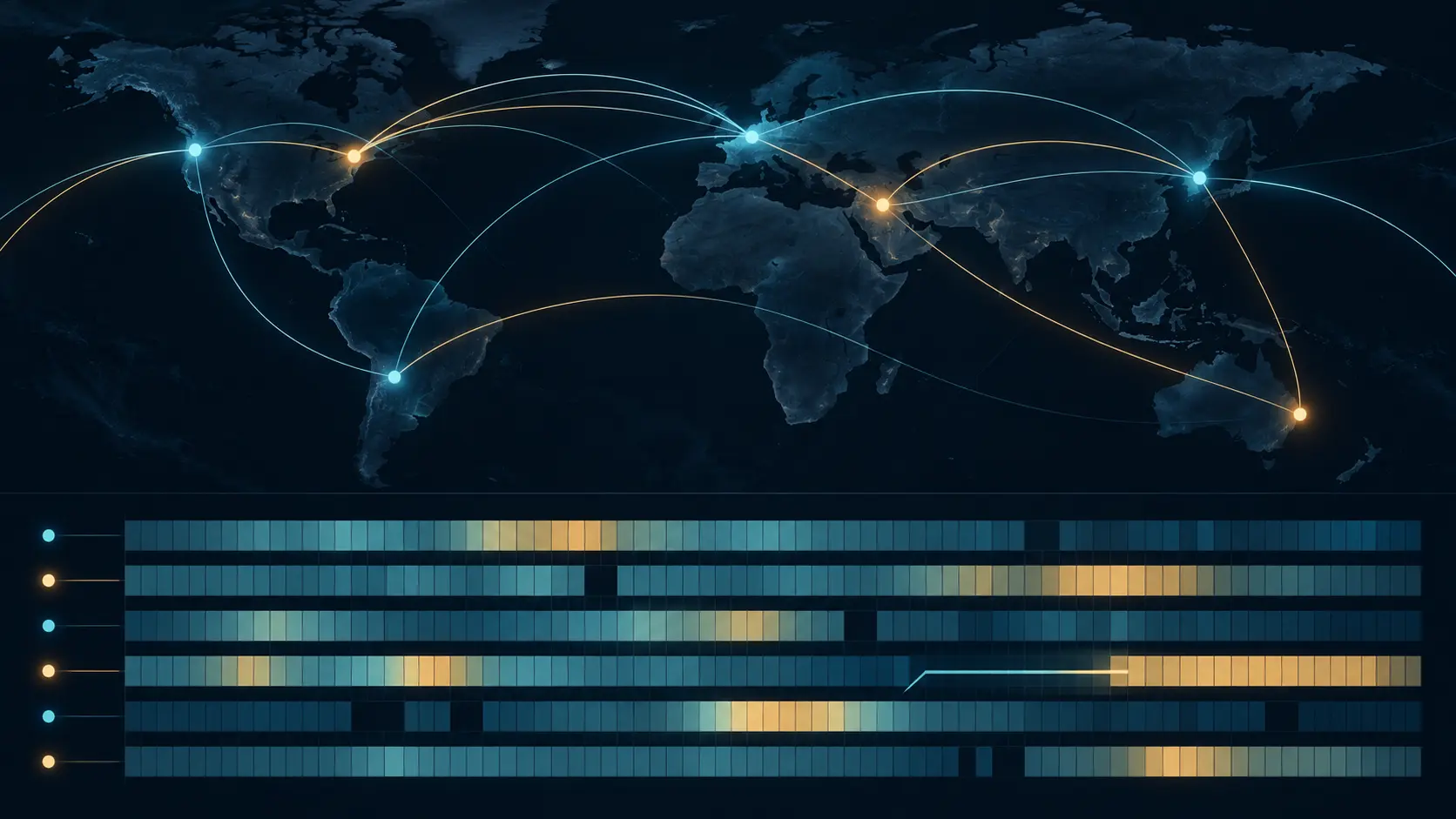
RIPE Atlas puts anchor corridors on a heatmap. The baseline stays inside the window.
When a network path slows, an average rarely tells an operator when the change began or which measured corridors shifted. RIPE Atlas’s new view makes that existing evidence easier to trace—but the baseline still comes from the selected time window.

Story
Timor-Leste’s First Cable Is Live. Route Diversity Comes Next.
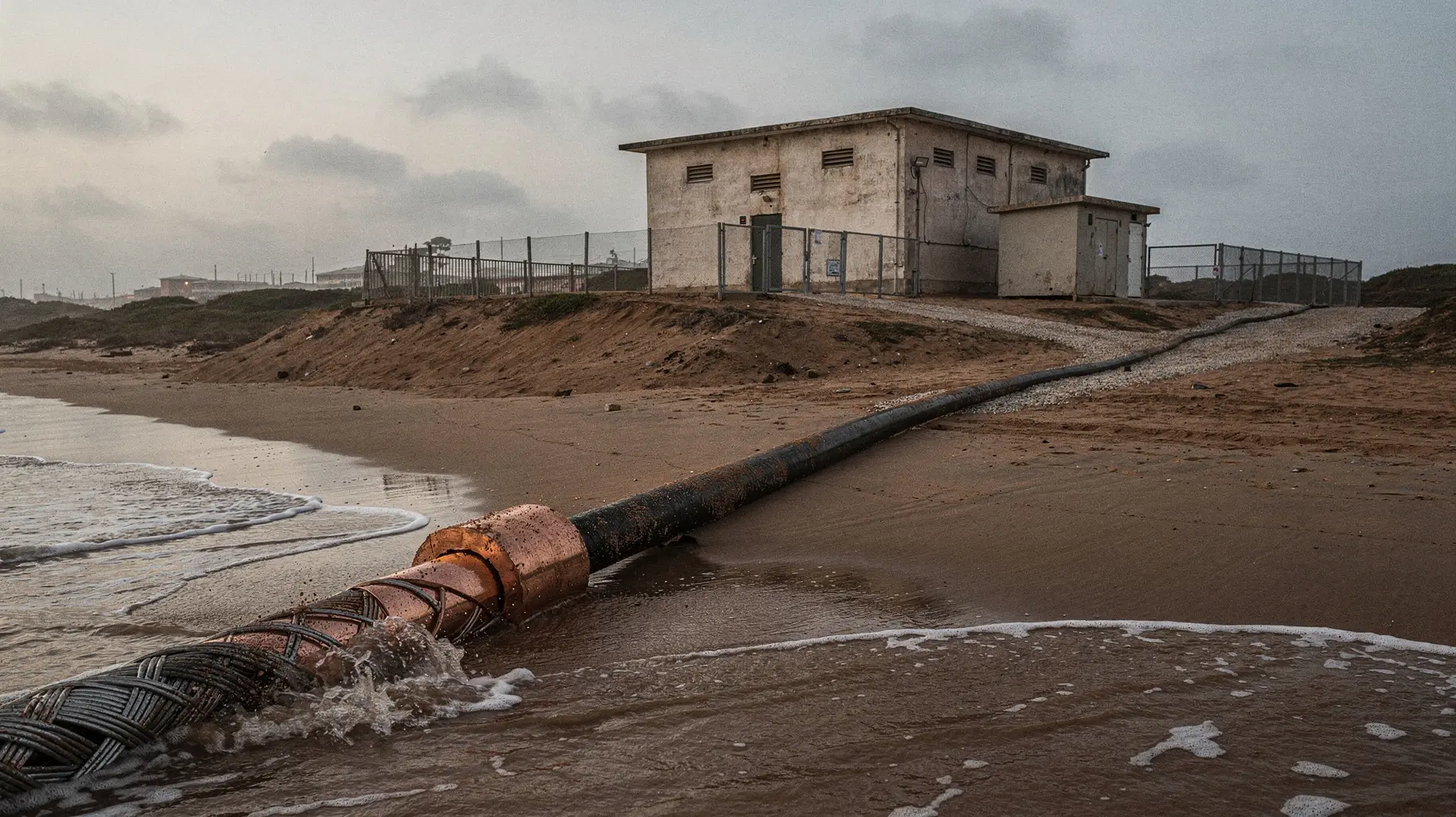
The Timor-Leste South Submarine Cable System began commercial operations in July. That gives the country a new international path; the government’s own launch speech still describes further connections as future work. Capacity has arrived. Resilience remains a programme to prove.
Africa National Telecom
Three references, one document: who may sell capacity at Banjul, and where the record stops
The Africa Coast to Europe cable record places a landing point at Banjul and carries this company's name in an owners field. What a buyer of Gambian capacity needs next is the party entitled to sell over that landing, and an owners string does not name it. That gap carries a…

History
Tuvalu Set a July Internet Target. The IP Link Worked by October, 1999
A national deadline and an engineer’s dated network tests mark different stages: the plan targeted July; the international IP path was reported operating by mid-October.

History
A 64-kbps Satellite Link Did Not Mean Internet at Home: Maldives, 1996–2006
A satellite link brought the Maldives onto the Internet in 1996. A decade later, the census still measured a different question: whether a household had access, and how unevenly that access was distributed between Malé and the atolls.

Asia-Pacific National Telecom
Eighty Hours Announced, No Restoration Time Measured: Bangladesh's SEA-ME-WE-5 Repair Window
For four days in April 2026 the operator took Bangladesh's newest submarine cable out of service, moved Singapore-bound traffic onto the older cable, and published a schedule. Its announcement carried one consequence for the people at the far end of the cable: users could expect…

History
RIPE’s 1990 debate: connectivity first, costs by bilateral agreement
Before European IP networks could behave like a wider system, their operators had to answer an awkward question: who would pay when one network carried traffic for another? RIPE’s January 1990 minutes show a community trying to grow connections without a central fund or a body…

History
The Queen’s ARPANET Message Announced CORAL 66, 1976
A familiar image shows Elizabeth II at a computer in Malvern. The message she sent on 26 March 1976 was less a greeting than a service notice: it told ARPANET users that the CORAL 66 compiler on the Royal Signals and Radar Establishment’s GEC 4080 was available. For a researcher…

History
250 X.25 Access Points Were Not an Internet Backbone: Hungary, 1992
Hungary had a national packet network before it had a national IP backbone. In 1992, about 250 public X.25 access points helped smaller and medium-sized sites join wide-area networking, while international IP still depended on a 9.6 kbit/s Budapest–Linz line shared by EARN…

History
A Ping Reached a .cm Host. Nationwide Internet Access Was Another Question, 1997–98
One successful Internet probe in March 1997 made a Cameroonian host visible from London. It did not settle whether Cameroon had a finished international link, where people could buy access, or how far that access reached. The contemporary record keeps those questions apart.

Asia-Pacific National Telecom
The Overland Majority: What Bangladesh's Submarine Capacity Numbers Do Not Measure
On 18 October 2026 the operator's own September figures put roughly 7.2 Tbps of submarine capacity at its disposal and roughly 3.2 Tbps of that unsold, while the last measured national split, dated March, put its two cable systems at about 4.2 Tbps combined against consumption…

History
A Link Reached Roma; Campus Access Still Had to Be Built: Lesotho, 1996–99
A 9.6K terrestrial connection put the National University of Lesotho’s host online from Roma to Bloemfontein in December 1996. In the same week, the university said its campus network did not exist and planned dial-in access was not working. Three years later, a Maseru café sold…

History
Tajikistan’s Email Network Crossed Regions Before Direct Internet Access, 1995–97
Tajikistan’s first public email nodes connected people across a country still emerging from civil war. Their messages could reach abroad, yet the server and telephone routes that carried them remained outside the country.

History
Fiji's Mail Link Ran Before Its Internet Route, 1992–94
At the University of the South Pacific, email already crossed the Pacific through a dial-up relay in 1992. A full Internet connection came later in the record, and even its date depends on which contemporary or retrospective account is used.

Europe and Middle East National Telecom Trends
The Caspian cable is launched; the corridor still has to perform
The 380-kilometre link between Azerbaijan and Kazakhstan has crossed a real commissioning milestone. Its design capacity and inauguration establish the segment; they do not yet show how much end-to-end traffic the wider Asia–Europe route carries.

Asia-Pacific National Telecom
The Solomon Islands end of the Coral Sea Cable System belongs to a company registered in Australia
A single landing at Honiara carries the country's international traffic, but the instruments that decide what a buyer there can contract sit one layer up: in an Australian ownership vehicle and a rights-of-use grant. This briefing reads what the operator publishes about both, and…