Summary
- Companies House identifies Arqiva Communications Limited as an active telecommunications company, while Arqiva's own pages describe management, maintenance and monitoring functions associated with broadcast infrastructure and Emley Moor.
- Those records support a bounded account of identity and operating responsibility; they do not by themselves establish which legal company owns a site, what equipment is active there, how well it performs or whether control is exclusive.
Three records, three different questions
A company record, an operator's service description and a named transmission site may all concern the same commercial setting, but they answer different questions. A company record answers who is registered and under what legal description. A service page describes what a business says it does. A site reference locates those activities in a physical and operational setting. Treating the three as interchangeable produces a deceptively simple story about control. Keeping them separate produces a more useful account of continuity.
Companies House records ARQIVA COMMUNICATIONS LIMITED, company number 02928653, as an active private limited company. The record gives Crawley Court as its registered office and lists “Other telecommunications activities” under SIC 61900. That is a precise identity anchor for the linked directory entry Arqiva Communications Ltd. It is not a complete map of the Arqiva brand, its group structure or the legal title to every site that appears in Arqiva service material.
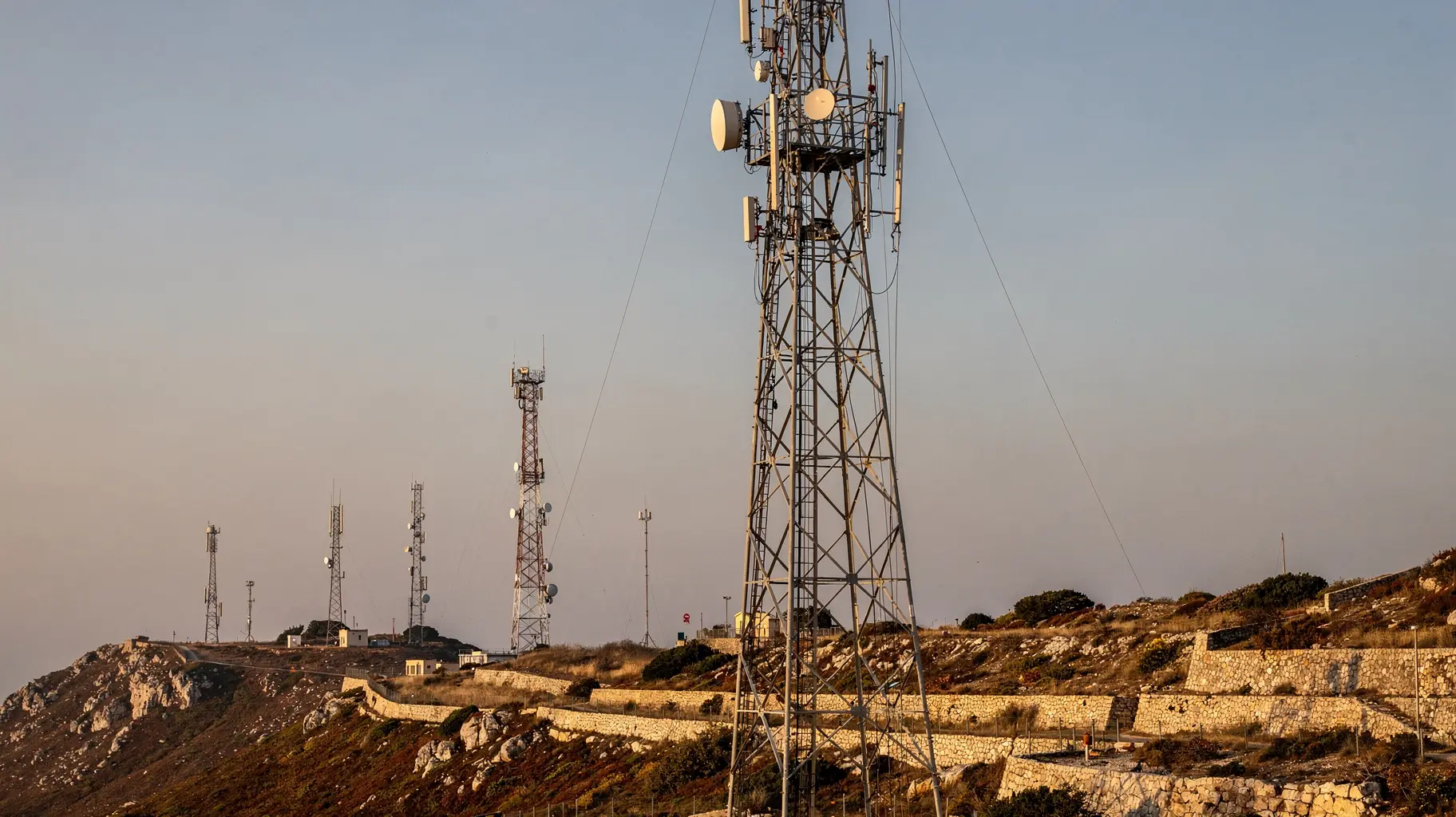
This distinction matters because the public-facing name Arqiva operates at a different level from the exact legal entry. The brand's radio-transmission page says Arqiva is responsible for managing and maintaining key transmitter sites across the United Kingdom, including Emley Moor. Its television-transmission page says it manages and maintains a 1,154-site television transmitter network and manages that service from a service-management centre at Emley Moor. A current Arqiva page about Emley Moor also describes it as a landmark site and discusses maintenance and management across a wider network of masts and towers.
These statements establish a clear operational relationship between the Arqiva brand and Emley Moor. They support reporting that Arqiva describes itself as managing and maintaining the site within its transmission activities. They do not resolve a different question: which legal subsidiary owns the tower or each item of infrastructure at the site. The exact directory company should therefore remain Arqiva Communications Ltd, while operational statements should remain attributed to Arqiva. Neither name should silently absorb the other.
Why management is not the same as ownership
Infrastructure language often compresses several roles into one verb. An organisation can manage a service, maintain equipment, monitor faults, coordinate field work, provide access or hold legal title. Some of those roles can coexist, but one does not automatically prove another. Arqiva's current pages provide direct first-party statements about management, maintenance and monitoring. They do not, in the material used here, assign legal ownership of Emley Moor to Arqiva Communications Limited.
That boundary is not a minor legal qualification. It changes what a reader can infer about responsibility. A management statement supports questions about operational processes: who says it watches the service, who coordinates maintenance and where a management function is situated. A legal company record supports questions about corporate identity. Ownership would require separate documentation that directly addresses title or the relevant legal relationship. Exclusive control would require still more: a basis for excluding other operators, owners, customers or regulated access arrangements from the analysis.
The safest language is also the most informative. Arqiva says it manages and maintains key radio transmitter sites, including Emley Moor. Arqiva says it manages and maintains the described television transmitter network and manages the service from Emley Moor. Companies House records Arqiva Communications Limited as an active telecommunications company. Each sentence has an identified speaker and a defined scope. None needs to be inflated into a claim that the directory entity owns every asset associated with the brand.
Emley Moor as an operational reference point
Emley Moor is useful here because it connects abstract company identity with a named place in current service material. The radio page includes it among key transmitter sites. The television page identifies a service-management function there. The current Emley Moor page ties the location to Arqiva's account of maintaining and managing a wider mast-and-tower network. Together, those statements make the site relevant to an examination of telecom continuity.
Yet a named site does not reveal every layer of the system. It does not, without additional records, establish the current equipment inventory, individual equipment owners, available capacity, measured performance, coverage, service quality or the exclusivity of any operator's control. Nor does the 1,154-site figure on the television page describe every radio, television or other infrastructure asset associated with the brand. It is a television-network figure in that page's stated context and should remain one.
This is the practical value of preserving scope. Numbers remain attached to the systems they describe. Site references remain attached to the functions the source assigns to them. Legal identities remain attached to registry records. When these categories are kept intact, a reader can see where operational continuity is supported and where additional proof would be needed.
The continuity question is about a running system
Telecom continuity is not demonstrated by a name alone. It is better understood as an alignment of records, operating statements and observable responsibilities over time. The company record provides persistence of legal identity. The radio and television pages describe current responsibilities for management and maintenance. The Emley Moor material supplies a named operational setting.
A UK Civil Service Commission page adds independent government context by describing Arqiva, with reference to Ofcom context, as a privately owned UK company operating broadcast infrastructure that includes nationwide digital-terrestrial-television and radio networks.
That independent description is useful, but its wording should also remain bounded. It is a government page describing regulatory context, not a direct replacement for the company record and not a legal map from the Arqiva brand to Arqiva Communications Limited. It helps establish why the operator matters in the broadcast-infrastructure landscape. It does not answer which group company holds every asset or contract.
This layered approach avoids two common errors. The first is registry determinism: assuming that the entity named in a company record must be the operational authority for everything carrying a related brand. The second is operational overreach: assuming that a current claim to manage or maintain infrastructure proves title, exclusivity or performance. Both errors turn partial records into total explanations.
A stronger analysis asks what would survive if one layer changed. If a legal name changed, would the operating responsibility and monitoring arrangement continue? If a service contract changed, which registry and site records would preserve an accurate history? If a site role changed, would public descriptions be updated quickly enough to prevent a stale identity from being mistaken for a current one? The available material does not answer those scenarios, but it shows why continuity depends on more than a static label.
What the record supports now
The present record supports four conclusions. First, Arqiva Communications Limited is an active registered telecommunications company and is the exact legal subject linked here. Second, the Arqiva brand currently describes itself as responsible for managing and maintaining key radio sites including Emley Moor. Third, it describes management and maintenance of a 1,154-site television transmitter network and a service-management function at Emley Moor. Fourth, independent UK government context describes Arqiva as an operator of nationwide broadcast infrastructure.
The same record leaves several conclusions open. It does not establish that Arqiva Communications Limited owns Emley Moor. It does not identify the legal owner of every item at the site. It does not prove current equipment, capacity, coverage, performance or service quality. It does not show that operational control is exclusive. Those are not omissions to conceal; they are the boundary that makes the supported conclusions credible.
For readers assessing network-resource identity, that boundary is the central finding. A registry can preserve the exact corporate name. A company can describe the work it performs. A site can anchor that work in a real operating context. Operational continuity becomes legible only when those layers agree without being collapsed into one another.
Member Briefing
Deeper Profile Context
Sign in with the right membership level to unlock the full briefing and source notes.
Only for Strategic Circle
Strategic Circle
Open to all readers. Unlock profile briefings after joining and signing in.
Join Strategic CircleOnly for Leadership Alliance
Leadership Alliance
For qualified IP-asset owners and management; sign in to unlock alliance briefings.
Join Leadership Alliance