Summary
- The current evidence identifies TELEKOM SRBIJA a.d. across several distinct records, but a company identity, a dated mobile-site notice, RIPE membership and an ASN coordination entry do not prove the same relationship or the same kind of control.
- The strongest reading treats registries as ledgers and coordination tools, then looks to observed network behaviour and continuity evidence before drawing conclusions about routes, capacity, coverage, uptime, performance or service quality.
Why a telecom name can answer one question but not another
When a reader encounters a company name beside a base station, registry entry or autonomous system number, it is tempting to compress everything into a single idea: the company “controls the network.” That conclusion goes beyond what these records establish. Each item answers a narrower question, and those questions must remain separate.
The current directory identity is TELEKOM SRBIJA a.d., linked through entity:telekom-srbija-a-d-rs. On 2026-08-08, one current company record carried that exact legal identity. During the same check, the directory edge returned HTTP 503 while the origin identity response returned HTTP 200. The different responses illustrate a useful boundary: momentary availability at one delivery layer does not create or erase the underlying legal identity. Equally, the identity itself says nothing about a particular site, number resource or live operational role.
That distinction matters to customers, business partners, regulators and infrastructure researchers. A name can be accurate while the implied relationship is not. A directory entity is not automatically a site operator. A named project holder is not automatically a building owner. A registry member is not automatically the controller of every resource associated with its name. An autonomous system coordination entry is not a measurement of the traffic currently moving through a network.
What the dated Belgrade notice actually establishes
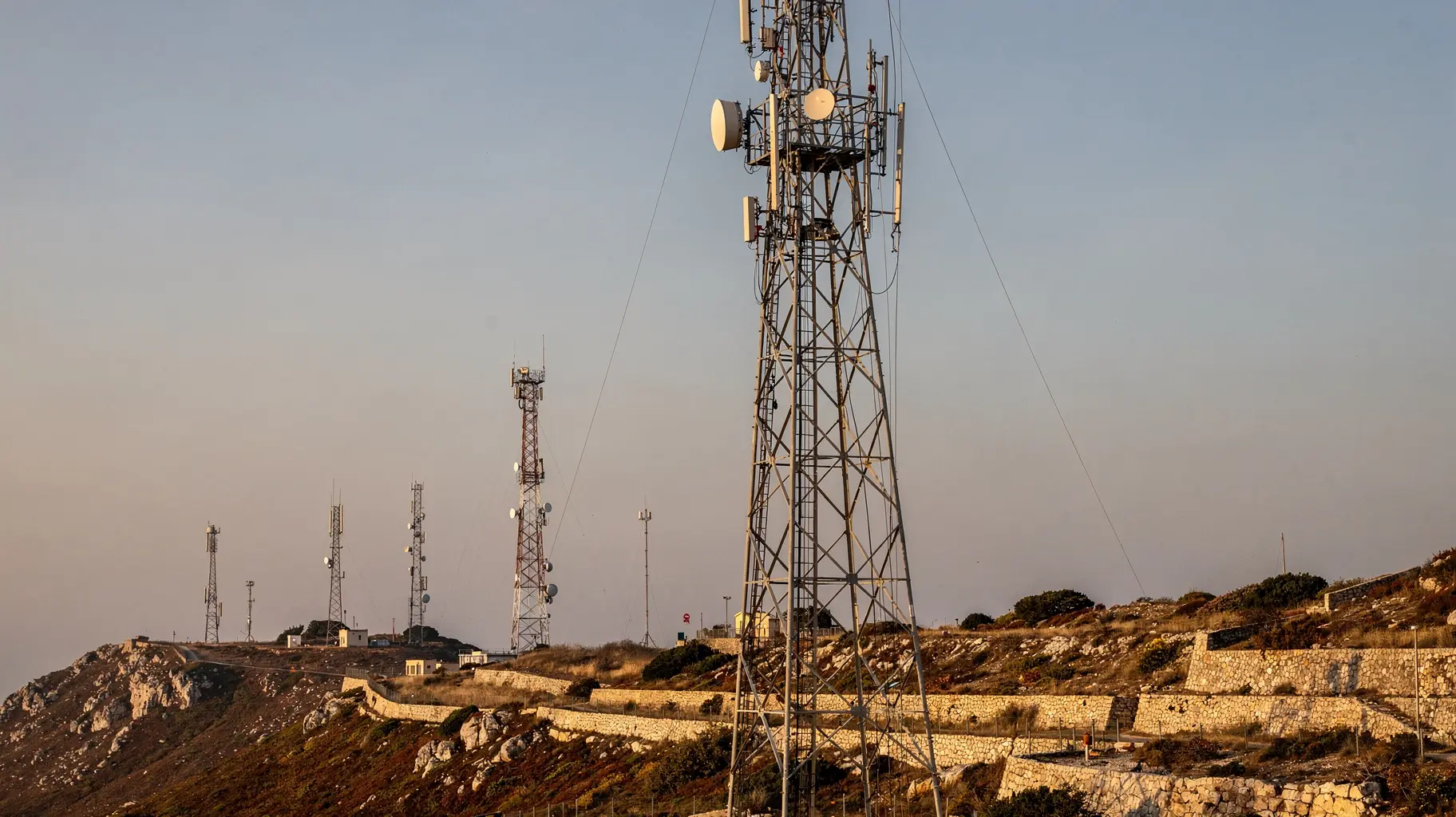
A City of Belgrade notice dated exactly 18.11.2025 named TELEKOM SRBIJA a.d. as project holder for the BG-TK Centar mobile base-station project at Katićeva 14-18. That is a specific historical relationship among a named company, a named project, an address and a date. It is more precise than a generic corporate description because it identifies what role the notice assigned at that moment.
Its precision also sets the limit. The notice does not prove that TELEKOM SRBIJA a.d. owns the building, exclusively occupies the site, owns equipment there, or exercises current exclusive control. The dated project-holder relationship should not be silently converted into a present-tense property or operating claim. A reader can say what the notice names; a reader cannot use it alone to answer who occupies the location now, which equipment is installed, or who exercises control today.
This is a common evidence problem in telecom research. Site-related documents can connect an organization to a project without describing the entire chain of property, equipment and operations. Treating the address as context rather than a complete control map preserves what the notice is good at proving while avoiding claims it was not designed to prove.
Registries help coordinate identity, not settle every operational question
As of 2026-08-08, the current RIPE NCC Serbia member ledger lists TELEKOM SRBIJA a.d. Membership is meaningful as registry-ledger identity. It places the organization’s name in a system used to support accurate coordination around internet number resources. But the listing is not sovereignty, and it does not by itself prove asset ownership, route operation, capacity, performance or exclusive control.
The practical principle is straightforward: a registry is a ledger and recordkeeper, not a sovereign. Ledgers help preserve unique, accurate and transferable identifiers, along with the information needed for security and operational continuity. They are essential to coordination precisely because they record relationships. Yet the recorded relationship must not be mistaken for the running system itself.
For readers, that means a RIPE membership entry is a strong answer to “is this name present in the member ledger?” It is not a complete answer to “what routes are active?”, “who operates each component?” or “how is the service performing?” Those latter questions belong to observed routing, operational telemetry and continuity evidence.
Member Briefing
Deeper Profile Context
Sign in with the right membership level to unlock the full briefing and source notes.
Only for Strategic Circle
Strategic Circle
Open to all readers. Unlock profile briefings after joining and signing in.
Join Strategic CircleOnly for Leadership Alliance
Leadership Alliance
For qualified IP-asset owners and management; sign in to unlock alliance briefings.
Join Leadership Alliance