
Profile
Research
Research profile intelligence connects person, company, institution, and other entity coverage for readers comparing the subjects behind BTW.MEDIA reporting. The page helps compare public profiles, related events, evidence packs, role changes, operating footprints, governance exposure, organisational links, and market relevance while keeping organisation and people records distinct from ordinary news chronology. Readers can understand the subject behind the headline, the evidence supporting that profile, and the infrastructure or market relationships that make the profile relevant. They can see who or what the profile represents, which public sources support it, how it connects to companies, markets, governance bodies, or events, and what changes may deserve continued attention as the subject evolves.
History
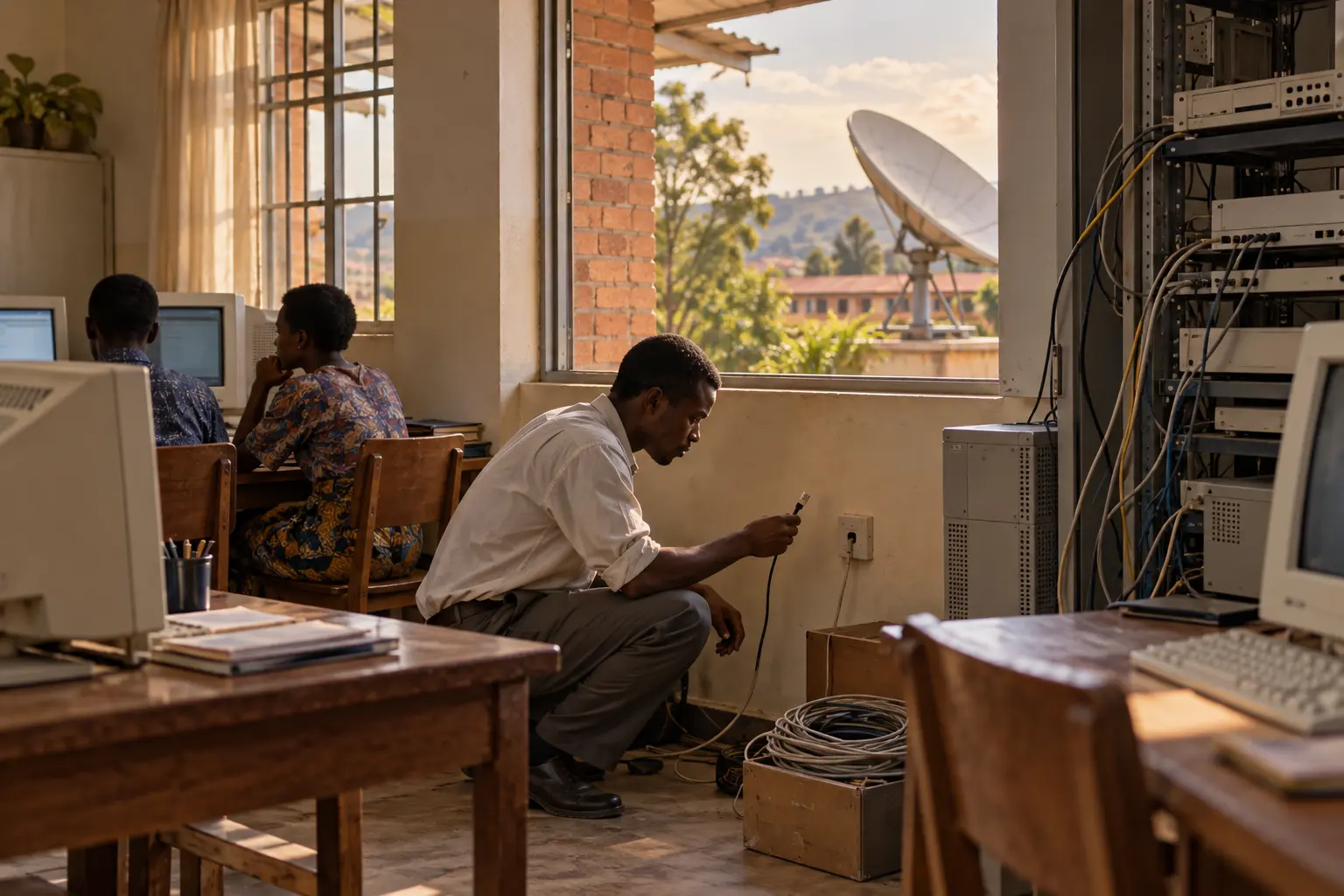
Rwanda Received the VSATs Before the ISP Market Opened, 1996–2001
A gateway, an Internet service, a university connection and a competing provider were different things in Rwanda’s late-1990s network. The record becomes clearer when each is dated separately—and when later accounts that use “service” differently are left visibly unresolved.

History
TANet’s No-Transit Boundary: ISP Interconnection Rules, 1996–2006
Taiwan’s education network allowed commercial providers to interconnect on conditions that kept its own backbone and international circuits outside their carriage plans. The surviving versions show how that boundary was reviewed, measured and revised.

History
Ecuanex Sent the Mail; Ecuanet Routed the Packets: Ecuador’s Two Internet Paths, 1991–93
Ecuador’s early Internet story is often reduced to a single arrival date. The surviving messages describe something more useful: Ecuanex was already exchanging mail and conference traffic over UUCP, while a separate, bank-backed network began carrying live Internet service over a…

History
Ankabut Took Four Years to Become a Network: The UAE’s Research Backbone, 2006–10
Research networks are built in stages. In the UAE, a 2006 university agreement began Ankabut; funding, a carrier contract and campus decisions took until 2010 to turn the proposal into reported connections.

History
Forty Private ISP Licenses, One Gateway: Saudi Arabia’s Internet Opening, 1997–99
Saudi Arabia approved public Internet access in 1997. Two years later, dozens of private providers could sell it—but their international traffic still passed through a government-run gateway, and the date announced for launch marked network activation, not the moment a household…

History
Research Could Take Years Without Becoming a Standard: RFC 2014 and the IRTF
In October 1996, RFC 2014 gave long-horizon Internet research a durable home beside the IETF. Its boundary mattered: a research result could travel toward standardization, but the research group did not acquire extra authority over that decision.

Leaders
David Huberman’s Role in ARIN’s Thirteen-Site Test for Direct IPv6 Space
A network can be small at every address and still be large in the number of places it must keep connected. David Huberman helped shepherd an ARIN rule that made those places count, while keeping the cost of carrying a larger prefix in view.

History
The South Pole’s Scheduled Data Route: TDRS-1 and the 1998 Internet Link
At 90° south, Internet access depended on a spacecraft whose orbit was changing. In 1997, National Science Foundation (NSF) and NASA turned that geometry into a route through White Sands Complex, separating everyday IP traffic from the larger scientific files that researchers…

North America Cloud Services
Cloudflare’s Clef-flash price cut trades a shorter context window for a lower rate
Cloudflare has cut Clef-flash’s displayed input rate by 58%, while shrinking the hosted context window by 62.5%. The commercial question is how many real customer requests fit inside the cheaper lane—not how small one company-wide request statistic looks.

Story
Díaz’s provider switch narrows the symptom, not the blocker
In a 14 October LACNIC Blog essay, Telecom Affairs lead César Díaz recounts that vehicle-repair diagrams were missing through one provider and available through another at the same place. That is a provider-dependent result in his account; it does not identify the layer that…

History
Four Licensed ISPs, One IAP: Vietnam’s 1997 Internet Opening
Vietnam’s Internet opening is often dated to a single day, 19 November 1997. The more revealing event was a division of authority: four licensed service providers could reach users, while one licensed access provider connected those providers to the international Internet. The…

History
Dynamic Routing Nearly Consumed Portugal’s X.25 Bandwidth, 1991
Portugal’s 1991 RCCN project did more than put IP on an international line. Its engineers found that routine dynamic-routing updates nearly consumed the bandwidth of public X.25, then chose static routes for a network whose shape was already close to a star.

History
TCP/IP Shared FUNET’s Backbone with DECnet, 1992–94
For Finnish universities, the Internet did not arrive by erasing every network already in use. FUNET’s 1992 move to Frame Relay belonged to a longer engineering transition; a 1994 account still lists both TCP/IP and DECnet on the research backbone. The record shows a…

Leaders
David Conrad’s IANA role brought operations into the CTO office
David Conrad’s remit at ICANN widened when IANA functions moved under the chief technology officer in 2018. The change joined service operations to a research and security portfolio; it did not move policy authority away from the communities that develop the rules IANA…

History
ThaiSarn’s May 1992 Surge Was Recorded, Not Measured
A line in NECTEC’s history says political unrest in May 1992 brought a surge in email use and Usenet circulation between Thailand and the wider world. The record gives no traffic count. What it preserves is a small but revealing sign of what people asked an academic network to…

History
The Access Point Was Ready; Colombia Still Needed the Circuit, 1993–94
By 1993, entities recalled that a U.S. Internet access point for Latin America was available, but Colombia still lacked the costly communications circuit needed to use it as a service. The later connection did not arrive as one clean flag day: an attempt failed, public histories…

History
The Internet Put 1900 on the Wire: RFC 868’s Time Limit, 1983
A machine could ask another host for one number and receive a date it could compare with its own clock. In 1983, RFC 868 made that exchange deliberately small: seconds counted from 1900, carried in 32 bits, with a horizon the document itself placed in 2036.
History
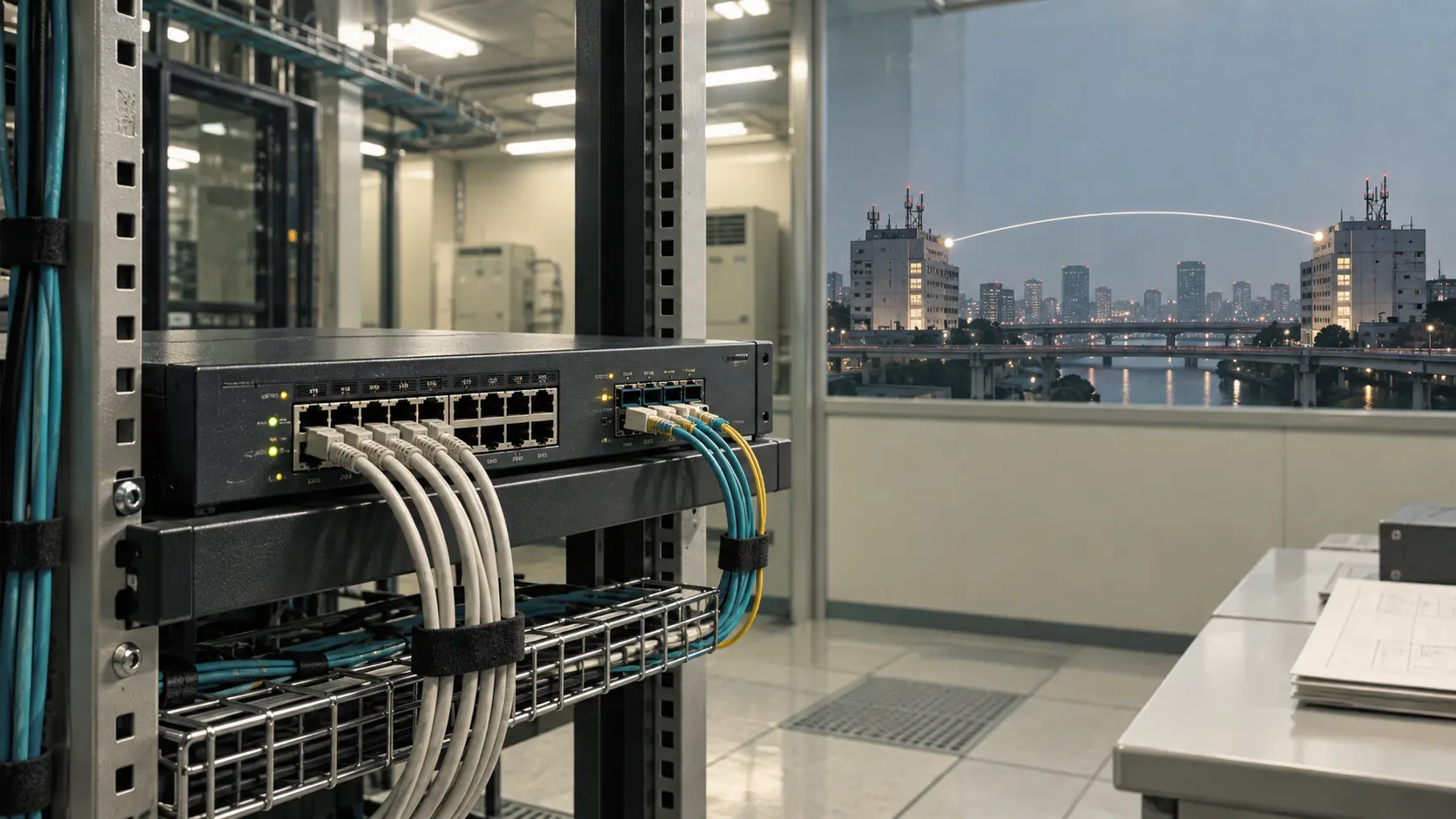
When the Exchange Became a Service: JPIX and Japan’s Commercial Peering Turn, 1997
Japan’s first commercial exchange was announced with an unusual promise: reliability would be built into a company, a customer service and a second site, while the experimental network it followed would remain a partner. JPIX’s founding shows how the Internet’s shared…

Leaders
Per Narvinger’s Ericsson career now meets the customer-return test
The new CEO has moved through research, product, customer-facing work, software services and network systems. That breadth makes for a compelling résumé, but it also sharpens the question awaiting him: can Ericsson turn technical reach into customer outcomes that recur, survive a…

History
The Gateway Was a Consortium: PHNET’s 64 Kbps Link, 1994
PHNET did not begin as one campus plugged into a line. Its record describes two stages: UUCP mail relayed through an Australian university, then a 64 Kbps route to the United States shared by a Philippine institutional consortium.