
Profile
Research
Research profile intelligence connects person, company, institution, and other entity coverage for readers comparing the subjects behind BTW.MEDIA reporting. The page helps compare public profiles, related events, evidence packs, role changes, operating footprints, governance exposure, organisational links, and market relevance while keeping organisation and people records distinct from ordinary news chronology. Readers can understand the subject behind the headline, the evidence supporting that profile, and the infrastructure or market relationships that make the profile relevant. They can see who or what the profile represents, which public sources support it, how it connects to companies, markets, governance bodies, or events, and what changes may deserve continued attention as the subject evolves.

History
CenpacNet’s Satellite Link Was Not the Whole Internet: Nauru, 1998–2010
Nauru’s first Internet service rested on several systems that did not share one owner or one failure mode: a national telephone network, an international satellite gateway, a small dial-up market, CenpacNet’s mail and domain operations, and the people who knew how to keep them…

History
Twenty Computers, Two Mail Runs: Namibia’s University Internet, 1993–94
At the University of Namibia, one server sent and collected email over a South African dial-up link at 6 a.m. and 6 p.m. The first year shows why a national connection could matter intensely to some users, remain inaccessible to others, and fail to answer the same needs…

History
PFnet Carried Village Email across the Solomon Islands by HF Radio
In the Solomon Islands, getting an email beyond a remote village did not require every household to own an Internet connection. It required a local operator, a shared station and a radio session to Honiara. PFnet made that chain into a community service from 2001 onward.

History
Uruguay’s .uy Identified Email Before the Internet Link Arrived, 1988–94
In Uruguay, messages could cross borders before the country had a permanent Internet connection. The email route, the national domain and the later academic link marked three different capabilities.

History
DENIC Was Founded in 1996. Karlsruhe Ran .de Until 1999.
The creation of a cooperative did not move a live domain system. DENIC eG had a Frankfurt office in 1997, while technical operation of the German country-code namespace remained with the University of Karlsruhe until a separate handover in 1999.

History
Kiribati’s 128 kbps Backbone Had Only 32 Dial-up Ports, 1999–2001
Kiribati’s first reported commercial Internet service paired a narrow international link with a small dial-up modem bank. A 2001 account suggests that the connection people could actually obtain mattered more than the headline capacity.

History
NUNet Routed Nigerian University Mail Through Abuja and Trieste
Nigeria’s university network was designed as a route to full Internet connectivity, but its early operating path was much narrower: campus mail servers called Abuja by modem, and Abuja relayed their messages to ICTP in Trieste.

History
When Bulgaria’s Research Network Lost Its External Link, 1997
A research network can have international circuits on a chart and still lack a usable path to the Internet. Bulgaria’s academic network makes that distinction visible across a decade of changing names, technologies and funding.

History
SezamPro Needed More Than a Dial Tone to Become an ISP
SezamPro began as a dial-up online service. Connecting its users to the Internet took a separate chain: a BBS, an academic-network handoff, an email gateway, a public café, more telephone lines and, eventually, a provider circuit.

History
Squid Began as a Fork to Keep Harvest’s Cache Running, 1996
When the Harvest research project was winding down, its cache code still had work to do. Duane Wessels took the last pre-commercial version, continued it as a separate open project, and called the fork Squid.
History
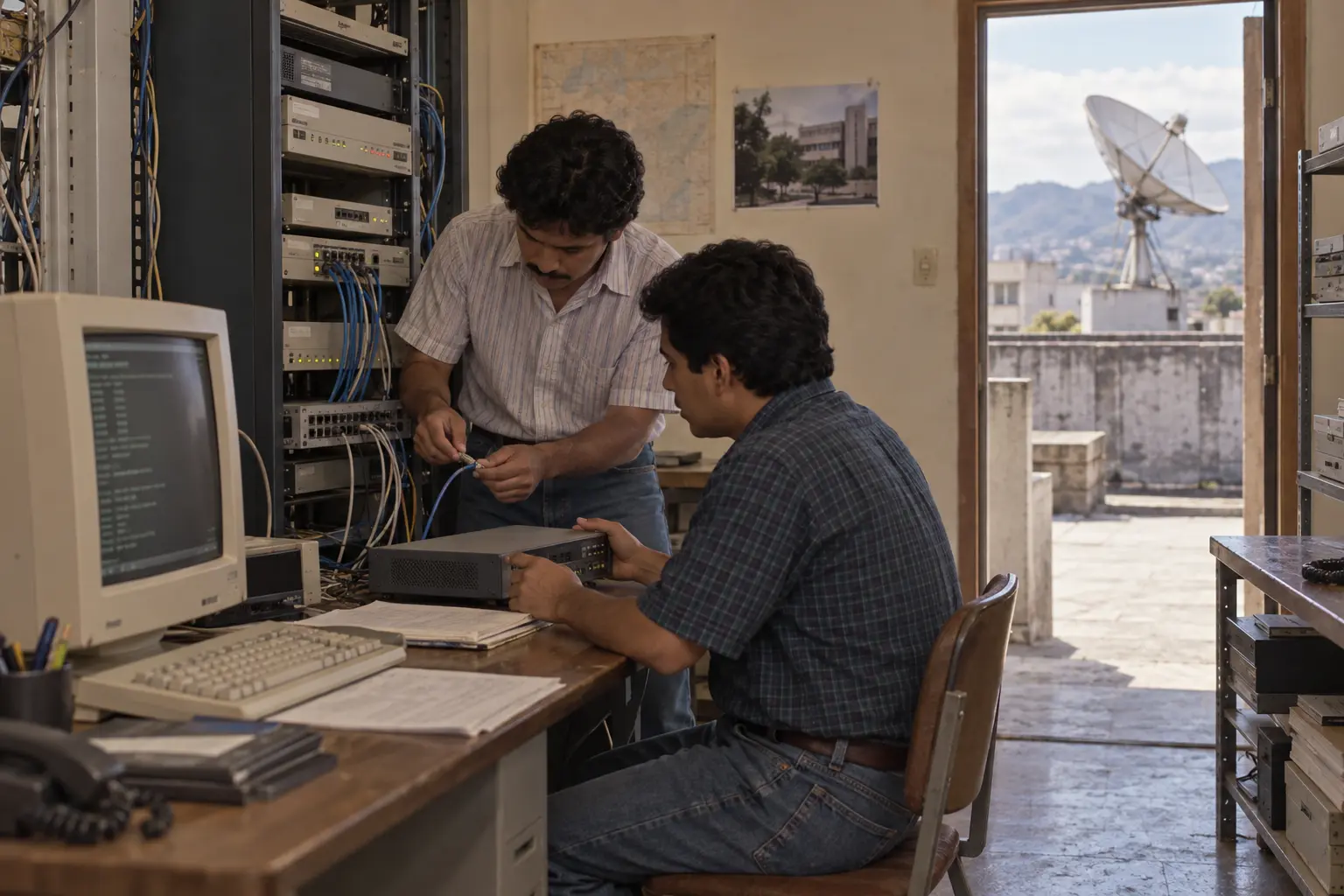
Honduras Reached the Internet by Satellite. A .hn Dispute Split HONDUNet
A June 1995 announcement said a satellite link had connected Honduras to the Internet. A later history dates the link five days later. Between the project plan and that route sat a dispute over who should administer `.hn`—one that paused HONDUNet and sent its organizers to a…

History
The Mail Stayed on the Server; Pine Put the Reader at the Terminal, 1992
At the University of Washington, Pine began as a replacement for an administrative mainframe mail program. Its 1992 public release marked a new client; the mailbox could remain on a shared server.
History
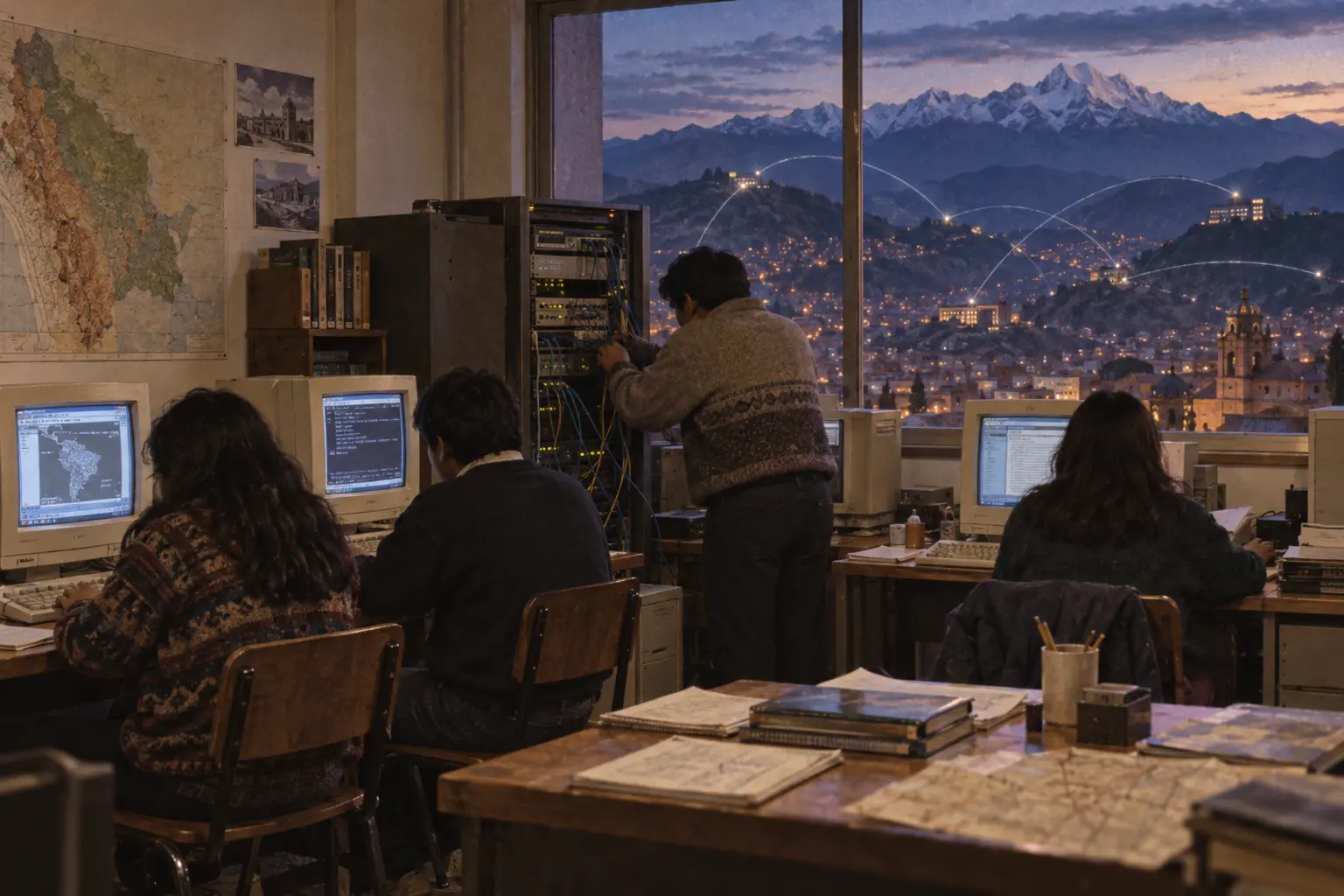
BolNET Reached Every Academic Network University by 1999. Access Remained an Open Question
Bolivia’s early Internet story is often dated to 1989, yet the institutional record describes a project that changed form as it moved from campus research into a national data service. By 1999 the university links were in place; the history that records that milestone also says…

Leaders
Alain Durand Made IANA’s Work Visible, One Request Type at a Time
In May 2015, just months into a new role at ICANN, Alain Durand tried to answer a practical question before the IANA stewardship transition was complete: what work did the operator actually perform, and how often did the three communities that relied on it use those services? His…

History
The Source Shipped in March; Mozilla’s Independence Took Five Years
Netscape announced an open source plan in January 1998, but a source archive was only the first deliverable. Contributors still needed a way to build, combine and release their work; Netscape kept product and licensing rights that the public source did not erase. The Mozilla…

History
Angola’s First Internet Link Went Quiet: The 1996 Gap Between Connection and Service
A university could be called connected in August, yet a November report said the local route carried no connectivity. A commercial provider’s test came in October, but its December account still described a licence as unfinished. Angola’s first Internet year had more than one…

IETF
UDP ECN Depends on the Socket API
An ECN mark can survive every router on a path and still be invisible to the UDP application expected to report it. RFC 10055 documents the operating-system interface between an IP-layer congestion signal and user-space transports such as QUIC.

History
A Country Code Became a Registry Product: Tuvalu’s .tv Deal, 1999–2000
In 1999, Tuvalu agreed to let a U.S. company commercialize registrations beneath its country-code top-level domain. Company and government records describe different parts of the arrangement: a global registry business, a government stake and board seat, and cash payments. They…

North America Institutional Trends
GlobalFoundries’ $21bn Fab Plan Puts Fees Before the First Wafer
GlobalFoundries says Japan will fund a new Malta, New York, fab while a U.S.–Japan government-owned project vehicle funds and owns the infrastructure. GF’s investor presentation schedules technology fees from 2027; the first wafer is expected in 2029. The forecast rests on a…
History
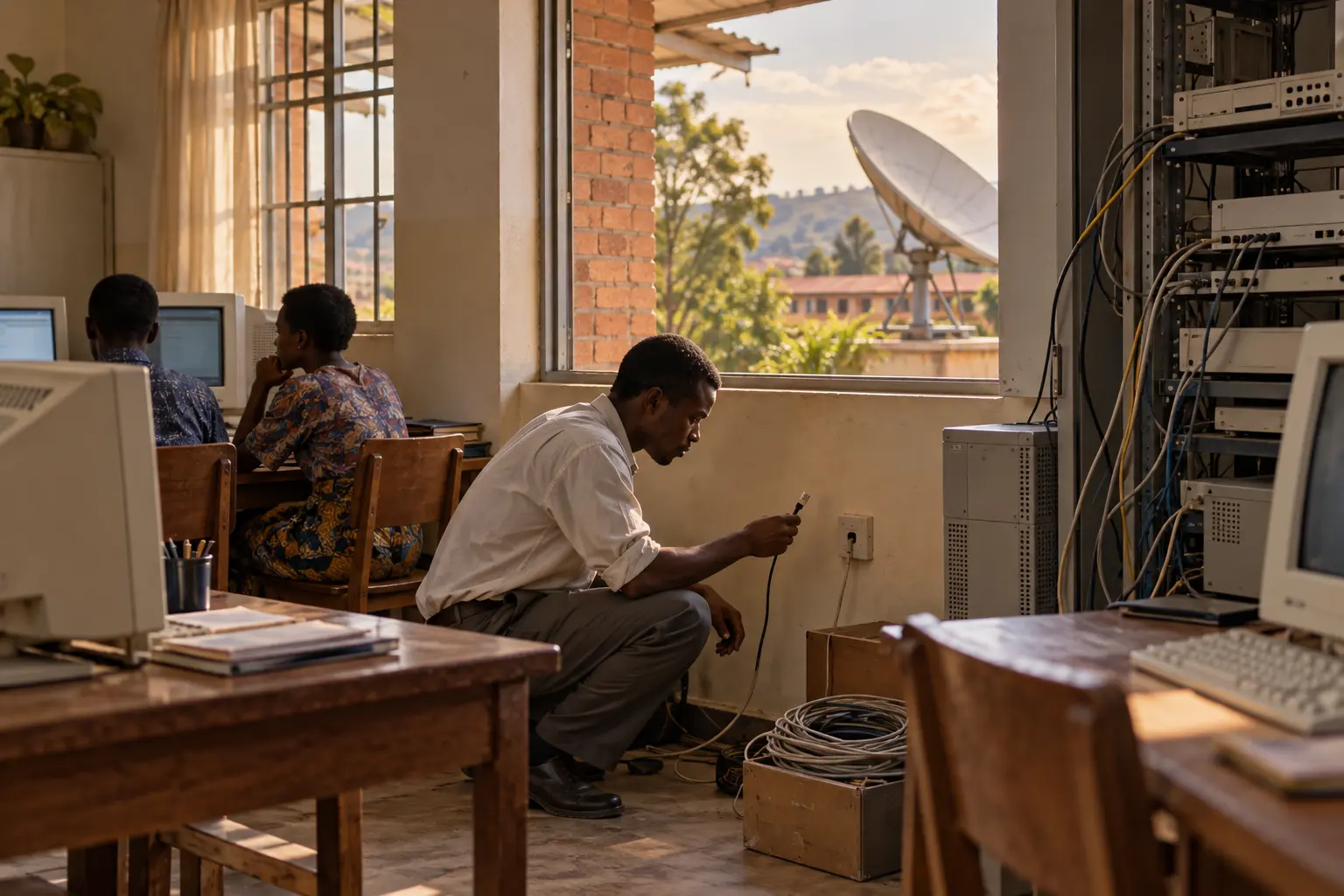
Rwanda Received the VSATs Before the ISP Market Opened, 1996–2001
A gateway, an Internet service, a university connection and a competing provider were different things in Rwanda’s late-1990s network. The record becomes clearer when each is dated separately—and when later accounts that use “service” differently are left visibly unresolved.