
Profile
Research
Research profile intelligence connects person, company, institution, and other entity coverage for readers comparing the subjects behind BTW.MEDIA reporting. The page helps compare public profiles, related events, evidence packs, role changes, operating footprints, governance exposure, organisational links, and market relevance while keeping organisation and people records distinct from ordinary news chronology. Readers can understand the subject behind the headline, the evidence supporting that profile, and the infrastructure or market relationships that make the profile relevant. They can see who or what the profile represents, which public sources support it, how it connects to companies, markets, governance bodies, or events, and what changes may deserve continued attention as the subject evolves.
History
The Patch List Became a Server: Apache’s First Year, 1995
Apache’s first year turned fixes made by separate webmasters into a tested public release, then replaced patch aggregation with a modular redesign. The change shows how shared maintenance can coordinate independent operators without making announcement itself the measure of…

History
A Root Server Moved to London; the Root Zone Did Not: K-root, 1997
On 19 May 1997, one experimental root server left its temporary home at Network Solutions and was placed at the London Internet Exchange. The change added a new operating location for K-root and a new operator, RIPE NCC. The accompanying record still pointed to the same unique…

ICANN
ICANN’s FY26 gain followed $35.690 million in investment returns
The audited accounts show an $18.066 million increase in net assets without restrictions, but revenue and support fell short of expenses before investment gains. A separate $542 million headline covers several funds with different purposes and approval rules.

History
Botswana Had an ISP; SADC Still Used UUCP Mail
In late 1996, a commercial provider in Gaborone reported a full 64K Internet link, while the SADC Secretariat still used a 9,600-baud UUCP mail route to Pretoria and was planning Internet access. The records show two operating choices in one place, not one shared network.

History
A Category Became a Suffix: Symbolics and the First .com, 1985
On 15 March 1985, Symbolics.com entered a namespace still being organized for network administration. The significance of that first `.com` is easier to see when it is separated from the website and commerce stories later attached to it: the record named a company inside a…

North America Cloud Services
GoDaddy’s app host skips the usage meter; the subscription must carry the load
GoDaddy has moved a small business from a private preview to a published Node.js app without charging separately for each request, gigabyte or build minute. That lowers the first deployment hurdle for code made with AI tools; it also makes plan conversion, workload mix and…

Story
APNIC’s public uptime figure excludes its maintenance window
APNIC warned that 15 status-page components could face interruptions of up to five minutes during a three-hour security update in Brisbane. A StatusIQ setting excludes planned maintenance from uptime calculations, so the percentage cannot show what users experienced during the…

North America National Telecom Trends
CRTC’s Cogeco ruling puts wholesale continuity on two routes
The CRTC has allowed Cogeco to retire regulated cable access as it replaces HFC with fibre in four Ontario locations. It relied on two alternatives for TekSavvy: Bell’s mandated wholesale FTTP service and a commercial Cogeco offer. The decision resolves this record; it does not…

History
Sierra Leone Web Put War News into an Archive, 1996–2002
When conflict reports disappeared in wire-service queues or sat behind subscriber feeds, Sierra Leone Web gave them a different afterlife: dated pages that readers could find again. Its history is less a story of a country coming online than of a small web publication turning…
History
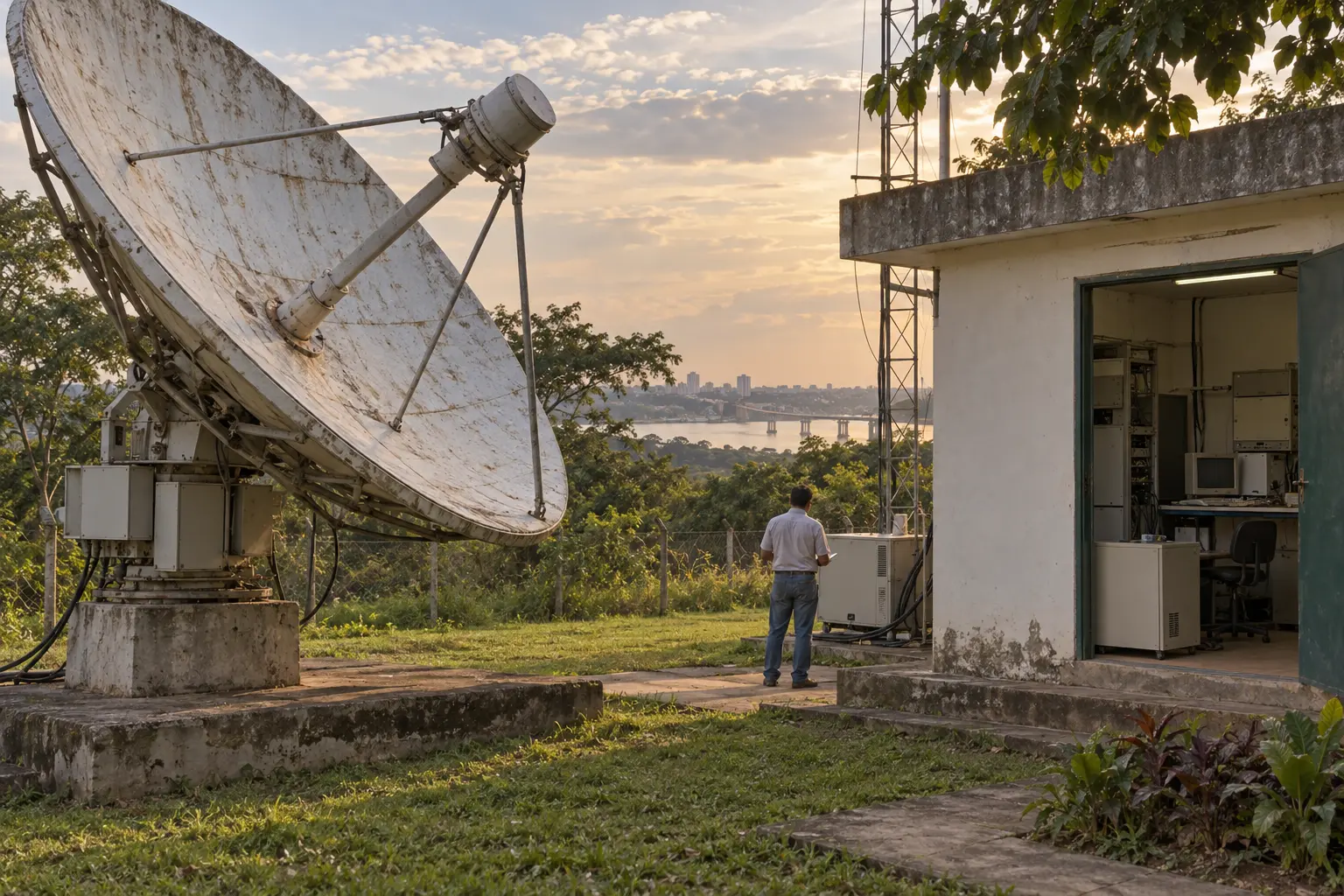
Three Payers Built Paraguay’s First Interactive Internet Gateway
A satellite earth station, a recurring international circuit and an upstream Internet port came from different budgets. That division explains how a university project in Paraguay crossed the gap between scheduled email and an interactive Internet connection.

Leaders
Three Proposals for a Global IPv4 Policy: Paul Wilson’s Role in the First Attempt
Paul Wilson was one of nine people named on prop-069, the first of three attempts to define how IANA could redistribute IPv4 addresses returned after its free pool was exhausted. The proposal reached consensus in four regional processes, while a substantially revised fifth…

History
Nicaragua Reached the Internet through Costa Rica’s Old Microwave Link
Before Nicaragua had its own direct international Internet exit, its academic network could reach the wider Internet by crossing a neighboring country. A decades-old analog microwave path carried the regional link; Costa Rica’s satellite gateway supplied the route outward.

History
Dakar’s Web Server Was Online Before Senegal’s Permanent Link
A November 1995 network message already listed Senegal Contact at refer.sn. A later history describes a Dakar server carrying IP over X.25, months before SONATEL’s permanent national link. The records mark different kinds of “online” and cannot tell us who successfully reached…

IETF
Where the State Lives: Marcelo Bagnulo’s Work on Internet Continuity
An Internet connection can survive a changing path, cross a boundary between two address families, or yield capacity to another flow. Those outcomes depend on where a system keeps the information that lets it react. In collaborative work on Shim6, Stateful NAT64 and…

History
Before Linux Had a Release, Linus Torvalds Asked MINIX Users What They Needed
The 1991 origin story is often compressed into one famous Usenet post. The surviving record shows a slower sequence: technical questions, a request for MINIX users’ advice, a limited source snapshot, and then a wider FTP announcement.

History
A Delayed ACK Made TFTP Repeat Itself: The Sorcerer’s Apprentice Bug
TFTP’s stop-and-wait design made a single delayed acknowledgement more than a nuisance. A rule that let both ends answer old packets could turn retransmission into a chain of duplicates, so 1989 host requirements prescribed a narrow fix before the protocol was revised in 1992.

Story
LACNIC’s Caribbean satellite fallback depends on an unstated trigger
Its CaribNOG 32 guidance pairs full-table routing over fibre with a default route over LEO. The post reports exercises, but no operator deployment, failover test or capacity result.

History
Cuba’s Four Networks Went International Before the 64 kb/s Link
A July 1996 field update described four Cuban networks exchanging information abroad while CENIAI was still seeking a direct IP connection. The 64 kb/s Sprint line that followed changed the kind of reach available; it did not create Cuban networking from nothing.

History
TUBA Could Keep TCP and UDP. It Still Had to Replace IP
TUBA promised to preserve familiar Internet transports and applications while moving packets onto the OSI Connectionless Network Protocol. That boundary made its migration story more demanding than its reassuring name suggested.

History
One Gateway, Two Internet Providers: Samoa’s 1998 Dial-up Network
Samoa’s first-ISP chronology is unsettled, but a 1998 field report records a clearer milestone: Telecom Samoa installed a shared gateway so two retail providers could reach the international link. The cutover shows where the route, the customer service and the operational…