
Profile
Briefing
Briefing profile intelligence connects person, company, institution, and other entity coverage for readers comparing the subjects behind BTW.MEDIA reporting. The page helps compare public profiles, related events, evidence packs, role changes, operating footprints, governance exposure, organisational links, and market relevance while keeping organisation and people records distinct from ordinary news chronology. Readers can understand the subject behind the headline, the evidence supporting that profile, and the infrastructure or market relationships that make the profile relevant. They can see who or what the profile represents, which public sources support it, how it connects to companies, markets, governance bodies, or events, and what changes may deserve continued attention as the subject evolves.

Story
A Locally Served DNS Root Has a Refresh Bill
Serving the root zone beside a recursive resolver removes many outward queries, but it does not remove network traffic. A new measurement highlighted by APNIC shows that the bill moves into the update loop—and that software behaviour can matter more than the name of the…

CASE FILE
At Kubernetes, a KEP Marked Implementable Is Neither a Release Inclusion Nor a Cluster-Support Promise
“Kubernetes approved the feature” can sound like a finished operational fact. The project’s public process says something more useful and more limited. An impacted SIG can approve a Kubernetes Enhancement Proposal for implementation; a release team can track a milestone; a…

CASE FILE
A CVE Record Is a Coordination Reference, Not a Patch or Remediation Receipt
The most useful thing a CVE record does is also the reason it is so easily overstated. It gives parties a stable way to mean the same vulnerability. That shared reference permits a finder, a CNA, a supplier, a distribution, a security team and an asset operator to exchange…

Asia-Pacific Cloud Services Trends
Fastly has a Singapore distributor. The service owner is still a question.
Fastly’s new distribution agreement with Ingram Micro makes its platform easier to reach through a local partner ecosystem. That is a commercial opening, not a public map of who will sell, implement, support and remain accountable for each customer service.
North America Datacenter Trends
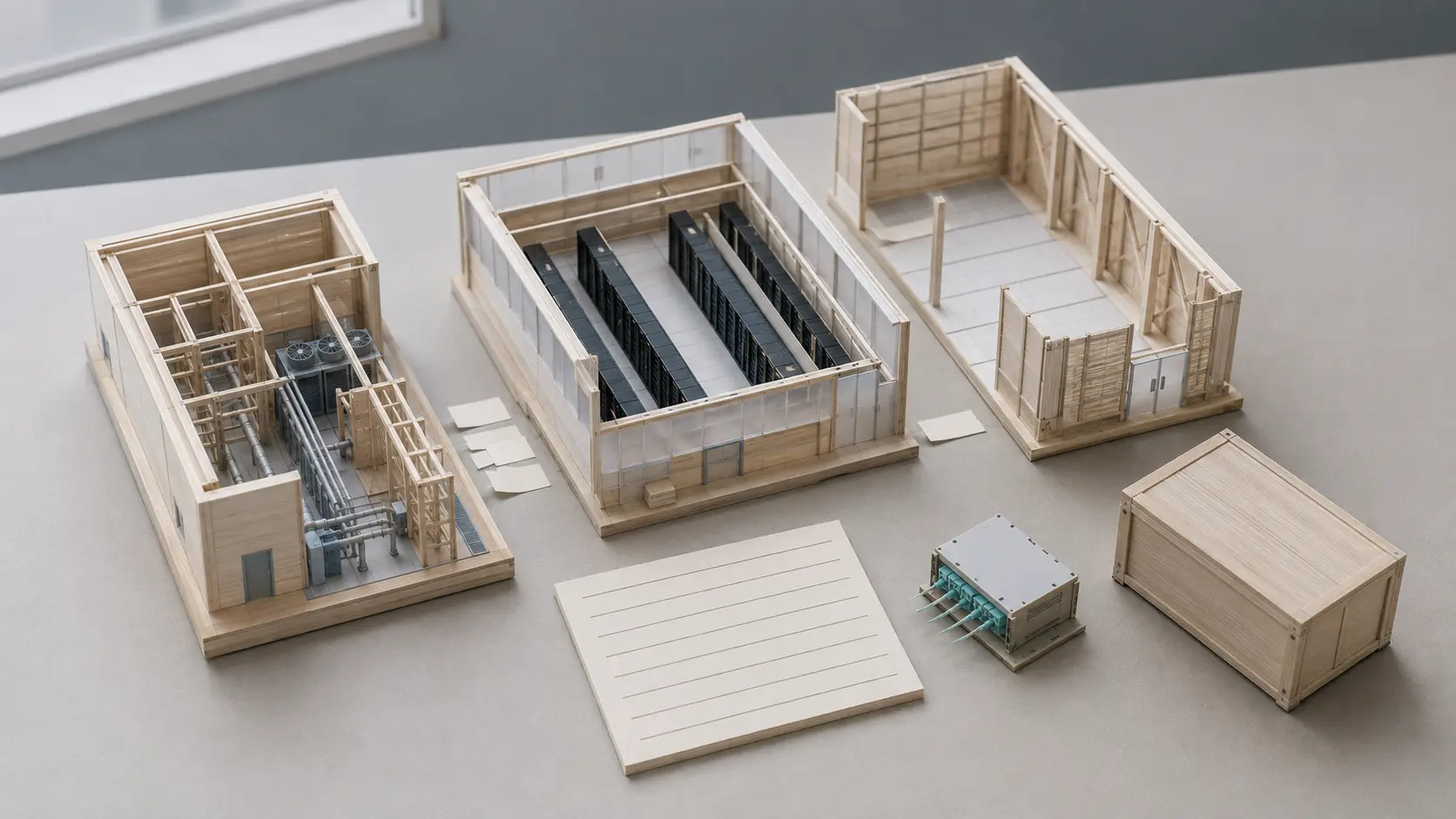
A 54-MW turnkey promise still needs an acceptance sequence
Northampton and Provident have formed a joint venture for a North Dallas data centre targeted for late 2027. The commercial test is how utility, fit-out, network and customer obligations turn a site figure into accepted computing capacity.

Story
APNIC proposal tests a one-/24 IPv4 bridge for IPv6-only networks
APNIC prop-165 version 4 would let an organisation eligible for an initial IPv6 allocation request one IPv4 `/24` for transitional functions in an IPv6-only deployment. The proposal is still under discussion: its practical significance lies less in the size of the grant than in…

Europe and Middle East Institutional Trends
Power International-Tyres: the corporate ASN behind a physical distribution promise
Power International-Tyres: the corporate ASN behind a physical distribution promise intelligence summary explains the development, the public evidence available to readers, the organisations involved, the regional context, market exposure, and the infrastructure consequences that…

Global Cloud Services Trends
An OAuth Access Token Is Not a Current Authorization Decision
An access token can remain acceptable after the decision that justified it has changed: a self-contained token may still pass local cryptographic checks, while an opaque reference token may still be accepted through a state lookup. The operational question is therefore not merely…

Story
APNIC’s RDAP Registrant Role Identifies a Registration Party, Not Corporate Ownership
One word inside a nested APNIC record carries real evidentiary weight, but less than its everyday meaning may suggest. The RDAP role `registrant` identifies the entity recorded for a registration; it does not turn the response into a corporate-ownership register or a live map of…

Story
APNIC prop-164 Turns Smaller IPv6 Allocations into a Reservation Test
APNIC prop-164 would let account holders begin with IPv6 allocations smaller than `/32` while preserving room for growth. The proposal may improve Whois and RDAP accuracy, but its durable test is whether reserved address space becomes a visible, reviewable registry commitment…

Global Cloud Services Trends
A TLS Delegated Credential Is Not a Delegation of Domain Control
A short-lived credential can let a CDN edge complete a TLS handshake without holding the certificate owner's long-term private key. That is a precise cryptographic delegation. It is not a transfer of the domain, certificate-issuance authority or the organisation behind either…

Story
ARIN’s Alternate Whois Link Is a Substitute View, Not Independent Corroboration
One ARIN RDAP record points sideways to ARIN’s older Whois REST service. That link is useful, but it does not turn two views from the same registry into two independent witnesses.

Global Regional ISP Trends
PolBox.TV: three registered relationships, one observed neighbour
PolBox.TV: three registered relationships, one observed neighbour intelligence summary explains the development, the public evidence available to readers, the organisations involved, the regional context, market exposure, and the infrastructure consequences that may follow. The…

Europe and Middle East National Telecom Trends
A mobile-site generator is not a local continuity plan until refuelling access, runtime and restoration priority are verified
A generator beside a mobile site is equipment, not proof of continuity. The local capability begins only when the site’s real load, safe access, fuel replenishment authority, delivery time and restoration priority can be exercised as one bounded operating chain.

Story
LACNIC’s RDAP Name Is a Registration Label, Not a Legal or Routing Identity
A field called `name` invites more confidence than it deserves. In LACNIC’s live RDAP record for `200.0.0.0/21`, the value is simply the address interval written as a label. It identifies a registration record; it does not settle who legally owns the addresses or who operates the…

Story
APNIC's Larger IPv4 Delegations Need a Queue Rule Before a Bigger Ceiling
APNIC's prop-168 would let eligible account holders grow toward an aggregated /22 while proposing a separate /12 transition reserve. The proposal defines who may ask and how much they may receive; its own scarcity arithmetic shows why it must also define who goes first when…

Europe and Middle East Regional ISP Trends
Plusine Systems: three public names, separate responsibilities
Plusine Systems appears in public evidence under a legal name, the Axians commercial brand and the registered autonomous-system name PLUSINE-AS. Those identities can be joined, but the join does not answer every operational question. For a buyer, the useful work is to map which…

Global National Telecom Trends
MSSA updates NTN architecture for regenerative payloads
MSSA's Version 2.0 adds regenerative payload guidance and shared 5G NR and NB-IoT design options for non-terrestrial networks.

Asia-Pacific Datacenter Trends
LS Electric, KT Cloud partner on AI data-centre power
LS Electric will work with KT Cloud from the design stage on power systems for modular AI data centres, with equipment supply planned for future projects.

Africa National Telecom Trends
BTC targets October 5G launch with 599-site upgrades
BTC plans to launch 5G in selected parts of Gaborone in October while upgrading capacity at 599 mobile sites and moving fixed customers off copper.