
Profile
Briefing
Briefing profile intelligence connects person, company, institution, and other entity coverage for readers comparing the subjects behind BTW.MEDIA reporting. The page helps compare public profiles, related events, evidence packs, role changes, operating footprints, governance exposure, organisational links, and market relevance while keeping organisation and people records distinct from ordinary news chronology. Readers can understand the subject behind the headline, the evidence supporting that profile, and the infrastructure or market relationships that make the profile relevant. They can see who or what the profile represents, which public sources support it, how it connects to companies, markets, governance bodies, or events, and what changes may deserve continued attention as the subject evolves.

Asia-Pacific Datacenter Trends
India targets data-centre delivery bottlenecks
India is focusing on reliable power, ready land and faster approvals as it seeks to turn about $200bn of expected data-centre investment into projects.

Europe and Middle East National Telecom Trends
MasOrange tests 6GHz radio technology with Ericsson
MasOrange has tested 6GHz spectrum with 256TR active antennas and beamforming as it evaluates radio technology for future 6G deployment.
North America Regional ISP Trends
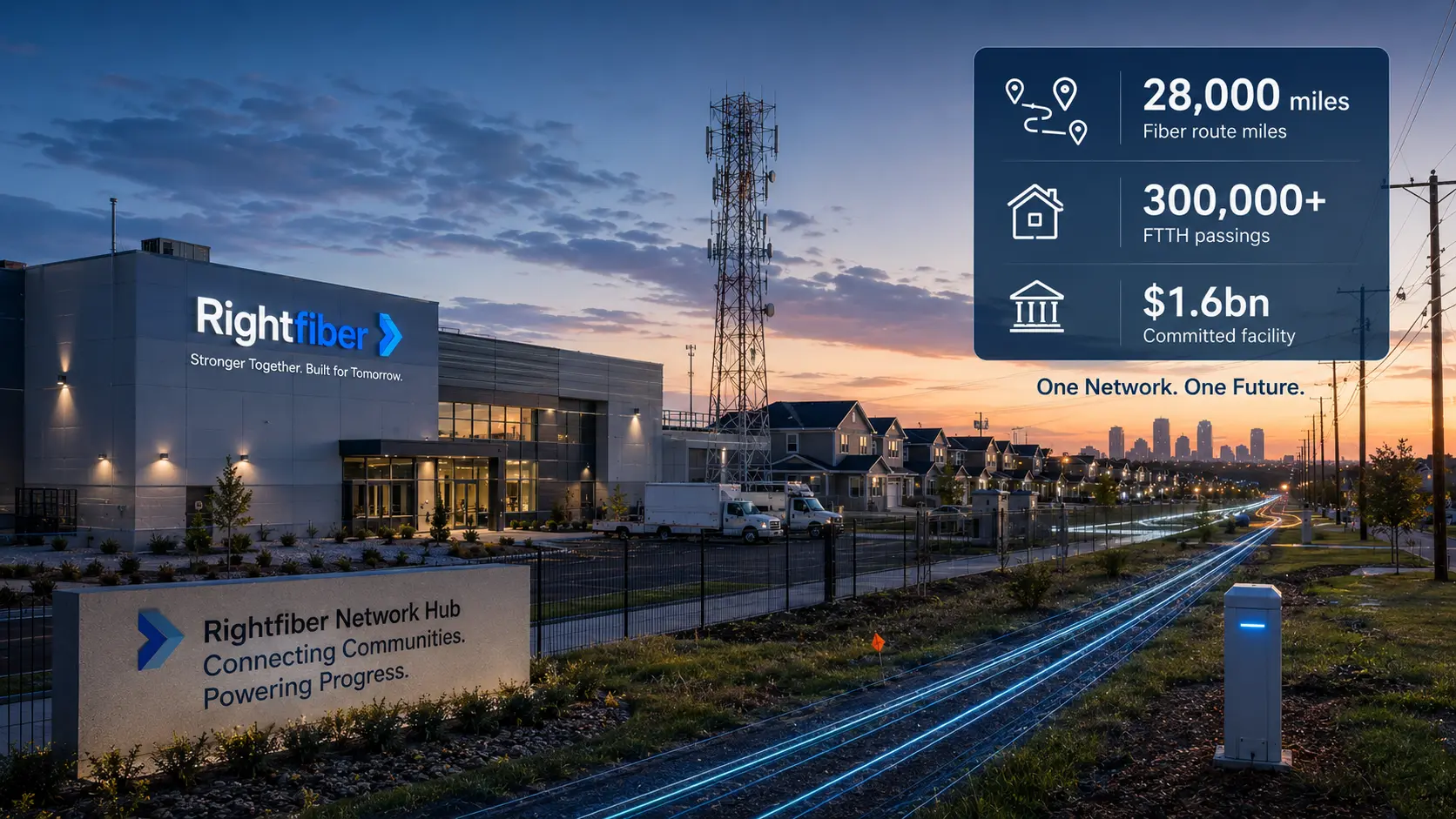
Ritter, Great Plains complete merger to form Rightfiber
Rightfiber starts with a 28,000-mile fibre network, more than 300,000 FTTH passings and a $1.6 billion facility for growth and acquisitions.

North America National Telecom Trends
US fibre market records 41 deals in 2026
A 41-deal count gives the US fibre consolidation debate a measurable base as investors weigh existing networks against further construction.

Europe and Middle East National Telecom Trends
Tottenham Hotspur upgrades stadium network with Wi-Fi 7
HPE will add outdoor Wi-Fi 7 and bring data-centre, campus and edge network management into Aruba Central at Tottenham Hotspur Stadium.

North America Datacenter Trends
Texas Batch Zero load is twice ERCOT peak
ERCOT is auditing about 200GW of large-load projects after Texas data-centre demand overwhelmed a grid whose July peak reached 91.3GW.

CASE FILE
The OID Was Recognized. The SLH-DSA Certificate Still Failed the Mode Check: RFC 9909
RFC 9909 gives X.509 a precise vocabulary for SLH-DSA keys and signatures. That vocabulary is intentionally unforgiving: a parser recognizing the family does not excuse a Pure/Hash mismatch, present parameters, wrong key use or an unproved trust decision.

IETF
Dave Thaler: A Block Observation Is Not Policy Attribution
An unavailable page, a reset connection or an altered DNS answer can be a real observation. It does not, by itself, identify who made a policy, what they intended, or whether the effect was deliberate at all.

IETF
Suresh Krishnan: Link Up Is Not an End-to-End Reachability Receipt
A radio, Wi-Fi or wired interface can be ready to pass frames while the path a customer needs remains unresolved. Suresh Krishnan’s RFC 4957 is useful precisely because it keeps that boundary visible.

CASE FILE
The Classifier Named the Flow. It Did Not Prove the Treatment: RFC 9892
A DLEP modem can tell its router which header patterns belong to a flow, but RFC 9892 keeps that description separate from the extension that uses it, the data-plane state that follows and the service result an operator may later claim.

IETF
Peter van der Stok and the Resource Registration That Was Not Endpoint Presence
A directory can make a resource easier to find without making the resource present. That is the operational boundary in RFC 9176, the CoRE Resource Directory specification collectively authored by Peter van der Stok with Christian Amsüss, Zach Shelby, Michael Koster and Carsten…

Global Cloud Services Trends
Kaleris Gained 25 EDI Links, Not One Repair Ledger
Newport Systems gives Kaleris an installed transport network between equipment owners and repair providers. The harder asset is common meaning for every estimate, authorisation, exception and invoice.

CASE FILE
The Client Predicted the Delay. The Server Still Owned the Validation Window: RFC 9891
RFC 9891 lets a Delay-Tolerant Networking client estimate how long an ACME challenge may take, but the estimate does not move the deadline: the server still controls the acceptance window, the path policy and the conclusion that follows.

North America Datacenter Trends
Augmenta's 8.5x clock stops at the first populated model
An 82-hour model-population result may be commercially useful on a large data-centre job. It is not yet a clock for design approval, fabrication, installation or the finished building.

CASE FILE
A Wikimedia Foundation Budget Has a Fiscal Clock, Not a Page-Level Editorial Verdict
A fiscal-year resolution has an unusually clean kind of clarity. It has a date, a decision-maker, a stated amount, a time period and an identified management path. A page-level editorial conclusion has a different kind of clarity: an applicable policy, evidence, discussion…

IETF
Dino Farinacci and the Requirement That Did Not Allocate a Multicast Address
A requirements document can make a future system easier to judge. It cannot make that system exist. That distinction is the useful way to read RFC 10019, an IETF document co-authored by Dino Farinacci with Nate Karstens and Mike McBride.

CASE FILE
The VLAN Field Was Twelve Bits. The Guidance Gave It Sixteen: RFC 9895
RFC 9895 makes Ethernet tags part of DLEP credit control, but its management guidance gives a 12-bit VLAN field a 16-bit-looking range. The wire format resolves the executable boundary; configuration, tests and vendor interfaces still need proof that they resolve it the same way.

Story
A Locally Served DNS Root Has a Refresh Bill
Serving the root zone beside a recursive resolver removes many outward queries, but it does not remove network traffic. A new measurement highlighted by APNIC shows that the bill moves into the update loop—and that software behaviour can matter more than the name of the…

CASE FILE
At Kubernetes, a KEP Marked Implementable Is Neither a Release Inclusion Nor a Cluster-Support Promise
“Kubernetes approved the feature” can sound like a finished operational fact. The project’s public process says something more useful and more limited. An impacted SIG can approve a Kubernetes Enhancement Proposal for implementation; a release team can track a milestone; a…

CASE FILE
A CVE Record Is a Coordination Reference, Not a Patch or Remediation Receipt
The most useful thing a CVE record does is also the reason it is so easily overstated. It gives parties a stable way to mean the same vulnerability. That shared reference permits a finder, a CNA, a supplier, a distribution, a security team and an asset operator to exchange…