
Profile
Briefing
Briefing profile intelligence connects person, company, institution, and other entity coverage for readers comparing the subjects behind BTW.MEDIA reporting. The page helps compare public profiles, related events, evidence packs, role changes, operating footprints, governance exposure, organisational links, and market relevance while keeping organisation and people records distinct from ordinary news chronology. Readers can understand the subject behind the headline, the evidence supporting that profile, and the infrastructure or market relationships that make the profile relevant. They can see who or what the profile represents, which public sources support it, how it connects to companies, markets, governance bodies, or events, and what changes may deserve continued attention as the subject evolves.

Global Cloud Services Trends
TLS 1.3 0-RTT Acceptance Is Not a Replay-Safety Decision
Early data can remove a round trip from a resumed connection. That speed is real, but accepting the bytes does not prove that the application operation is safe to execute twice, authorised under current policy or protected by a shared deduplication decision.

NANOG
The Hybrid Denominator
Hybrid access is easy to announce and hard to measure. NANOG’s official record shows a progression from an exclusively virtual meeting in 2020 to hybrid events and persistent webcast participation. It documents real channels for questions, chat and remote presentation. It does…

Story
AFRINIC's Monitoring Button Is Deployed and Disabled
AFRINIC's deployment monitor contains the control announced in its August release, but not the address that would make the control usable. The public code handles that absence carefully: it leaves the button hidden. That is good failure behaviour. It is also evidence that a…

Global Regional ISP Trends
When RPKI Validators Disagree, Redundancy Becomes a Policy Choice
Two healthy validators can give different answers about the same prefix. The moment an operator chooses which answer reaches a router, validator redundancy stops being a box-counting exercise and becomes a routing-policy decision.

NANOG
A Meeting Room Is Not North America
NANOG can convene an unusually useful concentration of network expertise. That does not turn the people in one room—or on one stream—into the electorate of North American network operations. The distinction protects the value of the forum by making its claims more exact.

ICANN
A Material Change to Public Application Content Opens 30 Days of Comment, Not Automatic Approval
When ICANN finds that a requested change materially affects public application content, the request enters a 30-day comment process but has not crossed the approval line.

Europe and Middle East Regional ISP Trends
DORIS: what a detailed routing policy proves when no routes are visible
DORIS: what a detailed routing policy proves when no routes are visible intelligence summary explains the development, the public evidence available to readers, the organisations involved, the regional context, market exposure, and the infrastructure consequences that may follow.…

IETF
QUIC Migration Can Fail Before the Connection Does
A QUIC connection can remain cryptographically alive while becoming unable to use a new path. The missing resource may be neither keys nor congestion window, but an unused connection ID supplied by the peer.

Number Resource Society
An RPKI Cache Serial Is Not a Freshness Timestamp
Two RPKI caches can report perfectly accurate serial numbers and still tell an operator nothing about which cache holds newer global data. RFC 8210 scopes a serial to one cache session and protocol version. Treating the larger number as the fresher view manufactures a chronology…

Europe and Middle East Regional ISP Trends
Farlep-Invest: the missing fault map behind a 100-hour continuity claim
Farlep-Invest says Vodafone Gigabit Net home-internet customers can remain online for more than 100 hours during central-power outages. The number is striking. Its real value, however, depends on a fault map the public filing does not provide: which network segments are…

IETF
QUIC's Three-Times Limit Is an Address-Validation Budget, Not DDoS Protection
A QUIC server can have the next handshake bytes ready and still be forbidden to send them. Before it knows that a client can receive packets at its claimed address, every received byte grants only a bounded amount of transmission credit.

Global Regional ISP Trends
A QUIC Connection ID Is Not a Durable Principal
A connection identifier can keep a QUIC session reachable while the network path changes. That continuity is operationally useful, but it does not turn the identifier into an account, a subscriber or a durable statement about who is authorised now.

NANOG
Who Gets the Scarce Minutes?
A conference agenda is not merely a timetable. It is a budget of collective attention. NANOG's published materials show technical talks, parallel rooms, workshops, keynotes, community coordination and commercial networking sharing a finite clock. The public record can show how…

ICANN
GAC Consensus Advice Starts a 21-Day Response Record, Not an Automatic Board Outcome
Formal GAC Consensus Advice changes the applicant's procedural position, but it does not itself supply the ICANN Board's decision.

Global Regional ISP Trends
A ROA maxLength Is Not a Traffic-Engineering Permission
A broad ROA can keep an emergency more-specific from becoming RPKI-invalid. It can also authorize origins that nobody intended to announce. The operating control is the exact origin plan, not the convenience of one large `maxLength`.

IETF
The QUIC Spin Bit Is a Sample, Not a Latency SLA
A passive latency graph can go blank while a QUIC service remains healthy. The signal may have disappeared because an endpoint did not participate, traffic paused, or connection context changed—not because round-trip time became infinite.
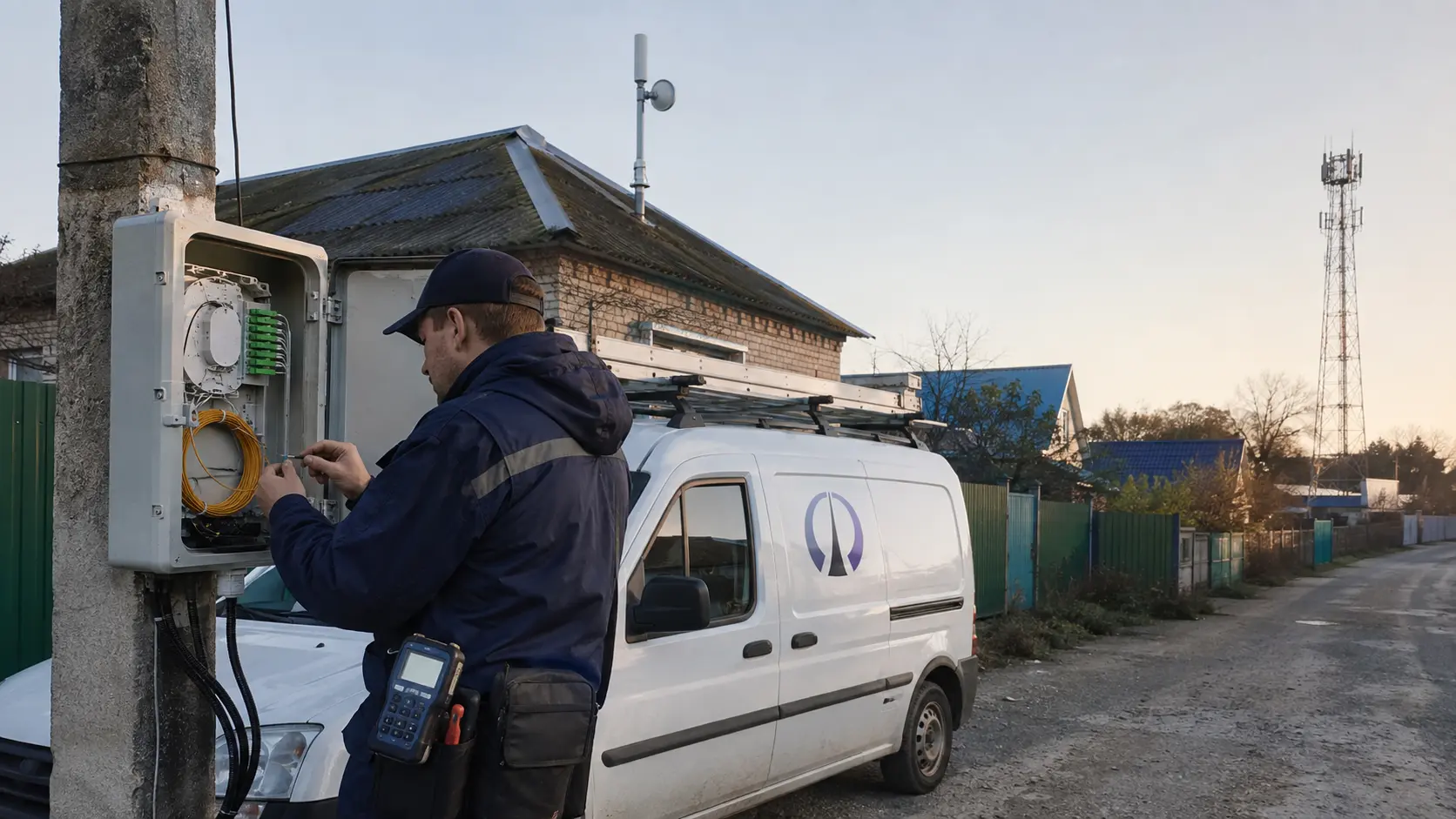
Europe and Middle East Regional ISP Trends
Prime-Service: the price parity hiding two different access futures
Prime-Service’s public retail surface puts GPON and WiMAX beside one another at matching displayed price points, but with sharply different advertised speeds. That contrast turns an ordinary tariff table into a due-diligence question about technology, upgrade paths and who…

North America Institutional Trends
HF Foods' 5x Searay Multiple Covers the Base Price, Not the Final Bill
HF Foods has closed its first international acquisition with a clean headline equation. The equation values Searay's base price; it does not settle the cash adjustment, escrow shares, two other earnouts or the accounting of the combined business.

IETF
Happy Eyeballs Is a Racing Budget, Not Proof of Dual-Stack Health
A page can load normally while one address family is unusable. Happy Eyeballs protects the user by letting another candidate win, but that success becomes misleading when operators treat it as evidence that the whole dual-stack service is healthy.

NANOG
The Late-Submission Exception
Urgency is a legitimate reason to keep a technical programme open. It is not, by itself, a sufficient rule for deciding who gets the remaining stage time. NANOG's public record offers both sides of that problem: a historical late-submission process governed by committee…